When you start a counted cross stitch project, you might wonder where to begin. Do you start in the center or at an edge? This article will guide you, whether you’re a beginner or an experienced stitcher.
Starting in the center is often advised in CROSS STITCH. It helps keep large motifs aligned and prevents running out of fabric. But, choosing a start point is more than just following tradition. You need to know how to find and check your reference points. Simple checks can help you stay on track.
Good posture and an organized workspace are just as important as your counting method. Make sure your spine is straight, shoulders relaxed, and your table is at the right height. These steps help keep your hands steady and reduce mistakes, whether you start at the center or an edge.
Preparation is key, like when driving safely. Position yourself well, signal your intentions, and control your speed. In CROSS STITCH, this means preparing your fabric, finding pattern landmarks, and stitching at a steady pace. This way, you avoid getting stuck in the middle of a miscount.
In this guide, you’ll find tips for cross stitch, steps for beginners, strategies for gridding and counting, ergonomic advice, and tool recommendations like DMC floss. These will help you make either starting choice work.
Key Takeaways
- Center starts help with alignment and are common in counted cross stitch.
- Use simple, repeatable checks to find and verify your starting point.
- Ergonomic setup—seat, table height, and posture—reduces errors and fatigue.
- Prepare fabric and pattern landmarks before stitching to avoid miscounts.
- You’ll get practical cross stitch tips and tool recommendations to suit either start style.
Why starting in the center is a common cross stitch recommendation
Many stitchers start by finding the center before they begin. This rule comes from charts that mark a midpoint. Designers at DMC and Anchor used center lines to make patterns fit fabric better.
Origins of the center-first rule in counted cross stitch
Charts for counted cross stitch often have a bold center line. This makes it easier to place a central motif. Early kits came with fabric cut to specific stitch counts, ensuring the designer’s center matched the fabric’s.
Benefits for pattern alignment and symmetry
Starting at the center helps keep motifs balanced. Stitching outward makes each side mirror the other. This is great for portraits and wreaths where symmetry is key.
How center-starting reduces waste and prevents framing mistakes
Starting at the middle lets you check margins early. This helps ensure you have enough fabric for framing. It also prevents discovering your design is off-center after hours of work.
By starting at the center, you can avoid common mistakes. This method saves time, threads, and your project’s investment.
| Aspect | Center Start | Edge or Corner Start |
|---|---|---|
| Alignment accuracy | High; easier symmetry for central motifs | Lower for large centered designs; risk of drift |
| Fabric margin assurance | Easy to verify before heavy stitching | Harder to gauge until progress is visible |
| Risk of cross stitch mistakes | Reduced with early verification | Increased, especially with limited margins |
| Best use | Counted cross stitch charts with central motifs | Border-focused samplers or pre-framed pieces |
| Practical tip | Locate pattern center, then find fabric center | Measure fabric carefully; consider gridding first |
CROSS STITCH: when center-first makes the most sense
Center-first is best for projects where exact placement is key. A quick check before starting saves time and avoids costly errors on cross stitch fabric.
Large motif patterns and centered designs
For medallions, portraits, and big motif patterns, starting at the center is safest. It keeps the design balanced. Match the chart’s center marks to the fabric center for even growth in all directions.
Stitching the centerpiece first helps avoid off-center issues. This is especially important for framed work and gifts.
Working with limited fabric margins and avoiding running out of fabric
With tight margins, starting at the center confirms border space before stitching. Measure stitch count, add framing allowance, and compare to fabric dimensions.
Center-starting is like planning a parking spot: assess the space first. This method prevents fabric shortages and keeps your projects from needing last-minute cropping.
Gridding techniques that pair well with center starts (cross stitch gridding, basting)
Mark a center cross with thin cotton basting or a water-soluble pen. Then, extend a 10×10 grid to match most charts. Cross stitch gridding in blocks speeds up counting and reduces rework.
Use short basting lines for vertical and horizontal guides. Temporary tapes or a light washable marker work well on delicate fabric. These tools create reliable landmarks for your project.
Before starting, take a moment to check your posture. A steady hand and neutral shoulders help with accurate counting and neat stitches across long projects.
Situations where you might not want to start at the center
Some projects need a different start than the center-first rule. When designs are near an edge or the layout is uneven, start with a clear point. This avoids mistakes and makes the project easier.
Asymmetric or border-focused patterns and samplers
For patterns that are not symmetrical or samplers with bands, start at the edge. This keeps designs even with the fabric edge. It also makes borders and lettering accurate, fitting frames without cutting.
Samplers with bands or uneven designs benefit from starting at the edge. This gives a steady margin and less scrambling as the design grows.
Projects using pre-framed or stretcher-bar techniques (cross stitch frames)
When mounting fabric on stretcher bars or frames, start at a corner or edge. This reduces distortion when tightening. It also prevents puckering when stretching the fabric.
Choosing a start point that matches the frame’s hold saves time. It avoids constant adjustments and keeps thread tension even.
How posture, workspace, and ergonomic considerations can influence start point
Your setup affects your accuracy. If reaching the center hurts your back or shoulders, start elsewhere. Good posture helps avoid mistakes and lets you stitch longer without pain.
Adjust your table and chair, check the lighting, and consider your working position. Choose a start method that keeps you comfortable. This makes stitching techniques reliable over long periods.
| Situation | Preferred Start | Why it helps |
|---|---|---|
| Asymmetric designs | Edge or motif reference point | Keeps elements aligned to fabric edge and reduces repositioning |
| Band samplers | Top or side edge | Ensures even spacing between bands and consistent margins |
| Pre-framed/stretcher-bar work | Corner or edge nearest the mounting | Reduces puckering when tensioning and eases mounting |
| Ergonomic concerns | Start within comfortable reach | Maintains posture for stitching and prevents counting errors |
| Mental focus or limited time | Simple reproducible start (edge or center) | Short sessions stay accurate and reduce rework |
Beginner cross stitch: practical tips to choose your starting point
Choosing where to start can make a big difference. These tips are for beginners in counted embroidery. They help with layout, accuracy, and comfort. Follow each step and use the suggested tools to avoid common mistakes.
Simple steps to find the center of counted fabric and pattern
Fold your fabric in half lengthwise, then fold it across. Press the folds lightly to make the intersection clear. Mark this spot with a water-soluble pen or a tiny basting stitch.
On the chart, find the center arrows or grid lines. Match the pattern center to the fabric mark. Then, count from the center to the edges before stitching outward.
Beginner cross stitch mistakes to avoid when starting
Double-check your counts before stitching. Many mistakes come from just two or three miscounts. If something looks off, stop and recount from a known landmark.
Always leave framing margins. New stitchers often forget this. Measure your fabric against frame dimensions before starting.
Don’t skip gridding. Without a grid, you might drift off-pattern. Also, avoid pulling stitches too tight. Tight stitches distort the fabric and design.
Recommended cross stitch tools for accurate starts
Use tapestry needles that match your fabric count. A hoop or Q-snap frame helps keep tension even. A small measuring tape is useful for confirming margins before starting.
Choose water-soluble gridding pens like Sakura for temporary lines. Use fine cotton basting thread for larger grids. Keep DMC floss organized on bobbins for consistent colors.
Include a needle minder, stitch markers or locking clips, and a bright task light with a magnifier if needed. These tools keep your work tidy and reduce rework.
| Step | What to do | Why it helps |
|---|---|---|
| Find center | Fold fabric twice, mark intersection | Gives a reliable starting reference for centered designs |
| Match chart | Locate center on pattern, align with fabric mark | Prevents misplacement and reduces fabric waste |
| Grid before stitching | Use water-soluble pen or basting thread | Makes counting easier and avoids big miscounts |
| Tool kit | Tapestry needles, hoop/Q-snap, DMC floss, bobbins | Ensures smooth stitching and consistent color use |
| Posture and breaks | Set chair height, support back, take stretch breaks | Reduces fatigue and helps steady hands for accurate counting |
Centering methods and alternatives inspired by centering practices
Before starting, create habits that help keep your stitches neat and focused. Small rituals can help steady your hands and keep your tension even. They also reduce mistakes when changing colors.
Use mindful centering to calm your mind and focus better. This helps you stitch more accurately.
Mindful centering and posture: why steadiness matters for tidy stitches
Take a minute to breathe deeply before stitching. Deep breaths slow your heart and calm your fingers. This makes your stitches more consistent and your counting more accurate.
Mindful centering also helps you make better decisions. If you feel scattered, pause and place one hand on your belly. This simple move helps you stay focused without mistakes.
Physical centering techniques for your workspace (seat, table height, posture)
Adjust your chair so your forearms rest lightly on the table or hoop. Keep your shoulders relaxed and head level to avoid neck strain. Use a cushion for your lower back if needed to keep your spine’s natural curve.
Good posture reduces fatigue and prevents mistakes from slumping. Ergonomic setup lets you stitch longer without fabric warping or alignment issues.
Using short, focused sessions (cross stitch therapy) to stay centered and avoid errors
Work in blocks of 20–45 minutes, then take a brief break to stand and move. These short sessions act like therapy, resetting your focus and reducing decision fatigue.
Between sessions, try mindful walking or a foot-awareness exercise to ground yourself. Regular breaks help you maintain steady tension and reduce mistakes from tired eyes or hands.
| Practice | Duration | Benefit |
|---|---|---|
| Breath pause (belly breaths) | 30–60 seconds | Improves concentration and stitch tension |
| Ergonomic check (seat, table, cushion) | 5 minutes to adjust | Prevents neck, shoulder, and back pain |
| Focused stitch block | 20–45 minutes | Reduces counting errors and fatigue |
| Grounding touch (hand-on-crown or belly) | 10–30 seconds | Calms mind when scattered during complex cross stitch techniques |
| Mindful movement between blocks | 1–3 minutes | Restores posture and attention; supports long projects |
Use these methods with your favorite cross stitch techniques to protect quality and keep momentum. Let mindful centering and good posture guide your rhythm. Seek embroidery inspiration in the calm you create, not in rush or strain.
Gridding, counting, and layout: technical strategies that support any start point
Before you start stitching, set up a layout to avoid common mistakes. A clear grid and landmarks help you start anywhere without losing your way. Follow these steps for accurate placement and steady progress.
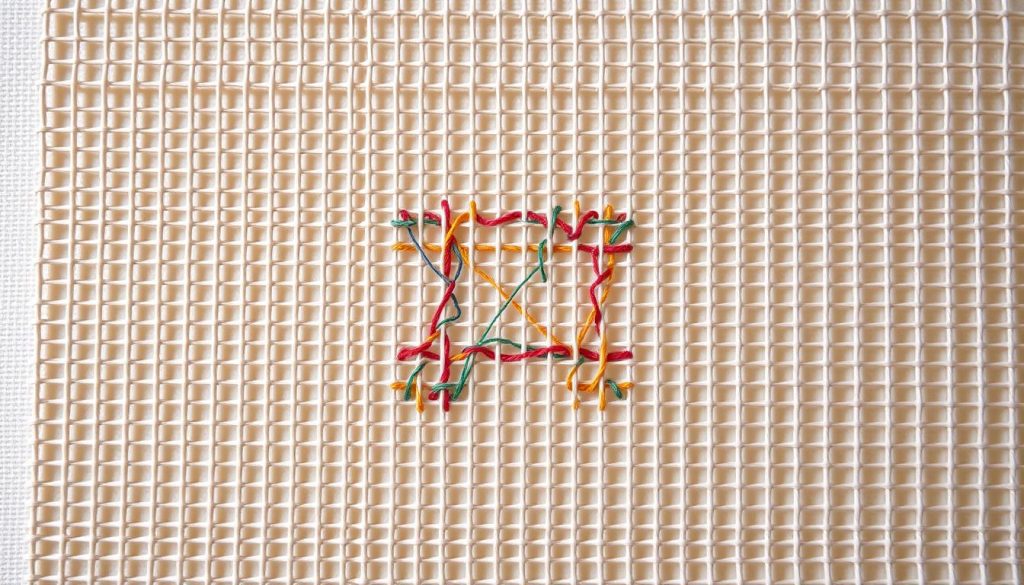
How to grid your fabric for predictable results
Use a water-soluble pen or thin cotton thread to mark 10×10 blocks. Align your grid with fabric threads for accurate squares. Choose removable marks if you plan to wash the piece.
Counting strategies to avoid misalignment and rework
Always count twice from a verified point before stitching. Use grid intersections as anchors, not long counts. Count to the nearest intersection when stitching large areas.
Mark completed areas on your chart with a highlighter or pencil. This helps with organization and makes picking up where you left off easier. Count ahead when moving between sections to avoid stopping in the middle of a motif.
Using pattern reference points and landmarks other than center
Find strong visual anchors in the design, like unique colors or outlines. Use these as guides when stitching. If lost, these points help you get back on track quickly.
Plan a few secondary anchors across the chart for extra guidance. Combining gridding with pattern reference points ensures accurate counting and organization.
Stitch techniques and finishing touches related to where you start
Starting a project in a certain way can influence your finishing touches. The path of your stitches impacts outlining, thread management, and space for borders and frames. Adopting a few habits can make your cross stitch finishing neat and consistent.
Backstitching and outlining strategies
Starting in the center lets you outline big shapes as you move outward. This method helps keep proportions right and prevents lines from getting jumbled. Starting at an edge means waiting to outline until the end. This allows for adjusting small details across the entire piece.
For smooth curves, use split backstitches. For straight edges, single long stitches work best. Changing stitch length can highlight important lines. These choices are key to crisp borders after mounting.
Thread management for long projects
Effective thread management keeps tension steady and reduces waste. Wind DMC floss on labeled bobbins by color number. Store them in a tackle box or floss organizer for easy access by project.
Keep often-used shades in small bags or on a thread sorter on your workboard. Cut thread lengths to 18–24 inches to prevent fraying. Using Thread Heaven can help with less knotting and smoother stitches.
How starting point affects borders, framing, and mounting
A center start usually leaves a good margin for framing. Check border allowances before stitching to avoid surprises when stretching or fitting a mat. Edge starts might be better if your design needs to align with fabric edges for mounting or stretcher-frame work.
Leave extra allowance for over-edge when planning matting or glazing. Using standing frames or Q-snaps helps maintain even tension and posture. This reduces distortion and enhances the look of borders and framed pieces.
Real-world examples and case studies: center start vs alternate starts
Choosing where to start can change the outcome of cross stitch projects. Below are examples of how starting in the center or alternately affected symmetry, alignment, and the need for rework.
In a framed floral medallion, starting in the center kept the petals balanced. This method avoided drift and saved time on corrections. For a border-heavy wooden plaque sampler, starting at the edge matched the edges of the plaque and prevented trimming errors.
Common project comparisons
Portraits benefit from a center start because it aligns facial features as you stitch. For multi-motif pieces, starting at a chosen anchor motif can be better. This makes joining adjacent motifs simpler than forcing every piece to meet at the exact center.
| Project type | Preferred start | Key benefit |
|---|---|---|
| Framed medallion | Center | Perfect symmetry and simpler counting for repeating petals |
| Border-heavy sampler | Edge | Accurate edge alignment for mounting and plaque fitting |
| Portrait | Center | Facial feature alignment reduces distortion |
| Multi-motif layout | Anchor motif | Easier merging and phased stitching by sections |
Lessons learned from mistakes
Many costly cross stitch mistakes come from miscounting early. You might stitch dozens of hours only to find the image sits off-center. Always verify reference points before starting long runs of thread to avoid this.
Fatigue and poor posture increase errors. Take short breaks and check grid lines regularly. Use a basting grid or water-soluble pen to confirm margins before committing to dense areas.
Planning merges and transitions
When two sections meet, plan how to pass the seam. Stitch overlapping boundary rows from one side or leave a buffer row to protect alignment. Mark landmarks on the fabric and pattern so you can match colors and densities precisely.
If a long seam joins two stitched areas, work toward the seam from both sides. Meet at a checked midpoint to reduce guesswork. Mark the meeting point on your chart so your pace stays steady and controlled while you finish the join.
Tools, hacks, and organization to make any starting choice easier
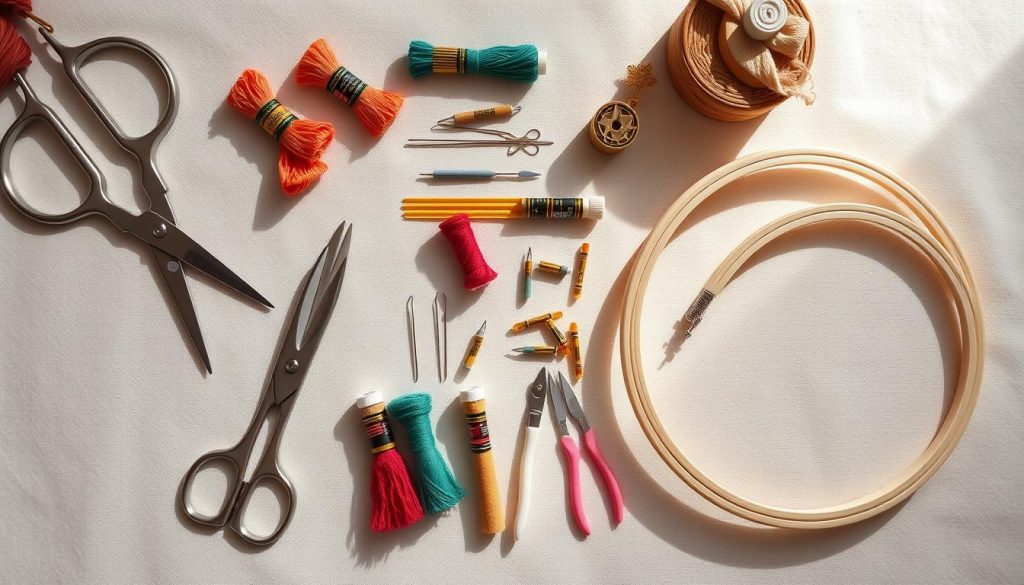
With a few embroidery hacks and smart tools, you can make your work easier. Start by clearing a small area for your most-used tools. Keep a floss organizer, needle minder, small scissors, and your pattern close. This way, you spend less time searching and more time stitching.
Practical embroidery hacks for accurate placement
Use clear plastic templates or paper cutouts to check placement before stitching. Mark temporary guide lines with washable markers or tailor’s chalk. Then, remove them with water when you’re done.
Use a small ruler and tape measure to check the center and distances. Magnetic clips and needle minders keep essentials close and stop pins from getting lost.
Workspace organization: lighting, frames, and posture-supporting chairs
Set up bright LED daylight lamps to reduce eye strain. Place a chart holder at eye level to avoid neck bending. Use an adjustable-height table for better posture.
Choose Q-Snap frames or stretcher bars for even tension if you prefer rigid support. A chair with lumbar support and a footrest helps you stitch longer without getting tired. Keep a small waste bin and a floss box nearby for tidy cross stitch organization.
Checklist of cross stitch tools to reduce errors and speed progress
Assemble a compact kit of cross stitch tools for quicker sessions and fewer mistakes. Include tapestry needles in several sizes, a Q-Snap or embroidery hoop, labeled DMC floss on bobbins, cotton basting thread, and water-soluble pens.
Add stitch clips, a highlighter for chart tracking, a magnifier or reading glasses, a task lamp, measuring tape, and a small storage box for patterns. Keep washable markers and gridding supplies handy for temporary marks that won’t harm fabric.
| Tool | Purpose | When to Use |
|---|---|---|
| Tapestry needles (sizes 24–28) | Smooth thread passage for various fabric counts | Every project for comfortable stitching |
| Q-Snap frame / embroidery hoop | Maintain even tension to reduce skewing | Large motifs or long projects needing stable tension |
| DMC floss on labeled bobbins | Quick color reference and tangle-free storage | Any multi-color project for faster thread changes |
| Washable markers / water-soluble pens | Temporary grid lines and placement marks | Mark centers, gridlines, and alignment guides |
| Needle minder & magnetic clips | Keep needles and clips secure and within reach | When you stitch in short bursts or move around |
| Task lamp & magnifier | Reduce eye strain and improve accuracy | Fine-count fabric or low-light conditions |
| Measuring tape & small ruler | Confirm centers and measure margins precisely | Before you start and during placement checks |
| Floss organizer & pattern box | Keep supplies labeled, tidy, and portable | When you work on multiple projects or travel |
Conclusion
You don’t need one rule for every CROSS STITCH project. Starting in the center is best for symmetrical designs and tight fabric margins. Edge or landmark starts are better for asymmetrical samplers and border pieces.
Let the pattern and your workspace guide your choice. Use cross stitch tips like marking centers and gridding. This helps avoid mistakes and keeps your stitches neat.
Manage your threads and tools well. For example, organize DMC floss on bobbins. Good posture and short sessions protect your hands and improve your work.
Bring mindfulness to your stitching. A simple breath and posture check can reduce mistakes. Whether starting in the center or not, combining awareness with method leads to better results.
Apply these tips to your next project. Let your process match the design. This way, you’ll stitch with confidence and find inspiration in every piece.
 English