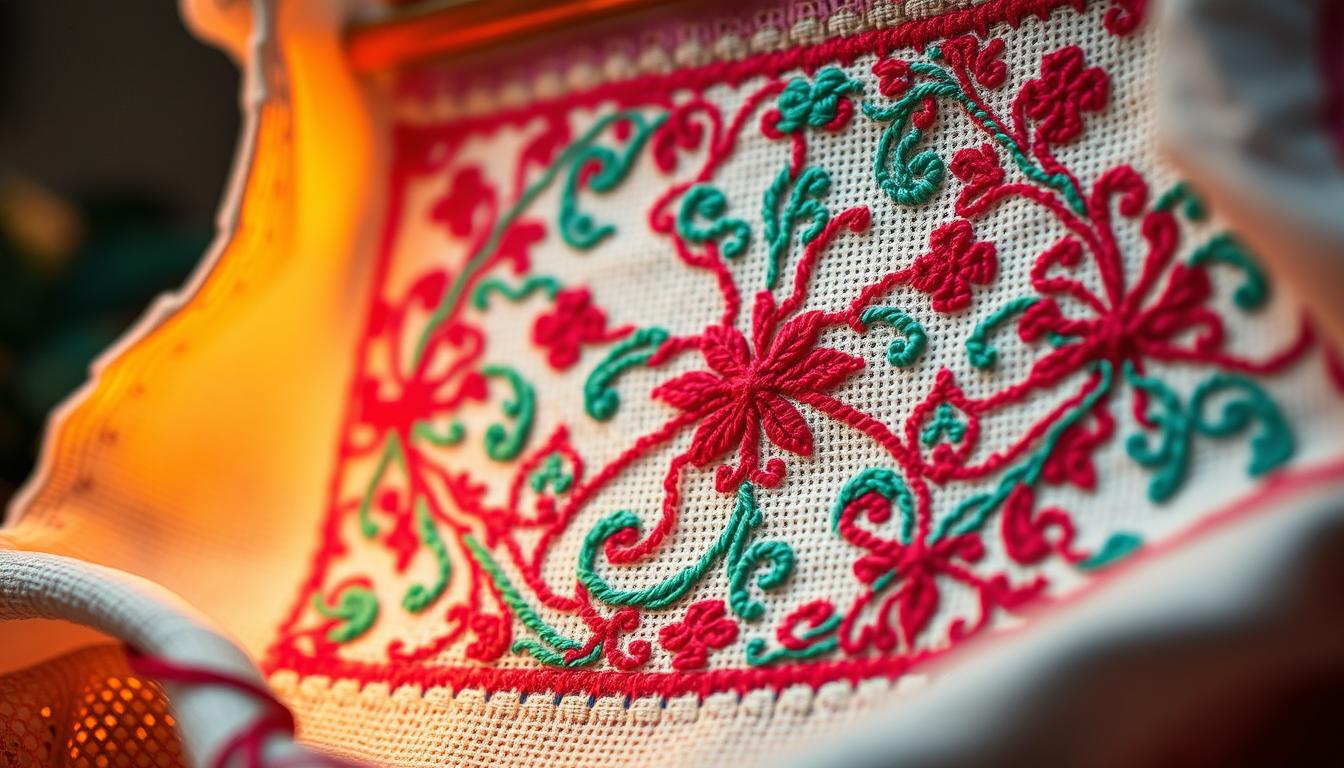
Short answer: you don’t knit with thread, but you can achieve the same handmade satisfaction by using a simple cross made from two diagonal stitches on aida fabric.
Why this feels like knitting: the process is tactile, repetitive, and calming. Aida fabric has clear holes that guide your needle, and a 14-count is ideal for beginners.
Typical tools are stranded six-strand embroidery floss and a blunt needle that slips through holes instead of piercing fibers. Starter kits and free pattern libraries make your first project approachable.
What you’ll gain: clear charts that turn color blocks into finished designs, easy tension control with a hoop, and optional backstitching to add fine detail.
Key Takeaways
- You won’t knit with thread, but cross stitch offers similar handmade satisfaction.
- Start on 14-count aida with stranded floss and a blunt needle for best results.
- Complete kits and free patterns help beginners finish a frame-ready design.
- Backstitching and count choice change detail and final size of your piece.
- Watch for a sale on kits and essentials, and join online groups for support.
Knitting vs. CROSS STITCH: What You Actually Do With Thread
At a glance, knitting and counted needlework can feel similar, but they use different tools and motions.
You make loops with two needles or a hook when you knit. In contrast, counted needlework uses a blunt needle to form precise X-shaped marks on a fabric grid. That grid is aida: an even-weave cloth with visible holes that guide every movement.
Why aida and count matter
Count is the number of squares per inch. A 14-count gives larger holes and clearer crosses, so beginners see progress quickly. Higher counts (16, 18) shrink each mark and suit finer designs.
Choosing materials and needles
Floss vs. yarn: stranded six-strand embroidery floss separates into thinner threads so you can match coverage to fabric count. Yarn is thicker and used for knitting, not for counted embroidery.
- Needle type: choose a blunt tapestry needle to protect fabric fibers; use a sharper tip only for non-aida fabrics.
- Practical tip: match the number of floss strands to the fabric count for even coverage.
| Material | Typical Use | Best For | Notes |
|---|---|---|---|
| Yarn | Knitting/Weaving | Garments, blankets | Builds loops; not for aida |
| Six-strand floss | Embroidery/Cross stitch | Counted designs on aida | Separates to control thickness |
| Embroidery thread (varied) | Detail work | Highlights, metallics | Use sparingly for texture |
| Needles | All needle arts | Tapestry or sharp | Blunt tapestry needles prevent fraying |
Your Essential Cross Stitch Toolkit and Materials
A small, well-chosen toolkit makes learning counted needlework faster and more enjoyable.
Fabric and count: Start with 14-count aida. The holes are easy to see and your first crosses land neatly. Higher counts give more detail but require finer thread and patience.
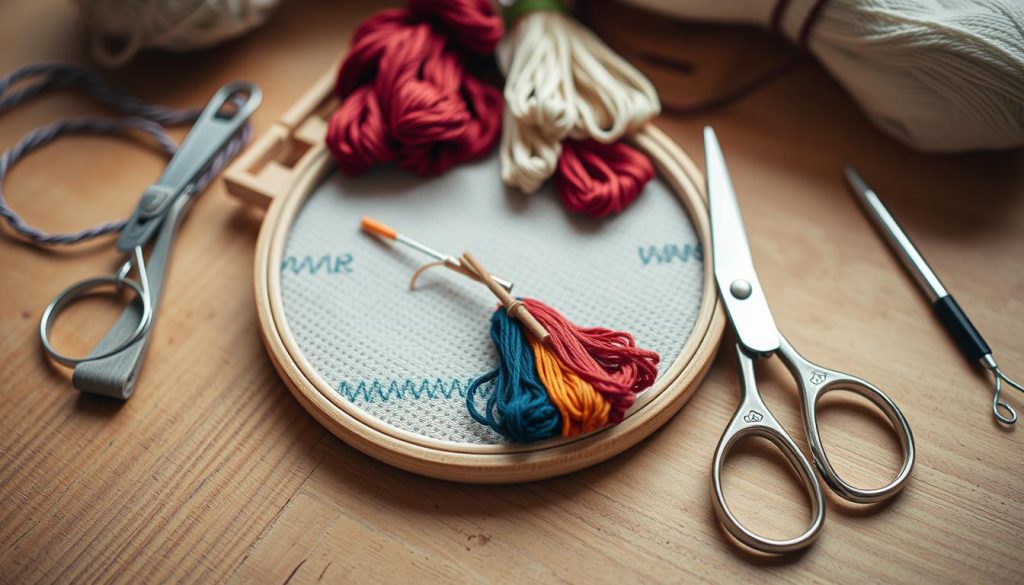
Floss and threads—why six strands matter
Choose six-strand embroidery floss so you can split strands to match fabric count and coverage. Trusted DMC color lines simplify matching symbols to shades. Keep extra skeins if a design uses many hues.
Needles, hoops, and scissors
Use a blunt-point tapestry needle with an elongated eye for smooth passes through aida. A hoop sized just larger than your design keeps tension even. Use sharp embroidery scissors to cut cleanly and avoid frayed ends.
Markers, transfer tools, and charting
Mark your grid with a water-soluble pen or use magic paper to transfer symbols. Organize embroidery floss on bobbins and label them to speed color changes. Highlight completed areas on your chart to reduce counting errors.
| Item | Why it matters | Tip |
|---|---|---|
| 14-count aida | Clear holes, easy counting | Best for beginners |
| Six-strand floss (DMC) | Adjustable thickness, wide color range | Match strands to count |
| Blunt tapestry needle | Protects fabric, glides easily | Choose elongated eye for multiple strands |
| Hoop | Keeps tension even | Size slightly larger than design |
| Sharp embroidery scissors | Clean cuts, neat ends | Reserve for thread only |
Quick shopping guide: prioritize floss, aida, a blunt needle, a hoop, scissors, and a DMC marker. Watch for a small sale on essentials to stretch your budget.
CROSS STITCH Kits, Patterns, and Supplies You Can Trust
Find curated kits and clear patterns that let you finish a framed piece in a weekend.
All-in-one kits for stress-free starts
You’ll get everything bundled: pre-selected fabric, quality threads, a blunt needle, a hoop, and a clear chart. These cross stitch kits are ideal if you want a reliable project that shows progress quickly.
Downloadable patterns and fresh releases
Many stores publish new cross stitch patterns weekly. You can grab quick designs for gifts or seasonal art. Free pattern libraries also offer small motifs and full-size charts for weekend projects.
Stock up on supplies
Build a basic stash: floss by color family, fabric cuts in multiple counts, needles, hoops, beads, charms, and stitchable blanks. Watch for a sale to refill threads and grab hard-to-find counts without overspending.
Gifts, cards, and small treasures
Choose between beginner-friendly stitch kits, gift cards, and tiny add-ons like needle minders or buttons. Testimonials praise well-packed kits with extra thread and active groups that help you finish each design.
| Category | Included | Best For |
|---|---|---|
| All-in-one kits | Fabric, threads, needle, hoop, chart | Beginners, quick gifts |
| Downloadable patterns | PDF charts, symbol keys | Weekend projects, seasonal designs |
| Supplies | Floss, fabric by count, needles, beads | Ongoing projects, customization |
| Gifts & cards | Gift cards, mini kits, charms | New stitchers, small presents |
- Compare kits by difficulty and chart clarity before you buy.
- Look for DMC color consistency when you reorder threads.
- Stock seasonal designs early and watch the site-wide sale for best deals.
How to Start and Improve: Learn With Guided Tutorials
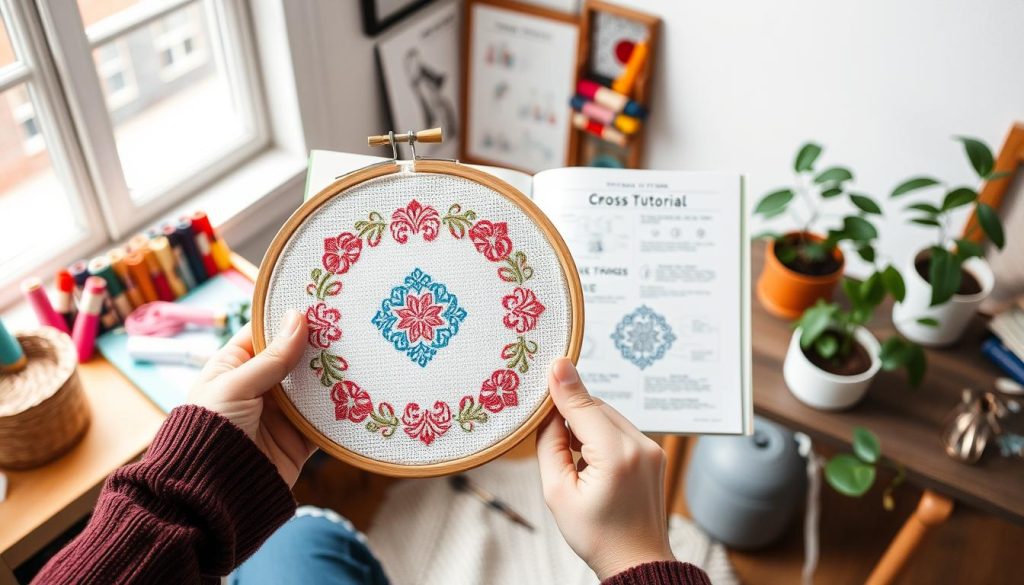
Start with a simple tutorial that walks you through securing the first diagonal and finishing a neat X.
Begin stitching on 14-count aida using six-strand embroidery floss and a blunt needle. Set your hoop, thread an appropriate number of strands, and pull the first leg gently to keep tension even.
Use charts by matching symbols to DMC color codes. Count squares from the center outward to avoid placement mistakes. Short video clips plus step-by-step diagrams speed learning and let you replay tricky moves.
Backstitch for cleaner outlines
After filling areas with the main cross, add backstitch to define edges and letters. This simple outline makes small designs read clearly at lower counts and gives a polished finish.
- Secure thread tails under nearby stitches to avoid bulky backs.
- Travel threads on the reverse efficiently; avoid long jumps on light fabric.
- Mark finished areas and work in color blocks to reduce counting errors.
| Focus | What you learn | Quick tip |
|---|---|---|
| Starting stitch | Secure first diagonal, then complete the cross | Keep tension consistent |
| Reading patterns | Match symbols to floss, count from center | Highlight completed sections |
| Backstitch | Outline and define small details | Use one or two strands for crisp lines |
Shop What’s New, Trending, and On Sale Right Now
New releases and weekend deals make it easy to refresh your project queue without overspending.
What’s trending in patterns: holidays, ornaments, and modern designs
Spot seasonal favorites like Just CrossStitch Christmas 2025, multiple Schooler Santa editions, Nutcracker variations, gnomes, Quaker Pumpkin, and the Yule Cat.
These designs are popular for ornaments, small samplers, and gift-ready art. Pick pieces with readable charts and lower color counts for faster finishes.
Weekend sales: quick projects to stitch more and stress less
Quick & Easy Pattern Sale runs on weekends. It’s ideal for grabbing small patterns that finish in a few hours or a weekend.
Look for Kits on Sale and Patterns on Sale. New Patterns (11/14/2025) and New Kits (11/11/2025) are already live. Many shops offer free shipping on orders $40+—bundle kits, threads, and charts to hit the threshold.
| Offer | What to look for | Why it helps |
|---|---|---|
| Kits on Sale | Fabric, threads, needle, chart | All-in-one convenience for quick starts |
| Patterns on Sale | PDF charts, clear symbols | Low-risk way to try new designers |
| Weekend Quick Sale | Small projects, fewer colors | Finish fast, build confidence |
- Filter by release date to find the freshest designs.
- Check fabric count and strand suggestions before you buy.
- Use sale windows to stock floss and threads for future projects.
Conclusion
Strong, begin with a small pattern, set your fabric count, and pick a kit that matches your pace.
You now know how cross stitch differs from knitting and why a 14-count setup helps beginners. Keep your essential tools close so each stitch feels steady and neat.
Choose between all-in-one kits or downloadable designs. Use tutorials, brand studios, and friendly groups to learn diagrams and finishing tips. Many retailers offer free shipping on orders $40+, so time purchases around a weekend sale.
Start a simple design, enjoy the embroidery process, and consider a gift kit for a friend. The crafting world supports every step, from first cross to framed finish.
 English