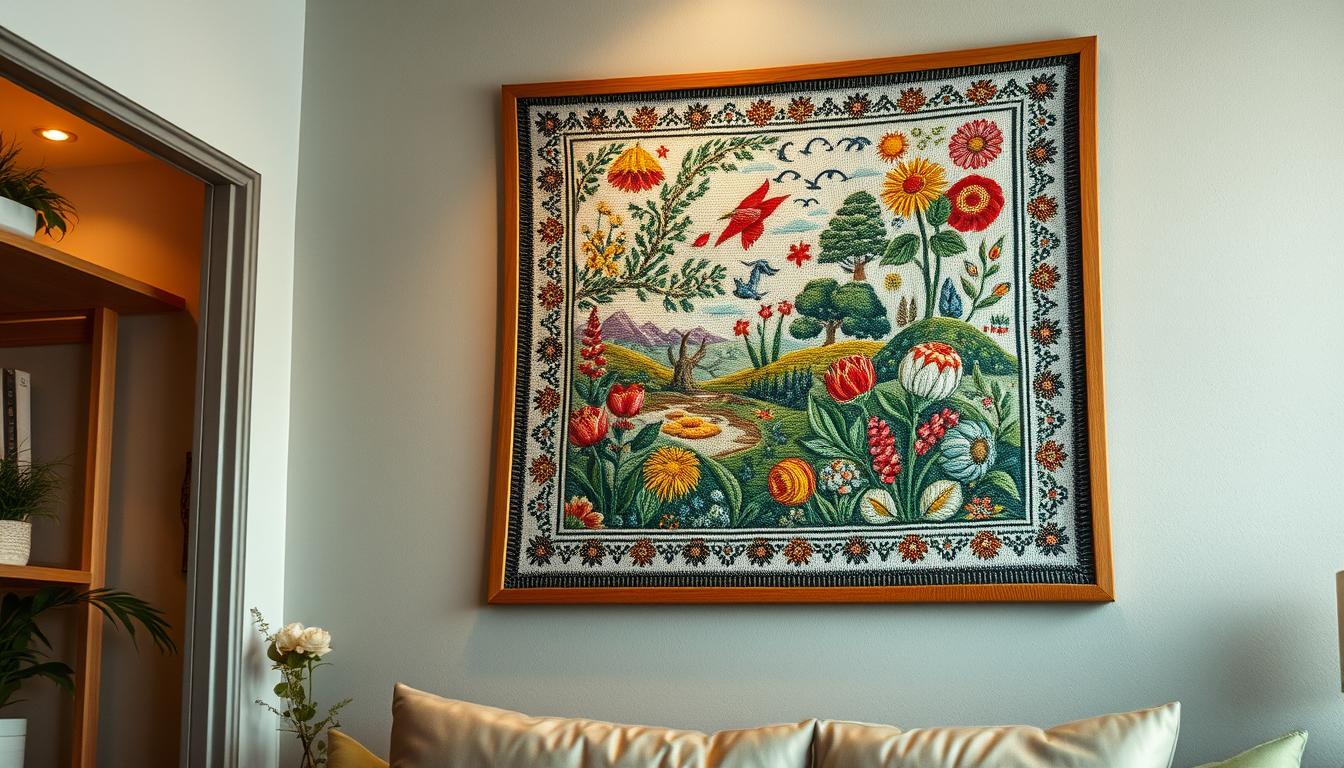
You’ll learn what people mean by a cross stitch tapestry and when that phrase fits your first project. In counted work, the familiar X-shaped cross builds neat rows on aida fabric. Many designs add a straight backstitch for outlines.
Beginners often start on 14-count aida with Six-Strand Embroidery Floss and a blunt needle that won’t split threads. Established brands sell all-in-one kits and downloadable patterns so you can begin without guessing supplies.
This intro helps you pick the right fabric count, read a chart, and choose small projects that match your time and budget. It also explains when to buy a curated kit versus sourcing supplies separately.
Start small, expect steady progress, and match pattern size to your schedule so your first project ends as a finished piece—not an abandoned one.
Key Takeaways
- Cross stitch uses X-shaped crosses on aida and often a backstitch for detail.
- Begin on 14-count aida with Six-Strand floss and a blunt needle.
- Small kits speed learning; standalone patterns let you customize supplies.
- Fabric count controls final size; pick designs that fit your time.
- Set realistic budgets and timelines to avoid unfinished work.
What “Cross Stitch Tapestry” Really Means in Your Stitching Projects
Many crafters use the phrase “tapestry” loosely, but understanding the materials clarifies what your project will actually look like.
Cross stitch vs. tapestry often comes down to fabric and stitch type. Counted cross stitch uses aida fabric and X-shaped crosses worked on a visible grid. Traditional tapestry or needlepoint usually uses a sturdier canvas and different stitches that cover the surface more densely.
Materials that set the look
Aida fabric is purpose-made with clear holes; its “count” (like 14-count) tells you how many squares per inch. Higher counts give finer detail.
Six-Strand Embroidery Floss is a stranded thread you split to control coverage. Use fewer strands on high-count fabric and more for full coverage on lower counts.
Choose a blunt needle with an elongated eye so it slips through holes without splitting the weave. After the main crosses, add a backstitch to sharpen edges and letters.
- Result: the right fabric, floss strands, and needle size produce neater crosses, reliable tension, and less rework.
- Learn: use tutorials and brand videos to master starting, chart reading, and clean backstitching.
CROSS STITCH Use Cases: When to Choose It for Your Next Project
Start with manageable designs that build confidence and teach tension control fast.
Beginner-Friendly Starts
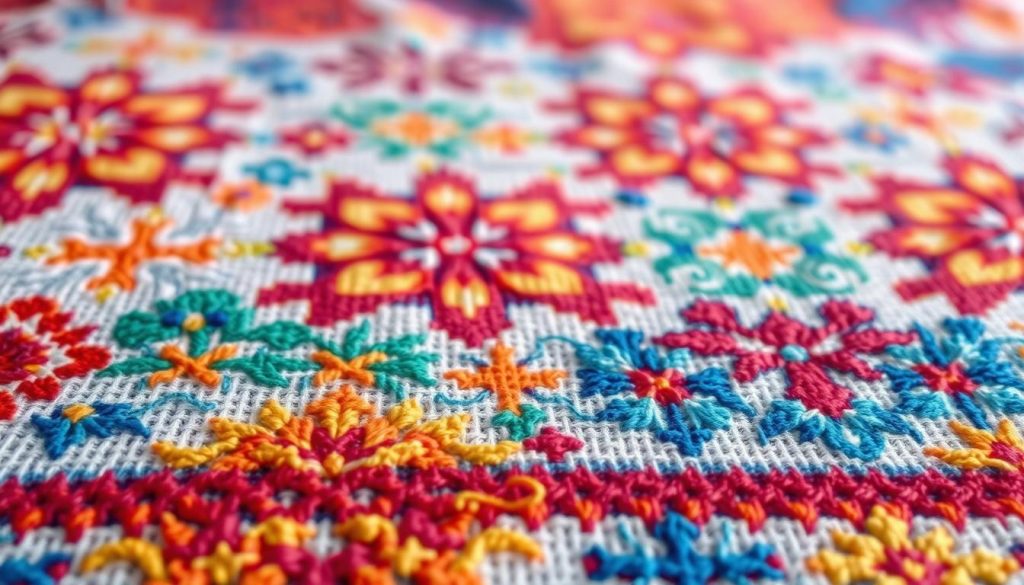
Pick 14-count aida for your first cross stitch project. The grid is easy to see and placement is straightforward. Small patterns like ornaments or mini samplers finish quickly and reward you in a weekend.
Leveling Up
When you’re ready, move to higher counts for finer detail. Add backstitch outlines to make letters and tiny motifs pop. Try a slightly larger hoop to keep fabric tension even without stretching the weave.
Seasonal and Trending Themes
Holiday collections — such as Just CrossStitch Christmas and yearly Schooler Santa designs — keep motivation high. Nutcracker and Halloween samplers make great gifts and quick sells during seasonal promotions.
| Use Case | Ideal Fabric | Why It Works | Good For |
|---|---|---|---|
| Beginner | 14-count aida | Visible grid, easy counting | Ornaments, mini samplers |
| Intermediate | 16–18 count | More detail, finer finishes | Personal gifts, framed pieces |
| Advanced | 22+ count or linen | Heirloom detail, fractional work | Heirlooms, detailed samplers |
Tip: Try multi-part stitch-a-longs to break large designs into stages. Smaller projects let you experiment with metallics or blended floss without pressure.
How to Buy the Right Kits, Patterns, and Supplies
Finding the right kit or pattern means matching the contents to your skill and schedule. Start by deciding whether you want a single-box solution or the freedom to pick fabric and thread yourself.
Cross Stitch Kits vs. Stitch Kits: What’s Included and Who They Suit
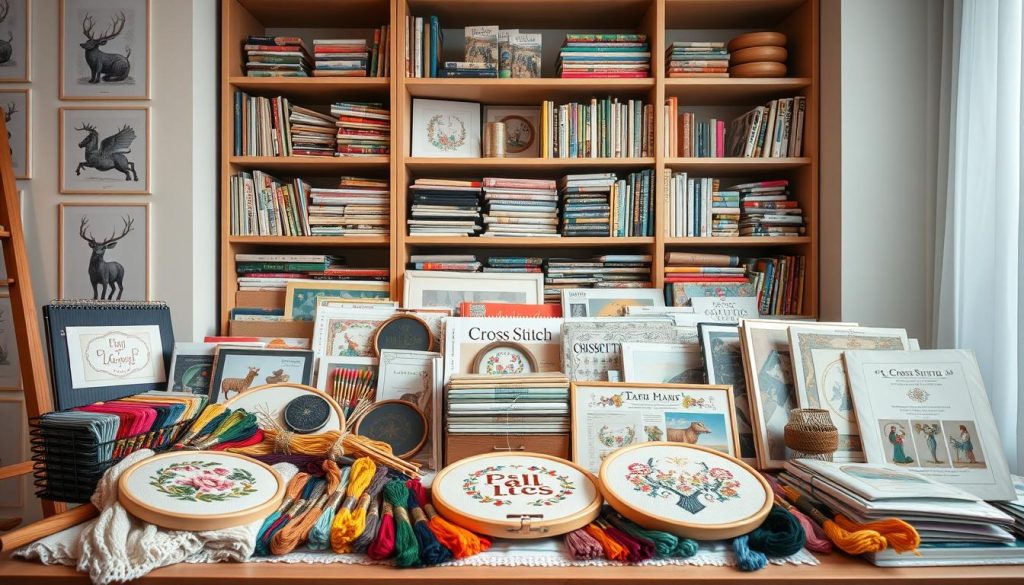
Cross stitch kits usually include a printed chart, pre-cut fabric, pre-sorted floss, and a needle. They are ideal when you want everything ready to go.
Stitch kits can be broader—sometimes stamped fabric or extra embellishments like beads and a needle minder. Choose these if you want extras without sourcing parts.
Choosing Patterns: Downloadables, Stitch-a-longs, and Quick Designs
Downloadable patterns give instant access and let you pick fabric count and thread brand. Stitch-a-longs and weekend “Quick & Easy Pattern Sale” drops are great for trying new designers.
Use free repositories and the 1,000-pattern programs to practice before buying premium charts.
Fabric, Hoops, and Needles: Matching Count, Size, and Tension Control
Confirm the recommended fabric count and calculate finished size with margins. Pick a hoop that frames the active area without stretching the weave.
Select a needle that glides through holes and follow strand recommendations for thread so coverage is smooth, not bulky.
Shop Smart: Sales, Clearance Picks, and Building Your Floss Stash
Scan Kits on Sale, Patterns on Sale, and clearance items to stretch your budget. Weekend sales and clearance finds are perfect for stocking basics.
Tip: Buy extra floss shades when discounted to build a palette you rely on for future projects.
- Buy an all-in-one kit to gift or finish a project quickly.
- Choose downloadable patterns to customize fabric and thread choices.
- Watch weekend sales and clearance racks to grow your supplies economically.
Your Essential Toolkit and Pro Tips for a Smoother Stitching Experience
Put together a compact toolkit so every project starts with the right gear and fewer surprises. A small, well-chosen set saves time and helps your work look crisp from first cross to final finish.
Core Supplies Checklist: Floss, Fabric, Needle, Hoop, Scissors, and Marking Tools
Assemble a core kit: multiple shades of floss, properly sized fabric, a blunt-point needle, sturdy hoops, sharp embroidery scissors, and a washable marker. These items keep rows even and chart marks removable after washing.
- Use Six-Strand embroidery floss and sort colors before you start.
- Pick a needle with an elongated eye so thread slides smoothly.
- Choose a hoop that holds fabric taut without stretching it.
Learn as You Stitch: Step-by-Step Tutorials, Charts, and Video Guides
Follow beginner-friendly paths like “Cross Stitch How To: Start” and “How To Read A Chart.” Short video demos and diagrams build muscle memory so each stitch becomes more confident.
Creative Hacks: Household Tools That Stand In for Specialty Supplies
Try binder clips to secure extra fabric, a magnetic baking sheet for charts, or washi tape as a temporary edge. These simple swaps cut costs and still protect your project.
“Pre-sort floss and batch colors to speed progress and reduce tugging.”
Finish strong: keep good lighting, trim thread tails neatly under existing crosses, then wash, block, and press from the back with a cloth so your finished piece looks polished.
Conclusion
Make your next piece intentional—pick an all-in-one kit or a custom pattern and set a finish date.
You’re ready to use “cross stitch” accurately, match materials to your style, and start a small project that fits your time and budget. Choose between cross stitch kits for a ready box or stitch kits and individual patterns when you want control.
Time purchases around kits on sale and clearance to save, then build a simple palette of neutrals and seasonal colors you’ll reuse. Lean on short tutorials and clean finishing steps so every stitch looks neater each time.
Plan one quick sampler or ornament today: grab a beginner kit on sale, download a chart, or join a stitch-a-long to keep steady progress.
 English