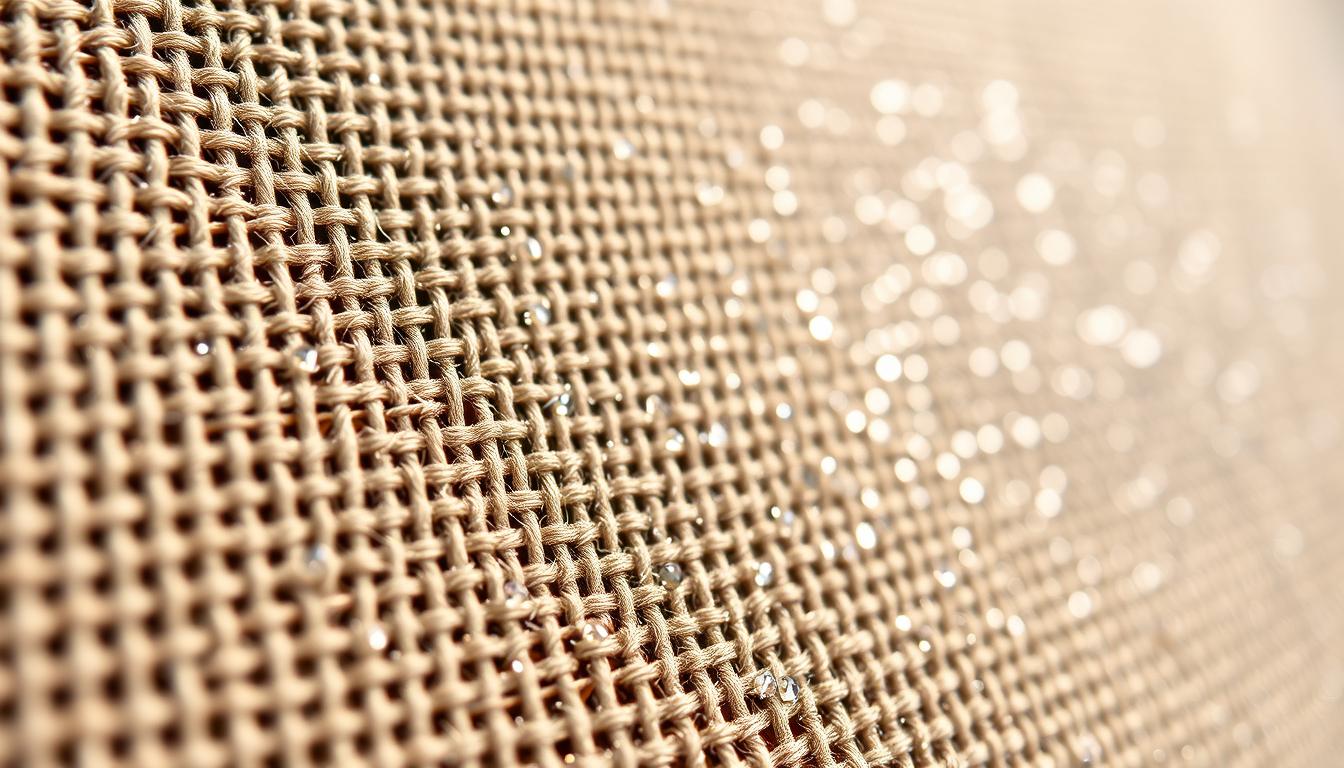
You can turn a beloved counted-thread embroidery pattern into a crisp diamond painting without losing the design’s detail. This guide shows how grids on Aida or evenweave fabric map to a drill-by-drill plan so you know the size and resolution before you start.
Start by noting the pattern’s count and finished size. Aida provides a clear grid; 14-count is common for beginners and counts like 28 over two threads equal 14 over one. Cotton floss brands such as DMC and Anchor set color references you can match to resin drills.
You will learn practical ways to handle fractional stitches, backstitch outlines, and color translation. The workflow covers mapping, testing, and sealing so the canvas keeps the same visual impact as the original needlework.
Key Takeaways
- Learn how aida and fabric counts convert to drill grids and final size.
- Match thread colors from DMC or Anchor to available diamond drill shades.
- Plan for fractional stitches and outlines to preserve edge detail.
- Map chart symbols and stitching density to drills, rows, and columns.
- Test scale and resolution early to keep small letters and fine lines legible.
What converting a cross stitch pattern to diamond painting really means
Conversion is a grid-level translation: you change counted embroidery marks into fixed drills so the image reads the same at a new scale.
The basic idea is simple. Each square on a counted chart becomes one drill, so composition stays intact. Aida and evenweave counts tell you how many stitches fit per inch, and that count maps to drill density.
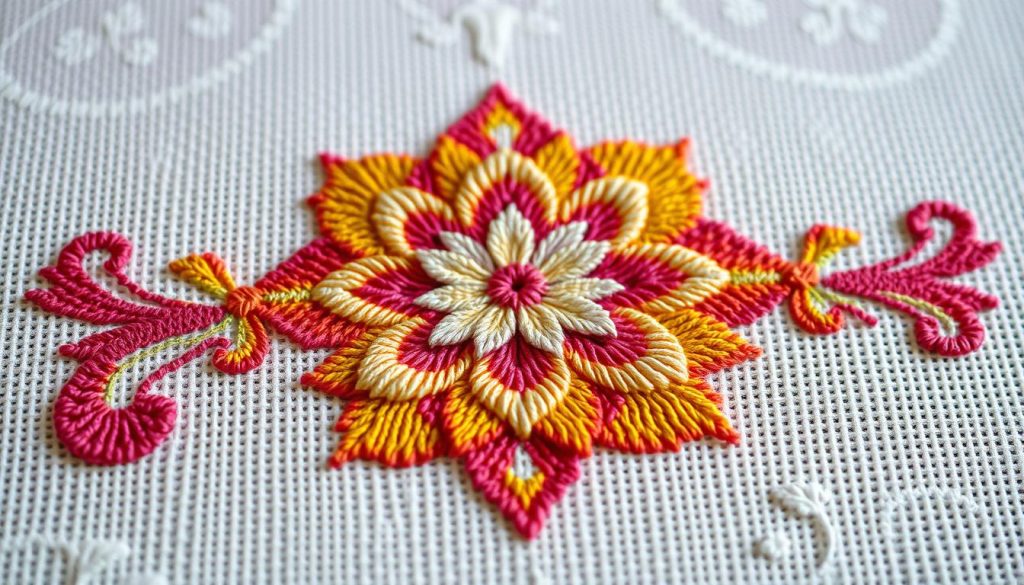
From stitches to drills: how gridded patterns translate
Treat each stitch like a pixel. Fractional stitches and backstitch outlines need decisions: merge, nudge, or redraw edges so lines remain sharp without partial drills.
When to convert versus buying a ready-made chart
Convert when you own a unique heirloom chart, want creative control, or enjoy editing symbols and colors.
- Compare count-driven density to fixed drill size to keep details and readable letters.
- Match DMC or Anchor thread references to drill shade sets; plan a color crosswalk to avoid muddy gradients.
- Factor color number, trays, and your budget—kits save time; conversion gives control.
“If you like tweaking charts and remapping colors, conversion is rewarding; if you want plug-and-play, choose a commercial kit.”
Prepare your CROSS STITCH assets and diamond painting supplies
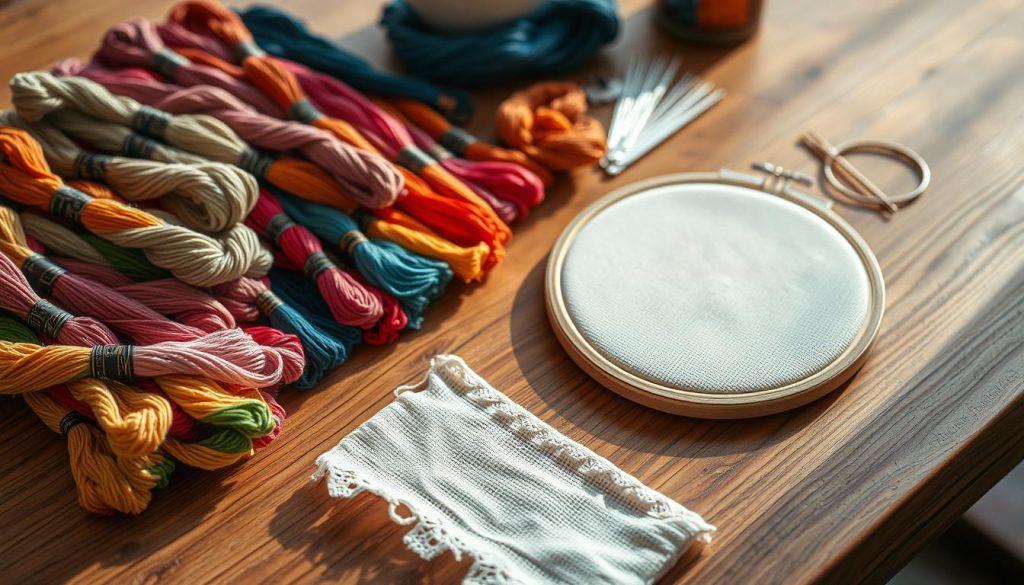
Gather your pattern pages and color legend before you touch any drills or glue. Organize chart pages, symbol keys, and thread numbers so your conversion grid mirrors the original plan. Print or save a clear PDF and mark symbols with highlighters for quick reference.
Know your fabric count
Fabric counts run from about 11 to 40 threads per inch on evenweave, linen, and aida. A 28-count evenweave stitched 2 over 2 equals 14-count aida coverage.
Match thread to drill colors
Collect DMC or Anchor floss lists and build an embroidery floss to drill-color sheet. Note where exact shades are missing and plan close substitutions; flag those colors for later review.
Toolkit essentials
You won’t use a hoop on a sticky canvas, but keep blunt needles, scissors, labeled bags, trays, tweezers, wax, a multi-placer, and a light pad handy. Also retain the original chart in paper or PDF so you can follow symbols precisely.
- Quick tip: Use 14-count aida as a conversion benchmark if your pattern targets beginners.
- Make a legend sheet linking each symbol to the original thread number and matched drill code.
“Organize first; convert confidently.”
Step-by-step: convert your cross stitch chart into a diamond painting layout
Begin by inspecting the chart’s symbols and blocks to see how each square will translate to a drill. Mark large color areas and note any small motifs or fractional sections that need special attention.
Read the chart like a pro: symbols, blocks, and counted-thread grids
Confirm each symbol in the legend and make a master key. Track the number for every color so you can estimate drill quantities before you order.
Map count to canvas: translating stitches per inch to drill size and overall dimensions
Use the fabric count to forecast final size. For example, treat 14-count aida as 14 drills per inch to preserve detail and pick a canvas that matches your resolution needs.
Build a color key: from embroidery floss references to diamond painting color sets
Align thread numbers (DMC or brand) to available drill colors. Where an exact match is missing, choose the closest hue and note substitutions on your worksheet.
Handle fractional stitches, backstitch, and outlines
Redraw fine edges so outlines become full squares. Use contrasting adjacent drills to simulate backstitch lines without losing definition.
Scale, print, or export your chart
Export sections to paper or PDF with high-contrast symbols. Number pages and keep a master symbol map so multi-page patterns in a book stay aligned.
Test a small section first
Proof a corner with mixed colors and outline work. Fix any color or scale issues now to avoid costly rework later.
| Step | Input | Action | Output |
|---|---|---|---|
| Read legend | chart & pattern | Confirm symbols and thread numbers | Master key |
| Map count | fabric count (e.g., 14 aida) | Calculate drills per inch | Canvas size forecast |
| Color key | embroidery floss numbers | Match to drill sets | Drill order list |
| Proof | small motif | Place drills and check outlines | Final adjustments |
“Test early: a small proof saves hours and preserves the original design’s intent.”
Quality checks, troubleshooting, and pro tips for flawless results
Give your newly mapped layout a focused check to catch density and color problems early. Do a small proof before you commit. This saves time and preserves detail.
Avoid muddy details:
Adjust pattern density, count, and size
If a pattern relies on high-count shading, increase canvas size so drills act like more stitches per inch. Treat drills as your new stitch unit and scale up if the original used 18–20 count fabric.
Simulate backstitch outlines by placing darker adjacent drills and widening key borders for eyes, lettering, or filigree. Check alignment often to avoid jagged diagonals.
Keep colors consistent:
Manage dye lots, numbers, and substitutions
Track DMC and Anchor thread numbers and note drill lot codes. Test small swatches to catch hue shifts before you place hundreds of matching drills.
- Keep spare drills for visible shades and verify replacements match current lots.
- Label trays and record which stitch used translations worked best in your project book.
- Finish with an appropriate sealing and framing plan to protect the piece.
“A short proof run saves hours and preserves the design’s intent.”
| Check | Why it matters | Action |
|---|---|---|
| Density | Preserves small shapes | Increase canvas size or scale pattern up |
| Color match | Prevents banding | Test swatches; track dye lots and thread numbers |
| Alignment | Keeps lines smooth | Work in blocks; straighten rows as you go |
| Backstitch emulation | Maintains edge definition | Use darker adjacent drills or widen borders |
Conclusion
Before you start the full canvas, finalize scale, confirm your color crosswalk, and run a short proof.
Use counted-chart fundamentals—Aida grids, DMC and Anchor floss references, and fabric counts—as your baseline. This keeps the pattern’s composition and color intent intact when you treat drills like stitches.
Keep a tidy legend and labeled trays, test a corner, and note any changes in your project book. That checklist helps you verify alignment, preserve outlines and fractional areas, and avoid costly rework.
With these steps you can choose to convert a favorite cross stitch chart or pick a ready-made option with confidence. Now gather your tools—needle, glue applicator, trays—and make something that honors both embroidery and diamond craft.
 English