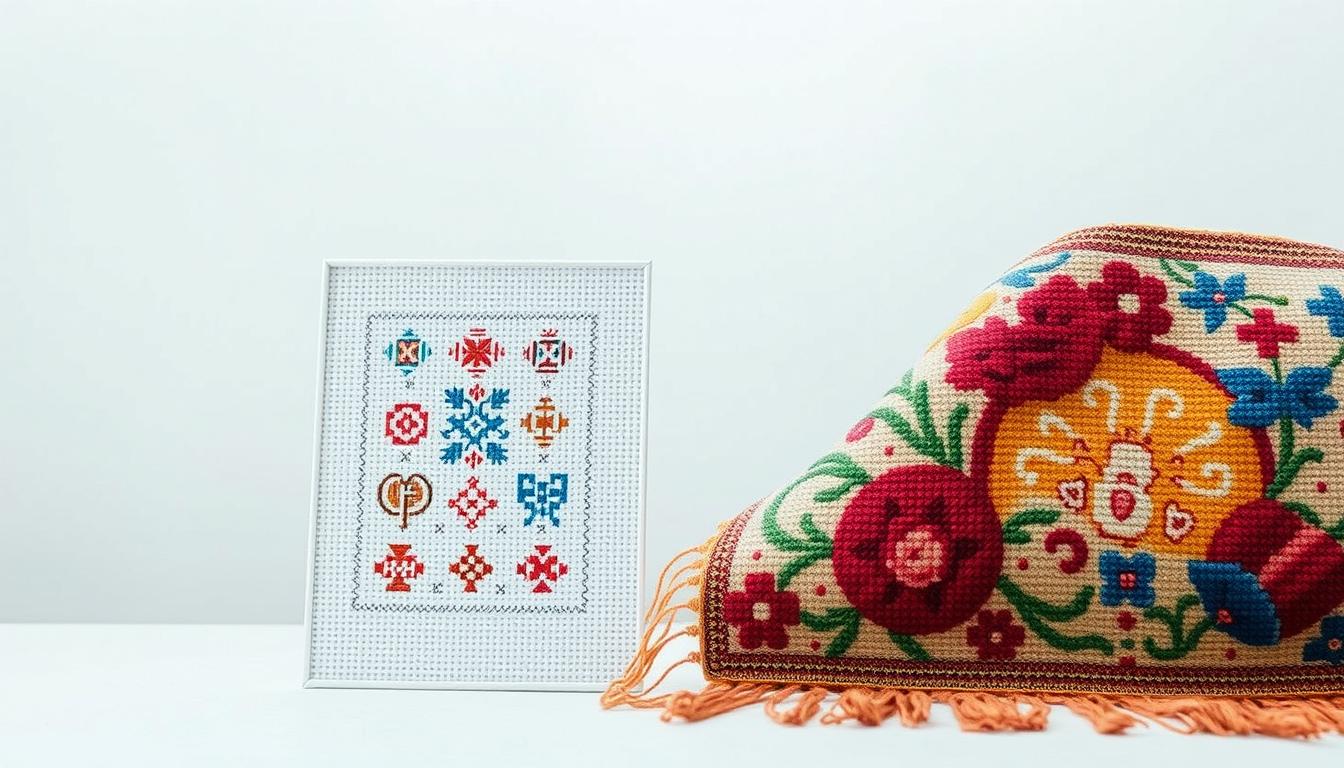
You want a finish that fits your time, budget, and skill. This intro helps you compare two popular needle arts so you can choose the one that appeals to your eye and your shelf when you shop.
Cross stitch produces a crisp, pixel-like surface on counted fabric such as Aida. You’ll see how 14-count Aida helps beginners make neat, even work. Use Six-Strand Embroidery Floss, a blunt needle, and an embroidery hoop for best results.
Tapestry (needlepoint) gives dense, woven coverage and a different texture. This piece outlines how each technique affects detail, pattern choice, and finishing. It also points you to kits, supplies, and sales so you can buy with confidence.
Practical tips and trusted resources, like DMC tutorials and active community groups, make it easier to start. By the end you’ll know which pattern types and notions to add to your cart.
Key Takeaways
- Cross stitch on Aida is crisp and beginner-friendly; 14-count is a common starting point.
- Tapestry offers fuller coverage and a woven look; choose by finish preference.
- Shop category pages help you find kits, patterns, and supplies on sale faster.
- DMC tutorials and online groups provide clear how-tos for reading charts and backstitching.
- Look for kits with clear charts and generous thread lengths for the best value.
How Cross Stitch and Tapestry Compare in Look, Texture, and Detail
Look at how each technique builds its surface: one creates tidy, grid-based motifs while the other lays color like a small woven tapestry. That basic difference shapes tools, speed, and the final use of your work.
Finish and Texture
Cross stitch reads like tiny pixels and gives sharp edges, especially with backstitch outlining. It works well for photo-style designs and typography. Tapestry results in a thicker, woven surface that feels sculpted and durable.
Materials and Method
You use Aida fabric, Six-Strand embroidery floss, a blunt needle, and a hoop for neat tension. The “count” controls stitch size; 14-count is a common beginner choice. Tapestry uses canvas and yarn for full-coverage areas.
When Each Looks Best
Choose the grid method for graphic patterns, fine detail, and projects that benefit from backstitch definition. Pick tapestry for bold color blocks, home décor, and textured panels. Look for kits and patterns on sale to try both, and consult DMC tutorials if you want to learn cross stitch.
CROSS STITCH Essentials: Fabric Count, Floss, Needles, and Hoops
Picking the right fabric count and toolkit makes your needlework easier and your finished piece neater. Start with a clear plan: choose a fabric count that matches the level of detail your pattern requires and the time you want to spend.
Understanding Aida “count” for size and detail
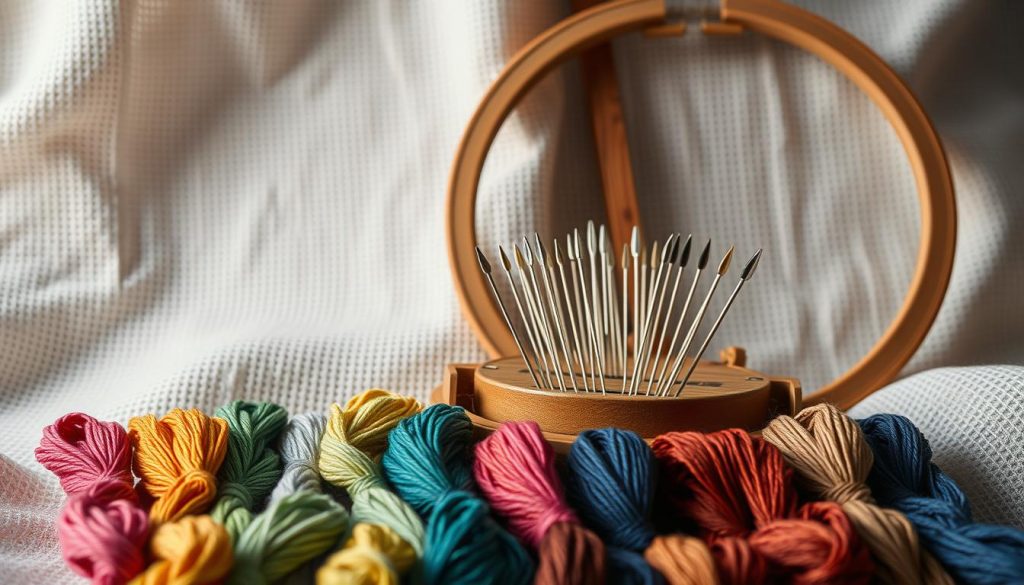
The Aida count equals stitches per inch; a higher count gives smaller stitches and finer detail. A 14-count Aida is a reliable choice for a beginner because it balances visibility and neat definition.
Move to 16- or 18-count when you want tighter detail or a smaller finished size. Mark the fabric center with a washable marker so your design sits correctly from the start.
Your toolkit: must-have supplies
Assemble a compact kit with Six-Strand embroidery floss, a blunt needle with an elongated eye, a hoop sized to your motif, and sharp embroidery scissors.
- Separate strands to match the thread thickness the pattern lists.
- Use needles that slide through Aida holes to keep the grid intact.
- Keep a soluble marker and your pattern key handy to reduce pauses mid-project.
Tip: Follow step-by-step DMC tutorials on starting, chart reading, and backstitch to build confidence and get clean outlines on faces and letters.
Shop Cross Stitch Kits and Patterns Built for Every Skill Level
Find curated kits and patterns that make starting a new project simple and rewarding.
Beginner-friendly kits bundle Aida, floss, a blunt needle, a hoop, and a clear chart. That lets you get started the day your order arrives.
Beginner-friendly stitch kits with clear patterns and all supplies included
Look for kits that list included threads and show stitch guides. Real customers report generous thread amounts and step-by-step directions that ease learning.
Explore a growing repository of downloadable patterns and monthly tips
DMC’s 1,000-pattern program offers free PDFs and a monthly newsletter with tips. Use those patterns to expand your queue without breaking the bank.
Stitch‑along kits and supportive communities to keep you motivated
Try stitch‑along kits that release sections over time. Join brand Facebook groups to share progress and get finishing tips from other makers.
| Kit Type | Included | Skill | Price Range |
|---|---|---|---|
| Quick Mini | Aida, floss, needle, chart | Beginner | $12–$20 |
| Sampler | Fabric, multiple threads, hoop, instructions | Beginner–Intermediate | $25–$45 |
| Statement Piece | Large fabric, full floss set, advanced chart | Intermediate–Advanced | $50–$120 |
Tip: When you shop, compare thread lists and look for sale bundles that include extra floss. That saves money and keeps your projects moving.
Get Started Today: Learn Cross, Read a Chart, and Add Backstitch for Definition
Start a small project today to learn basic techniques, read a chart, and add clean outlines for instant polish.
Quick-start learning
Learn one basic stitch and practice it until your tension stays even. Use DMC tutorials for step-by-step diagrams and short videos that show starting knots and the proper way to form each cross stitch.
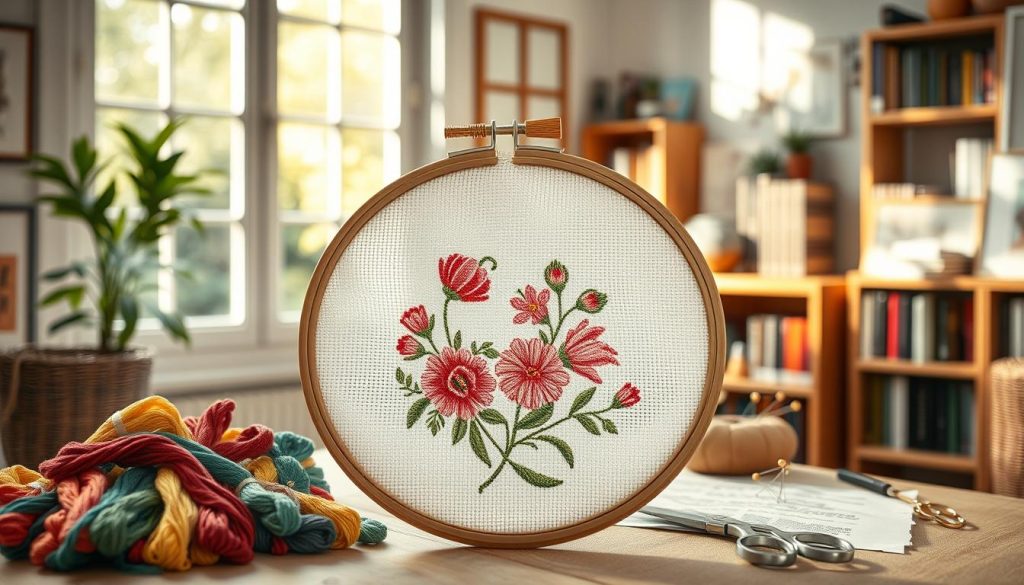
Chart reading, pattern placement, and counting tips
Match symbols to floss colors and count squares from the chart center. Start at the fabric center so your motif sits correctly on the chosen fabric size.
Work in small blocks and use chart landmarks to spot counting mistakes early. That saves time and prevents long unpicking sessions.
Fabric, hoop fit, and thread management
Pick 14-count Aida for your first projects to balance visibility and finished size. Choose a hoop that leaves an inch or two of margin and keep even tension so every stitch lays flat.
Manage thread by separating strands to match pattern instructions and parking colors or using multiple threaded needles to change colors faster without tangles.
- Needle glide: use a blunt needle with an elongated eye so it passes through Aida holes without splitting fibers.
- Backstitch last: add outlining once filled areas are complete to define eyes, text, and fine details.
- Tidy finish: secure tails under nearby stitches, wash gently, and flat dry before framing or hoop-mounting.
Shop by What Matters: Count, Threads, Pattern Type, and Notions
Use focused filters to pick the right cloth, threads, and notions without sifting through hundreds of listings.
Cloth count and fabric type
Choose cloth by count to control final size and detail. A 14-count Aida gives clear, readable crosses and suits most beginners.
Higher counts shrink stitches and increase detail. Match the count listed in a pattern to avoid resizing or recharting.
Threads and embroidery floss
Select thread by fiber, sheen, and bundle size. DMC Six-Strand Embroidery Floss is a common choice for even coverage.
Tip: Buy curated color packs to keep a consistent palette and reduce mid-project color searches.
Patterns and formats
Filter patterns by Paper or PDF, designer style, and finished size so you only view options that fit your timeline and frame.
Check symbol keys, color lists, and whether backstitch is included to avoid surprises when you start.
Needles, hoops, and notions
Round out your cart with blunt needles, a hoop sized for your motif, sharp scissors, and a washable marker. Look for stock status and sale badges to save on essentials.
“Filter by count, format, and stock to shop smarter and catch sale pricing on larger kits.”
- Compare kits vs. à la carte: cross stitch kits simplify start-up; single patterns let you use existing supplies.
- Scan Coming Soon: pre-order seasonal patterns so you don’t miss limited releases.
- Watch stock and savings: Out of Stock and percent-off badges help time purchases during a sale.
| Filter | Why it matters | What to check |
|---|---|---|
| Cloth Count | Defines stitch size and detail | 14-count for beginners; list shows finished size |
| Pattern Format | Delivery and use preferences | Paper vs. PDF, symbol clarity, color key |
| Notion Type | Starter tools and extras | Needle type, hoop size, marker, scissors |
Conclusion
Conclusion
Deciding which needle art suits your space comes down to the finish you want and the time you can commit.
You can pick a crisp cross stitch look on Aida with a blunt needle, Six-Strand embroidery floss, and 14-count for easy counting.
Or choose a denser woven finish for bold texture and home décor. Either way, free patterns, tutorials, and active Facebook groups help you learn and improve fast.
Tip: Grab a beginner kit on sale to save money, or filter patterns and notions by count and stock to build a custom cart that fits your goals.
Start small, enjoy the craft, and finish something you’re proud to display.
 English