Want to pick the right needlework for your next project? This guide helps you choose between tapestry and cross stitch so your time, budget, and skill match the result.
You’ll learn which method gives fine detail and which one offers bold texture. The intro previews what comes in kits and what solo patterns include. That way you avoid checkout confusion and buy only what you need.
We cover tools, fabrics, and thread choices so you can set up a workspace that prevents mistakes and keeps you stitching longer. You’ll also get shopping tips for common sale windows and seasonal drops.
By the end, you’ll know how to judge pattern difficulty, match fabric count to comfort level, and pick a first design that becomes framed art or a handmade gift. Start smart and enjoy the craft.
Key Takeaways
- Learn how each technique fits your time and skill before buying kits.
- Know what tools and thread work best for clean stitches and coverage.
- Spot pattern difficulty to match fabric count and strand usage.
- Time purchases around common sale periods to save on supplies.
- Choose small projects first for quick wins, then try heirloom pieces.
CROSS STITCH vs Tapestry: What You Need to Know
A project’s look and feel depend most on the stitch type you choose and the surface you stitch on.
Stitch structure and technique
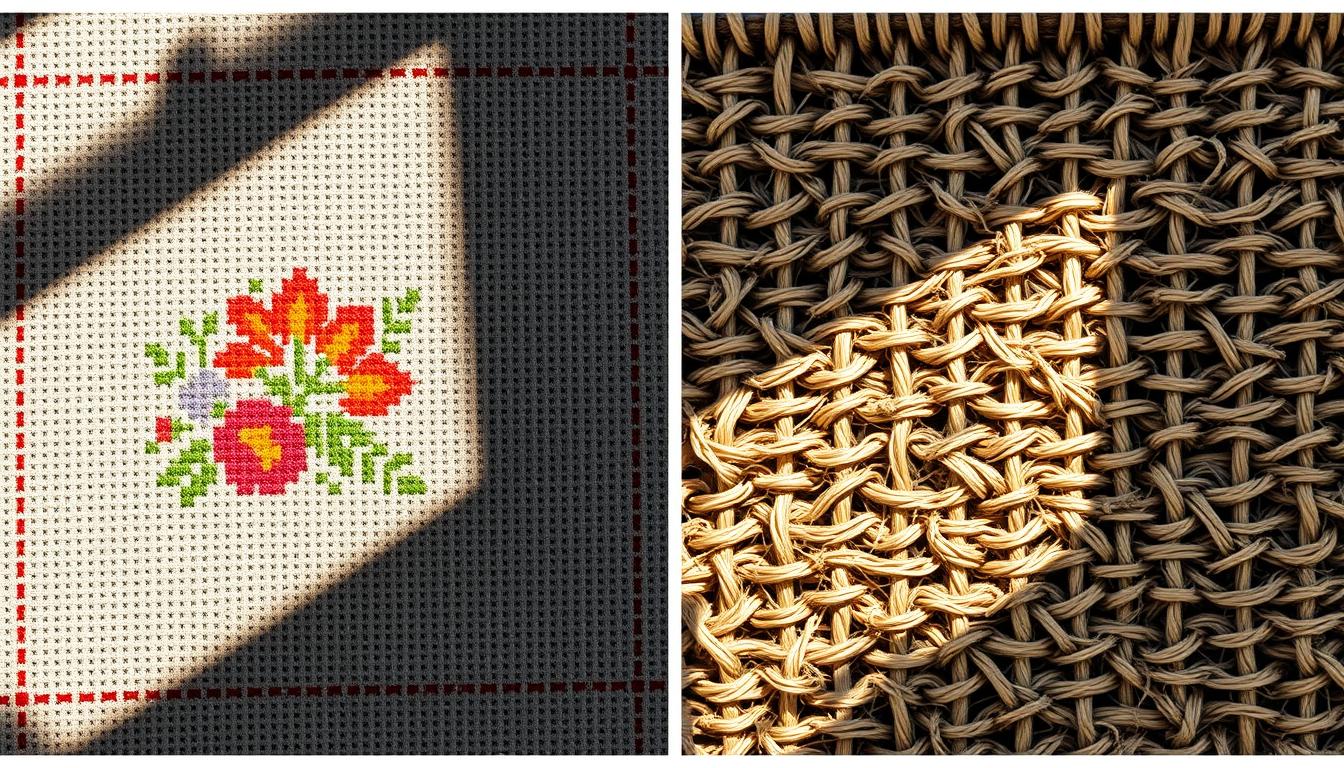
Cross stitch builds X-shaped crosses on a counted grid, giving crisp, pixel-like detail. You’ll sometimes add a straight backstitch to outline and sharpen edges.
Fabric types explained
Cross work is usually done on aida fabric, which has even holes for easy counting. Tapestry uses a stiffer canvas that suits diagonal tent stitches and heavy coverage.
Thread choices and finish
In cross work you separate strands from Six-Strand embroidery floss to control coverage and detail. Tapestry typically uses wool or thicker yarn for a textured finish.
Needles, tension, and final look
Use a blunt needle that slips through aida holes for gentle stitching. Canvas-friendly needles pair with heavier yarn and tighter tension. Check the pattern for recommended count so your project matches the intended scale and feel.
- Tip: Beginners often start on 14-count aida for balanced detail and easy placement.
Materials and Tools Breakdown for CROSS STITCH Success
Gathering the right materials makes the difference between a smooth start and a frustrating project.
Fabric & count
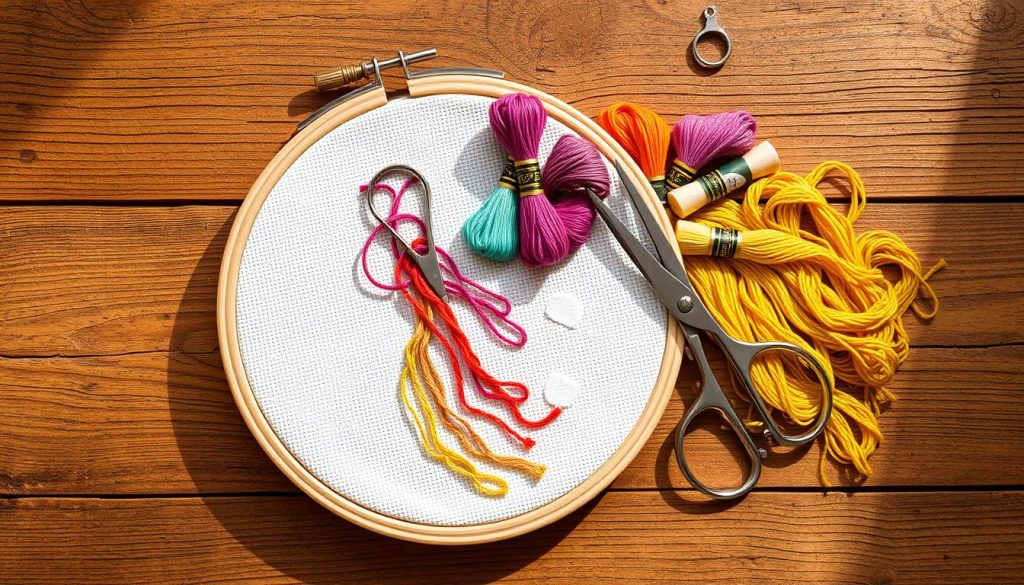
Start on 14-count aida. This fabric has clear holes so you place each cross easily.
Higher count gives smaller crosses and more detail, but it needs better light and patience.
Floss and threads
Use Six-Strand Embroidery Floss so you can pull 1–3 strands for coverage or detail.
Embroidery floss is flexible: change strands to match the pattern without altering the chart.
Needles, hoops, and scissors
Choose a blunt needle with an elongated eye to protect the fabric and ease threading.
Use a hoop to keep tension even. Keep sharp embroidery scissors close to trim tails cleanly.
Reading charts and outlining
Read symbols and color keys before you start. Mark progress with a DMC soluble marker or magic paper.
Add a backstitch at the end for crisp outlines and better definition.
Starter checklist
- Basic kit: 14-count aida fabric, chosen pattern, and a small organizer.
- Threads & tools: Six-strand floss, blunt needle, hoop, sharp scissors.
- Extras: DMC tutorials, soluble marker or magic paper, and a few spare threads.
How to Choose Kits, Patterns, and Supplies: From First Project to Gift-Worthy Art
A well-chosen kit lets you open the box and start stitching with no guesswork.
Cross stitch kits vs stitch kits
Cross stitch kits usually include a pattern, cut fabric, floss, a blunt needle, and sometimes a hoop or finishing items. If you want a coordinated start, pick a kit so colors and fabric match the chart.
Stitch kits are curated for themes or SALs and often come with pre-sorted threads and clearer instructions. Beginners benefit from the step-by-step approach and the reduced setup time.
Patterns and downloads
Downloadable patterns are great for quick projects and seasonal decor. Look for weekend-friendly designs if you need a last-minute gift.
DMC’s free program and publisher issues (holiday collections, Nutcracker or Celtic themes) keep new cross stitch patterns flowing by email.
Budget-savvy shopping
Time purchases around Kits on Sale, Patterns on Sale, and Clearance Items to stretch your budget. Add a gift card when buying for others.
| Item | When to Buy | Why | Notes |
|---|---|---|---|
| Cross stitch kits | Seasonal sales | All-in-one convenience | Good for beginners |
| Patterns (downloads) | Year-round promos | Cheap and fast | Print and stitch immediately |
| Supplies (fabric, floss, needle) | Clearance or bulk | Save on staples | Customize later |
| Specialty items (beads, frames) | Off-season sales | Lower prices | Buy when on sale |
- Tip: Choose kits when you want guaranteed matches; buy supplies separately to upgrade or customize.
- Follow trusted brands and communities for support and high-quality threads and patterns.
Conclusion
Finish your planning by matching fabric count, thread weight, and pattern size to the time you have. For a smooth start, choose 14-count aida, use Six-Strand embroidery floss, and pick a small, clear chart. This helps you keep progress steady and turn a short project into framed art.
Keep your toolkit simple: a blunt needle, reliable hoops, and sharp scissors plus a few embroidery thread colors. Use beginner tutorials to learn reading charts and backstitching, then pick a manageable pattern so every stitch builds skill and joy in your craft.
 English