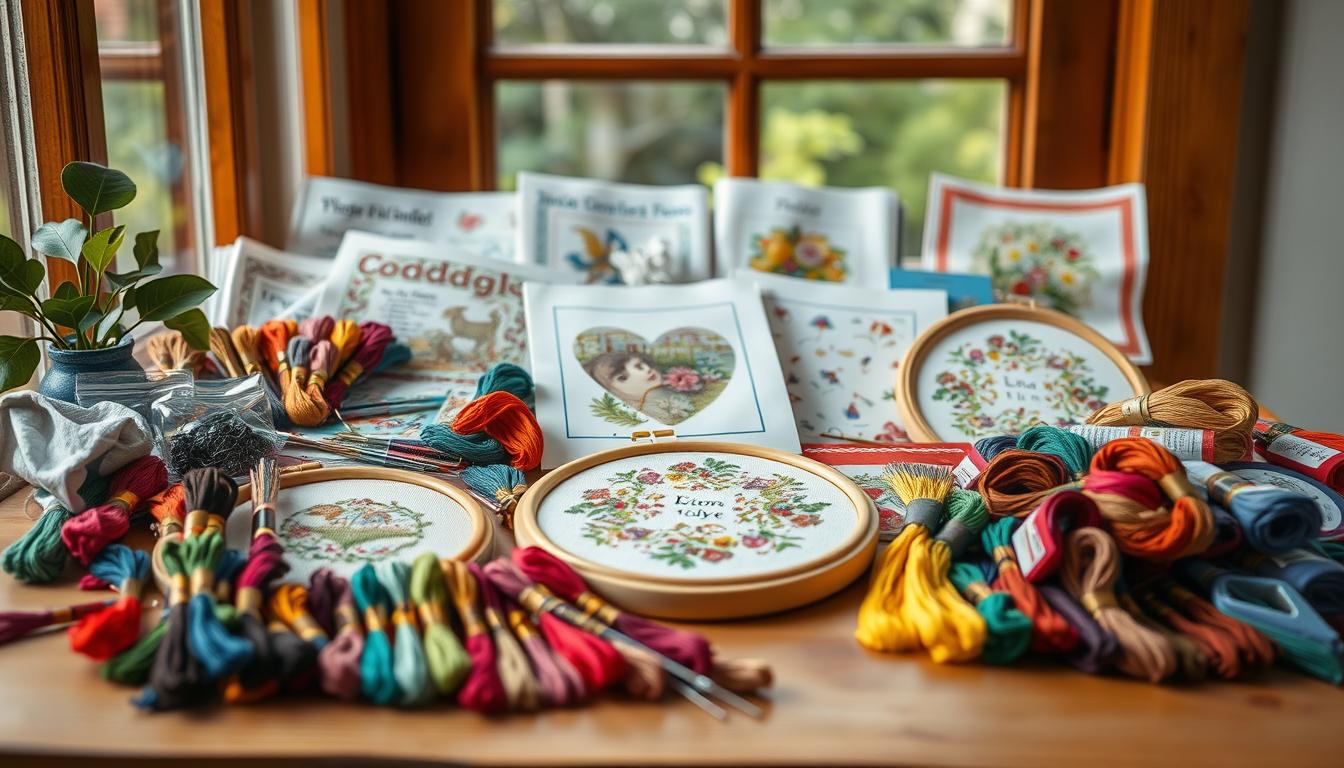
Choosing a new hobby can feel overwhelming, so this guide helps you compare two popular needle-and-bead arts side by side.
You’ll get a quick look at what makes each craft unique and what supplies you actually need. For example, cross stitch uses aida fabric and a simple X-shaped stitch. A 14-count aida is a friendly start for beginners.
Learn which kits bundle fabric, threads, hoops, needles, and scissors so you avoid buying extra items you don’t need. We’ll also point out free patterns and tutorials from DMC and why some stitch kits include more than enough floss.
By the end, you’ll understand how count affects detail, how sales can help you test a project affordably, and which craft matches your pace and display goals.
Key Takeaways
- You can start with a basic kit that bundles fabric, threads, needle, and hoops.
- 14-count aida is a good beginner fabric for neat results.
- DMC and trusted kit makers offer free patterns and step-by-step help.
- Compare supplies so you don’t overbuy when trying your first project.
- Watch sale cycles to pick up quality kits and patterns at lower cost.
Diamond Painting vs Cross Stitch: Side‑by‑Side to Help You Decide
Comparing tools, time, and finished style will help you choose the hobby that fits your pace and display plans.
What each craft involves:
Tools and workflow
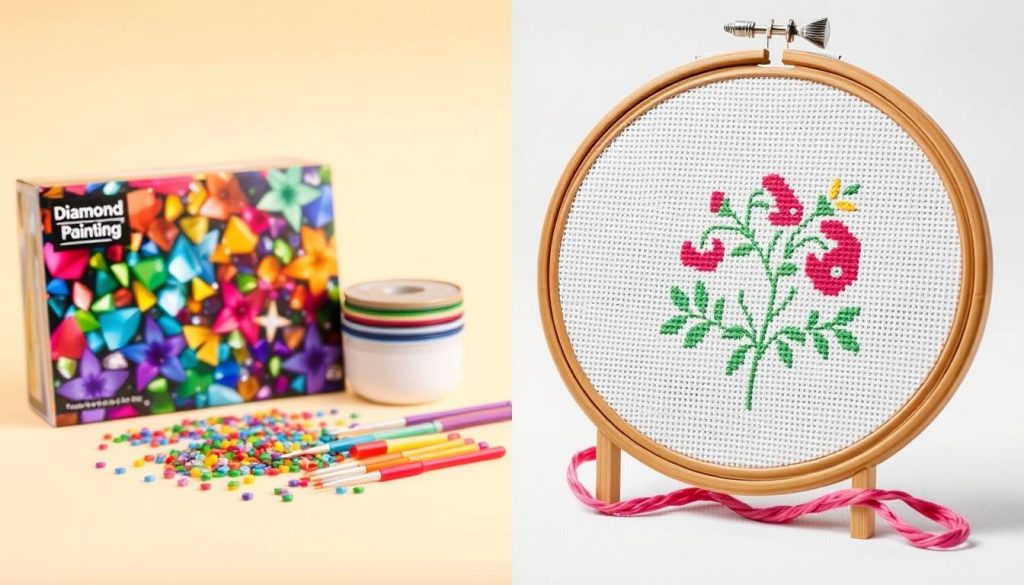
Diamond painting uses color-coded resin drills, a wax pen, and an adhesive canvas for a tray-and-drill workflow. It feels like paint-by-number with beads.
By contrast, cross stitch relies on aida fabric, embroidery floss, a blunt needle, and a hoop. A 14-count fabric is a friendly start for beginners.
Learning curve and relaxation
Diamond sets are plug-and-play and let you make visible progress fast. That makes them soothing for low-effort sessions.
Hand sewing rewards careful tension and pattern reading. DMC tutorials and downloadable patterns ease the learning path for new makers.
Finished look, display, and who it suits
The beaded finish pops with sparkle and works well as bold wall art. Soft embroidery offers more finishing variety — framed pieces, hoop decor, cards, or small gifts.
Tip: If you travel, a small hoop, needle, and a few bobbins of floss are lighter than multiple trays. Check retailer listings and sales to find affordable cross stitch kits or stitch kits that bundle everything you need for your first project.
Tools, Kits, and Costs: What You’ll Need for Each Craft
Knowing which basics to buy makes starting a project less intimidating and more fun. Gather a compact toolkit and you’ll save time and money while learning the ropes.
Your essential toolkit
Start with these items: Six-Strand Embroidery Floss, 14-count aida fabric (recommended by dmc), a blunt needle with an elongated eye, a 6–8 inch hoop, sharp embroidery scissors, and a washable marker.
These basics cover most small projects and make tension, color, and count easier to manage.
Kits, patterns, and budgeting
Retailers group supplies under fabric, floss & thread, needles, hoops, and general items. Buying cross stitch kits or stitch kits bundles fabric, threads, and notions for convenience.
| Item | Typical Cost | Why it matters |
|---|---|---|
| Starter kit | $10–$30 | Includes patterns and enough floss for small designs |
| Single skein floss | $0.50–$1.50 | Buy extra for larger pieces to match dye lots |
| Hoop, needle, scissors | $8–$20 | Durable tools speed up stitching and reduce mistakes |
Money-saving tips: watch for kits on sale or clearance, use gift cards when testing a hobby, and lean on dmc’s free patterns and tutorials to cut pattern costs.
CROSS STITCH Deep Dive: Fabric Counts, Threads, Patterns, and Kits
Understand how fabric count and thread choice shape your finish and learning curve.
Fabric and “count” explained
Count measures stitches per inch on aida fabric. A 14-count aida gives a visible, comfortable stitch size for beginners.
Higher counts like 16–18 produce finer detail and smaller crosses, which suit small, elegant art but slow progress.
Embroidery floss and thread options
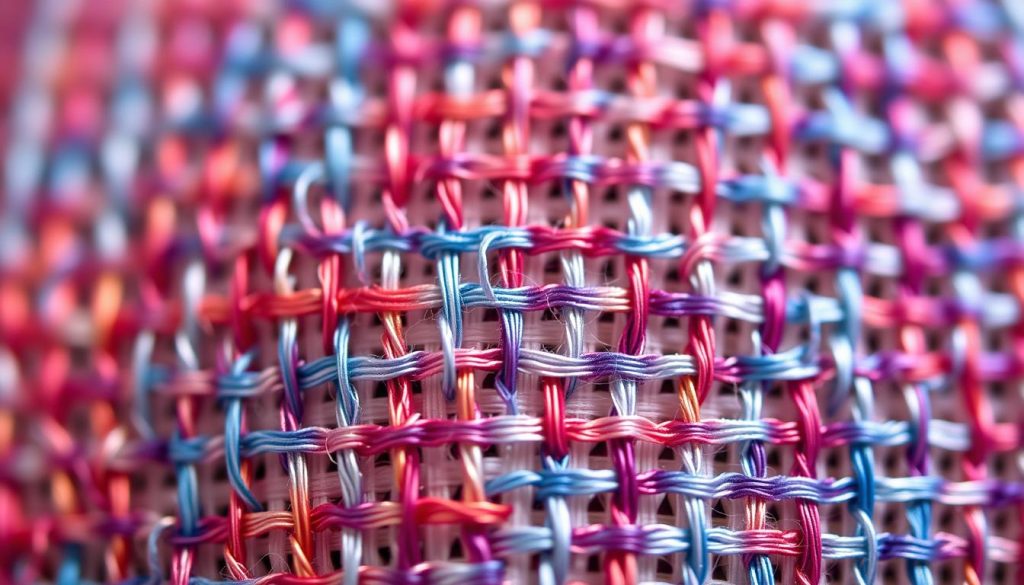
Use DMC Six-Strand embroidery floss and split it into 2–3 strands for typical coverage. Thread organization with bobbins and cards reduces tangles and speeds up work.
Patterns, trends, and quick wins
Download free cross stitch patterns from DMC’s 1000-pattern library to practice chart reading. Seasonal series like Just CrossStitch Christmas and Schooler Santa pop up in sale events and offer rapid finishes.
Kits and what’s included
Quality stitch kits usually include aida fabric, pre-sorted floss, needles, and sometimes hoops. Brands like Caterpillar Cross Stitch are praised for clear patterns and enough thread for the project.
Learn and level up
Start with step-by-step DMC Craft Studio guides for basics: how to start, read a chart, and backstitch. Videos and supportive Facebook groups help when you hit technique questions.
| Topic | Beginner Recommendation | Why it matters |
|---|---|---|
| Fabric count | 14-count aida | Visible stitches, easier to learn and fast to finish |
| Thread | DMC Six-Strand, use 2–3 strands | Good coverage, consistent color, easy to manage |
| Kits | Pre-sorted floss, aida, needles, hoop | Convenient starter package and reliable supplies |
| Patterns | DMC free downloads; seasonal themes | Practice charts, trendy decor, and quick projects for gifts |
- Tip: Keep a spare needle and small scissors in a pouch so your project is always ready.
- Plan ahead: Leave fabric margins for mounting and pick hoop sizes that match your desired frame.
Conclusion
Decide whether you prefer quick, sparkly finishes or textured, heirloom pieces.
For beginners, pick a 14-count aida fabric, a simple hoop, a blunt needle, and a small pattern so your first stitch is rewarding the same evening.
Time purchases for a sale and buy starter kits that bundle fabric and essentials. Use DMC’s tutorials and free patterns to learn crosses, chart reading, and backstitch without extra cost.
Start small for cards or a thoughtful gift, then try larger pieces to explore finer count fabrics and detailed embroidery. Join brand groups like Caterpillar Cross Stitch fans for quick help and motivation.
Make your first finish display-ready by planning margins for framing or choosing a hoop so your work looks polished on the wall or as a keepsake.
 English