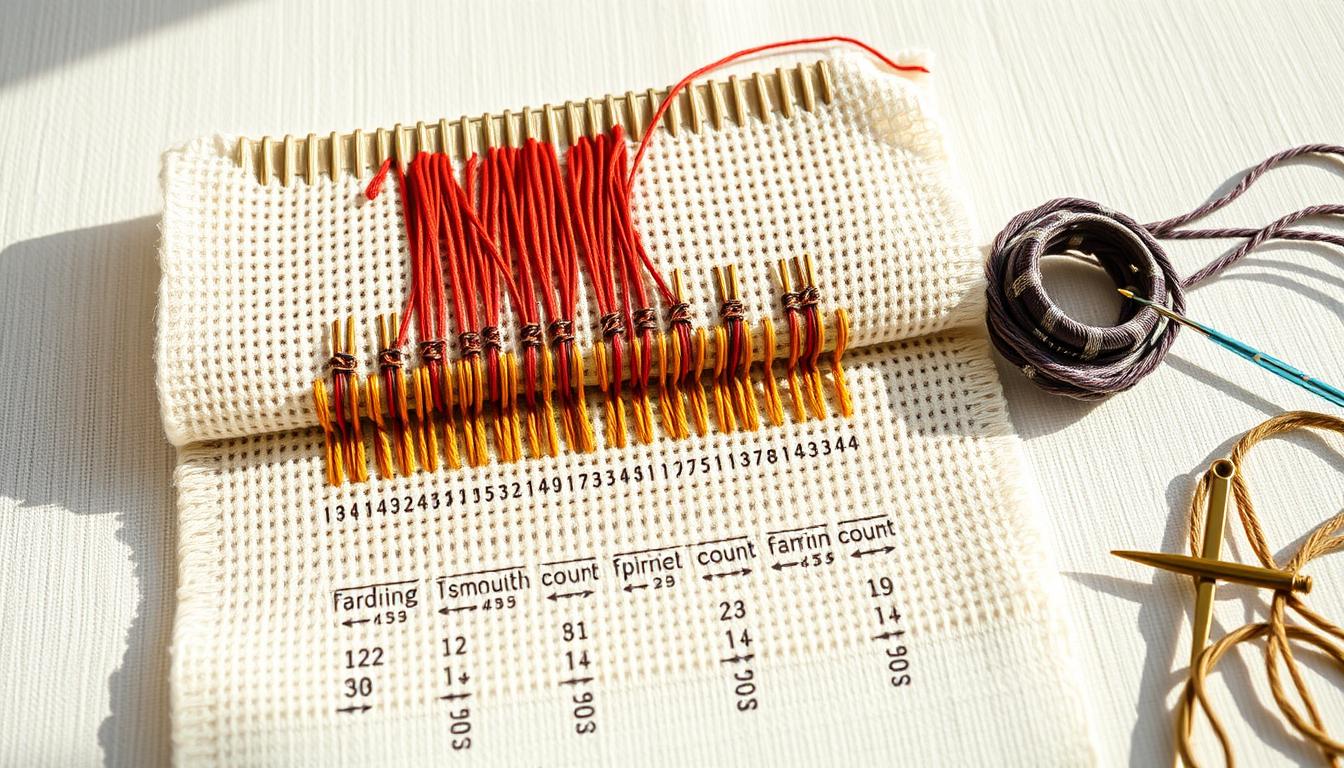
Choosing the right number of strands makes your work look tidy and professional. You’ll learn how fabric count affects stitch size and why 14-count Aida is ideal for beginners.
Most projects use Six-Strand Embroidery Floss and a blunt needle. Pair that with a hoop and sharp scissors for even tension and neater stitching.
Higher count fabric means smaller crosses and often fewer strands for good coverage. For 11–14 count, two to three strands give bold coverage. For 16–18 and finer, one to two strands keep detail crisp.
Brands and kits can speed setup. DMC offers patterns and tutorials, and Caterpillar Cross Stitch kits include ample thread and clear instructions plus a helpful community if you need tips.
By matching strand count to fabric, you avoid bulky work or gaps on the back of your piece. That helps your project look polished and makes framing or gifting easier.
Key Takeaways
- 14-count Aida is the best starting fabric for most beginners.
- Use two strands for 14-count for balanced coverage and tension.
- Switch to one or two strands on 16–18 count for finer detail.
- Keep a basic toolkit: floss, blunt needle, hoop, fabric, and scissors.
- Follow DMC tutorials or kit communities for setup tips and troubleshooting.
CROSS STITCH fundamentals: fabric counts, floss strands, and flawless coverage
Fabric count tells you how many tiny squares fit into an inch, and that number guides strand choices. A higher count yields smaller crosses and finer detail. Lower counts make bigger crosses and may need more thread for full coverage.
Quick-start picks: For a beginner, choose 14-count Aida and two strands of Six-Strand Embroidery Floss. Use an elongated-eye blunt needle and a hoop to keep tension steady. These supplies help your Xs stay even and your back tidy.
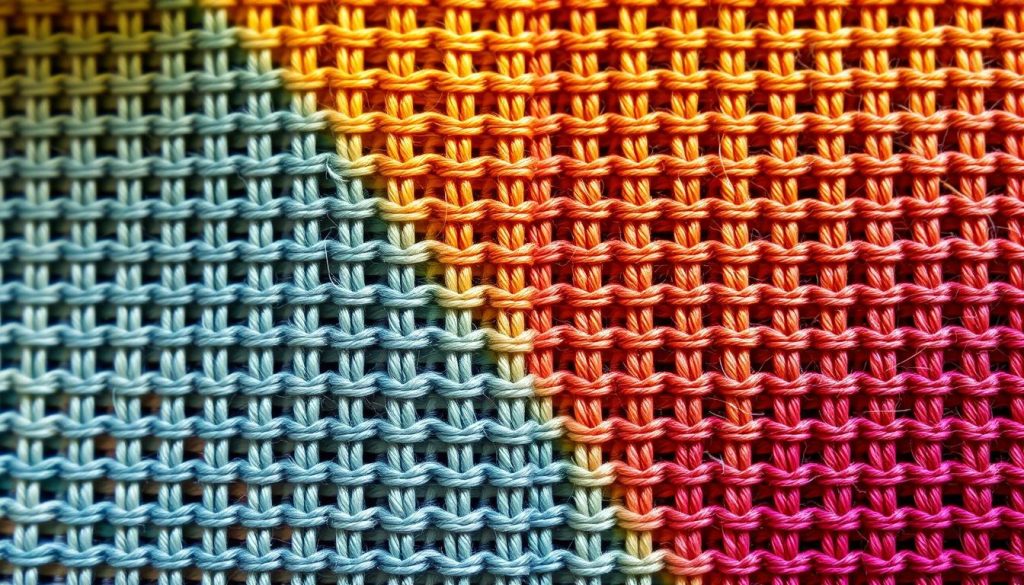
How to match count and strands
On 11–12 count, consider three strands for bold blocks of color. On 16–18 and higher, one to two strands keep lines crisp. Separate floss cleanly and condition strands to reduce twist.
“Start simple: the right fabric and two strands will teach you good tension and coverage.”
Bookmark DMC tutorials for starting methods, reading charts, and backstitch basics. With the right supplies and a steady hoop, your embroidery work will look professional from first cross to last.
The buyer’s guide to strands by fabric count and finish
Deciding on strand count starts with the look you want—opaque fills or delicate detail. Below are clear, actionable choices so you can pick strands that match your fabric and final finish.
Aida 11–14: bold coverage or beginner-friendly balance
11–12 count: use three strands for saturated blocks and bold color. Keep stitches even with a hoop.
14 count: two strands give balanced coverage and neat tension. Use DMC separated embroidery floss and a size 24 needle.
16–18+: finer detail and clean backstitching
On higher counts, choose one strand for crisp detail and lettering. Use two strands when you need more opacity without bulk.
Linen and evenweave: over-two-threads technique
When you stitch over two fabric threads, two strands usually give elegant coverage. For heirloom lightness, drop to one strand.
Coverage goals, blending, and trims
- Full blocks: two to three strands for saturated areas.
- Shading: blend two colors on one needle for soft transitions.
- Edges and text: one-strand backstitch to sharpen details without adding bulk.
Needle size, tension, and floss care
Match needle to count: size 24 for 14-count, 26 for 16–18, and smaller tapestry needles for finer counts.
Stabilize fabric in a hoop and lightly railroad glossy floss to reduce twist. Test a small square when a kit or pattern does not list strand recommendations.
“Test a swatch on your chosen fabric before you commit—it’s the fastest way to confirm coverage and finish.”
Shop smart: kits, patterns, and supplies that match your strand-and-count choice
Smart shopping pairs the right kit with your chosen fabric count so projects start smoothly. Choose items that state fabric count and strand or thread recommendations. That prevents rework and saves money.
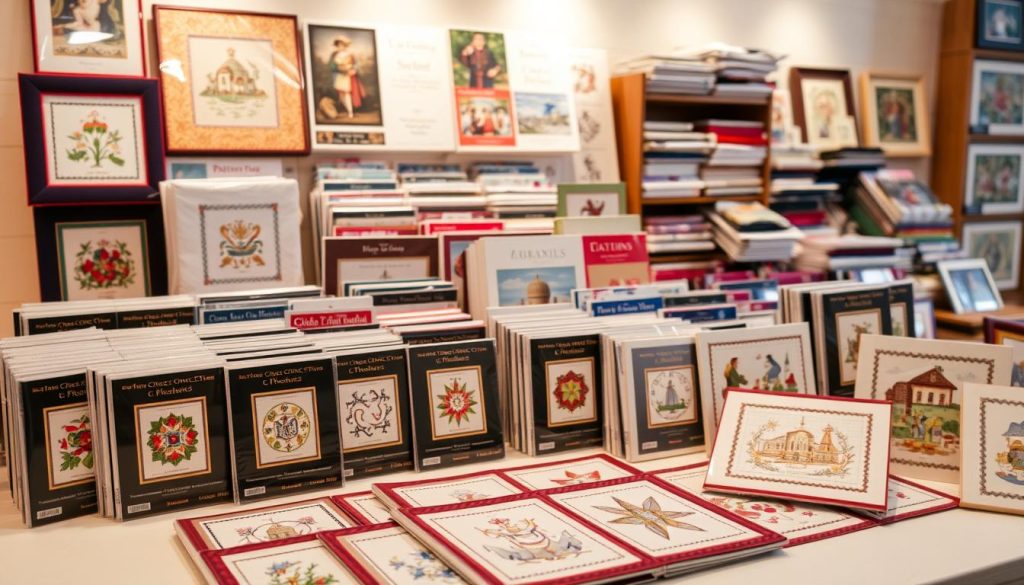
All-in-one kits and starter bundles
All-in-one kits include fabric, presorted floss, a blunt needle, and an easy chart. Brands like Caterpillar Cross Stitch are praised for clear patterns and extra thread, ideal for beginners who want a ready project and group support.
Patterns, downloads, and fabric matching
Filter cross stitch patterns by fabric count so strand suggestions match your stash. Use downloadable patterns to test small motifs before investing in a large project. DMC’s free downloads and Craft Studio help you sample stitches and thread choices.
Essential supplies and budget tips
- Pack a toolkit: Six-Strand Embroidery Floss, fabric, elongated-eye needle, hoop, and sharp scissors.
- Watch weekend promotions and clearance sections to buy fabric and multi-pack needles on sale.
- Use gift cards and timed sales to combine discounts when buying kits, patterns, and tools.
| Item | Best for | What to check |
|---|---|---|
| All-in-one kits | Beginners, gifts | Included thread, clear chart, fabric count |
| Downloadable patterns | Test motifs, custom counts | Count compatibility, scaling options |
| Supplies (floss, fabric) | Repeat projects, color matching | Yardage deals, brand (DMC), needle size |
“Buy smart: match counts and threads, and use sales to build your toolkit.”
Conclusion
Finish strong by using the simple rule: pick fabric first, then choose how many strands. For most beginners, 14-count Aida with two strands of Six-Strand Embroidery Floss gives balanced coverage and easy learning.
Keep your work neat. Use a blunt needle, a hoop for steady tension, and separate strands to avoid twist. These small habits make each stitch even and the back tidy.
Choose kits when you want a guided start, or buy patterns and supplies if you prefer control. Use DMC tutorials and free patterns to test counts and refine technique as you grow.
 English