Want a quick, confident answer on how many strands to use on 14-count Aida? This guide shows when to pick 1, 2, or 3 strands so your cross stitch looks clean and even across your project.
You’ll get a simple rule of thumb first, then clear tips on coverage, texture, and finish. Learn how fabric holes, lighting, and floss twist affect your cross choice.
If you are a beginner, the steps to get started are practical and easy to follow. We cover needle size, hoop tension, and how to separate floss so your crosses are neat, not lumpy or gappy.
This is also a buyer’s guide. You’ll find smart advice on where to shop for thread and kits, what to buy on sale, and how to pick supplies that make the craft smoother. By the end, you can plan and stitch with confidence and match strand choices to your designs and finish.
Key Takeaways
- Use 1, 2, or 3 strands depending on desired coverage and texture.
- Test a small swatch to lock in the look before a big project.
- Needle size, hoop tension, and floss handling affect final results.
- Shop quality floss and a blunt needle for smoother stitching.
- Beginners should follow step-by-step tips to avoid common mistakes.
The quick answer for 14 count Aida
Here’s a fast, practical answer on how many strands to use for 14-count Aida. The “count” equals stitches per inch, so 14-count gives mid-size holes that are friendly for beginners.
Use six-strand embroidery floss and separate it to the number of strands you need. A blunt cross stitch needle slips through Aida’s holes without enlarging them. Backstitch outlining often uses a single strand for a crisp finish.
Recommended strands: when to use 1, 2, or 3 threads on 14-count
- 2 strands — the classic choice for balanced coverage and a smooth X that isn’t bulky.
- 1 strand — for fine details, subtle shading, or when you want fabric to show through.
- 3 strands — for bold, opaque blocks, especially on darker fabric to reduce show-through.
- Keep a single thread handy for backstitch, text, and fractional work. Adjust after a small test swatch under your normal light.
“Always test a small swatch first — the pattern may call for a count, but your feel, tension, and light decide the final look.”
Tip: If your tension is firm, start with 2 strands; if your floss is slick or you need denser coverage, try 3.
CROSS STITCH basics that matter on 14-count fabric
Aida’s ‘count’ directly controls stitch size and the final look of your project.
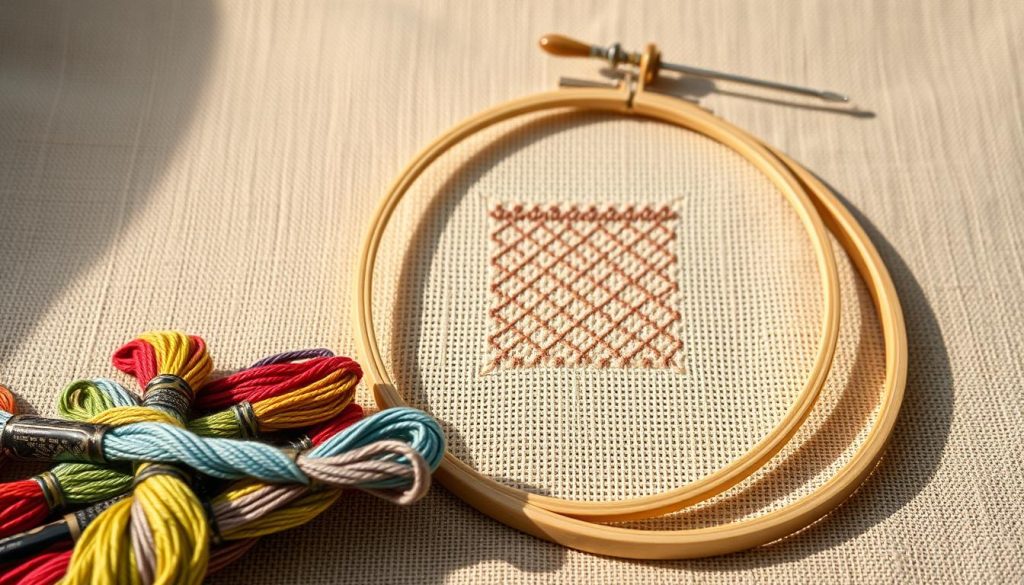
Count tells you how many stitches fit in one inch. On 14-count Aida, crosses are mid-sized and easy for a beginner to manage. Higher counts make smaller stitches and denser detail.
Why Aida “count” changes stitch size and coverage
The count sets the grid your needle follows. Use fewer strands for a lighter fill and more strands for fuller coverage.
Six-strand embroidery floss: how to separate and strand up
Work with six-strand embroidery floss by gently pulling it apart into single strands. Recombine into 1, 2, or 3 strands based on the look you want.
Blunt cross stitch needles and hoops: keeping fabric taut and holes intact
Choose a blunt needle sized for 14-count so you glide through existing holes without enlarging them. A hoop keeps fabric taut like a drum, improving stitch consistency and preventing stretched holes.
Quick toolkit
- Six-strand embroidery floss (core colors)
- Blunt needle with elongated eye
- Hoop, sharp scissors, soluble marker
| Item | Purpose | Tip |
|---|---|---|
| 14-count Aida | Mid-size grid for beginners | Use two strands for balanced coverage |
| Six-strand floss | Adjustable thickness | Separate gently to reduce twist |
| Blunt needle & hoop | Protect fabric holes and keep tension | Tighten hoop until fabric feels like a drum |
Choosing strands for coverage, color, and finish
Choosing strand count is a simple tweak that controls opacity, texture, and edge clarity. On 14-count Aida you commonly work with six-strand embroidery floss and split it to 1, 2, or 3 strands to get the look you want.
Two strands give the classic coverage most patterns expect. Use this for general fills and midground colors so areas read clearly from a short distance without making the fabric stiff.
Two strands for classic coverage on 14-count
Two threads balance coverage and drape. They hide the fabric grid enough for clean shapes while keeping crosses tidy. If your floss is soft or your tension loose, try three strands instead of tightening too much.
One strand for delicate details, light fills, and high-count look
One strand works great for hair, skin tones, fine lettering, and subtle shading. It mimics a higher-count finish without changing fabric and softens transitions in complex stitch patterns.
Three strands for bold, opaque stitches on darker fabric
Use three strands when you need deeper color saturation or to avoid show-through on dark fabric. This is useful for large saturated blocks and high-contrast borders where colors must pop.
Backstitch with a single strand for crisp outlines
For outlines and small text, backstitch with one strand to keep edges sharp. That single thread separates shapes without drawing attention away from your main design.
“Always test blends and metallics on a scrap—on 14-count, specialty threads can behave heavier than expected.”
- When blending two colors, try one strand of each to mix hues while keeping coverage even.
- If a 3-strand area looks bulky, drop to two and tighten tension slightly.
- Test metallics separately; pair one metallic strand with one cotton strand for balance.
Buyer’s Guide: threads, kits, patterns, and supplies to get it right
Choosing the right bundle or pattern can make your next project faster and more enjoyable. Start with a short checklist so you buy what fits your timeline, skill level, and finish goal.
Floss & thread: stock up smart
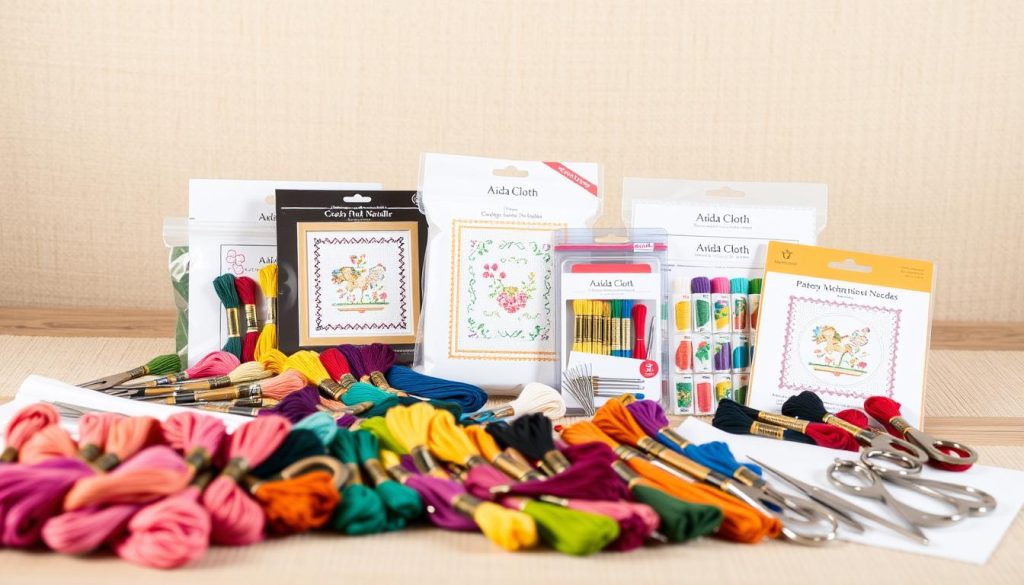
List every color in the pattern and add an extra skein for your most-used shades.
This avoids dye-lot issues and gives you room if you change from 2 to 3 strands mid-project.
Cross stitch kits vs. patterns: pick what suits you
Choose kits if you want convenience: pre-sorted floss, fabric, a blunt needle, and clear charts. Kits cut setup time for beginners and busy makers.
Opt for standalone patterns if you prefer customization. Buy cross stitch supplies separately to match your materials list precisely.
Fabric, needles, and hoops: essentials for neat work
For 14-count Aida, stock a size-24 blunt needle and a hoop that holds fabric taut without marking.
Add sharp scissors and a soluble marker for clean starts and accurate counting.
Shop smart: timing, trends, and sales
Scan New Patterns (11/14/2025) and New Kits (11/11/2025) and watch weekend quick & easy pattern sale events.
Stretch your budget with kits on sale, patterns on sale, and clearance items. Gift cards are handy for wish lists.
Community-tested picks
Customers praise Caterpillar Cross Stitch kits for clear charts and generous thread lengths, plus a helpful Facebook group.
DMC kits include iconic threads and free downloadable patterns with tutorials if you want guided learning.
- Buy tip: choose stamped kits or stitchable items for quick gifts.
- Plan: confirm your 14-count strand choice (1, 2, or 3) before estimating floss needs.
| Item | Why it matters | What to look for |
|---|---|---|
| Kits | All-in-one convenience for faster starts | Pre-sorted thread, clear chart, generous lengths |
| Patterns | Maximum customization and designer choice | Check supplies list and plan floss by color |
| Needles & Hoops | Protect fabric holes and keep even tension | Size-24 blunt needle; hoop that won’t mark fabric |
| Sales & Clearance | Great for building supplies on a budget | Watch new-release dates and weekend pattern sales |
Test before you commit: a fast swatch routine for perfect coverage
Make a short sample with one, two, and three strands so you can compare how each option reads on your fabric. This quick test prevents surprises and helps you get started with confidence on any project.
How to run the swatch
Stitch a mini block with 1, 2, and 3 strands to compare
Stitch three 10×10 blocks on the same 14-count fabric. Use the same color and the same blunt needle sized for this count. Keep the fabric in a hoop so tension stays consistent.
- Label each block at the edge with a single-strand backstitch: “1,” “2,” and “3.”
- Evaluate front and back: one thread shows lighter coverage; two threads give balanced crosses; three threads give denser, more opaque coverage.
- Tug the fabric lightly to check hole stress. If 3 strands stretch holes, choose 2 strands or reserve 3 for dark pattern areas.
Photograph the swatches under your normal light to see how colors read. Note thread behavior at your preferred working length and shorten if fuzzing appears.
“A small swatch stops big mistakes—test once, then stitch with confidence.”
| Step | What to use | Why it matters |
|---|---|---|
| Three 10×10 blocks | Same color, same fabric, same hoop | Direct compare of coverage and texture |
| Label edges | Single-strand backstitch “1/2/3” | Prevents confusion after trimming |
| Evaluate & photograph | Front, back, and under pattern light | Shows show-through, sheen, and hole stress |
| Record choice | Write margin note (e.g., “14 ct: 2 strands”) | Saves time on future patterns and projects |
Conclusion
Wrap up your plan with a simple rule: two strands work best on 14-count Aida as your go-to choice. Use one strand for fine details and a single-strand backstitch. Try three strands when you need richer, opaque coverage on dark fabric.
Before you start a big piece, swatch and note your choice on the pattern. If you want convenience, buy complete kits that include fabric, embroidery floss, a blunt needle, and a clear chart. If you prefer custom work, shop patterns and supplies individually and keep spare thread on hand.
Watch weekend sales and trending releases to save on kits and patterns. With a simple swatch library and a clear strand plan, your future projects at home will finish cleaner and faster, and you’ll enjoy learning cross stitch with steadier results.
 English