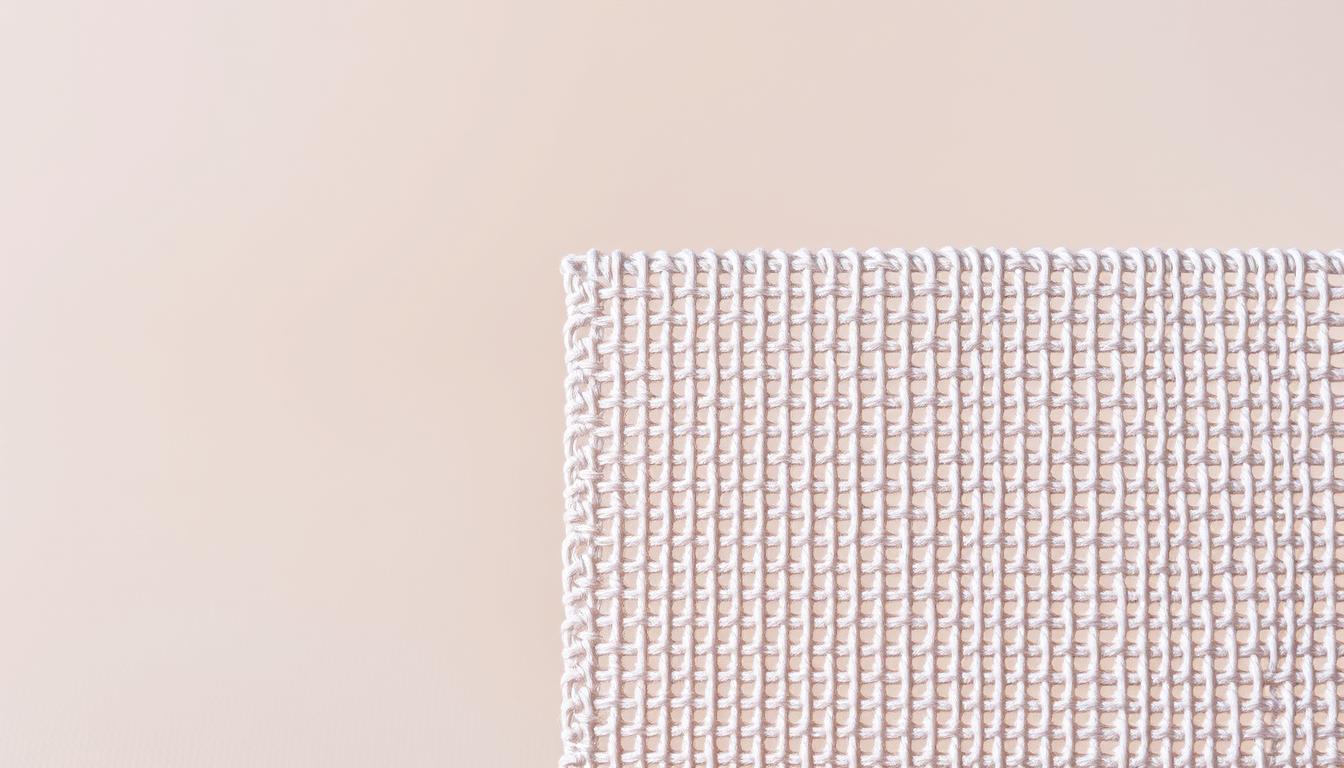
Picking the right number of strands shapes how your needlework will look and feel. You’ll learn simple rules to match thread thickness to fabric count so your work stays smooth and even.
Count refers to how many tiny squares fit in an inch of Aida; higher counts mean smaller squares and finer results. If you are new, 14-count Aida with two strands of DMC floss is a reliable place to start.
We’ll cover tools you’ll use: six-strand embroidery floss, a blunt needle with an elongated eye, a hoop, and sharp scissors. Branded kits often include clear patterns and enough thread, plus helpful community tips when you need them.
Before you commit, test a small area to see coverage and texture. That quick check will save time and make your next project look professional.
Key Takeaways
- Count tells you how many stitches fit in an inch; higher count = smaller stitches.
- For beginners, start on 14-count fabric using two strands of thread.
- Use the right tools: six-strand floss, a blunt needle, hoop, and sharp scissors.
- Test a small swatch to check coverage before you begin the full pattern.
- Branded kits and online communities can speed learning and reduce guesswork.
Your guide to stitch counts, thread strands, and professional results
Knowing fabric count helps you choose strands that make fills smooth and outlines clear. If the count is low, stitches look bold; at higher counts they read delicate. That choice changes how many strands of floss you load in the needle.
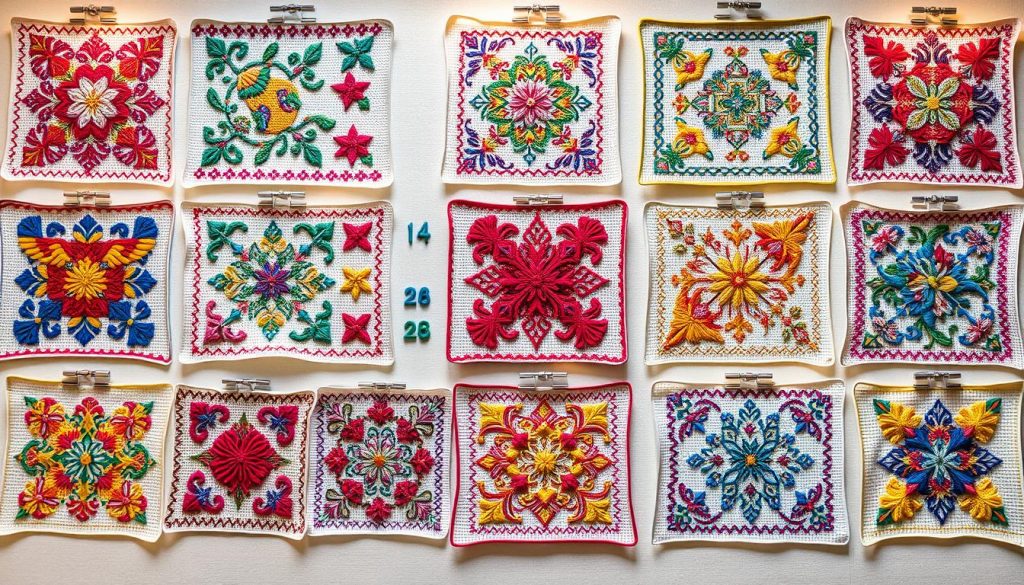
Start simple: most makers pick 14-count Aida and use two strands of embroidery floss for solid coverage. Save one strand for backstitch detail so outlines stay crisp.
Use six-strand DMC-style floss separated to the number you need, a blunt needle with an elongated eye, a hoop that fits your motif, sharp scissors, and a water-soluble marker or magic paper to transfer the pattern.
Why it matters
Right strand choices keep fills even, reduce shadowing, and let your colors sit cleanly on the fabric. As count rises, reduce strands to avoid cramped crosses and to keep texture light.
“Test a small swatch first — it saves time and gives professional-looking results.”
- Pick 14-count to learn quickly.
- Adjust strands for higher counts to match detail.
- Consider kits and clear patterns to simplify setup.
Practical strand recommendations by count for CROSS STITCH
Match strand thickness to fabric count and you’ll see how coverage, texture, and detail change in every block.
11–12 count Aida: Full coverage with bold texture
Use 3–6 strands of embroidery floss for solid fills on low-count fabric. Many stitchers prefer 4–6 strands to get plush, dense color without leaving gaps.
14 count Aida: The beginner-friendly standard
On 14 count, the usual choice is 2 strands for fills and 1 strand for backstitch. This balance gives neat holes, good coverage, and clean outlines for most patterns and kits.
16–18 count: Crisp detail with lighter loft
Switch to 1–2 strands depending on color depth: use 2 on 16 for richer fills and 1–2 on 18 to avoid crowding. Keep backstitch to a single strand for sharp detail in stitch patterns.
20–22 count: Ultra-fine coverage and delicate finishes
Stick to 1 strand for fills on 20–22 counts to prevent bulk. If you test 2 strands on 20 count, check for raised texture that might distort adjacent crosses.
Linen, tools, and the visual check
On linen or evenweave over two threads, treat the fabric like its effective count and typically use 2 strands for fills and 1 for outlines. Pair a blunt tapestry needle sized to the weave, a snug hoop to keep the fabric drum-tight, and sharp scissors to trim tails cleanly.
Stitch a 10×10 test square with your planned strands before starting the full project to check coverage and tension.
Shop the right kits, patterns, and supplies to match your stitch count
Find kits and patterns that match your fabric count so your planned threads cover exactly as the designer intended.
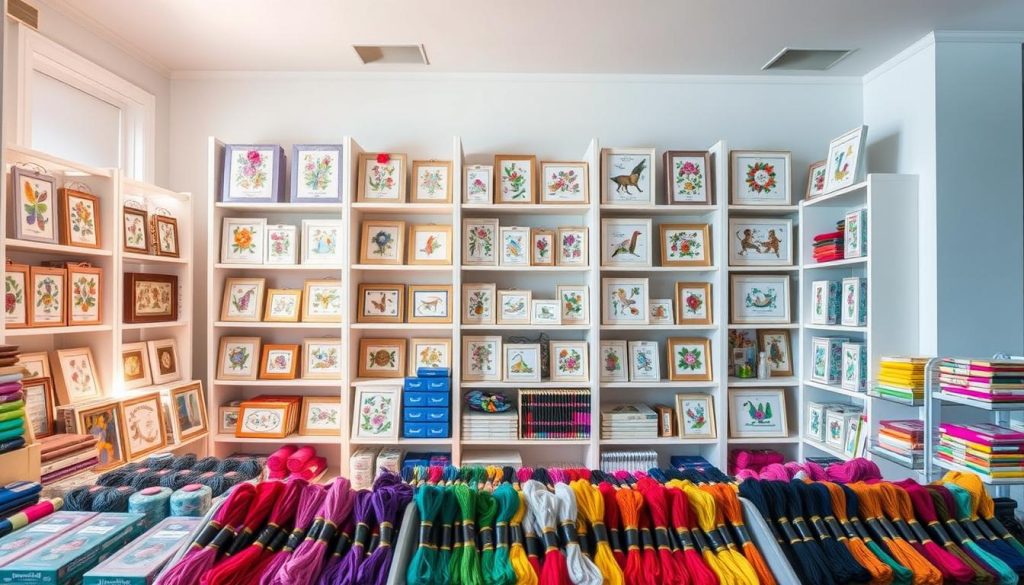
Select curated cross stitch kits when you want an easy start. These come with clear printed patterns, enough floss, and quality fabric. You’ll save time and avoid mid-project surprises.
Curated kits with clear patterns and full thread packs
Look for kits labeled beginner-friendly and those that list fabric count and recommended strands. Good kits include a needle, hoop suggestions, and sharp scissors on the supply list.
Patterns, fabric, and floss by count: build your own project
If you build your own, shop pattern pages by count. Match the pattern to fabric and floss so your coverage and texture match the designer’s sample.
- Browse categories: Kits, Patterns, Floss & Thread, Cross Stitch Fabric, Needles, Hoops & Supplies.
- Check product specs: fabric count, recommended strands, and thread color lists.
- Use resources: free DMC downloads and newsletters to learn techniques while you shop.
What’s on sale and great gift ideas
Visit sale sections—Kits on Sale and Patterns on Sale—to pick up items at a discount. Bundle a hoop, needle, and scissors to finish the toolset.
Gift cards are ideal for makers who prefer choosing their own patterns. They pair well with seasonal designs and magazines and work as last-minute gifts.
“Check for free shipping thresholds and clear return policies to protect your purchase.”
Conclusion
strong, practical steps help you finish smart. The right strand choice and a quick test square will save time and improve results. Aim for 14-count when learning and adjust strands as the fabric gets finer.
Keep a simple toolkit: six-strand embroidery floss separated to need, a blunt needle, a snug hoop, and sharp scissors. Test a 10×10 square to confirm coverage before you commit to the full pattern.
Shop by count and pattern so your supplies match from day one. Whether you choose curated kits or build your own, these steps make your cross stitch and embroidery projects look like lasting art and elevate the craft.
 English