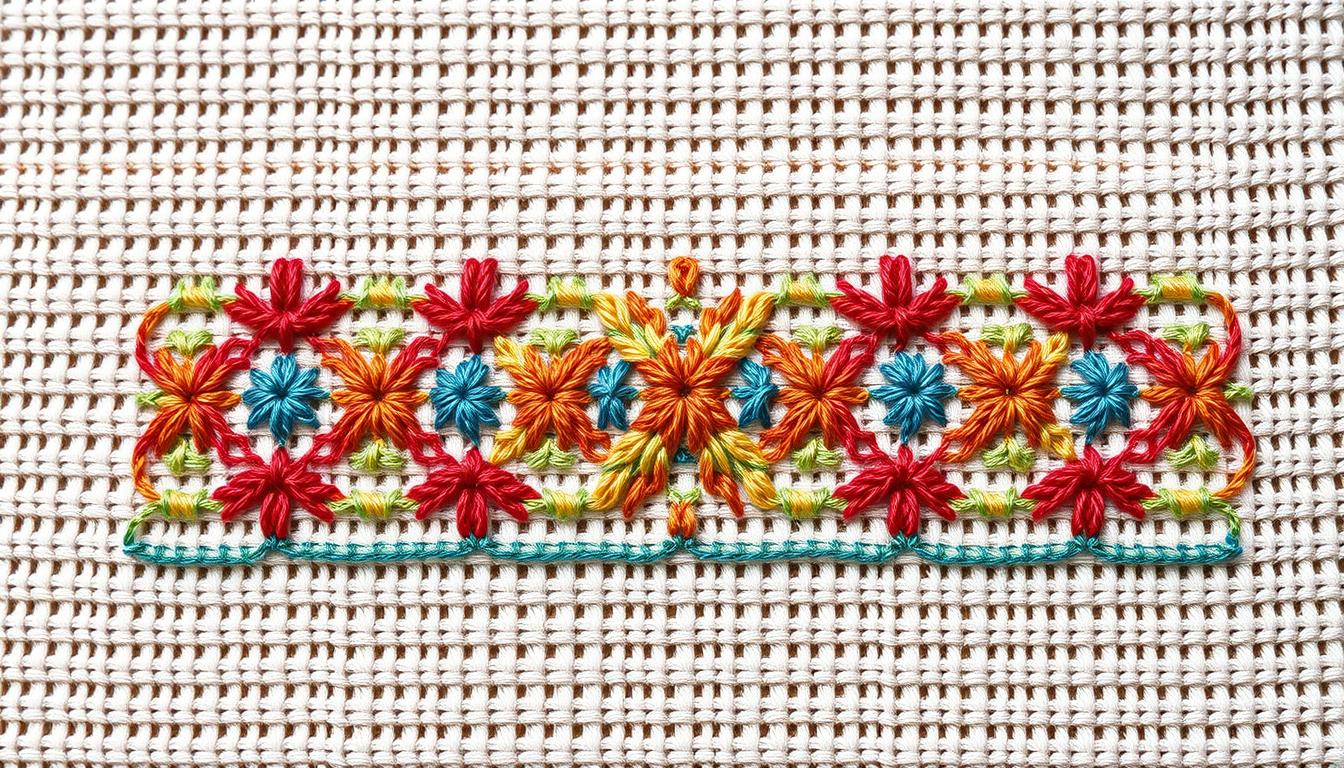
Ready to make your first piece? You’ll learn how a single X-shaped stitch creates charming designs with little fuss. This guide shows why the craft is ideal for beginners and how simple tools bring quick wins.
Start with 14-count aida to balance clarity and detail. You’ll use six-strand embroidery floss, a blunt needle with an elongated eye, a hoop to keep fabric taut, and sharp scissors. Optional items like a DMC marker or magic paper help transfer a chosen pattern.
We’ll preview reading a chart, making your first X, and adding a neat backstitch outline. You’ll also learn whether to buy a ready-made kit or download free designs and how to add supplies to your cart when you shop.
By the end of this intro, you’ll know what to buy, how to set up, and how to plan a small project that builds confidence fast.
Key Takeaways
- You’ll learn the basics of a cross stitch and why it’s beginner-friendly.
- Use 14-count aida plus six-strand floss and a blunt needle to start.
- Follow charts to place Xs and add a backstitch for clean outlines.
- Choose between kits or downloadable patterns to match your budget.
- Shop for patterns, floss, fabric, and tools, then add items to your cart.
Start Strong: What Cross Stitch Is and Why It’s Perfect for Beginners
For your first project, use 14-count aida — it shows the grid clearly and keeps stitches roomy. This approach helps you learn fast because the technique uses one main X-shaped move and a simple outline option for detail.
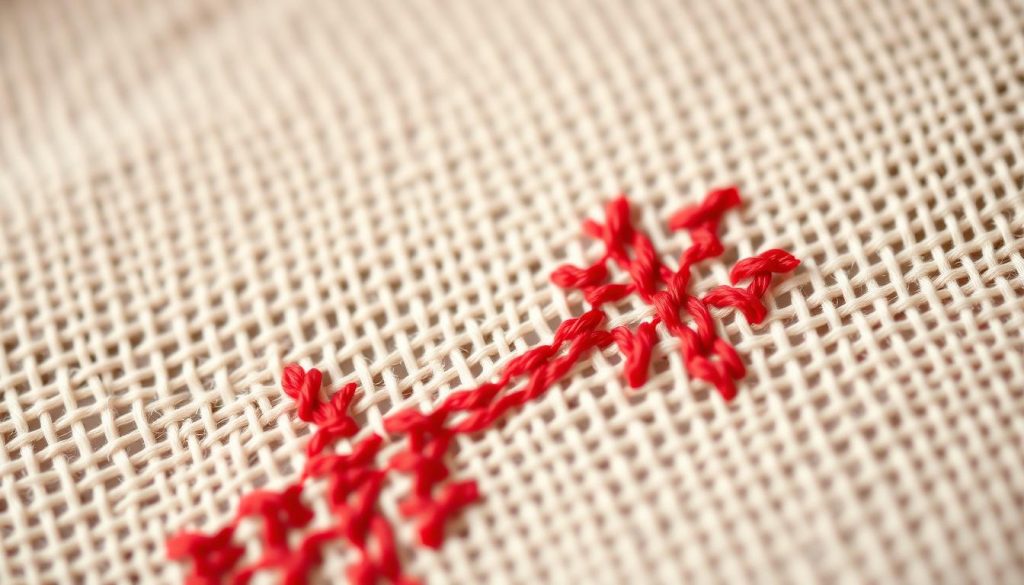
How aida count works: The count equals stitches per inch. Lower counts (10) make big squares. Higher counts (16–18) create tiny detail. Fourteen-count hits the sweet spot for visibility and neat results.
Tools that matter: Use Six-Strand Embroidery Floss and a blunt needle that slips through aida holes without piercing threads. Separate strands to control coverage. Backstitch outlines add crisp edges for letters and borders without adding complexity.
| Element | Why it helps | Beginner tip |
|---|---|---|
| 14-count aida | Visible grid, easy placement | Start here for most patterns |
| Six-strand floss | Adjustable coverage | Use 2–3 strands for 14-count |
| Blunt needle | Slides through holes, protects fabric | Use tapestry size 24 or 26 |
| Prep & testing | Prevents fray, ensures even tension | Test on a scrap before stitching |
Quick checklist: fabric color choice (white, ecru, or black), pattern size estimate, blunt needle, floss, and a small hoop. Prep edges and test tension on scrap so your finished piece fits your frame and looks tidy.
CROSS STITCH
A compact toolkit gets you stitching smoothly from the first square. You only need a few quality items to start a small project and build confidence.
Your essential toolkit: fabric, floss, needle, hoops, and scissors
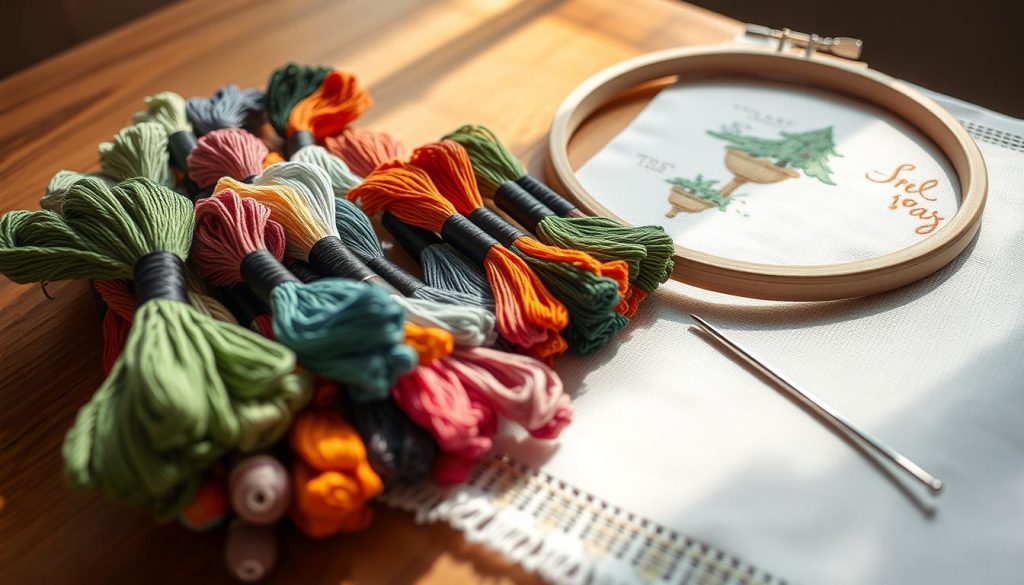
Core items: 14-count aida fabric, Six-Strand Embroidery Floss, a blunt needle with an elongated eye, a hoop that fits your design, and fine-point scissors.
Choose your path: kits vs. downloadable patterns
Beginner-friendly kits give everything in one box and often include clear charts and extra threads. Downloadable patterns let you pick fabric and supplies a la carte.
Threads and floss: six-strand management
Separate and use 2–3 strands for 14-count aida. Park or secure threads to keep the back neat and reduce tangles. Store bobbins and color cards in small boxes for fast access.
Fabric options and stitchable items
Start with aida, then try tote bags, ornaments, or pillow inserts for practical gifts. Choose fabric color to make your design pop and match the frame you plan to use.
Needles, hoops, and handy add-ons
Use tapestry needles, a hoop sized to your pattern, and optional tools like DMC soluble markers, magic paper, and needle minders. These extras speed transfers and keep your needle safe.
- Quick checklist: fabric, floss, needle, hoops, scissors, pattern or kit, and basic storage for threads and supplies.
- Brands like DMC offer free patterns and tutorials; customer reviews for Caterpillar Cross Stitch praise generous thread and helpful community support.
Step-by-Step: From Reading a Chart to Your First Stitch
Begin by finding the chart center so your design sits square on the fabric. Match the chart midpoint to the fabric center and place the cloth in your hoop with gentle, even tension.
How to read a chart and set up your hoop
Read the key to match symbols to thread colors before you pierce the fabric. Count from the center marks and mark a faint midpoint on a scrap if you need a guide.
Make your first stitch and secure your thread neatly
Use a blunt needle with two to three separated strands on 14-count aida. Start with a loop start for even strands or a waste knot for odd strands.
Work all bottom legs in one direction, then return with the top legs for uniform crosses. End threads by weaving under adjacent stitches for a low-profile finish.
Backstitch for outlines: when and how to use it
Outline after filling areas to avoid snagging and to keep borders crisp. Use short floss (12–18 inches) and a blunt needle, and travel short distances to prevent carried thread showing through lighter fabric.
- Follow DMC Craft Studio tutorials for visuals on starting, chart reading, and backstitching.
Shop, Save, and Get Inspired: Kits, Patterns, Supplies, and Gifts
Explore curated kits and downloadable patterns that make finishing fast and fun. You can shop by category—Cross Stitch Patterns, Cross Stitch Kits, Stamped Kits & Stitchables, Downloadable Patterns, Clearance Items, and Gift Cards—then add everything to your cart in one session.
Shop by category
Find floss & thread, cross stitch fabric, beads and charms, needles and hoops, and stitchable items in one place. Use filters to compare fabric counts, floss brands, and included extras.
What’s trending and deals to grab
Browse seasonal favorites like Just CrossStitch Christmas 2025, 2025 Schooler Santa, and the 2025 Nutcracker for fresh ideas.
Check Kits on Sale, Patterns on Sale, and the Quick & Easy Pattern Sale this weekend to save while you build projects fast.
Free downloads, gifts, and customer love
DMC offers a large free pattern library so you can grow your collection without cost. Gift cards and stitchable items make thoughtful presents for makers.
“Annabelle and Tony praised Caterpillar Cross Stitch kits for clear charts and generous thread; the Facebook group helped them finish projects.”
- Before checkout: review your cart—pick one quick pattern, one centerpiece kit, and essentials like extra needles and a spare hoop.
- Consider cross stitch kits or stitch kits if you want everything ready to go.
Conclusion
, You’re ready to turn small squares of fabric into simple, satisfying designs. Use 14-count aida with Six-Strand Embroidery Floss and a blunt needle to keep your first project smooth and fast.
Keep sessions short. Use short lengths of thread, steady tension, and tidy starts and finishes. Add backstitch last to sharpen borders and letters without snagging the fabric.
Choose cross stitch kits or stitch kits for a turnkey start, or download a pattern and pick your own colors. Store extra threads and spare hoops in a project bag so you can pick up stitching anytime.
Ready to go: pick a small design, follow clear tutorials (DMC has great free guides), and stitch one confident piece before moving to a larger project.
 English