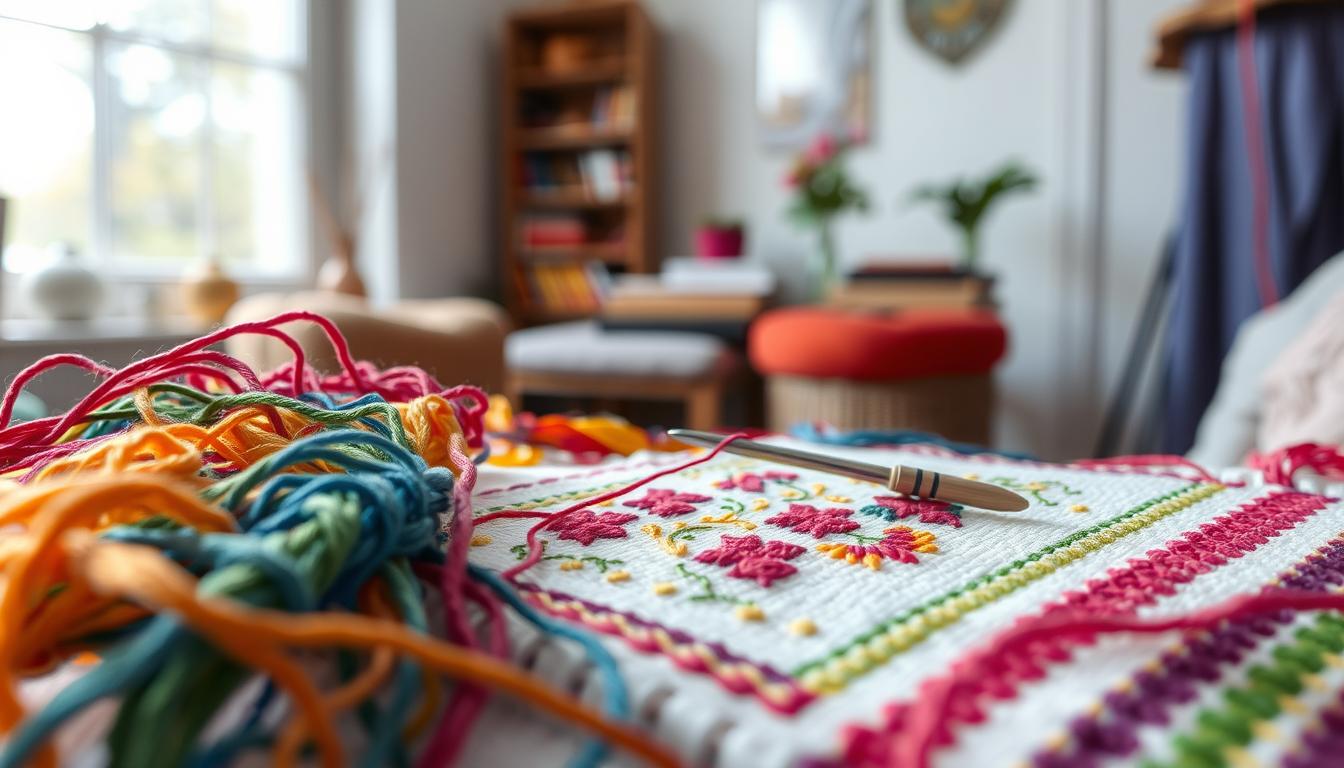
You want clear guidance so your next cross stitch project looks right from the first stitch. This short intro explains what “2 strands” refers to, how stranded six-strand floss works, and why a blunt tapestry needle and aida fabric matter for neat results.
Two strands means you separate the six-strand floss and use two threads together to fill a single stitch. That choice balances coverage and texture on common aida counts like 14. Higher-count fabric has more stitches per inch and often needs fewer strands for crisp detail.
Beginners usually start on 14-count aida with a blunt tapestry needle, a hoop, sharp scissors, and a soluble marker. Knowing how strand count links to your pattern will help you read kit notes and shop for only the gear you need.
Key Takeaways
- You’ll learn what “2 strands” means and why it gives balanced coverage.
- Two strands use stranded six-strand floss and a blunt tapestry needle on aida fabric.
- Aida count (stitches per inch) determines stitch size and strand choice.
- Start with 14-count aida for an easy, predictable result.
- Read pattern notes and kit labels to match strand counts and avoid mistakes.
Start Here: What “2 Strands” Means and Why It Changes Your Stitching
When a pattern calls for two strands, you separate a six-strand floss and thread two strands together through a blunt tapestry needle with an elongated eye. This setup helps the thread pass smoothly through aida holes and keeps tension even.
Two strands give balanced coverage on common fabrics. On 14-count aida, two strands fill the little square neatly and hide most fabric show-through. On higher-count fabric, two strands look fuller; on lower counts, they may appear more open.
- Pull individual strands gently from the skein, then align two in the needle so they lie parallel.
- The blunt needle prevents splitting and protects fibers as you work.
- Practice on 14-count aida—DMC recommends it for beginners for reliable results.
| Fabric Count | Recommended Strands | Visual Effect |
|---|---|---|
| 14-count aida | 2 strands | Clean coverage, minimal fabric show-through |
| 16–18 count | 1–2 strands | Finer detail with lighter coverage |
| 11-count or lower | 2–3 strands | Thicker, bolder crosses with more texture |
Decode the Language: Core Stitching Terms You’ll See in Patterns and Kits
Patterns and kits use specific wording — knowing those terms saves time and mistakes. Learn a few quick definitions and you’ll pick the right materials and follow charts with confidence.
Floss, skeins, and strands
Six-strand embroidery floss arrives in skeins. You separate strands to match the pattern. Most full cross areas use two strands; backstitch lines often use one.
Aida count explained
The aida count is the number of stitches per inch. Fourteen-count is beginner-friendly with visible holes. Higher counts give smaller, finer crosses and need fewer strands for detail.
Full cross vs. backstitch
A full cross makes the filled “X” that covers a square. A backstitch is a straight outlining line. Use backstitch for text and crisp edges without bulky thread.
Needle types and stamped vs. counted
A blunt tapestry needle with an elongated eye guides separated thread through aida holes and reduces splitting. Stamped fabric prints the design for you; counted requires you to follow a chart and count squares.
| Term | What it means | Why it matters |
|---|---|---|
| Floss / skein | Six strands twisted together | Separate strands to match pattern calls |
| Aida count | Stitches per inch (14, 16, 18…) | Determines stitch size and strand choice |
| Backstitch | Straight outline stitch | Adds definition without bulk |
How Many Strands Should You Use? Match Coverage to Fabric, Count, and Design
Choosing the right number of strands is the quickest way to control coverage and detail.
Quick picks: On 14-count aida you’ll usually use two strands for a balanced, opaque finish. That setup fills each square and reduces fabric show-through for solid color areas.
14-count: the reliable choice
Two strands on 14-count give clear, even crosses and make filling large blocks easy. If you want bolder texture, test three strands on low counts.
Finer and lower counts
For 16–18 count, one or two strands can work. On 18-count, try one strand for delicate detail and smoother gradients.
On 11–12 count, consider three strands for strong, vivid coverage in big color fields.
- Match your needle to the strands so the eye fits the thread without shredding.
- Use two strands for full cross areas and one strand for backstitch outlines.
- For shading or metallics, swatch one vs. two strands to preserve subtle blends.
Tip: Always stitch a small test swatch on your chosen fabric before committing to a large area.
Your Essential CROSS STITCH Toolkit and How to Choose It
You don’t need a lot to start—just a few quality tools that match your pattern.
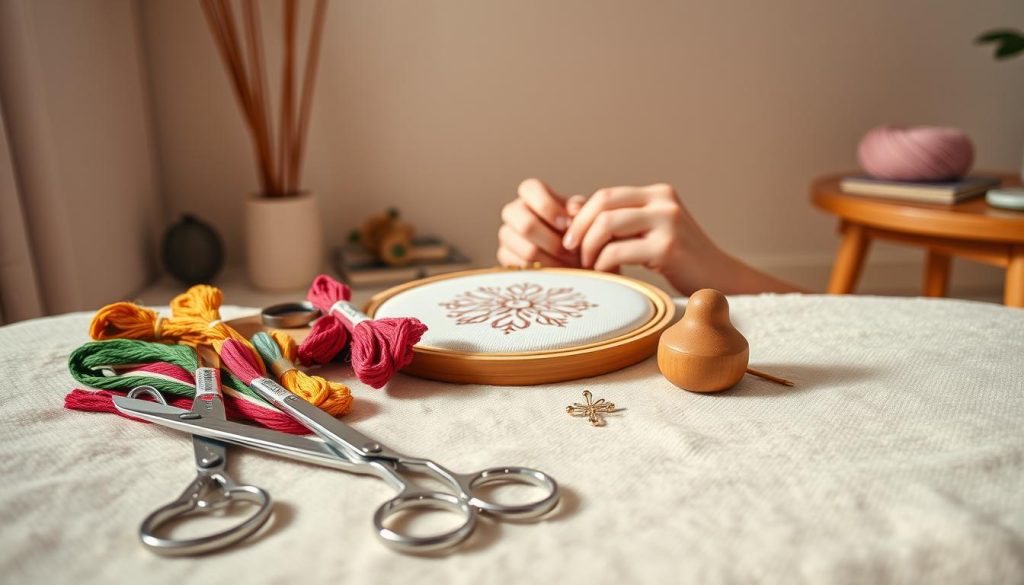
Floss and color choices
Six-strand embroidery floss gives you control: separate strands to match pattern calls and build a color palette that suits your fabric and design.
Fabric and stitchables
Begin on aida fabric for clear holes and easy counting. Later you can try stitchable items like ornaments or apparel accents for creative finishes.
Needles, hoops, and tension
Pick a blunt tapestry needle with an elongated eye so multiple strands pass without shredding. Size your hoop to hold the working area taut without stretching.
Scissors, markers, and helpers
Keep sharp pointed embroidery scissors for clean thread cuts. Use a soluble marker or magic paper for neat guidelines.
- Build a minimal kit first: hoop, needle, floss, fabric, and marking tool.
- Add items like needle minders and project bags to stay organized.
- Reference DMC Craft Studio tutorials to improve starting, reading charts, and backstitch.
| Item | Why it matters | Tip |
|---|---|---|
| Six-strand floss | Adjust strands for coverage | Swatch one vs. two strands |
| Aida fabric | Easy counting for beginners | Start with 14-count |
| Tapestry needle | Prevents splitting thread | Match size to strands |
Buy Smart: Kits, Patterns, and Supplies That Fit Your Skill Level and Budget
Choosing the right purchase saves time and keeps you motivated. Decide first if you want an all-in-one experience or the freedom to customize materials.
Kits include fabric, floss, a needle, a hoop, and a chart—perfect when you want everything ready to go. If you prefer control, downloadable patterns let you pick your own fabric and thread.
Kits vs. patterns
Pick kits when you want guidance and matched colors. Choose a pattern if you already own supplies or want to substitute premium floss.
Shop categories to explore
- Cross Stitch Patterns and Cross Stitch Kits for charts and complete bundles.
- Stamped kits & stitchable items if you like visible outlines on fabric.
- Floss & thread, fabric, beads/charms, and needles/hoops for tools and extras.
What’s hot right now
Watch New Patterns (11/14/2025) and New Kits (11/11/2025) updates for seasonal designs such as Just CrossStitch Christmas 2025 and 2025 Schooler Santa.
Save more today
Look for “Quick & Easy Pattern Sale! On sale this weekend only!” and banner messages like Kits on Sale, Patterns on Sale, and Clearance Items to stretch your budget.
- Sign up for newsletters — programs often offer free downloadable patterns and early access to new releases.
- Stock basic supplies as needed so you don’t pause a project: extra floss shades, a spare needle size, and a backup hoop.
From First Stitch to Finish: Confidently Start and Elevate Your Project
Begin with a simple sampler on 14‑count aida to build steady hands and clear counting habits.
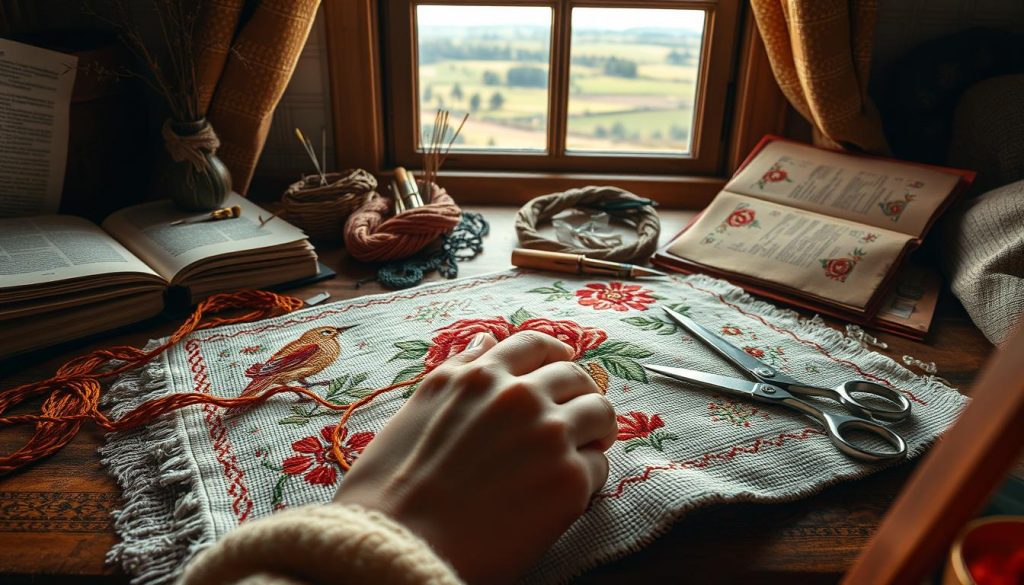
Beginner foundation
Start on 14‑count aida so you can learn to form neat crosses and read charts without strain.
Practice consistent tension so each stitch sits flat and rows align. Count carefully and follow step‑by‑step “how to start” and “how to read a chart” tutorials to avoid misplacement.
Use a needle size that fits two strands easily and keep short thread lengths to prevent tangles.
Next‑level polish
Add backstitch outlines last, using one strand to sharpen features and text without adding bulk.
Anchor thread tails neatly on the back and weave under nearby stitches to reduce lumps. This keeps the finished side tidy and comfortable.
Repurpose ORTs—tiny thread snippets make clear ornaments, art vials, or mixed‑media cards. Small creative uses cut waste and spark new project ideas.
- Choose beginner‑friendly kits with clear charts and plenty of thread; many stitchers find them relaxing and complete.
- Join a supportive community for quick answers and moral support while you work on a project.
- Keep tools organized with a needle minder and project bag so you can pick up stitching during short breaks.
| Stage | Action | Why it helps |
|---|---|---|
| First sampler | 14‑count aida, short chart | Faster learning, clear holes for counting |
| Tension practice | Consistent pulls, short thread lengths | Even texture, aligned rows |
| Finishing | Backstitch with one strand; tidy tails | Sharp details, low bulk |
Conclusion
,With a clear grasp of strand choice, you’ll pick materials faster and spend more time completing projects you love.
Now that you know what two strands mean, match your strand count to fabric and test a tiny swatch. Choose cross-friendly kits for convenience or pick patterns and stitch kits when you want to customize colors.
Build basic supplies first, then add stitch supplies like minders and organizers. Browse shop categories for patterns, cross stitch kits, and cross stitch supplies — and watch kits on sale or weekend pattern sales to save.
Practice two strands on 14‑count for steady results, then experiment as your eye and skill grow. You’ll shop smarter, stitch cleaner, and finish more pieces to gift or display.
 English