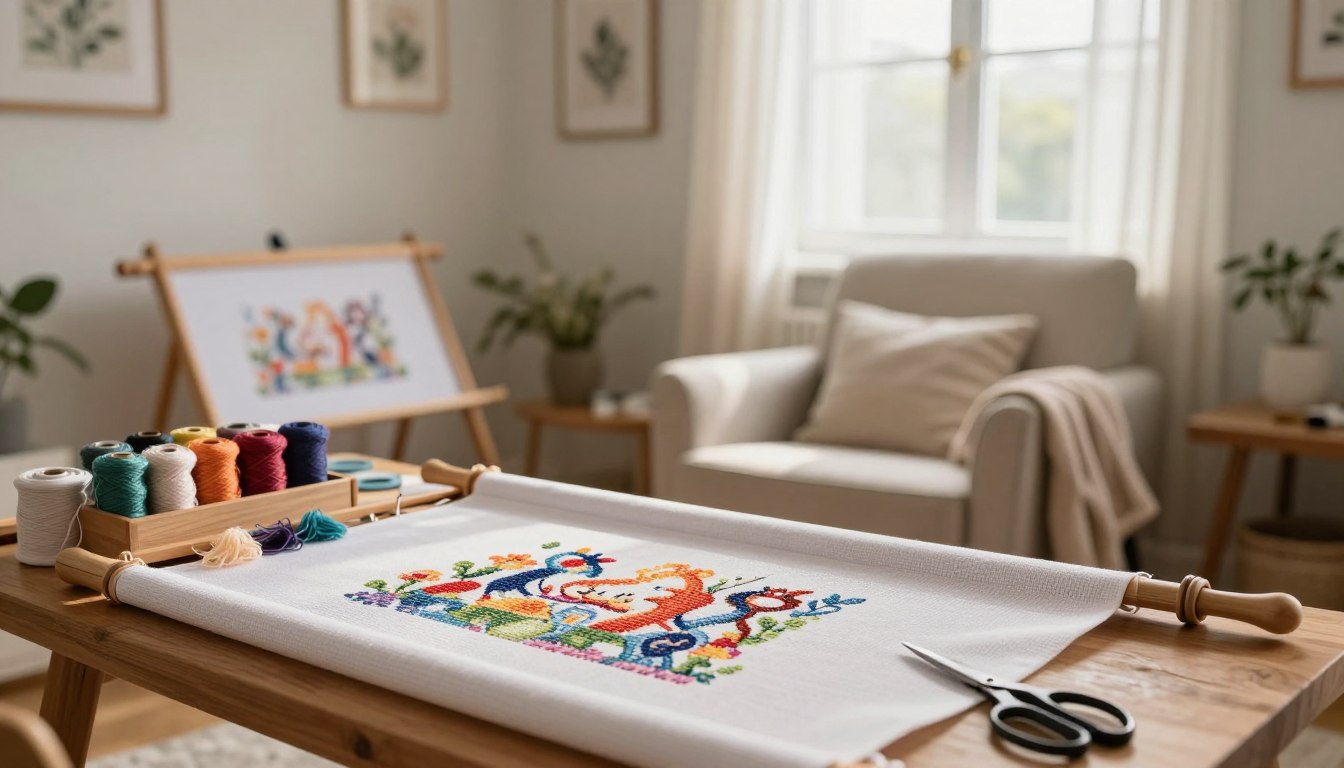
Starting a big counted cross stitch project can be both exciting and daunting. You might have felt thrilled at first, but the long hours and slow progress can wear you down. This guide offers gentle, practical steps to help you stay motivated without feeling guilty.
Remember, taking breaks is more beneficial than pushing through discomfort. If your hands hurt or your mind feels tired, it’s okay to rest. Try a small, quick project or take a “cross stitch holiday.” These breaks can give you the same sense of accomplishment as finishing a small piece, making it easier to dive back into the big project.
See cross stitch as a way to relax and cope with stress. Listen to a podcast or an embroidery-focused show while stitching to make the time pass more enjoyably. Set small goals, keep a simple project sketchbook, and learn what motivates you. This way, you can adjust your approach when your interest wanes.
Key Takeaways
- Give yourself permission to pause and rest when needed.
- Rotate in a quick cross stitch project to regain momentum.
- Use audio content to make long stitching sessions enjoyable.
- Keep a sketchbook or plan to prevent impulsive new starts.
- Track your patterns of motivation and adjust goals accordingly.
Why motivation fades on large counted cross stitch projects
Working on big counted cross stitch projects can feel slow and heavy. Life’s stressors like anxiety, grief, or a busy schedule take a toll. Physical strain from wrist pain and eye fatigue makes stitching less enjoyable.
Social media and the need for perfection can make stitching feel like work. This is instead of the fun it used to be.
Common causes of burnout and loss of interest
You might start several projects at once, excited by new ideas. But then you stall on the older ones. Neurodivergent attention patterns and pandemic life’s effects make finishing harder.
Feeling pressured to post perfect progress can make you fear mistakes. This fear can lead to avoiding stitching altogether.
Slow progress can make you think your effort isn’t worth it. Mental fatigue from tiny stitches adds up. Creative people often feel burnout as a loss of joy, not skill. This is true for hobby stitchers too.
How motivation loss looks and why you shouldn’t be hard on yourself
Signs of losing motivation include procrastination and constant comparing. You might also put projects off until later. Obsessing over small mistakes or ripping out work to meet an impossible standard is common.
It’s okay to stop or slow down. Giving yourself permission to pause helps keep your enjoyment long-term. Taking small breaks, trying new ideas, or switching to easier patterns can help. You shouldn’t feel ashamed about it.
Design and project choices to keep you engaged with cross stitch
Choosing the right project is key to making progress. Start with designs that match your taste and skill. Plan colors, techniques, and tools to enjoy every session. Making thoughtful choices helps avoid frustration and keeps you stitching.
Choose patterns and colors you love. When you’re excited about a design, you’ll come back to it. Avoid projects with backstitching or French knots you don’t like until you’re ready.
Match your fabric, floss, and tools to what feels comfortable. Use counted cross stitch fabric that’s easy on your eyes. Choose DMC floss shades that look good against the fabric and reduce eye strain. Use comfortable needles, hoops, or Q-snaps, and frames that keep fabric taut for smooth stitching.
Use a sketchbook to plan your projects before starting. Sketching helps you avoid starting projects impulsively. It also lets you spot any issues with backstitching or crowded colors before starting.
Keep a simple checklist to help choose projects. Ask if the motif excites you, if the fabric feels good, if the floss palette matches your vision, and if you enjoy the techniques. When you answer yes to these, you’re more likely to make steady progress.
| Choice | Why it matters | Practical tip |
|---|---|---|
| Pattern selection | Passion for the design fuels consistency and reduces stalled projects | Favor motifs you would display in your home or give as gifts |
| Color planning | Good palettes lower eye strain and make stitching faster | Test DMC floss shades on a scrap of your chosen fabric |
| Fabric choice | Count and texture affect speed and comfort | Try a swatch of cross stitch fabric before committing to a large piece |
| Technique fit | Disliked techniques lead to stalled progress | Avoid patterns heavy on backstitching techniques until you feel motivated |
| Tool comfort | Ergonomic tools reduce physical strain and make long sessions pleasant | Use needles, hoops, and cross stitch tools you enjoy handling |
Practical stitching tactics that rebuild momentum
When a big project slows down, start with small steps. Break it into tiny goals. Use short timed bursts to make starting easier. Choose quick projects to celebrate your wins.
Set small, achievable goals for steady progress
Set micro-goals for one sitting, like finishing a motif or a color block. Mark your wins in a planner or notebook. This builds confidence, especially for beginners.
Use timers and routines to make stitching manageable
Try Pomodoro cross stitch: 20 minutes stitching, then a break. This protects your neck and reduces mistakes. Set a routine, like stitching after dinner, to make it a habit.
Stitch a quick project to refresh your motivation
Do a small project like a bookmark or ornament over the weekend. Quick projects give you the boost to tackle bigger ones. Keep fast patterns and colors ready for quick changes.
Take progress photos often. Seeing your growth keeps you motivated. Photos also help spot and fix mistakes early.
Switch between big and small projects to stay interested. When you finish a big piece, move to a small one. This balance prevents burnout and keeps progress rewarding.
Creative systems to organize multiple projects and avoid overwhelm
Managing several counted cross stitch projects can be easy with simple systems. A sketchbook or planner is great for jotting down ideas and notes. It helps you keep track of your projects without getting overwhelmed.
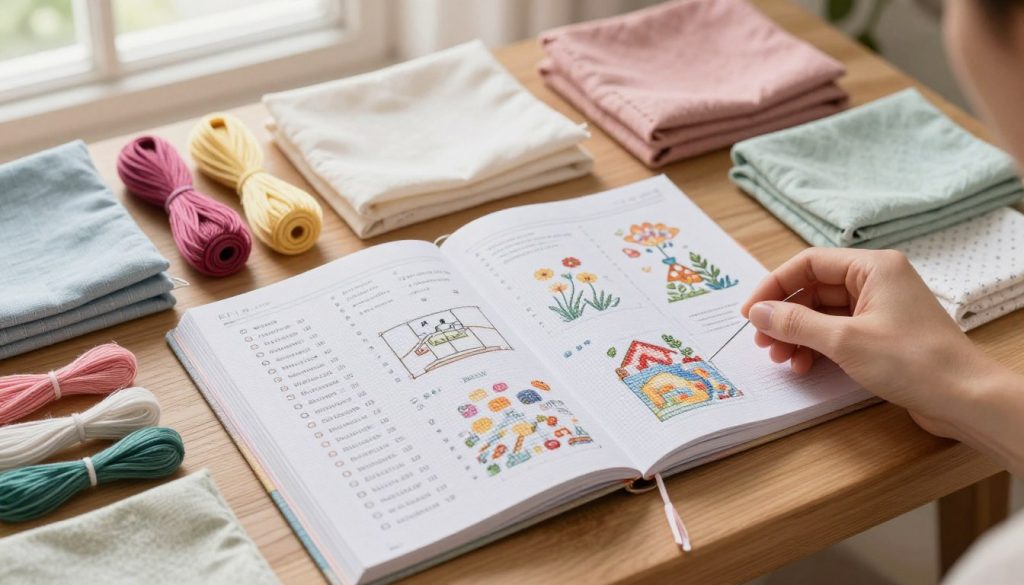
Keep a project sketchbook or planner
Record DMC floss numbers, fabric counts, and needle sizes in your planner. It’s also good to note which frames you used. A DMC floss log inside saves time when you return to a project.
Write a one-line status for each project. This tells you if it’s ready for backstitching, finishing, or framing.
Adopt gridding and organization hacks
Gridding helps cut down on counting mistakes and speeds up work on big designs. Use a removable pen or pre-marked aida to mark 10×10 blocks. Store threads by number in clear boxes or a labeled binder.
Keep needles, scissors, and clips near your chair for quick setup. Store patterns in one folder or app folder for easy access.
Manage attention with multiple-but-planned projects
Work on a small piece for quick wins. Weekend-sized projects help when a big piece stalls. Designate natural stopping points in big works.
Use your planner to schedule nights for big pieces and short sessions for small ones. This mix keeps your creative energy steady without sacrificing progress.
Motivation techniques from mindset, inspiration, and self-care
Big projects need more than just skill. They require a clear mind, small rituals, and self-care to avoid burnout. Here are ways to keep your focus sharp, stay well, and remember why you started stitching.
Look for fresh sources of inspiration
Feeling stuck? Check out Tiny Modernist, Ink Circles, or DMC galleries for new ideas. A quick scroll can refresh your vision and boost your mood.
Use stitching as therapy and safeguard your wellbeing
See cross stitch as a calming habit. Work in focused 20–30 minute sessions, then rest. Try coloring or reading during breaks to keep your mind fresh.
Be kinder to yourself about stopping or changing projects
It’s okay to pause or change your project. Celebrate what you’ve done and what you’ve learned. Taking breaks can actually boost your motivation.
Simple routines to maintain interest
Use pacing, short projects, and a planner to stay on track. Rotate projects to avoid boredom. Set small goals and celebrate each step to stay motivated.
| Approach | Why it helps | Practical tip |
|---|---|---|
| Inspiration browsing | Reconnects you to design and color choices | Save three patterns that excite you for future cross stitch ideas |
| Mindful stitching | Reduces stress and improves focus | Set a 25-minute timer, then take a 10-minute break |
| Project rotation | Keeps interest fresh and prevents burnout | Keep one large, one medium, and one quick piece on the go |
| Accepting pauses | Protects creativity and prevents guilt | Note the reason for pause in a project planner and revisit in weeks |
| Learning new methods | Refreshes practice and builds skills | Try a new cross stitch technique each month and log results |
Community, accountability, and learning to stay motivated
Joining a stitch-along or a local group can revive your energy and keep you stitching. Shared deadlines create momentum. Posting progress photos invites encouragement from a wider cross stitch community.
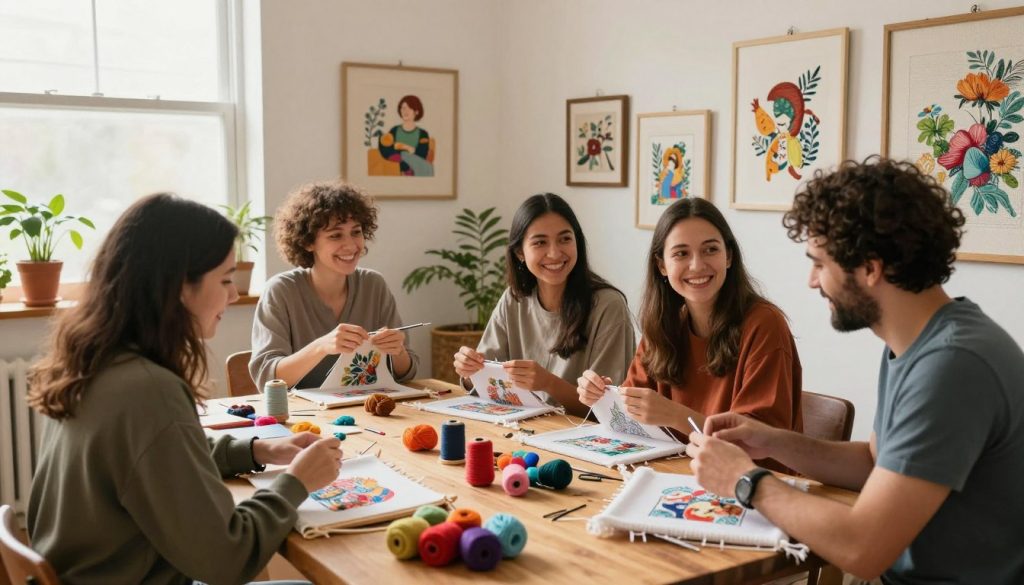
Pick a format that fits your life. Casual Facebook groups, Instagram hashtags, and in-person guilds at craft stores like Joann or Michaels offer different paces and expectations. A friendly forum reduces isolation during long sections. It helps you find quick embroidery hacks that save time and frustration.
Learning small new skills refreshes your interest. Short cross stitch workshops, YouTube tutorials, and weekend classes teach specialty stitches and backstitching techniques. These add detail and variety to a project.
Try one new technique per month to avoid overwhelm. Changing fabric, experimenting with specialty threads, or adding a row of backstitching techniques breaks monotony. It makes progress feel novel.
Accountability works best when it feels gentle. Set flexible, bite-sized goals and track them in a sketchbook. Pair stitching sessions with music, podcasts, or a favorite show. This makes the habit enjoyable, not punitive.
Use checklists or a simple habit app to mark small wins. Celebrate finishing a color block or completing an hour of stitching. These tiny rewards build steady confidence and keep you connected to the cross stitch community.
| Action | Why it helps | How to start |
|---|---|---|
| Join a stitch-along | Creates shared deadlines and friendly accountability | Find a current event on Instagram or Facebook and share a first progress photo |
| Attend cross stitch workshops | Teaches new skills and rebuilds confidence | Sign up for a one-hour online class or a local store session this month |
| Practice backstitching techniques | Adds detail and variety to long projects | Allocate one session to outline a small motif using contrasting thread |
| Adopt embroidery hacks | Saves time and reduces frustration | Try trimming excess fabric or using a needle minder to speed setup |
| Flexible accountability | Makes goals sustainable and pleasant | Set hourly or daily stitch targets and reward completion with a short break |
Conclusion
Working on big cross stitch projects can be slow. It’s okay to take breaks and rest. Try using short goals and 20-minute work sessions to keep moving forward.
Take small breaks with quick projects like bookmarks or ornaments. They can help you stay excited and improve your skills.
Choose patterns and materials that make you happy. Pick soft fabrics and easy-to-use floss. Avoid complicated stitches when you’re not feeling up to it.
Use simple tools to stay organized. Gridding, floss logs, and frames can save you time. This way, you can focus more on stitching.
Join communities that match your pace. Look for stitch-alongs, online groups, and short tutorials. They offer new ideas and support.
See stitching as a way to relax. Be gentle with yourself if you slow down or stop. It’s okay to take breaks.
Try one small thing today. Set a timer for 20 minutes or start a tiny project. Bookmark this guide for more tips. With these simple steps, you’ll stay motivated, whether you’re a beginner or an experienced stitcher.
 English