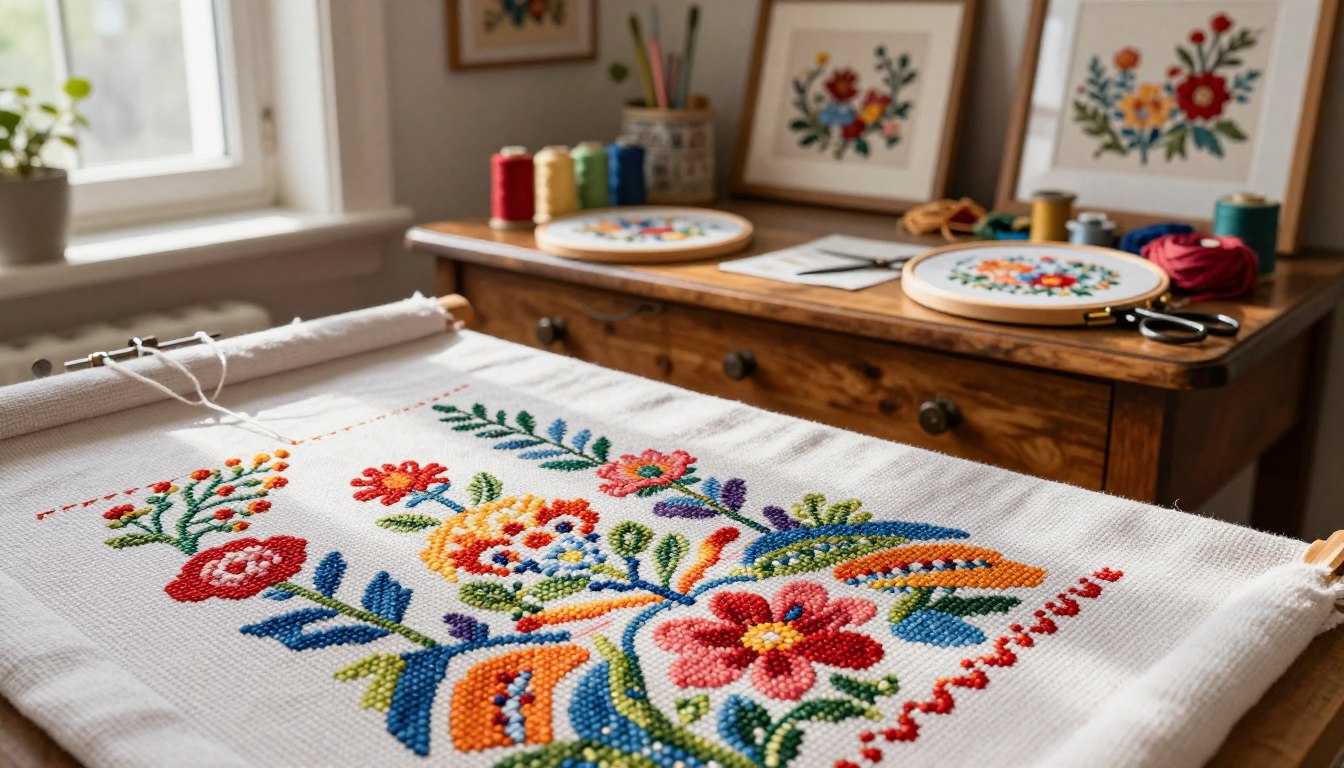
Cross stitch is a simple stitch that looks like an X on fabric. It’s often done on Aida, evenweave, or linen with embroidery floss like DMC. Counted cross stitch is a common starting point, where you count threads or squares to follow a design.
There are many cross stitch patterns, from small samplers to detailed scenes. The basics are easy to learn and teach.
This article will explore cross stitch history and its modern revival. You’ll learn about kits, digital patterns, and tips for beginners. It shows how cross stitch combines creativity, mindfulness, and practical skills.
You’ll discover tools like embroidery hoops, tapestry needles, and DMC floss. We’ll cover common mistakes and how to fix them. Plus, there are tips for planning your projects, including gridding and floss usage calculators.
The history of cross stitch spans ancient times to the present day. It includes medieval and Renaissance periods, the 18th–19th century, and the 20th-century hobby kits. Today, Etsy shops and Facebook groups offer endless embroidery inspiration.
Key Takeaways
- Cross stitch is built on a simple X-shaped stitch worked on grid-like fabric and is accessible to beginners.
- The craft has deep historical roots that inform modern cross stitch patterns and techniques.
- Modern tools and digital patterns make learning and scaling projects easier than ever.
- Cross stitch offers creative expression, stress relief, and skills you can pass down.
- This guide covers history, modern developments, beginner tools, common fixes, and project planning.
Ancient Roots and Historical Evolution of Cross Stitch
Traces of cross stitch can be found in many early cultures. Egypt and Asia have textile finds with X-shaped stitching. This shows how ancient cross stitch was used for both decoration and strength.
The simple form of the stitch made it easy to learn and use on different fabrics. It was found in household items, clothing, and ceremonial cloth. This widespread use is why cross stitch has such a broad history.
Early origins across civilizations
Textiles with stitching date back centuries, even before written patterns existed. Traders and travelers likely spread motifs and techniques. This exchange led to different styles and techniques in various regions.
Medieval and Renaissance developments
In medieval Europe, embroidery became more complex and visible. Nobility used expensive fabrics and metallic threads to show their status. This made needlework a way to communicate visually, with family heraldry and religious symbols appearing in many pieces.
During the Renaissance, patterns became more detailed. Natural motifs, intricate borders, and scenes of people and animals became common. Skilled stitchers used the X stitch to create intricate designs.
Democratization in the 18th and 19th centuries
The Industrial Revolution made quality fabric and thread more affordable. Mills produced cheaper linen and cotton, and new dyeing methods offered more colors. This change allowed needlework to move from the elite to the middle class.
Pattern books and samplers taught girls basic stitches and designs. These teaching tools helped spread cross stitch throughout Europe and North America. Samplers were used to show off a person’s skill and helped standardize designs.
| Period | Key Developments | Typical Materials |
|---|---|---|
| Ancient | Local textile fragments show simple X-stitch use for repair and decoration; cross-cultural spread via trade | Linen, wool, plant fibers |
| Medieval & Renaissance | Rise of ornate motifs, heraldry, religious scenes; stitchwork as social marker | Silk, fine linen, gold and silver thread |
| 18th–19th Century | Mass production of fabrics; publication of pattern books and samplers; broader middle-class practice | Machine-woven cotton, printed patterns, dyed threads |
CROSS STITCH in the Modern Era: Kits, Communities, and the Digital Revival
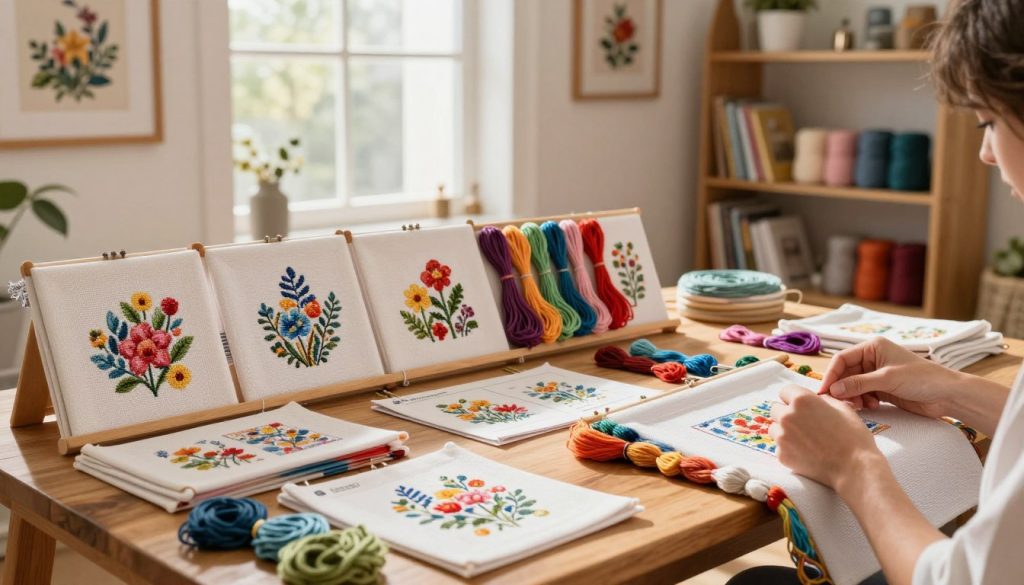
In the 20th century, cross stitch moved from homes to craft shops. By the 1960s and 1970s, kits made it easy for beginners. These kits had everything you needed to start stitching right away.
In the 1980s and 1990s, cross stitch grew more diverse. You could find traditional designs, flowers, and even pop culture themes in stores. Tools and instructions became more standard, welcoming new generations to the hobby.
The 2000s brought digital changes to cross stitch. Now, you can buy digital patterns online. Etsy and Ravelry offer instant downloads, so you can start stitching quickly.
Online communities have also changed the game. You can find groups on Facebook, Instagram, and forums. These spaces let you share your work, get advice, and find new ideas.
Today, there are tools to help plan your projects. Floss calculators and time estimators make budgeting easier. You can also find video tutorials and classes to improve your skills.
Design trends are pushing cross stitch into new areas. Artists use stitches for modern art, home decor, and fashion. Your sampler can become a pillow, wallpaper, or even a piece of clothing.
Cross stitch today is both a craft and an art form. It’s a way to relax and express yourself. Whether you use a kit or digital patterns, you’re part of a tradition that keeps evolving.
| Era | What to Expect | Typical Sources |
|---|---|---|
| Mid 20th Century | Pre-printed kits with Aida cloth, DMC floss, simple samplers | Brick-and-mortar craft stores, department stores |
| Late 20th Century | Broader themes, better instructions, standard tools | Specialty needlework shops, catalogs |
| Early 21st Century | Instant downloadable charts, PDF cross stitch patterns, stitch calculators | Etsy cross stitch shops, designer websites |
| Now | Online cross stitch community support, video classes, modern motifs | Instagram, Facebook groups, pattern marketplaces |
Why You’ll Love Cross Stitch: Benefits, Mindfulness, and Practical Tips
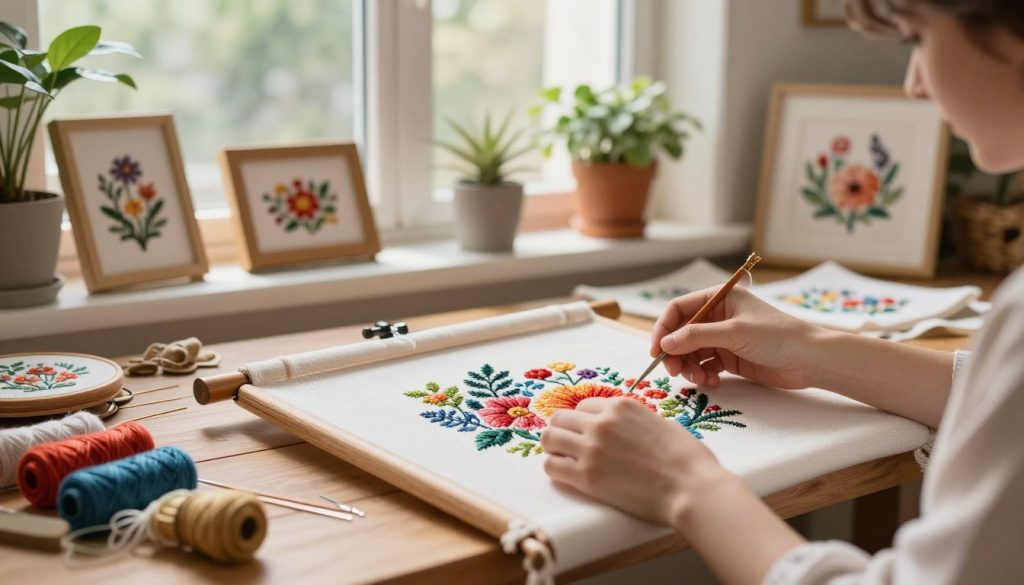
Cross stitch brings quiet rewards as you stitch. The rhythm of needle and thread eases tension. It supports cross stitch therapy for stress relief.
Stitching improves your hands’ skill. You’ll get better at fine motor control, hand-eye coordination, and spatial awareness. Finishing projects boosts confidence and shows the practical benefits of persistence and skill-building.
Mental and physical benefits
When you start stitching, you enter a calming routine. Repetitive stitching lowers anxiety and can lift your mood. Patterns and colors give your mind a small problem to solve, improving concentration and presence.
Physical gains include steadier fingers and better coordination. Older adults say needlework keeps hands nimble. Shared projects create social bonds, extending cross stitch therapy into family and community time.
Beginner guidance and tools
Start with simple supplies. Choose Aida cloth for clear squares and a tapestry needle with a blunt tip. DMC embroidery floss is reliable for consistent color and quality. Use an embroidery hoop or Q-snap frame to keep fabric taut.
Learn counted cross stitch basics: count squares, follow color-coded charts, and practice backstitching for outlines. For 14-count Aida, split six-strand floss into two strands. Gridding with a water-soluble pen or basting method prevents miscounts.
Pick a small pattern with few colors. Organize thread with bobbins or a floss sorter. A sharp pair of scissors and a needle minder save time and frustration. These tools make the hobby smoother from the start.
Common mistakes and simple fixes
Miscounts happen. Grid your fabric and mark chart progress to fix counting errors. Take progress photos to compare the piece to the pattern.
Uneven tension creates messy rows. Practice keeping stitch direction consistent and use a hoop or frame for even tension. If floss runs out or shades differ, buy extra skeins from the same DMC dye lot and test colors on a scrap.
Backstitching gets skipped sometimes, but it transforms detail and definition. Do outlines last, using the prescribed single or double strands. These tips raise the quality of your finish with little extra time.
| Issue | Quick Fix | Tool or Method |
|---|---|---|
| Miscounted stitches | Undo to the last correct grid line and re-stitch | Gridding pens, basting, chart markers |
| Uneven tension | Relax hands and re-stitch maintaining consistent direction | Embroidery hoop, Q-snap frame |
| Floss shortage or color mismatch | Buy extra skeins and test on scrap before use | DMC skeins, small swatch samples |
| Lost detail from skipped backstitch | Add backstitching at the end with correct strand count | Tapestry needles, contrast thread |
| Tangle and knotting | Shorten working lengths and separate strands properly | Thread conditioner, floss bobbins |
Want to dig deeper into needlework secrets? Practice small projects that teach counting, color placement, and finishing. Those early wins build momentum and make every new pattern easier to enjoy.
Project Ideas, Techniques, and Long-Term Practice to Pass Down
Cross stitch projects bring joy at every skill level. Start with small samplers, ornaments, and bookmarks. These use few color changes.
As you gain confidence, move to pillows, seasonal motifs, and themed wall hangings. Tackle large counted pieces or mixed-media work for a real challenge.
Project inspiration for every skill level
Beginner-friendly patterns have clear symbols and limited colors. Try simple floral or geometric patterns to practice basic skills. Use personalized name charts and framed samplers for thoughtful gifts.
Intermediate projects let you explore composition and color. Pick seasonal motifs, simplified portraits, or pillows for your home. Advanced ideas include photorealistic portraits and large panels that demand stamina and planning.
Techniques to expand your skills
Learn fractional stitches, half-stitches, and specialty stitches for texture. Practice backstitching techniques for outlines and fine detail after main crosses. Use one strand for delicate lines and two strands for bolder definition.
Experiment with blending threads for subtle shading. Shift from 14-count Aida to 16–18 count or evenweave and linen for finer detail. Keep a floss usage calculator handy for large color blends and estimating DMC.
Organization, planning, and scaling projects
Plan projects by size and time. Use stitch planners and time estimators to set realistic goals. Pre-grid fabric with water-soluble pens or baste grid lines to reduce counting errors and speed progress.
Adopt cross stitch organization habits early. Use labeled bobbins, floss organizers, and project bags. Track dye lots and stash extra floss before starting a large piece. Choose cross stitch frames such as Q-snap, scroll frames, or hoops to keep even tension across sessions.
Teach younger stitchers by documenting patterns and maintaining neat kits. Share cross stitch gridding methods, counting tips, and simple starter patterns to make learning easier. Preserve progress notes and marked charts so pieces can be finished or passed down with confidence.
Conclusion
Cross stitch is loved for its simple yet rich history. It started in ancient Egypt and grew in medieval and Renaissance Europe. This mix of simplicity and tradition makes it both timeless and personal.
The craft has changed over time. It moved from samplers and books to easy kits and digital patterns. Now, anyone can start stitching with modern tools.
When you start or keep stitching, use helpful tips and tricks. Choose the right materials like Aida cloth and DMC floss. Also, try gridding and backstitching early.
Small steps can make a big difference. Count carefully, use a floss calculator, and keep threads tidy. These habits reduce mistakes and make stitching more fun.
Begin with a simple pattern and gather what you need. Practice gridding and basic backstitch to feel confident. Join online groups or follow Etsy designers for inspiration and advice.
See stitching as a way to relax and be creative. It connects you to those who stitched before you. By sharing your work, you help keep the craft alive for others.
With easy-to-find supplies and lots of resources, you can make stitching a lasting hobby. It combines skill, calm, and tradition in a beautiful way.
 English