
Welcome to a guide that helps you fix common CROSS STITCH problems. Whether you’re starting with beginner patterns or working on bigger projects, small changes can make a big difference. This guide will show you the usual mistakes and how to improve them quickly.
Many mistakes are easy to learn and fix. Issues like choosing the wrong fabric, uneven tension, counting wrong, and messy thread starts often come from bad habits. By changing how you prepare fabric, handle threads, and read patterns, your work will look better and more professional.
This advice comes from experienced stitchers and teaching resources. They cover important topics like fabric counts, gridding, tension control, strand counts, and setting up your workspace. Follow these tips to reduce mistakes, build confidence, and enjoy counted stitchcraft more.
Key Takeaways
- Common cross stitch mistakes are usually fixable with better preparation and simple habit changes.
- Choosing the right fabric and using a cross stitch calculator prevents sizing issues.
- Consistent tension and stitch direction improve the final look of your pieces.
- Gridding and clear marking reduce miscounts and wasted time.
- Proper thread starts, ends, and storage keep the back tidy and colors true.
- A well-lit, organized workspace makes beginner cross stitch projects easier and more enjoyable.
Choosing the Right Fabric and Count for Your Project
Choosing the right cross stitch fabric is key to your project’s look and ease. The fabric you pick affects stitch size, detail, and the final size of your piece. Before starting, it’s important to understand fabric counts and how they impact your project.
Understanding fabric counts and how they affect finished size
Fabric counts show how many threads or holes are per inch. A higher count means smaller stitches and a smaller finished piece. If you change fabric counts, your design size will change, and you’ll need to recalculate margins.
Recommended fabrics for beginner cross stitch patterns
Beginners often choose 14-count Aida because the holes are big and easy to see. For more detail, 18-count linen is popular. Patterns usually suggest a fabric; follow it or adjust your strand count if you change fabric.
Using a cross stitch calculator to confirm fabric dimensions
Before cutting fabric, use a cross stitch calculator. Enter the stitch counts and margins you want. This ensures you have enough fabric and keeps your design centered.
Preparing and treating fabric: washing, pressing, and edge finishing to prevent fraying
Wash and press fabric as the pattern suggests to remove sizing and prevent shrinkage. Use pinking shears, a zigzag stitch, or fray-check to prevent fraying. Fold the fabric in half twice to mark the center for accurate placement.
| Fabric Type | Common Count | Best For | Starter Tips |
|---|---|---|---|
| Aida | 14-count | Beginners, bold designs | Use 2 strands of floss; easy hole visibility |
| Linen | 18-count | Finer detail, heirloom pieces | Use fewer strands or a smaller needle; more precise tension |
| Evenweave | 28-count (works as 14ct over 2) | Detailed patterns, fractional stitches | Count threads, not squares; adjust strands for coverage |
| Monks Cloth | 10-12 holes/inch | Rug hook style, bold textures | Not typical for counted cross stitch; check pattern first |
Centering, Planning, and Starting in the Right Place
Starting your project with precision saves time and fabric. Before you begin, check a few things. Find the fabric’s center, make sure the pattern is placed right, and plan your cross stitch margins. This way, you won’t stitch too close to the edge.
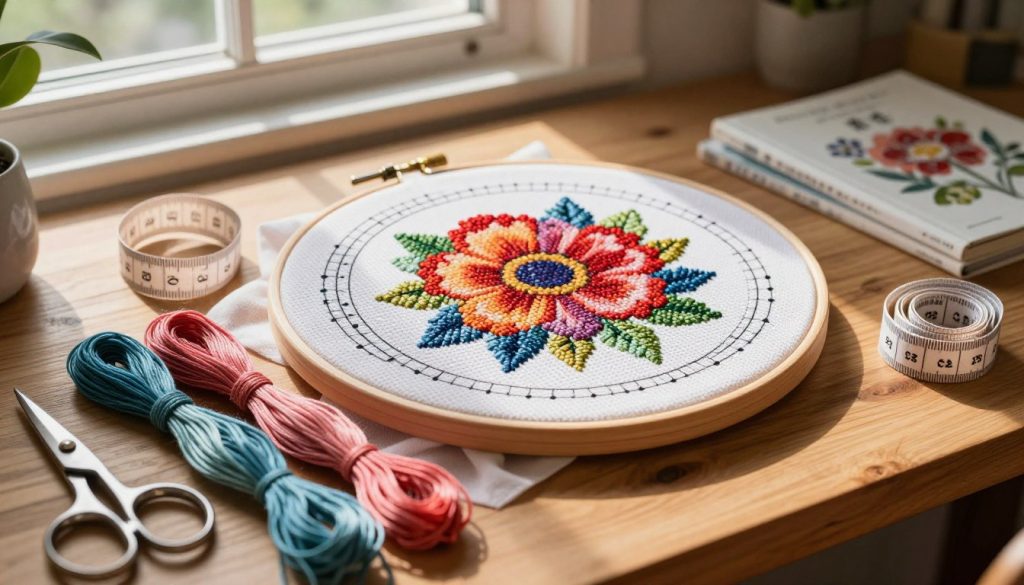
How to find the center of fabric and pattern
Fold your Aida or linen in half both ways. The creases meet at the true center. Match this point to the center grid mark on your pattern to stay on track. For a precise mark, use a washable fabric pen or temporary grid threads.
Planning margins and placement
First, measure the total stitch count of your pattern. Add the border or hoop allowance you want. Then, compare that to your fabric size. Decide on your cross stitch margins early to avoid running out of space.
Mark small reference lines at the planned margins. This helps you keep your orientation while stitching.
When to start from the center or follow pattern directions
Most counted work suggests starting from the center for balance. If a designer tells you to start at a corner or edge, follow their instructions. Always check your placement by measuring and aligning grid marks before starting. This ensures your pattern is placed correctly.
| Step | Action | Why it helps |
|---|---|---|
| Find center | Fold fabric twice; match to pattern center grid | Prevents off-center stitching and wasted fabric |
| Plan margins | Calculate stitch count + border; mark edges | Keeps design balanced and allows framing |
| Mark reference points | Use water-soluble pen, grid threads, or pins | Maintains alignment on large or specialty grounds |
| Choose start method | Start from center for counted designs; follow designer notes when given | Ensures correct pattern placement and fewer corrections |
| Verify placement | Measure twice, stitch once; compare to pattern placement | Reduces risk of misplacement and incomplete designs |
Miscounting and Pattern Navigation
Miscounts can ruin a counted cross stitch project quickly. Poor lighting, rushing, and skipping colors are common mistakes. These errors can make small problems big.
Gridding helps avoid miscounts. Use a 10×10 grid to match your pattern blocks. Draw lines with a water-soluble pen or use basting threads.
Counting pins mark row boundaries and stopping points. They help you remember where to stop.
On paper patterns, highlight completed areas. For digital patterns, use tools to shade blocks and add notes. This keeps your work organized and prevents mistakes.
If you find an error, decide how to fix it. Unpicking and restitching is the best way. If it’s small, you might just leave it.
Don’t let threads get too long. They can snag and show on the front. Break threads often and work close areas together.
Use both physical and digital tools. Gridding and counting pins help, as does a water-soluble pen. Keep your digital pattern up to date. These steps will help you avoid mistakes and keep your work neat.
CROSS STITCH Stitching Technique and Tension Control
Mastering your stitch technique brings a clean, professional finish to every project. Simple habits you adopt now will prevent puckering, uneven coverage, and the frustration of frequent rework. Practice builds muscle memory for consistent stitch direction and even stitch tension.
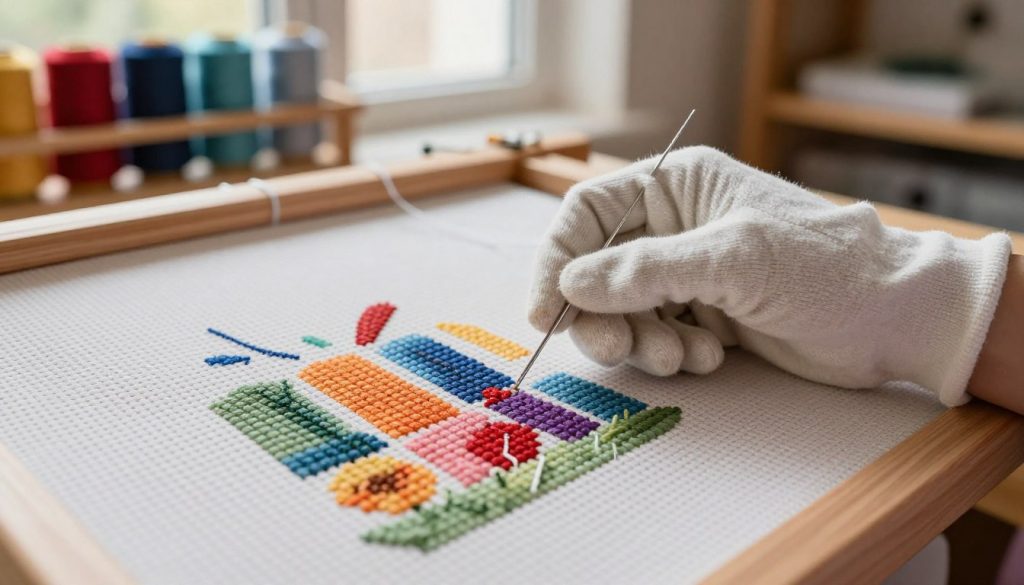
Consistent stitch direction
Make the first half of every X the same diagonal across your work. Many stitchers start bottom-left to top-right for the first stroke and complete the cross in the opposite diagonal. Keeping the direction uniform across a whole area gives a smooth surface and uniform light reflection.
Maintaining even stitch tension
Pull your thread with a gentle, steady feel. Too tight stitches will pucker the fabric, while too loose stitches sit unevenly or form loops. Aim for stitches that lie flat without distorting the weave. If a section looks different, remove a few rows and restitch to match the surrounding tension.
Using hoops and frames
Hoops and frames hold fabric taut so your stitch tension stays stable. Options include wooden embroidery hoops, Q-snaps, and stretcher bars. Each tool changes how the fabric behaves under the needle, so try a couple to see which reduces fatigue and gives the most consistent result.
Scroll bars
Scroll bars are ideal for larger projects. They keep fabric evenly stretched without constant rehooping. Paired with a good frame, scroll bars let you work comfortably while keeping stitch tension steady across wide areas.
- Practice rows of Xs focusing on the same start stroke to train your hands.
- Match tension by comparing new stitches to adjacent ones; restitch small areas when needed.
- Rotate between hoops and frames to find the best fit for different fabric counts.
Good cross stitch techniques and steady stitch tension transform a piece from rough to refined. Prioritize consistent stitch direction and reliable tools like hoops and frames or scroll bars to raise the quality of your work.
Thread Handling: Strands, Starts, and Ends
Working with thread strands changes how your design looks on fabric. Stranded embroidery floss has six strands. Most 14-count Aida patterns use two strands for the right look and feel.
Before stitching, split and confirm the strands. This prevents uneven and thick coverage.
How many strands to use
Choose the right strand count for your pattern and fabric. If a pattern calls for two strands, use exactly two. Using more strands can make stitches bulky and change the size of your design.
For denser fabrics or backstitching, follow the pattern’s advice. Keep scissors and a magnifier handy for precise splitting.
Start and end methods that keep the back neat
Avoid knots in your stitching. Use the loop start for even strand counts. For odd counts, try the pin stitch or start with a single strand.
When finishing, weave tails under stitches to secure them without bulk. This keeps the back neat and prevents knots from showing.
Avoiding long carries and managing scattered colors
Long carries can create lumps and show through on light fabric. Always end and start new threads instead. When colors are scattered, stitch areas in sequence or grid the fabric to reduce jumping.
Plan thread changes and use small stitches between colors. This minimizes loose threads.
Proper storage and care for floss
Keep DMC floss and threads away from sunlight to prevent fading. Store them in sealed boxes, drawers, or plastic bobbins. Label bobbins and keep skeins clean to avoid stains.
Good storage keeps colors vibrant and makes it easier to find the right shade.
Practical tips and tools
- Use bobbins, thread cards, or labeled organizers to keep colors accessible when managing many shades.
- Keep a needle minder and small scissors among your cross stitch tools for quick thread changes.
- When moving between distant color blocks, weigh the pros and cons of a short carry vs. ending the thread.
Workspace, Lighting, and Ergonomics
Set up a calm, tidy corner for stitching. Clear surfaces and labeled boxes for threads, patterns, and needles help keep focus. Good cross stitch organization reduces lost needles, wasted time, and the urge to abandon projects.
Place your most-used cross stitch tools within arm’s reach. Keep scissors, needle minders, a thimble, and spare needles in dedicated containers. Use a small clipboard or folder for patterns so pages stay flat and readable.
Eye comfort matters. Aim for natural daylight when possible. If you stitch at night, choose daylight bulbs or LED task lamps that mimic daylight. A magnifying lamp is a smart choice for 18-count fabric or tiny details.
Clip-on magnifiers and desktop magnifying lamps cut eye strain. Try a daylight slimline table lamp or a BenQ LED task light if you need broad, even illumination. Good cross stitch lighting prevents miscounts and reduces fatigue.
Sitting right keeps you stitching longer. Adjust chair height so your shoulders relax and your forearms rest lightly on the table. Add lumbar support or a small cushion to maintain an upright posture.
Take short stretch breaks every 30 to 45 minutes. Simple neck rolls, shoulder shrugs, and wrist stretches ease tension. These small moves are central to healthy cross stitch ergonomics and help avoid chronic pain.
Your workspace can feed wellbeing. A neat, well-lit setup turns stitching into a soothing routine. Many stitchers find that care taken with tools and posture deepens the benefits of cross stitch therapy.
Use the quick reference below to compare common lighting and ergonomic choices for a functional stitching area.
| Item | Why it helps | Recommended option |
|---|---|---|
| Task lamp | Bright, focused light for counting and detail work | LED daylight lamp with adjustable arm |
| Magnifier | Makes small stitches and backstitching easier | Magnifying lamp with 3x–5x lens or clip-on magnifier |
| Tool storage | Keeps patterns and floss organized, cuts clutter | Stackable boxes and labeled pouches |
| Chair support | Prevents slouching and reduces neck strain | Adjustable chair with lumbar pillow |
| Break routine | Reduces repetitive strain and refreshes focus | Timer set for 30–45 minute intervals |
Tool Care, Organization, and Good Habits
Keeping your kit tidy makes stitching faster and more enjoyable. Store scissors, needles, and other cross stitch tools in dedicated spots. This way, you spend less time hunting and more time stitching.
Scissors, needles, and needle minders
Use small embroidery scissors for thread and a larger pair for fabric. Brands like Premax or Fiskars last longer than cheap household scissors. Always wipe blades after use and oil pivot screws if they squeak.
Keep needles in magnetic cases or use decorative needle minders. This way, you won’t lose needles and save time. DMC magnetic cases and enamel needle minders are great for this.
Clean hands and finished pieces
Wash your hands before stitching to avoid oils and dirt. If a stain happens, test a gentle wash on a scrap or follow kit instructions. When washing finished cross stitch items, use mild detergent and cool water. Then, press on the reverse with a towel for protection.
WIP organization
Label projects with the pattern name, start date, and current page or stitch count. Pack works-in-progress in zip bags or project boxes to protect fabric and threads. Good WIP organization helps you rotate projects and finish more than you begin.
Keep a simple list of active projects. Rotate intentionally so one or two pieces get attention each week. This habit prevents piles of abandoned work and keeps momentum.
Embroidery hacks and needlework secrets
Grid your fabric or use counting pins to cut down on mistakes. Stitch solid areas in blocks rather than jumping around. This reduces thread carry and speeds progress. Use loop starts and weave-in tails for tidy backs and fewer knots.
Try basting large pieces to stabilize fabric during long sessions. Accept small imperfections when they don’t affect the design. Many stitchers leave minor errors as part of the handmade charm.
Simple habit fixes
Never stitch in dim light and avoid blunt household scissors. Build routines: prepare fabric, check the center, store threads away from sunlight. Tidy tools after each session to lower stress and mistakes.
These small practices, from scissors care to smart WIP organization, keep your projects moving. They make stitching a pleasure.
Conclusion
Choosing the right fabric and count is key. Plan your center well and use a cross stitch calculator to check margins. Simple habits like gridding fabric and marking patterns help a lot.
Keeping your workspace tidy and well-lit is crucial. These tips help avoid mistakes and keep your design straight from start to finish.
Stitch consistently and keep tension even for a better look. Handle threads carefully, matching strand count to fabric. Use secure starts and ends.
Try one new method, like a loop start, to speed up your work. Good organization for tools and works-in-progress keeps projects going. It also stops you from giving up.
Practice backstitching and basic finishing to make your piece look great. Cross stitch is forgiving, and mistakes are part of learning. With these tips and habits, you’ll finish more projects that look professional and feel rewarding.
 English