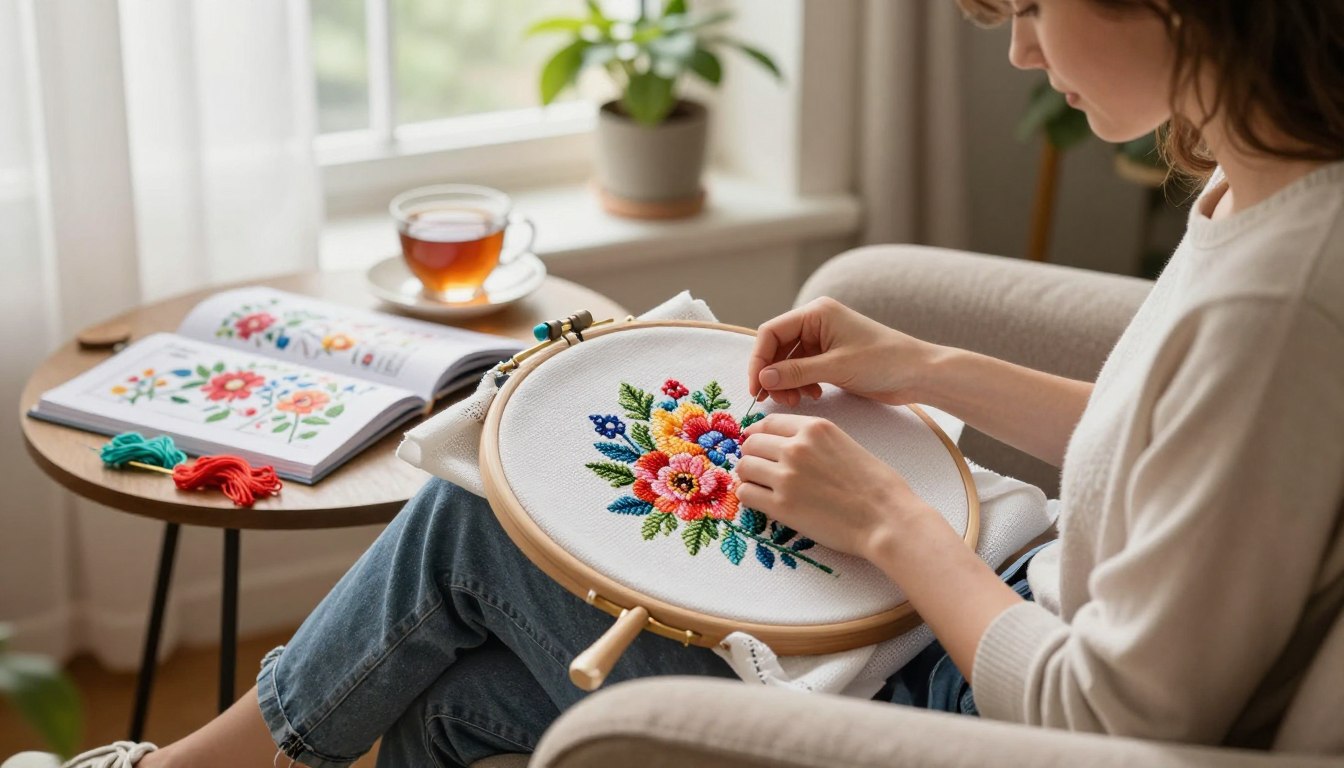
Cross stitch is a simple, grid-based needlecraft that gives you clear, lasting results. You work one X at a time on fabric like Aida, and finished pieces stay as keepsakes for years. This makes cross stitch projects satisfying in a way digital hobbies rarely are.
As people look for low-tech ways to unwind, cross stitch has seen a steady rise in interest. It’s like cross stitch therapy: a slow, deliberate practice that pulls you out of constant screen time. The rhythm of stitching helps you focus and calm your mind.
Getting started is easy and inexpensive. All you need is a needle, thread, and fabric, making it accessible for beginners. Kids build counting skills and fine motor control, while older adults keep dexterity and mental engagement. The craft fits many ages and lifestyles.
Beyond technique, cross stitch also feeds creativity. You can follow a pattern or personalise a design for a gift or home piece. The vibrant online community offers embroidery inspiration and ready-made patterns, making it simple to find projects that match your taste and skill level.
Key Takeaways
- Cross stitch delivers tangible, long-lasting results and makes satisfying keepsakes.
- The hobby acts as cross stitch therapy by encouraging mindful, present-focused activity.
- Cross stitch for beginners is budget-friendly and easy to start with minimal tools.
- Projects help kids and older adults with counting, coordination, and dexterity.
- Online communities supply patterns, tips, and embroidery inspiration for every skill level.
CROSS STITCH as a Mindfulness Practice and Mental Health Tool
When you pick up a needle and thread, you start a calming ritual. The small X-shaped stitches create a steady rhythm. This rhythm helps you focus and quiet your mind.
How repetitive stitching promotes relaxation and a flow state
The motion of counted cross stitch slows your breathing and narrows your focus. As you stitch, your mind becomes more focused. This often leads to a flow state, where time seems to slow down and worries fade.
Basic cross stitch techniques help you achieve small victories. These small wins boost your confidence and reduce mental chatter. Each row becomes a manageable task that keeps your attention without feeling overwhelmed.
Evidence linking cross stitch to reduced stress hormones and improved mood
Studies show that stitching can change your biology. It can lower stress markers and improve mood. People who stitch regularly report feeling calmer and clearer in their thinking.
Cross stitch therapy is seen as a helpful tool for managing anxiety and depression. It’s a low-cost way to improve your mood and quiet your mind.
Cross stitch as a screen-free evening routine to improve sleep quality
Switching to stitching in the evening reduces blue-light exposure and mental stimulation. It helps you relax without the alerting effects of screens. Many stitchers find they fall asleep faster and wake up feeling refreshed.
Try a short pre-bed routine with simple stitching tips. Choose calming colors, keep sessions short, and have a small kit nearby. This makes it easy to disconnect and prepare for sleep.
| Benefit | What it feels like | Practical cross stitch techniques |
|---|---|---|
| Reduced anxiety | Calmer breathing, fewer racing thoughts | Even tension, small stitches, count method |
| Improved mood | Sense of progress and small rewards | Color planning, backstitch highlights, finishing tips |
| Better sleep | Easier wind-down, less screen-related alertness | Short evening sessions, low-light projects, gentle pace |
| Increased focus | Longer stretches of undistracted attention | Counted patterns, grid marking, tidy floss management |
Why Cross Stitch Is Easy to Learn and Ideal for Beginners
Cross stitch is great for beginners because it simplifies complex images into easy squares. It uses a grid, like Aida, to guide each stitch. This makes it easy to focus on one stitch at a time.
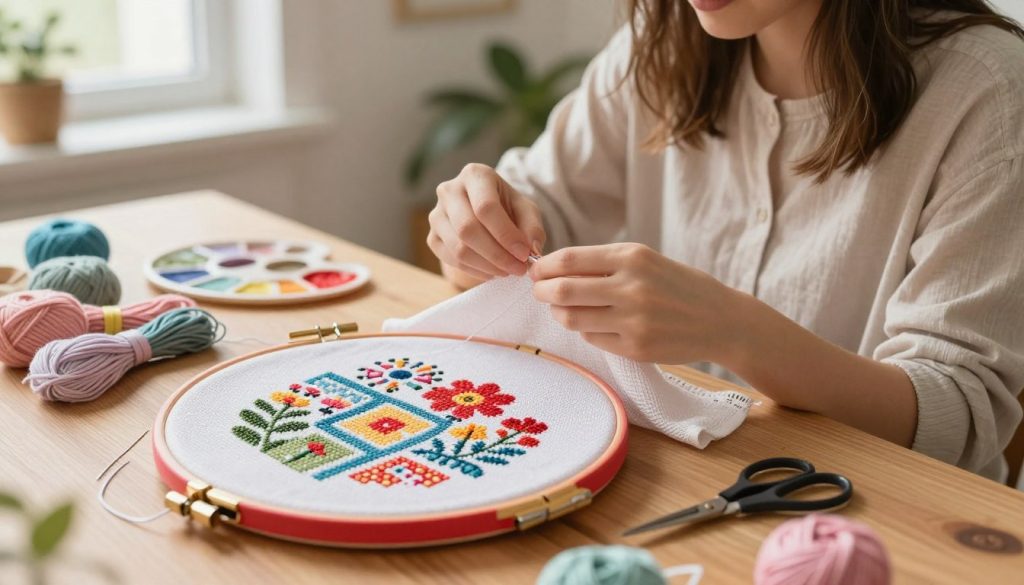
First, learn the basic X stitch and how to read charts. The fabric count, like 14-count or 16-count, shows how many stitches fit in an inch. This helps you choose the right fabric for your project.
Start with small, clear patterns. They help you practice counting squares and keeping your stitches even.
Counted cross stitch basics: understanding grids, Aida and cross stitch fabric
Aida cloth has visible holes that help guide your needle. This makes it easier to avoid mistakes and learn faster. Higher counts offer more detail, while lower counts create larger, bolder stitches.
Beginner cross stitch kits and what to look for (DMC floss, needles, clear instructions)
Good beginner kits include Aida fabric, a clear chart, tapestry needles, and DMC floss. DMC is known for its color accuracy and durability. Look for kits with floss numbers and a floss legend for easy reordering.
Start with a small kit and simple patterns to build confidence. Choose a kit with step-by-step directions and a photo of the finished piece. This will help you learn basic stitching and finishing.
Common beginner mistakes and simple cross stitch tips to avoid them
New stitchers often miscount, start in the wrong spot, or pull stitches too tight. Use an embroidery hoop or frame to keep your stitches even. Always count twice before piercing the fabric to avoid mistakes.
Keep thread lengths moderate and separate strands as needed. Work in good lighting to see the fabric clearly. Learn basic finishing steps early, like securing tails and weaving ends, to keep your work neat and lasting.
Accessibility and Benefits for All Ages
Cross stitch is for everyone, no matter your age. You can start with simple patterns and see progress right away. It’s great for learning, keeps your hands busy, and offers many designs to choose from.
For kids, cross stitch makes math fun. It helps with counting and following steps. It also improves hand-eye coordination and fine motor skills.
Young ones feel a sense of accomplishment when they finish a piece. It teaches patience and boosts confidence. There are kits for beginners that make it easy and fun for kids.
For older adults, stitching is good for the hands. It keeps them dexterous and can slow down age-related decline. It also keeps the mind sharp by improving memory and focus.
Stitching groups and online classes are great for socializing. They help people who have trouble moving stay connected. These groups offer support and new ideas for stitching.
Today, designers offer a wide range of stitching ideas. You can find patterns that are funny, pop culture-themed, or even about activism. This attracts a diverse group of stitchers.
The internet makes it easy to find new patterns. You can quickly find designs that match your interests. This makes it simple to start a new project that reflects your personality.
| Age Group | Benefits | Suggested Project |
|---|---|---|
| Children (6–12) | Counting skills, pattern reading, hand-eye coordination | Simple animal pattern, 4″ hoop, Aida 14-count |
| Teens & Young Adults | Creative expression, fine motor refinement, social sharing | Pop-culture sampler, downloadable chart, small framed piece |
| Adults (30–60) | Stress relief, focus enhancement, hobby collection | Medium sampler, colour-blending practice, mixed techniques |
| Older Adults (60+) | Dexterity maintenance, cognitive stimulation, social engagement | Large sampler worked in sessions, muted palette, tactile threads |
Practical Advantages: Portability, Low Cost, and Pick-Up-and-Put-Down Convenience
Cross stitch is perfect for a busy life. You can take a small project anywhere. Whether you’re commuting or waiting, you can stitch.
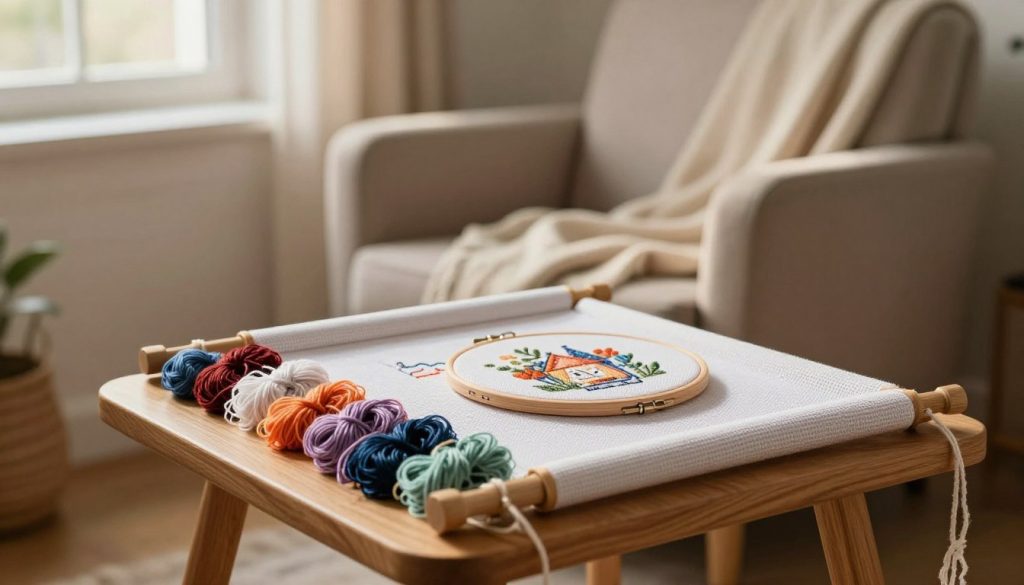
Why small projects travel well
Most cross stitch kits are small and quiet. You can stitch in cafes or parks with just a few items. This makes it great for multitasking.
Budget-friendly supply list
You don’t need to spend a lot to start. Aida fabric, DMC floss, and a tapestry needle are essentials. You can add extras later if you want.
How minimal cross stitch tools deliver value
With just a hoop and scissors, you can stitch a lot. This keeps costs low. Starter kits have everything you need and make learning easy.
Project sizing and in-progress storage
Choose small kits for quick projects. Larger pieces offer more detail. Pick a size based on your time.
Smart options for cross stitch storage and organization
Store your work in zip pouches or project bags. This keeps your supplies organized. Use a binder or tote box for multiple projects.
Label each pouch with the project name and needle size. This makes it easy to find your work and keeps things tidy.
Creative Techniques, Tools, and Community That Enhance Relaxation
Refresh your stitching with new techniques and tools. These can make your projects more enjoyable and calming. Small changes can make long sessions feel easier.
Backstitching techniques add sharp outlines and details. Stick to pattern lines and keep stitches even to avoid clutter. Try French knots and special stitches on scrap fabric first to control size.
Mix two strands of different colors for soft gradients and deep shading. Practice blending colors on sample squares to find good combinations.
Choose cross stitch frames that fit your stitching style. Q-snaps, scroll frames, and traditional hoops all offer consistent tension and comfort. Pick a frame that lets you see the pattern clearly and keeps fabric flat.
Use cross stitch gridding to save time and reduce mistakes. Mark fabric with water-soluble pens or pre-gridded cloth. Good gridding makes complex patterns easier.
Keep floss organized with bobbin cards, plastic organizers, or labeled rings. Strong organization prevents tangles and makes color changes easy. Store leftover DMC floss by number for future projects.
Try embroidery hacks to speed up your work. Work by color to reduce thread changes. Secure thread ends under stitches for a neat back. Use a needle minder to avoid losing your needle.
Break big projects into smaller sections or pages. This helps you see progress and stay motivated. Good lighting and a magnifier make high-count fabric easier.
Join stitch-a-longs and online groups for tips and support. These communities offer feedback and inspiration. Local meetups provide hands-on help and company.
| Focus | Quick Benefit | Practical Tip |
|---|---|---|
| Backstitching techniques | Adds definition to motifs | Follow pattern lines; keep stitches same length |
| French knots & specialty stitches | Introduce texture and focal points | Practice on scrap fabric for consistent knots |
| Cross stitch frames | Maintain even tension | Choose Q-snaps for portability or scroll frames for large work |
| Cross stitch gridding | Reduce counting mistakes | Use water-soluble pens or pre-gridded fabric |
| Cross stitch organization | Save time finding colors | Label bobbins and store leftovers by DMC number |
| Embroidery hacks | Speed up stitching | Work by color blocks and secure ends under stitches |
| Needlework secrets | Improve workflow and comfort | Use needle minders, magnifiers, and break projects into sections |
| Community groups | Inspiration and support | Join stitch-a-longs and online forums for shared goals |
Conclusion
Cross stitch is a calming craft that fits into busy days. With a small kit, Aida fabric, and DMC floss, you can start stitching quickly. It’s a great way to relax and see progress.
Using cross stitch as a screen-free evening routine can help reduce stress. It improves focus and supports better sleep. This gentle practice is calming and repetitive.
Cross stitch is more than just a hobby; it’s therapy. It combines creativity with benefits for mood and fine motor skills. Start with basic stitches like the X stitch and backstitch to build confidence.
Use tips like gridding and floss organization to keep projects fun. Working in short sessions makes it enjoyable and portable.
You don’t need to spend a lot to enjoy cross stitch. Small projects and clear instructions make it affordable. Join online communities for ideas and motivation.
With regular practice, your work becomes a calming ritual and a keepsake. It shows your progress and creativity.
 English