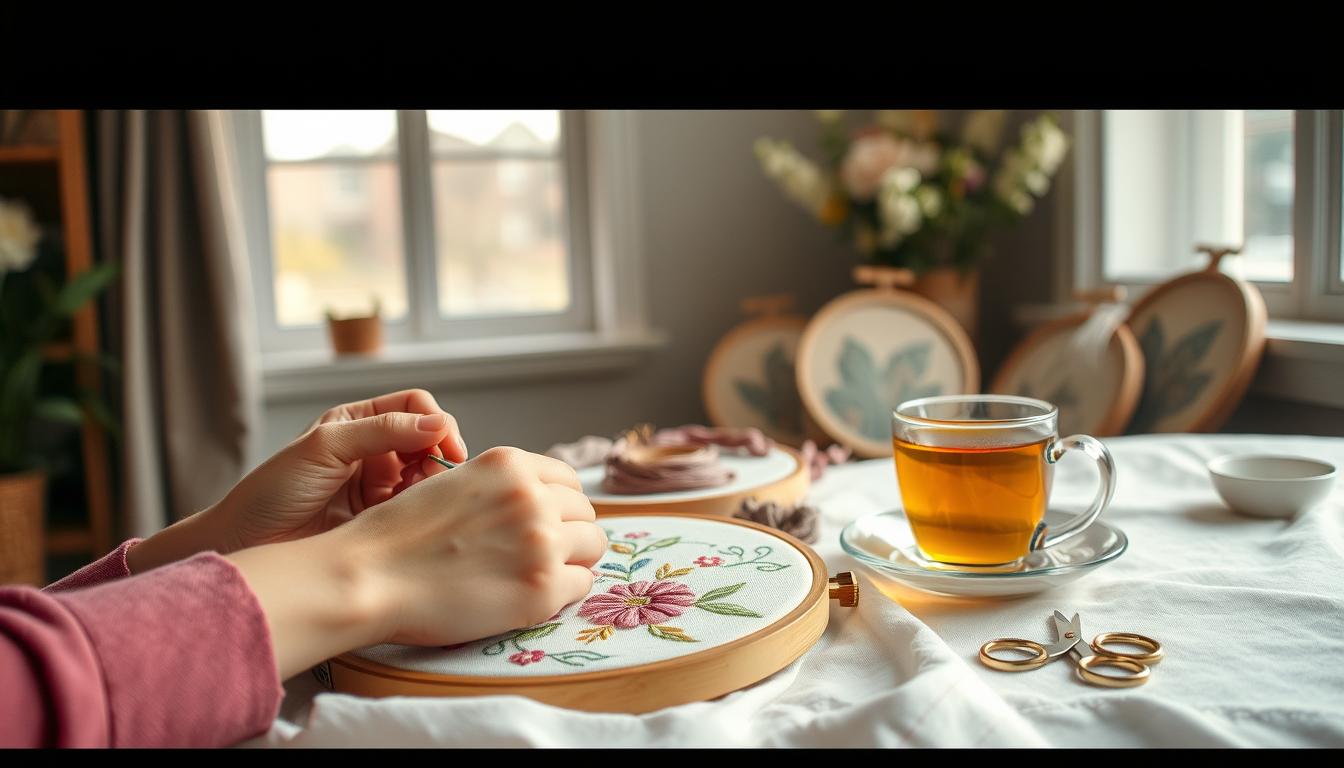
Embroidery is more than just a hobby. It can transform how you feel and handle stress. Hand & Lock reports that stitching can quiet your mind in minutes. The repetitive motion keeps you busy and lowers stress hormones.
University College London’s research backs this up. Textile crafts like knitting and embroidery can reduce inflammation and stress. They may even lower dementia risk over time. Studies show that embroidery helps create flow states and emotional connection.
Embroidery offers more than just stress relief. It improves focus and fine motor skills. It also lets you express yourself creatively. Plus, hand sewing and visible mending support sustainability by making clothes last longer.
Research, industry reports, and mental health writing all agree. Embroidery is a low-cost, accessible health craft with real benefits.
Key Takeaways
- Embroidery and embroidery wellness help reduce stress quickly through repetitive action.
- Hand embroidery supports brain health and may lower inflammation and dementia risk.
- Textile crafts improve focus, fine motor skills, and offer emotional expression.
- Embroidery benefits include lower blood pressure and a stronger sense of calm.
- Starting is affordable and practical—materials often cost under $20.
How embroidery promotes stress reduction and lowers cortisol
Embroidery is more than just pretty designs. It can be a way to reduce stress. Studies and craft reports show it can change your mood and body.
A UCL (2020) study found that art can lower stress hormones like cortisol. Hand & Lock and the Home Sewing Association agree. They say the touch and rhythm of stitching calm the mind and heart.
Research linking artistic activities to lower stress hormones
Studies show that making crafts can lower cortisol and improve well-being. This is seen in academic papers, craft reports, and community programs. It shows that creative activities can change how we handle stress.
Mechanisms: repetition, rhythm, and muscle memory
Repetition and rhythm create a calm pattern in your mind. When you repeat a stitch, your body remembers it, freeing your mind. This helps you enter a flow state and reduces stress hormones.
Practical tips to use embroidery as a daily stress-relief ritual
Begin with short sessions of 15–30 minutes to avoid getting tired. Choose simple designs to keep your mind calm. Make sure you have good lighting and a comfortable chair.
Make a small ritual to start your embroidery. Try a warm drink, soft music, or a special place for your hoop and threads. Keep a journal to track your progress and see how it affects your mood.
| Action | Why it helps | Suggested routine |
|---|---|---|
| Short daily sessions | Builds consistency without strain | 15–30 minutes after breakfast or before bed |
| Simple patterns | Reduces cognitive load and frustration | Small motifs or sampler squares |
| Comfortable setup | Supports sustained practice and focus | Good light, supportive chair, ergonomic needle |
| Ritual anchors | Signals your brain to switch into calm mode | Tea, playlist, or dedicated stitching corner |
| Session tracking | Reinforces habit and reveals benefits | Short journal note: time, mood, physical sensations |
Embroidery and mental health: anxiety reduction and emotional regulation
Stitches can help you breathe more slowly and calm your mind. Studies by Hand & Lock and the Home Sewing Association show embroidery can lower anxiety. It also encourages mindfulness. Looking at beautiful embroidery can make you feel calmer too.
Research with teens in open-studio settings shows clear results. They felt more in control and calm. They also felt a sense of calm from the repetitive action. This helped them express their emotions without feeling rushed.
Occupational therapists and art therapy experts have used embroidery for years. It helps those who struggle with constant thinking and PTSD. The act of stitching requires your full attention. This helps break the cycle of worry and reduces anxiety.
You can do embroidery alone or in a group setting. In groups, it’s a way to share feelings while respecting personal space. Therapists might add stitching to treatment plans. It helps people express feelings without words and learn to focus.
| Setting | Primary Benefit | Who it helps |
|---|---|---|
| Individual hand embroidery practice | Immediate focus, self-paced calming | Anyone needing quick anxiety reduction |
| Open-studio with therapist present | Shared safety, emotional communality | Adolescents and groups processing trauma |
| Occupational therapy sessions | Skill rebuilding, attention training | Patients recovering motor or cognitive function |
| Art therapy programs | Nonverbal expression, emotional regulation | Clients working on emotional awareness |
Embroidery improves cognition, memory, and brain plasticity
When you pick up a needle, you start a small, focused workout for the mind. Regular stitching practices strengthen spatial reasoning and procedural memory. These changes in mental demand reflect the core benefits of embroidery that support everyday thinking and recall.
Research links craft activities to lower dementia risk through ongoing cognitive engagement. Studies by Hand & Lock and other craft scholars show that gestural and spatial work, like embroidery, helps maintain neural circuits tied to memory and learning.
Fine motor practice matters for more than neat seams. Repetitive hand movements train coordination and bilateral hand use. This training builds fine motor skills while strengthening attention and task sequencing.
Therapists report that patterned stitching promotes brain plasticity during recovery from injury. Needlework tasks can be tailored to challenge precise hand motions and visual planning. This kind of graded practice supports repair of neural pathways after stroke or trauma.
Embroidery helps you sustain focus and visualize spatial relationships. Those cognitive demands build reserve capacity the brain can draw on as you age. Group stitching adds social interaction, which amplifies benefits and may further reduce dementia risk.
Below is a concise comparison of cognitive effects and practical uses you can try. Use it to match simple exercises to goals for attention, coordination, and recovery.
| Goal | Stitching Exercise | Targeted Skill |
|---|---|---|
| Improve sustained attention | Long running stitch sequences on a marked grid | Concentration and procedural memory |
| Refine bilateral coordination | Cross-stitch patterns requiring symmetrical hand use | Fine motor skills and hand dominance integration |
| Enhance spatial visualization | Embroidery with color-block pattern planning | Spatial reasoning and planning |
| Support neural recovery | Graded needlework tasks increasing complexity over weeks | Brain plasticity and pathway re-establishment |
| Boost cognitive reserve | Regular group workshops with varied projects | Memory consolidation and social-cognitive engagement |
Emotional expression and self-discovery through embroidered art
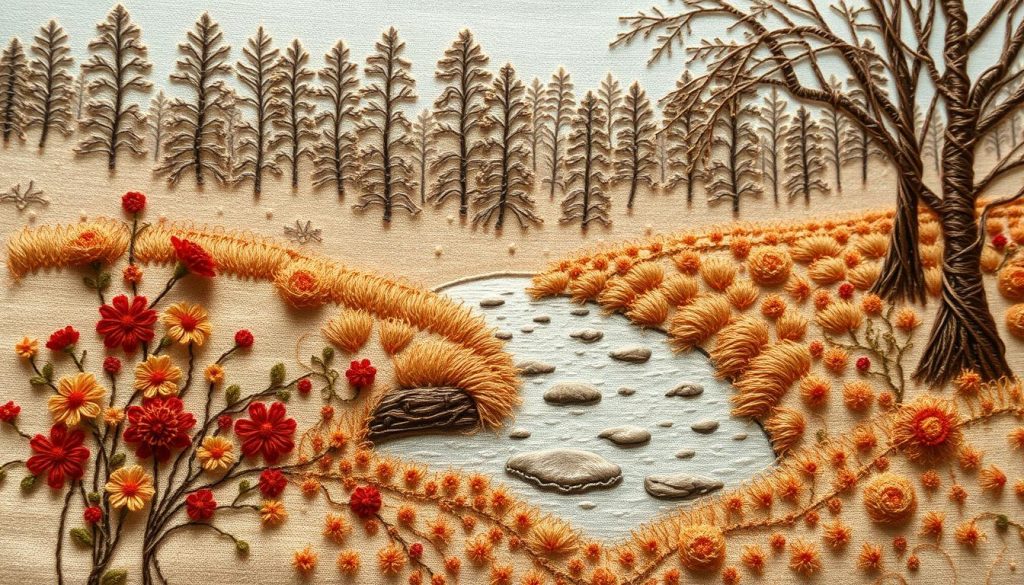
Embroidery is a quiet way to express feelings that are hard to say out loud. The choices you make in your stitches—like color, texture, and pattern—become a secret language. This language lets you show feelings like sadness, joy, anger, or hope without words.
Hand & Lock and textile experts say stitchwork is like singing or dancing. Sketching a design and picking thread is a form of creative therapy. It helps you understand your mood and what you want to say.
Working with fabric connects the present moment with memories. A study on “stitch through time” showed that stitching gives a sense of continuity. You can mix past events and future dreams on the same fabric, changing how you see things as you work.
Therapeutic embroidery offers both control and release. You decide the design and how fast to work, but the touch of the fabric can surprise you with thoughts. Therapists say clients start to tell stories and name their feelings while stitching.
In group settings, sharing cloth rituals and gentle feedback creates a space for reflection. You see how others’ methods reflect their lives. This builds empathy and deepens emotional expression.
Adolescents in open studios often feel calm, special, and connected to their family’s history through their stitches. This shows how embroidered art can help with self-awareness and identity during important growth years.
If you want to try it, start with a small piece and let color guide you. See each stitch as a sentence in your own diary. Over time, your work will show your inner changes and be a tool for ongoing creative therapy.
Community, connection, and the social benefits of stitching
Stitching in groups turns a solo hobby into a shared activity. It boosts mood and expands social circles. Joining a local stitch night or open-studio session offers learning and friendship.
The open-studio model is welcoming and relaxed. You can work alongside therapists or experienced makers. This builds trust and emotional connection through shared effort.
Intergenerational storytelling flourishes in these settings. Family members share embroidery patterns, passing down family history and culture. Younger stitchers add new ideas, linking past and present.
Community embroidery projects have many social benefits. They help reduce loneliness and improve memory and social skills. These programs are affordable and act as social remedies for those seeking connection.
You can get involved by attending local open-studio hours or community mending events. Starting an intergenerational exchange is another way to share stories and traditions through embroidery. These activities combine craft with community service and cultural exchange.
| Activity | Who Benefits | Primary Social Outcome |
|---|---|---|
| Neighborhood stitch night | Adults and seniors | Regular social contact and peer learning |
| Open-studio drop-in | Beginners to advanced makers | Skill sharing and emotional communality |
| Intergenerational project | Families and youth groups | Intergenerational storytelling and heritage transfer |
| Community mending event | Neighborhoods and sustainability groups | Practical repair, resource sharing, and bonding |
| Workshop using historic patterns | Cultural organizations and learners | Preservation of embroidery patterns and cultural motifs |
Embroidery boosts confidence, accomplishment, and purpose
Finishing a stitching project gives you something real to hold. Seeing your work done, like a hoop or a mended shirt, boosts your confidence. It shows that even small efforts can make a big difference.
Hand & Lock says that finishing embroidery pieces makes you feel accomplished. This feeling strengthens your self-worth.
Setting small goals helps you see progress easily. Try to do ten stitches at a time or finish one motif each week. Start with easy patterns or kits to help you along the way. These small victories build your confidence.
Learning new stitches makes you feel more capable. Mastering stitches like backstitch and French knots boosts your self-confidence. This skill goes beyond just stitching.
Documenting your work helps you see how far you’ve come. Take photos, pin up your work, or give it to someone. Seeing your progress and achievements can make you feel proud.
Staying consistent is key. Choose one pattern for a month or practice a few stitches. This routine helps you stay focused and motivated.
Here are some tips to keep your progress steady:
- Start with easy patterns to avoid feeling overwhelmed.
- Set small goals like ten stitches or one small element per session.
- Take photos and notes of your progress.
- Show off or give away your finished work to celebrate.
- Try DIY embroidery kits from well-known craft stores for guided practice.
By following these tips, embroidery becomes a regular part of your life. Over time, these small victories add up. They build your confidence, purpose, and self-efficacy, helping you in many areas of life.
Physical health perks: lowered blood pressure, heart rate, and fine motor gains
Hand embroidery is more than just a hobby. It can make you feel calmer by slowing your heart rate and lowering blood pressure. Studies show that the calm feeling comes from the brain chemicals released while stitching.
Physiological findings from home-sewing and cross-stitch studies
Studies by Hand & Lock and the Home Sewing Association found that cross-stitch and similar crafts help relax. They found lower heart rates and blood pressure. This shows your body is relaxing while you stitch.
How regular hand embroidery protects and refines manual dexterity
Hand embroidery keeps your fine motor skills sharp. It’s used in therapy for stroke or hand injuries to improve coordination and strength. Regular practice helps keep your hands working well.
Eye health: working with good light and appropriate session length
Working in good light and taking breaks helps your eyes stay comfortable. Take a 20-minute break every hour. Use magnifiers or ergonomic needles if needed. Hand stretches also help prevent eye strain.
Embroidery as a mindfulness and flow activity
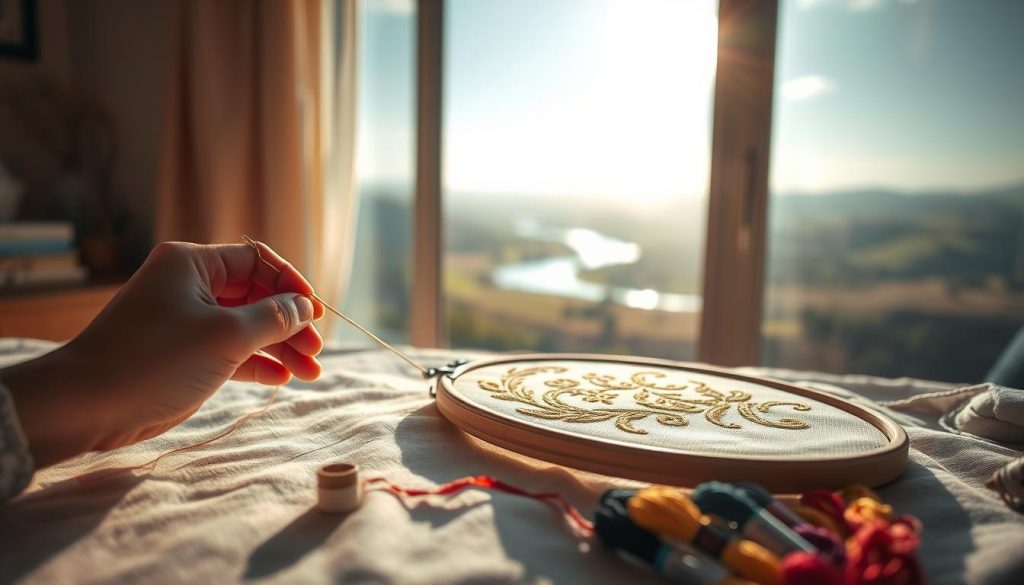
When you pick up a needle and thread, you enter a simple ritual. The repetitive motion and quiet focus bring calm. This calm helps with embroidery wellness, as research and craft practitioners have found.
Repetition and structure that promote flow states
Repeating a stitch creates a steady pulse your mind can follow. This pulse helps your mind focus on the task, away from worries. You move into a flow state where time seems less important and creativity flows.
Techniques to make your stitching practice more mindful
Start with simple stitches and a short ritual to begin. Small actions help your brain settle and focus. Count stitches as an anchor. Keep sessions short at first to build habit without getting tired.
Combining breathing and stitch rhythm for deeper calm
Pairing breath with stitch tempo deepens relaxation. Begin with 3–5 deep breaths, then match your stitch pace to your breath. This sync reduces heart rate and steadies attention. Many people who use therapeutic embroidery report greater self-awareness and calm after a few sessions.
Practical ways to start: supplies, patterns, and accessible kits
Starting with embroidery is easy and won’t break the bank. You can gather basic supplies at home or buy embroidery kits from Hand & Lock or local stores. You’ll need a small hoop, linen or cotton cloth, embroidery floss, and a needle with a big eye to start stitching right away.
Choose projects that fit your goals. Hand embroidery is great for slow, mindful work and improving fine motor skills. Machine embroidery is faster and better for making lots of items or for small businesses.
Begin with a simple shopping list to save money. A 4–6 inch hoop, embroidery pencil, needle pack, and 2–3 floss colors are enough. Most starter supplies cost less than $20. If you like guidance, choose embroidery kits with pre-drawn designs.
Use free embroidery patterns to practice and learn. Downloadable cross-stitch patterns and simple designs are perfect for beginners. Start with simple motifs and move to more complex designs as you get better.
You can mix DIY embroidery with kits based on your learning style. DIY lets you experiment and create your own designs. Kits provide structure and materials for a smooth start. Open-studio models let you try both and choose what works best for you.
When deciding between hand and machine embroidery, think about what you want. Handwork helps with focus and emotional control through repetition. Machine work is great for those with limited dexterity and for making things faster.
Practical starter steps:
- Pick a 4–6 inch hoop and a simple design from an embroidery kit.
- Choose 2–3 floss colors to start and learn color mixing later.
- Learn three basic stitches: running, backstitch, satin stitch.
- Schedule short daily sessions, 10–20 minutes, to build habit and focus.
There are many learning resources available. Local classes, Hand & Lock workshops, and community open studios offer materials and support. These places let you try different tools and patterns until you find what works best for you.
Embroidery therapy, art therapy, and structured programs
You can use embroidery therapy in many places like clinics and schools. It’s a low-cost, flexible way to help people. Hand & Lock and craft guides say embroidery is great for therapy because it’s easy to use and can be adapted for different needs.
Therapists often lead open-studio sessions. They share a ritual and offer different materials. This way, embroidery helps people relax, learn new skills, and express their feelings without needing to talk a lot.
Studies show that embroidery helps teens and people in therapy feel calmer and more in control. They like the shared experience and the chance to reflect at the end of each session.
When planning programs, aim for relaxation, skill-building, or emotional healing. Use sessions of 45–60 minutes. Let everyone choose what they want to do, so they feel comfortable and engaged.
Here are some tips to make your programs better:
- Start with a shared ritual to help everyone feel connected.
- Show them how to stitch by working alongside them.
- Give them time to reflect and share if they want to.
- Take photos and notes to track their progress.
You can also use mood scales and other tools to measure how well the therapy is working. Occupational therapists and community workers often use creative therapy along with standard tests to see how people are improving over time.
| Program Element | Practical Tip | Therapeutic Aim |
|---|---|---|
| Open-studio format | Voluntary attendance, mixed skill levels, communal table | Social support, reduced pressure, creative therapy access |
| Short ritual | Shared cloth or breathing-and-stitching prompt at start | Group cohesion, grounding, ease into focus |
| Therapist participation | Therapist stitches alongside participants, models calm | Trust building, modelling regulation, relational safety |
| Session length | 45–60 minutes with final reflection | Balance between flow and attention limits, emotional processing |
| Materials and patterns | Simple templates, varied threads, tactile cloth choices | Skill mastery, creative choice, sensory regulation |
| Assessment | Pre/post mood scales, photos, participant notes | Measure change, refine goals, support evidence-based practice |
| Target populations | Adolescents, veterans, refugees, people with mood disorders | Trauma-sensitive care, anxiety reduction, identity work |
When planning sessions, remember that embroidery is part of art therapy. Use flexible pacing and set clear goals. It works best when you give people choices, are skilled in leading, and balance repetition with freedom.
Environmental, cultural, and sustainability benefits of mending with embroidery
Visible mending makes old clothes new again. It keeps your favorite items in use longer. This action also reduces waste and shows your support for the planet.
Start by fixing weak spots with strong thread and a small patch. Use durable threads like perle cotton or quality embroidery floss for color and strength. Add lightweight interfacing to elbows or knees for extra durability.
Extending garment life
Decorative stitching can fix holes and prevent throwing away clothes. Hand & Lock says embroidery gives clothes a second chance. It also makes a statement about caring for the environment. Simple patterns help keep repairs neat and tidy.
Cultural reclamation and storytelling
Embroidery is full of history. Studies show it helps communities and women’s economic power in places like South Africa and Israel. You can choose patterns that tell your story and show your heritage.
Practical upcycling ideas
- Reinforce cuffs and collars with contrasting running stitches to hide wear and add a design edge.
- Create floral or geometric patches over holes, using layered fabric and visible mending stitches for texture.
- Add embroidered initials, symbols, or a narrative panel to transform plain tees into statement pieces.
Use templates or patterns for consistent results. Choose threads that match or contrast to highlight the repair. For areas that get a lot of wear, sew a fabric patch first, then add decorative stitching.
Mending can be a way to support sustainability and tell your story. Choose motifs that mean something to you, like family or place. This makes each repair a unique piece of your wardrobe.
| Repair Goal | Materials | Suggested Stitch | Why it Helps |
|---|---|---|---|
| Reinforce elbow or knee | Perle cotton, interfacing, small fabric patch | Buttonhole stitch or satin stitch | Strengthens stress points and extends garment life |
| Cover small hole | Embroidery floss, scrap fabric patch | Running stitch with decorative crosses | Quick fix that looks intentional and supports sustainability |
| Add decorative patch | Contrast threads, patterned scrap, stabilizer | Chain stitch or blanket stitch with outline motifs | Personalizes clothes and showcases cultural embroidery |
| Strengthen seam | Strong polyester thread, small backing | Backstitch with visible accent stitches | Prevents tear progression and promotes upcycling clothing |
| Embellish plain garment | Embroidery patterns, stranded cotton | Mixed stitches: French knots, satin, stem | Transforms basics into meaningful, longer-lived pieces |
Conclusion
Embroidery offers real health benefits and creative rewards. Reports and craft groups show it lowers stress and blood pressure. It also sharpens your mind and improves fine motor skills.
Hand embroidery and therapeutic embroidery boost mindfulness and confidence. They help you express yourself in meaningful ways.
Studies with teens and art-therapy programs explain its effectiveness. The repetitive motion of stitching calms the mind and helps manage emotions. It also builds connections in group settings.
Starting small is key to embroidery wellness. Choose simple supplies and patterns, and set aside a little time each day. Free patterns and local classes can help you grow your skills.
Embroidery can become a regular part of your life. It offers stress relief, mental and physical benefits, and creative growth. With a simple routine, you can use stitching for lasting wellbeing and change.
 English