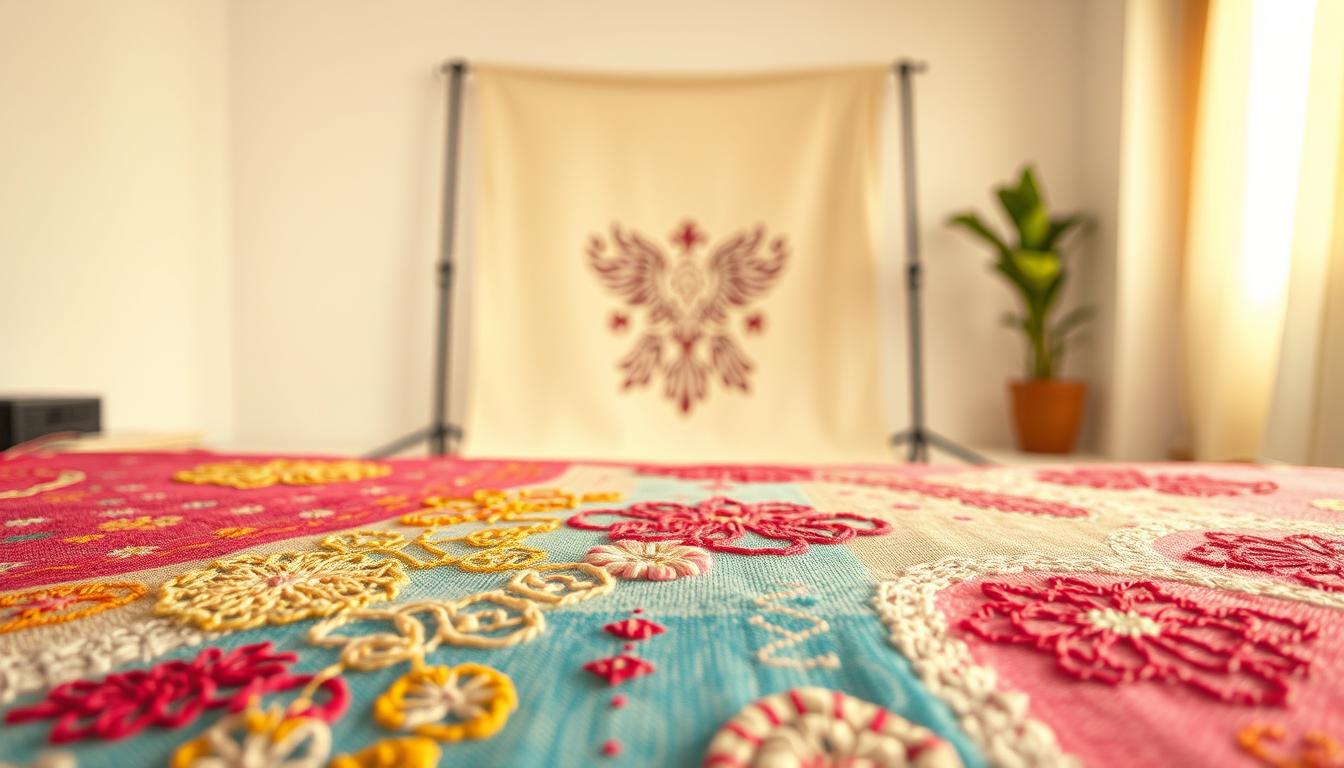
Can a bold screen print and delicate stitchwork truly live on the same garment without one stealing the show?
Embroidery and screen printing are two different ways to decorate. Screen printing is great for bright colors and big designs. Embroidery adds texture and a hand-crafted look, showing off modern embroidery and a growing interest in it.
Together, they offer speed and color options from screen printing and detailed texture from embroidery. This mix creates unique, impactful pieces for clothes and products. They look modern yet stay true to traditional craft.
But, there are challenges. You need to align print and stitches carefully. Fabric can shrink or move during embroidery. Also, you must digitize designs for machines to stitch over prints correctly.
Deciding on cost, setup time, and whether to do it yourself or outsource is also important. These choices affect how you produce your designs.
Key Takeaways
- Screen printing provides bold color; embroidery supplies texture and premium appeal.
- Combining techniques supports the embroidery revival and preserves needlework skills.
- Careful planning is needed to avoid misalignment and fabric shrinkage during stitching.
- Digitizing for embroidery is essential to stitch cleanly over printed areas.
- Weigh cost, setup time, and in-house vs. outsourced production before committing.
Why combine screen printing and embroidery for apparel and products
Combining printed art with stitched details makes your items stand out. Screen printing works well for big, colorful areas and subtle shades. Embroidery adds a raised texture and focus that catches the eye.
By printing broad fills and saving embroidery for highlights, you can cut down on stitches and speed up making. This approach keeps your items feeling premium without the high cost of full embroidery.
Benefits of mixing techniques
Mixing screen printing and embroidery opens up creative possibilities. You can use metallic thread and 3D puff pop over printed layers. This creates layered textures that add depth, something neither method can do alone.
Embroidery offers lasting texture and resistance to fading from washing. Hand and traditional embroidery add a touch of authenticity. They’re perfect for small runs or limited drops where you want a crafted, heritage crafts feel.
When combining adds value to your brand
Use this hybrid method for high-end product lines, corporate polos, or special merchandise. The value increases when customers see printed art enhanced with stitched accents.
Brands that focus on craft and storytelling benefit the most. Highlighting the connection between modern print and traditional embroidery shows your brand’s heritage. It appeals to customers who value needlework and the preservation of crafts.
Tradeoffs to consider: cost, speed, and texture
Embroidery can increase costs and slow down production, mainly for large filled areas needing many stitches. Screen printing is better for bulk color work but has higher setup costs for short runs.
Find a balance: print large areas for speed and cost savings, then stitch focal points for a tactile appeal. Consider care differences too. Screen prints can last if cured right, but embroidery generally resists fading and handles frequent washing better.
| Factor | Screen Printing | Embroidery | Best Hybrid Use |
|---|---|---|---|
| Cost per unit | Low at scale, higher for small runs | Higher due to stitch time and thread | Print fills, stitch key details |
| Production speed | Fast for many garments | Slower, machine-dependent | Print first, then hoop for embroidery |
| Visual impact | Vivid color, fine gradients | Raised texture, tactile premium | Combine for contrast and depth |
| Durability | Good when cured correctly | Very durable, resists fading | Use embroidery on high-wear accents |
| Craft appeal | Modern finishing | Connects to hand embroidery and traditional embroidery | Tell a heritage crafts story in packaging |
Planning your hybrid design in Procreate, Photoshop, or Illustrator
Begin by envisioning the look you desire for your garment. Consider how printed colors and stitched details will blend. Planning well at the start saves time and avoids unexpected issues later.
Choose which parts to print and which to stitch. Use screen printing for big areas, gradients, and textures. Small details like lettering and outlines are better suited for embroidery, adding a modern touch.
Make sure there’s enough space around printed areas for stitching. Stitches can hide fine lines. Also, account for fabric movement and shrinkage by keeping printed details away from stitches.
Organize your files with clear layers for print and stitch. In Procreate, label layers for each. In Photoshop and Illustrator, use named layers and paths for easy separation. Export files in CMYK or Pantone and provide high-resolution PNG or SVG for the embroiderer.
Give clear embroidery instructions with your print files. Mention stitch types, thread colors, and the order of operations. This helps production know what to do first, avoiding mistakes.
Use Illustrator for precise vector shapes and scalable designs. Procreate is great for quick sketches and textured ideas. Keep your final art organized into print and stitch zones for a smooth production process.
How embroidery digitizing affects combined decoration
Mixing screen print and stitched details requires top-notch embroidery digitizing. Accurate digitizing turns your artwork into a detailed guide for stitching. Make sure to give your digitizer the layered print files for precise stitch file conversion.
Converting embroidered details into a stitch file
Stitch file conversion brings your design to life by turning it into machine commands. A well-made stitch file helps avoid skipped stitches and keeps the design intact. Always test the conversion on a sample before starting a large production run.
Underlay stitches, density limits, and preventing puckering
Underlay stitches are key for keeping fabric and ink stable. They help ensure that topstitch fills and prints stay flat. Use them wisely under satin edges and fills to prevent fabric movement.
Remember, too dense fills can distort the garment. Choose the right stitch types and balance density with thread tension to avoid puckering.
Always use at least two layers of stabilizer when stitching over prints. This keeps the fabric stable and ensures consistent alignment across all pieces.
Starting from the center: best practices for machine stability
Digitize your stitches to start near the design center and move outward. This method reduces hoop distortion and improves stability. Always test your center-start method on a sample to ensure perfect alignment.
Positioning techniques: projector, Hoop Master, and EPS systems
When you mix screen printing and embroidery, getting the placement right is key. First, check the stitch file on the garment before you hoop it. This step saves time and avoids costly mistakes by aligning prints with stitched details.
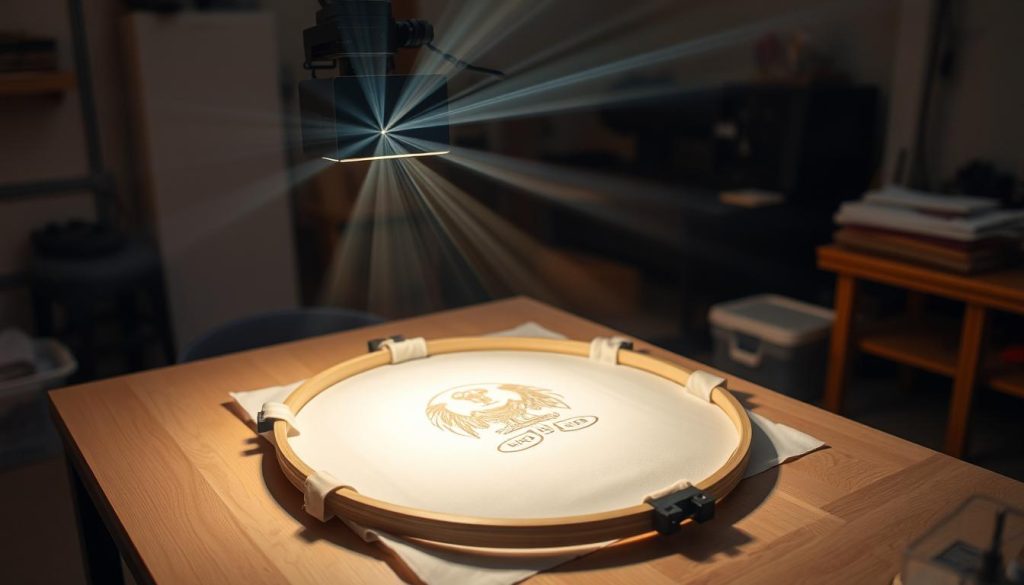
Using a projector to preview stitch placement over prints
Link your embroidery software to a projector to cast the design on the fabric. This method lets you see the stitch file over the print. You can adjust the image until it matches perfectly, making needlework placement easier and reducing errors.
Hoop Master and Easy Positioning Systems for repeatable alignment
Hoop Master fixtures and Easy Positioning Systems ensure consistent results. They keep the garment in the same spot for every piece. This makes positioning embroidery fast and reliable, thanks to the Easy Positioning System and print registration marks.
Aligning with garment features like pockets and buttons
Use garment landmarks as guides for your design. Seams, pockets, collars, and button plackets are great references. But, avoid stitching over buttons or seams to prevent damage. Test your needlework placement around these features before starting a big production run.
| Tool | Primary Benefit | Best Use |
|---|---|---|
| Projector | Visual preview of stitch over print for on-the-spot adjustments | One-offs, sample checks, precise alignment over complex prints |
| Hoop Master | Repeatable hooping with templates for consistent placement | Small to mid runs where exact replication is required |
| Easy Positioning System | Speed and reduced human error across large batches | High-volume production with combined printing and embroidery |
Matching screen print and embroidery on the production floor
To get consistent results, plan each step carefully. This ensures prints and stitches match perfectly on the garment. A clear production workflow embroidery helps avoid surprises and keeps lead times steady.
Workflow: print first, dry completely, then hoop for embroidery
Always follow the print-first process. Let inks cure fully before hooping or stitching. This prevents smears and ink transfer under the needle.
Drying the printed surface is key. It helps stitches keep their shape. Skipping curing can lead to puckering and color contamination during embroidery.
Securing fabric with stabilizers, magnets, and clamps
Choose the right stabilizers for embroidery based on fabric weight. Heavy cottons need cutaway stabilizers. Lightweight knits do better with tearaway or a layered system.
Use Hoop Master fixtures, magnets, or clamps to keep the garment tight. This prevents stretching the print. Proper hoop tension is essential for stitching over printed areas without misalignment.
Quality checks and manual needle positioning before stitching
Do quality checks embroidery before starting a full run. Lower the needle by hand to check center alignment in the hoop. Adjust the hoop or design until the needle hits the right spot.
Use a short checklist for quality checks: print alignment, stabilizer type and placement, hoop tension, thread color and tension, and needle sharpness. Always do a sample stitch-out on matching fabric when testing new print-plus-embroider combinations.
Appliqué and sustainability: upcycling screen print scraps with embroidery
Appliqué is a way to add fabric shapes to a garment without using too much thread. You can mix printed scraps with stitched edges for bold patterns and a neat finish. This method saves thread and makes production faster than dense fills.
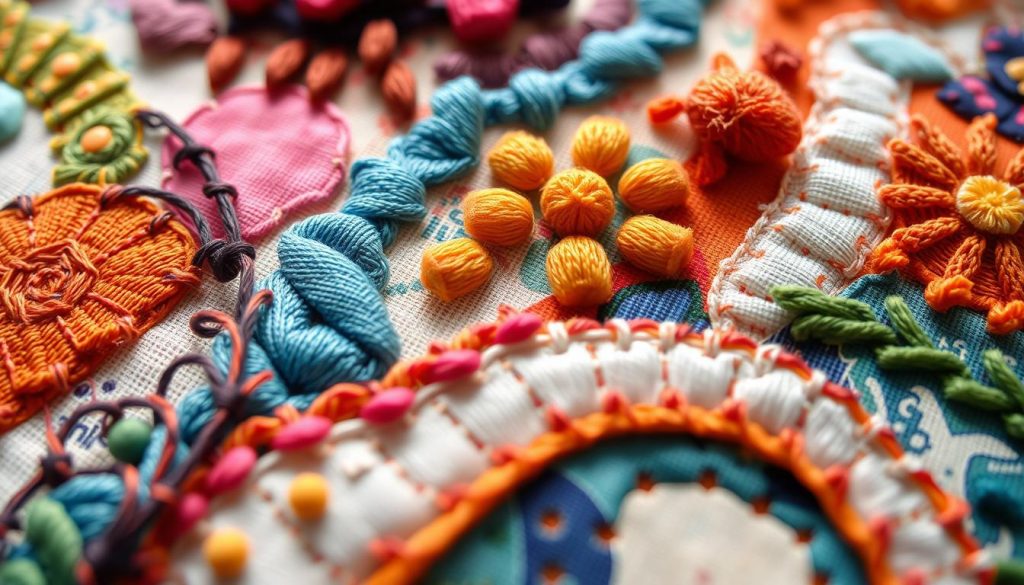
What is appliqué and why it pairs with screen printing
Appliqué involves placing cut fabric on a base and securing it with stitching. It’s great with screen printing because it uses leftover prints and test runs. This adds texture and color that screen ink alone can’t provide.
Using appliqué embroidery lets printed patterns take center stage. Stitch outlines add structure and durability. This makes each piece feel special and handcrafted, without taking too long to make.
Cutting methods: scissors for one-offs, laser cutters for scale
For single items or prototypes, sharp fabric scissors are best. They give you control and clean edges. Cut slowly and trim to the stitch line to avoid frayed corners.
For bigger runs, a laser cutter like xTool is better. It’s fast and precise. Create digital cut files that match your embroidery placement file exactly for consistent registration.
Pro tip: build the embroidery file and the vector cut file from the same source art. This prevents misalignment during production.
Sustainable advantages: reduce waste and create premium looks
Upcycling screen print scraps keeps fabric and ink out of landfills. These eco-friendly pieces appeal to customers who value sustainable embroidery and transparent sourcing.
Appliqué creates unique items that can sell for more. These pieces tell a story of craft and care. Combining appliqué with embroidery culture supports heritage skills and shows that detailed needlework is not dying.
| Use Case | Best Method | Benefits |
|---|---|---|
| One-off garment | Hand-cut with scissors + single-run embroidery | Low setup cost, flexible design changes, artisanal feel |
| Small batch (10–200 pcs) | Die-cut or xTool laser cutter + matched embroidery file | Consistent shapes, moderate speed, reduced waste |
| Large production | Automated cutting tables + production digitizing | High throughput, tight registration, cost effective per unit |
| Brand storytelling | Mixed-media appliqué with visible print details | Premium pricing, sustainability angle, appeals to craft-minded buyers |
Creative techniques and use cases for combined decoration
You can mix print and stitch to make unique apparel and merchandise. Start with printed bases for colors and gradients. Then, add stitched details for depth, shine, and feel.
Metallic thread embroidery shines best when tested against printed inks. Choose small brand marks or highlights for metallic thread. This way, it catches light without overwhelming the print. Make sure it doesn’t fade or change color after washing.
Layered florals and textured waves mix flat prints with stitched elements. Start with a printed base, add satin-stitched petals, and finish with raised fills. Plan stitch densities and underlay types to avoid puckering.
3D puff embroidery adds volume to motifs. Use foam under short satin stitches for clean height. Keep puff areas small and well-supported to keep the garment’s shape.
Sticker-bomb embroidery blends sticker-like prints with stitched outlines. Print overlapping graphics, then add embroidered borders or decorative stitches. This style works well for streetwear and limited-edition merchandise.
Use embroidery to protect printed edges and add definition. Outlines prevent printed artwork from fraying and increase longevity. Assign printed elements to cover color-heavy areas and reserve stitching for edges, texture, and highlights.
When designing, map layers for both processes. Create separate files for screen printing and digitizing. Note where metallic thread embroidery and 3D puff embroidery will sit to avoid interference.
Conclusion
Combining embroidery and screen printing creates a unique decoration method. Screen printing offers a wide color range and quick production. Embroidery adds texture, durability, and value. This blend helps brands shine during the embroidery revival, despite some decline in crafts.
To excel, start designing in Procreate, Photoshop, or Illustrator. Then, digitize your embroidery designs carefully. Use a print-first approach with full curing and tools like a projector or Hoop Master for precision. Secure your fabric with stabilizers and clamps to avoid misalignment and puckering.
Appliqué is a green option: reuse screen print scraps to cut waste and boost sustainability. It also creates high-end looks that draw in customers who appreciate traditional crafts. Test small batches to find the right balance between cost, speed, and quality for your brand.
With careful design and shop practices, hybrid decoration can be a key asset. Keep trying new things, note what succeeds, and let embroidery and screen printing craft a line that shows quality and care.
 English