
Who first threaded a needle and turned a simple stitch into a statement of culture, wealth, or identity?
Embroidery is the art of decorating fabric or other materials with needle and thread. It’s used in everything from quilts to high fashion. As you start this embroidery guide, you’ll learn about techniques like chain stitch, satin stitch, and cross stitch.
These techniques have ancient roots. Archaeologists found embellished clothing and tools dating back to 30,000 BC. This shows how embroidery started as a way to keep warm and repair clothes. It then became a way to tell stories and show status.
In this introduction, you’ll find the basics to get started. Whether you want to embroider a simple design or explore its history, this piece will guide you. It connects the craft to its cultural impact, showing how embroidery has changed the world.
Key Takeaways
- Embroidery is both functional and decorative, used on clothing, accessories, and textiles.
- Techniques like chain stitch and cross stitch are foundational for beginner embroidery.
- The craft dates back tens of thousands of years, predating some woven fabrics.
- Learning how to embroider connects you to global traditions and social history.
- This embroidery guide will balance practical basics with cultural context for newcomers.
Origins of embroidery: where and when it began
The origins of embroidery are spread out across many places and times. Early pieces show stitching for both fixing and decoration. This makes tracing embroidery’s history quite complex.
In ancient Egypt, some of the oldest embroidered fabrics were found. China’s Warring States period and a 4th-century BC Zhou tomb garment show advanced stitches like round chain work. Migration period Sweden and Viking-Age burials also reveal various stitches.
Archaeologists have found hand-stitched clothes from the Cro-Magnon era. These items show decorative sewing long before sewing machines were invented. In Europe, around 1000 AD, embroidery became more popular and detailed.
Understanding how embroidery began involves recognizing independent innovation. Finds from China, the Near East, and Europe suggest multiple origins. Early skills rival later ones, showing long traditions of embroidery.
When starting embroidery today, remember its rich history. Small stitches carry centuries of tradition, fashion, and skill. This history enriches both the craft and our understanding of embroidery.
| Region | Earliest Evidence | Notable Techniques Found |
|---|---|---|
| Egypt | Ancient textile fragments (early BC) | Decorative stitched motifs on garments |
| China | Warring States period; 4th-century BC Zhou tomb garment | Round chain-stitch rows and fine silk embroidery |
| Scandinavia | Migration period (300–700 AD); Viking-Age burials (9th–10th c.) | Running, back, stem, tailor’s buttonhole, whip stitches |
| Paleolithic Europe | Cro-Magnon era finds (circa 30,000 BC) | Hand-stitched decorated clothing items; early ornamental sewing |
| Medieval Europe | Circa year 1000 onward | Ecclesiastical and royal commissions; complex surface embroidery |
Key historical figures and cultures that shaped embroidery
Embroidery history is filled with craft centers where artists perfected thread, stitch, and design. You’ll explore breakthroughs in different eras. Royal support, religious needs, and trade routes all influenced visual language.
Ancient China
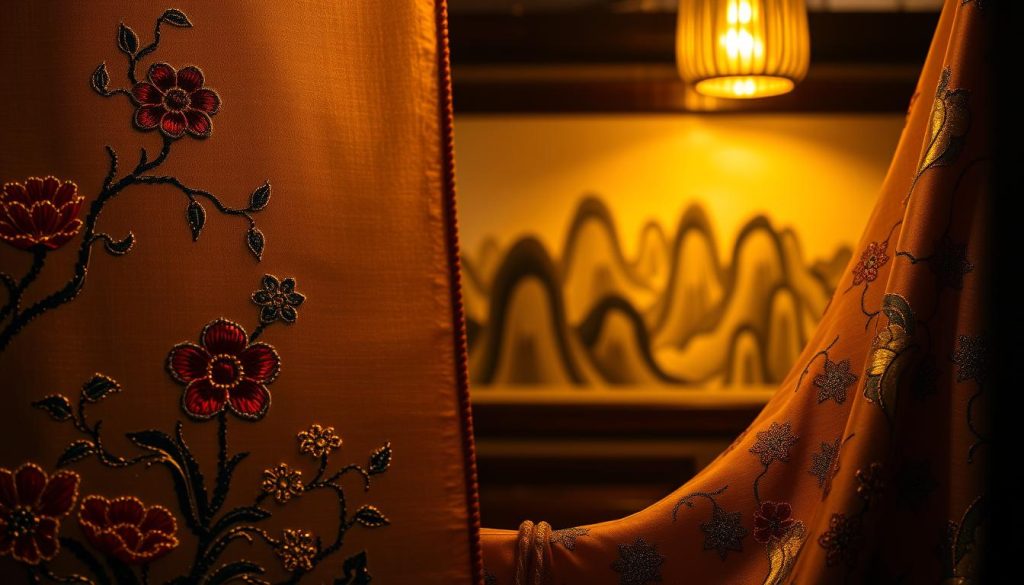
Chinese embroidery starts with finds from the Zhou and Warring States periods. Tomb textiles show early mastery of silk thread on silk ground.
By the Song and Ming eras, Suzhou, Hunan, and Guangdong workshops excelled in satin, chain, and couching. Su Xiu and Xiang Xiu are known for their work in silk shading and metallic couching.
Medieval England and notable workshops
At the heart of medieval English luxury embroidery is Opus Anglicanum. Professional workshops and guilds made high-end garments with goldwork and satin stitches.
The Bayeux Tapestry tells a story from the 11th century. Later, Elizabethan items in the Bodleian Library show embroidery’s use in book bindings and personal items.
Islamic, South Asian and Central Asian centers
Workshops in Damascus, Cairo, and Istanbul focused on gold and silver thread work. They made robes, banners, and horse trappings.
Mughal embroidery from Agra, Lahore, Fatehpur, and Ahmedabad is known for zardozi, nakshi, and surface stitches. The Ain-i-Akbari and traveler accounts highlight imperial workshops and their standards.
Comparing stitch samples from Chinese, Opus Anglicanum, and Mughal pieces is helpful. It shows technique, iconography, and material choices. This hands-on approach links practice to history.
| Region | Key Techniques | Typical Materials | Historical Role |
|---|---|---|---|
| China (Suzhou, Hunan, Guangdong) | Satin stitch, chain stitch, couching, goldwork | Silk ground, silk thread, metal-wrapped thread | Court attire, ritual textiles, luxury trade goods |
| Medieval England | Split stitch, laid work, padded goldwork (Opus Anglicanum) | Linen or silk ground, gilt metal thread, wool | Ecclesiastical vestments, royal garments, narrative panels |
| Islamic & South/Central Asia | Zardozi, nakshi, gota, kohra, chikankari | Silk, velvet, gold and silver threads, sequins | Imperial workshops, ceremonial robes, diplomatic gifts |
How the Industrial Revolution and machines transformed embroidery
The move from handwork to machines changed embroidery’s role in industry and design. Inventors in France and Switzerland saw stitches as repeatable motions. This made embroidered items cheaper and more consistent, keeping their beauty.
From hand to mechanical production
In 1832, Josué Heilmann created one of the first hand embroidery machines. This led to the schiffli machine, which combined sewing and loom technology. Places like St. Gallen and Plauen became hubs for improving these machines.
By the late 1850s, machine-stitched items looked as good as handwork. This made embroidery common on everyday clothes. It showed how industrialization spread decorative embroidery and lowered prices.
20th–21st century digitalization and modern machine embroidery
In the 20th century, machines got smarter, moving from mechanical to electronic control. Today, computerized embroidery uses digital patterns and software. It can create logos, monograms, and custom designs quickly.
Learning to embroider now means knowing about digitizing software and thread. Shops prefer rayon or polyester thread for its durability. Home machines can do free-motion, while industrial lines use schiffli for specific textures.
Starting with embroidery basics or making branded clothes, today’s tools offer speed and customization. This was impossible before digital control became common.
Traditional techniques, materials, and global styles of embroidery
Embroidery is a mix of craft and culture, with many techniques and styles. You can start with simple stitches to learn the basics. Then, move on to more complex methods like counted-thread or goldwork.
Major stitch types and classifications
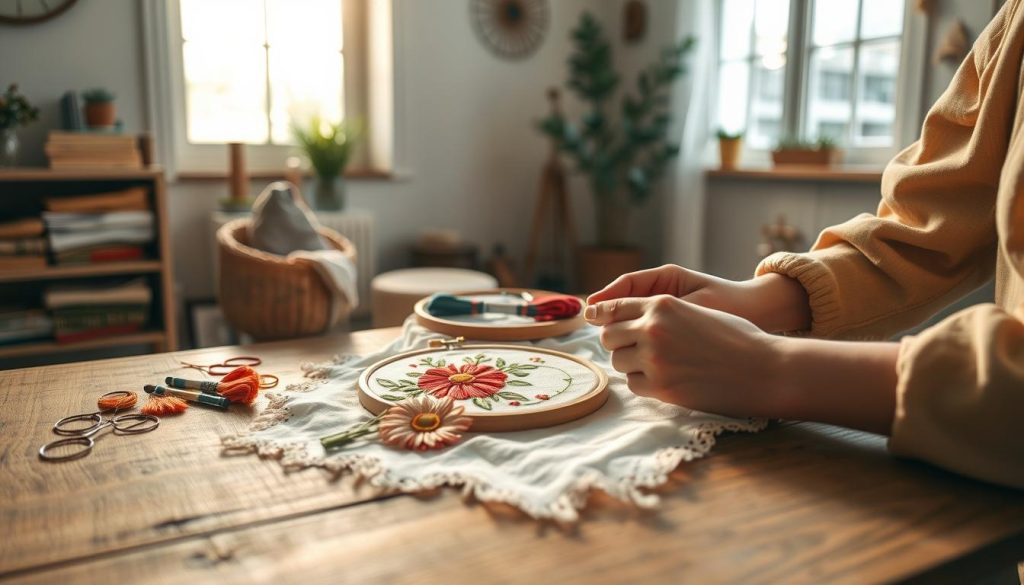
Key stitches include chain stitch, running stitch, satin stitch, cross stitch, and buttonhole stitch. These stitches are the foundation of many embroidery traditions. They’re great for beginners because they don’t require a lot of tools.
Embroidery can be classified into different types. Surface embroidery covers styles like crewel and Chinese embroidery. Counted-thread work includes cross-stitch and blackwork. Needlepoint and canvas techniques, like bargello and Berlin wool work, create dense fabrics.
Whitework, cutwork, drawn-thread work, and goldwork are also main categories. They use different techniques to create unique designs.
Materials and essential tools
Traditionally, embroidery used wool, linen, and silk. Today, we also use cotton, rayon, polyester, and novelty yarns. Ribbon embroidery uses silk or organza ribbon.
For embroidery, you’ll need tapestry and chenille needles. You’ll also need hoops and frames to keep your fabric taut. Beeswax helps smooth and strengthen threads. Choosing the right materials makes your projects look better and helps you learn faster.
Regional styles and examples
Each region has its own embroidery style, influenced by local materials and traditions. Nakshi Kantha from Bangladesh and West Bengal turns old cloth into quilts. Sashiko from Japan uses geometric stitches for decoration and reinforcement.
Hardanger embroidery from Norway features drawn-thread work and whitework. Phulkari from Punjab uses dense silk thread on coarse cloth for vibrant panels. Opus Anglicanum from medieval England is known for its fine goldwork and ecclesiastical designs.
Zardozi in Iran and India uses metallic threads with couching. Suzani from Central Asia creates large floral textiles used in rituals and dowries.
| Technique | Common Fibers | Typical Uses |
|---|---|---|
| Chain stitch / Surface | Silk, cotton, wool | Decorative motifs, economical use of luxury threads |
| Counted-thread (Cross-stitch) | Cotton, linen, rayon | Samplers, household linens, counted patterns |
| Needlepoint / Canvas work | Wool, tapestry yarns, cotton | Rugs, upholstery, durable textiles |
| Whitework / Hardanger | Linen, white cotton | Heirloom linens, ecclesiastical pieces |
| Goldwork (couching) | Gold thread, metallics, silk | Regalia, ceremonial garments |
embroidery as craft, culture, and modern practice
Embroidery has been important in many societies. In Europe, young women learned needlework as part of their education. They made samplers to record names, verses, and skills.
Embroidered garments showed rank at courts and carried ritual meaning. This shows how embroidery was used for both practical and symbolic reasons.
Folk traditions turned needlework into a living archive. Story cloths and stitched narratives preserve family histories and voices of protest. Programs in Inner Mongolia and South Africa show embroidery’s role in protecting cultural identity and creating income for women.
In recent years, there’s been a big revival of embroidery on platforms like Pinterest and Instagram. People enjoy DIY embroidery for relaxation and to reduce screen time. Starter embroidery kits and beginner samplers make it easier to start.
Try easy embroidery projects to build confidence. Start with simple stitches like running stitch, backstitch, and satin stitch. These stitches can help you finish a small hoop in an evening.
If you’re starting, pick one clear pattern and a starter kit. This will help you avoid feeling overwhelmed. Your practice can mix handwork and machines, depending on your goals.
Hand embroidery is great for personal stories and mindful making. Machine embroidery is faster for branding or making larger items. Both ways connect you to craft traditions while meeting modern needs.
Use this quick comparison to choose your path and tools.
| Goal | Best Approach | Starter tools | Time to finish |
|---|---|---|---|
| Personal keepsake | Hand embroidery | Hoop, embroidery floss, needle, simple pattern | 1–6 hours |
| Practice basic skills | Beginner samplers | Starter embroidery kit, printed sampler, instructions | 1–3 hours |
| Upcycling clothing | Hand visible mending or machine accents | Threads, needles, scrap fabric, optional sewing machine | 30 minutes–4 hours |
| Small business or branding | Machine embroidery | Embroidery machine, digitized designs, stabilizer | Minutes–several hours per item |
| Mindful hobby | Hand embroidery with easy projects | Hoop, simple stitches guide, basic floss | Evenings to weeks |
Conclusion
Embroidery has grown from simple sewing to a rich global art. It started with Cro-Magnon stitched garments and evolved through medieval Europe and Mughal ateliers. This shows a thread of skill and meaning throughout history.
Embroidery’s adaptability is clear whether you’re a beginner or a seasoned artist. Machines have changed production, but hand techniques remain key. They keep cultural practices alive and spark artistic revivals.
Embroidery can be practical, social, and sustainable. Start with basic stitches, materials, and styles. With patience and practice, you’ll connect with history and create pieces that show your taste and purpose.
 English