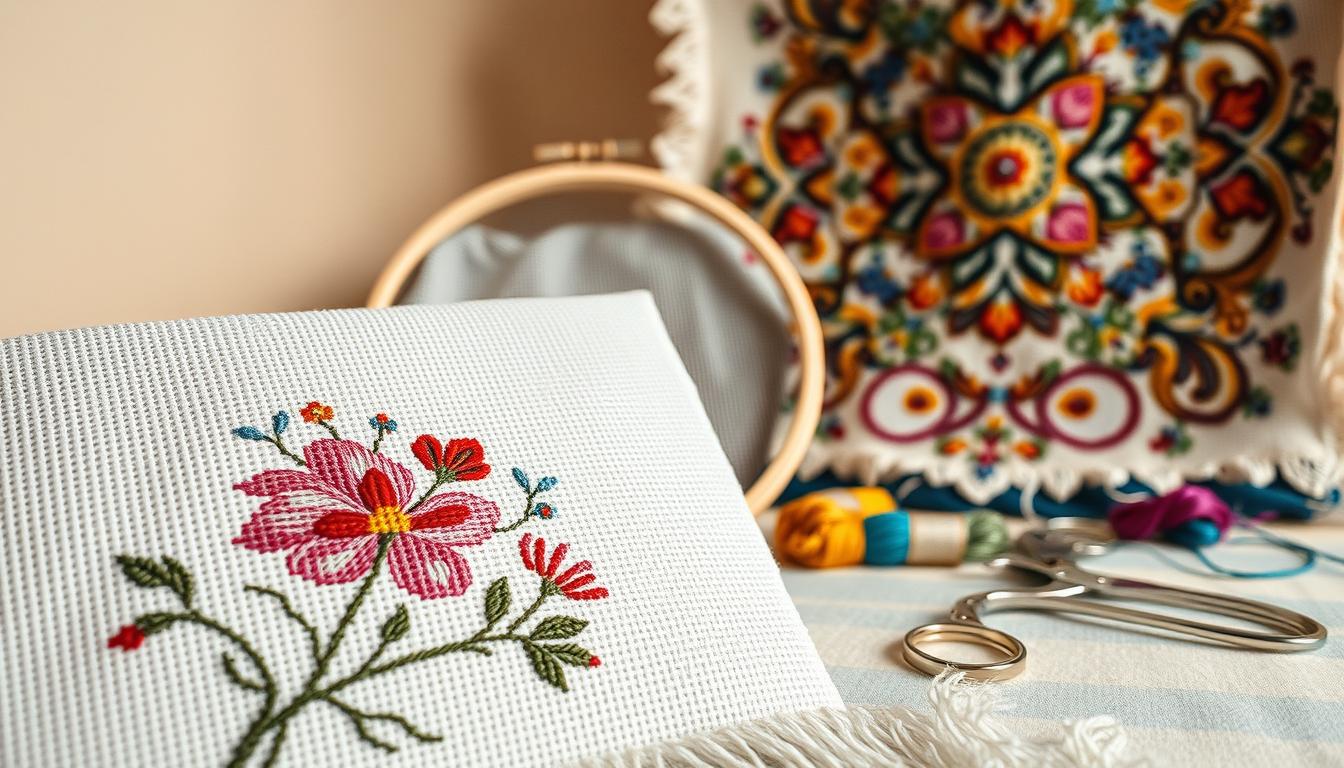
Ever wondered why two projects with needle and thread look so different? This question is at the core of the embroidery vs. needlepoint debate. It will change how you pick materials and techniques for your next project.
Embroidery and needlepoint both belong to textile art and needlework. But they differ in key ways. Embroidery is a broad term for decorating fabric with needle and thread. Needlepoint, on the other hand, is a specific type that uses open-weave canvases and thicker yarns.
This guide will help you see the differences in fabric, thread, and needles. You’ll learn about stitch families and typical uses. You’ll also understand why cross stitch is often confused with other embroidery forms and how it sometimes looks like needlepoint.
By the end of this guide, you’ll know when to use embroidery for delicate items and when to choose needlepoint for durable ones. The aim is to give you practical clarity for your needlework projects to meet your expectations every time.
Key Takeaways
- Embroidery is a broad category of decorative stitching on fabric; needlepoint is a specific canvas-based form.
- Fabric matters: choose linen, cotton, silk, or denim for embroidery and open-weave canvas for needlepoint.
- Threads differ: stranded cotton and silk suit embroidery, while wool and heavier yarns suit needlepoint.
- Needle choice affects results—sharp needles for embroidery, tapestry needles for needlepoint.
- Pick needlepoint for lasting, heavy-use items; choose embroidery for fine detail and wearable pieces.
What is embroidery: definition, fabrics, and thread choices
Embroidery is the art of decorating fabric with needles and thread. It includes simple stitches, dense designs, and freeform patterns. Any embellishment on fabric is considered embroidery, from small monograms to large panels.
Defining embroidery as a broad needlework category
Embroidery is found in many areas, from folk costumes to high fashion and home decor. It involves various techniques and stitches, making it versatile. Think of embroidery as creative needlework that suits different fabrics and uses.
Common fabrics you’ll use for embroidery (linen, cotton, silk, denim)
Linen and cotton are great for beginners and experts alike. They offer a smooth weave and clean stitches. Cotton is best for beginners because it’s easy to work with.
Silk adds a luxurious touch and drapes well, but it requires finer needles and careful tension. Denim is perfect for bold designs on jackets and bags, needing thicker needles and specific threads.
Threads and floss: stranded cotton, perle, silk, metallic options
Stranded cotton floss is the most popular choice. It comes in six strands, allowing you to adjust the thickness for your stitches. Perle cotton has a fixed twist and is thicker, ideal for textured stitches and bold lines.
Silk, polyester, and rayon threads offer a shiny finish that highlights small details. Metallic threads add sparkle but can tangle or fray, so use a larger eye needle or thread conditioner.
Tools for embroidery: needles, hoops, frames, and when to use them
Embroidery needles are sharper than tapestry needles and range from 5 to 10 in size. Choose a size that fits your fabric and thread. For tight fabrics like linen, a smaller needle ensures neat stitches.
Hoops and Q-snap frames keep fabric tight, preventing puckering. A 4″–10″ hoop is suitable for most hand projects. Frames are better for large pieces or maintaining even tension. Hand embroidery offers control over texture and creative effects, while machine embroidery speeds up repetitive tasks.
For beginners, start with plain cotton, a size 7 needle, and stranded cotton floss. Match needle size to thread and fabric weight for clean stitches.
What is needlepoint: canvas work, yarns, and specialty needles
Needlepoint is a type of embroidery done on stiff, open-weave canvas. It has been around for centuries, with roots in ancient Egypt. Today, it’s loved for making decorative items and durable projects.
Historical roots and how needlepoint fits the broader craft
Needlepoint is a special kind of embroidery with its own tools and style. It started with practical items like chair seats. Now, it’s used for pillows, upholstery, and framed art.
Choosing the right canvas: why open-weave matters
Needlepoint canvas comes in mono, interlock, and plastic types. The mesh count, or stitches per inch, affects the detail. A clear mesh makes it easier to pick yarn and needles for your design.
Yarn options and how they change the look
Wool yarn is the classic choice for needlepoint. It gives a warm, textured look that lasts. For shine or delicacy, use silk or metallic threads. Stranded embroidery floss works too, but you might need to mix strands for thickness.
Tapestry needles and size selection
Tapestry needles have blunt tips and large eyes for thicker threads. Kits usually include different sizes for matching yarn or finer threads. Choosing the right needle size makes stitching easier and keeps the canvas intact.
Practical tips for getting started
Start with kits that include everything you need. Use stretching bars or a scroll frame to keep the canvas flat. Begin with simple stitches and add more complex ones as you get better.
Needlepoint vs embroidery: head-to-head craft differences
This comparison helps you choose the right approach for a project. You’ll see clear fabric differences, needle and thread contrasts, and where each technique best performs. Read on to weigh thread art choices and practical uses for creative needlework and durability.
Fabric and substrate differences: canvas vs general fabrics
Needlepoint uses a stiff, open-weave canvas made for counted stitches and dense coverage. The canvas holds shape and accepts thick yarn without puckering.
Embroidery works on many fabrics like linen, cotton, silk, and denim. Those general fabrics let you stitch freely, add surface detail, and decorate garments and linens.
Needles and threads compared: tapestry needles and yarn vs sharp needles and floss
Tapestry needles have blunt tips and large eyes to pull wool or tapestry yarn through canvas. Stitches cover the grid for solid, long-lasting fills.
Embroidery uses sharp needles with larger eyes for stranded cotton, perle, silk, or metallic threads. You can work fine details, satin fills, and delicate accents with floss.
Durability and use cases: upholstery, pillows, framed art, linens
Because needlepoint packs yarn densely into canvas, it produces strong, textured panels. You’ll find needlepoint on upholstery, pillows, and pieces that face wear and contact.
Embroidery suits decorative linens, garments, and lighter-use items. Machine embroidery can place detailed designs quickly on towels, shirts, and home textiles.
Machines and handwork: when embroidery can be machine-made and needlepoint is hand-only
Commercial and home embroidery machines reproduce repeatable designs quickly. Machine work shines when you need consistent embroidery comparison across many items.
True needlepoint remains largely handwork due to canvas count and stitch variety. The hand process yields unique texture and long-term durability in heavy-use projects.
| Aspect | Needlepoint | Embroidery |
|---|---|---|
| Primary substrate | Stiff open-weave canvas | Linen, cotton, silk, denim and others |
| Needles | Blunt tapestry needles | Sharp embroidery needles |
| Threads | Wool, tapestry yarn, silk yarn | Stranded cotton, perle, silk, metallics |
| Coverage style | Dense, grid-based fills | Surface detail, varied stitches |
| Best uses | Upholstery, pillows, framed art, heavy-use items | Garments, linens, decorative accents |
| Machine suitability | Primarily handwork | Often machine-made or hand-stitched |
| Durability | High durability for wear | Moderate durability; depends on fabric and thread |
| Creative needlework focus | Texture and long-lasting structure | Fine detail and versatile surface design |
| Ideal when | You need sturdy, long-wearing coverage | You want fast decoration or delicate thread art |
Stitch types and texture: how stitching styles set them apart
Choosing different stitching types can change a piece’s look. A satin fill or a French knot can alter the texture and how light hits the thread. Each stitch type takes different amounts of time, so plan your project carefully.
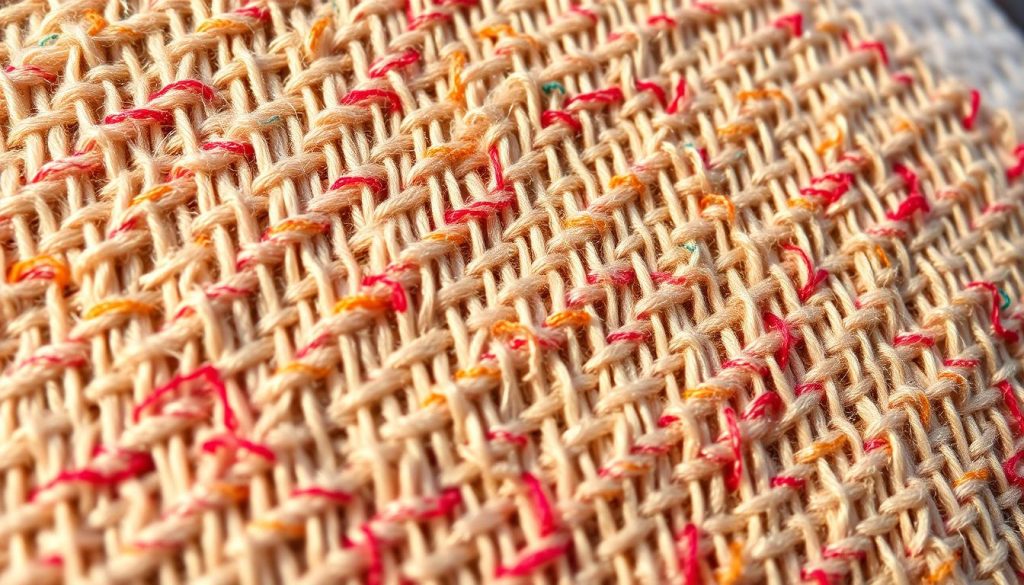
Popular embroidery stitches
Embroidery stitches like satin stitch, backstitch, chain stitch, and French knots offer a wide range of details. Satin stitch makes smooth areas. Backstitch is great for sharp lines. Chain stitch creates decorative lines.
French knots add small dots for highlights.
Needlepoint stitches and coverage
Needlepoint stitches focus on filling canvas. Tent stitch and its relatives, half cross and continental, fill spaces well. Basketweave keeps tension even over large areas. Special stitches like brick, Brighton, and mosaic add pattern and depth.
Cross stitch’s place among techniques
Cross stitch uses X-shaped stitches on even-weave fabric. It’s between freeform embroidery and canvas needlepoint in concept. You can mix cross stitch with embroidery stitches for texture or use it with needlepoint stitches for mixed effects.
How stitch choice affects texture, coverage, and project time
Your stitch choice controls texture and coverage. Full-coverage needlepoint stitches create a solid surface. Open embroidery stitches leave space for a lighter feel.
Stitch time varies with complexity and count. Cross stitch and dense needlepoint take longer for systematic filling. Simple backstitch or chain can speed up projects for outlines or lettering.
| Stitch Family | Common Uses | Texture | Typical stitch time |
|---|---|---|---|
| Embroidery stitches | Floral details, lettering, small accents | Varied: flat fills to raised knots | Low to medium for small areas |
| Needlepoint stitches | Pillows, upholstery, dense pictorials | Solid, even coverage | High for large, filled areas |
| Cross stitch | Counted designs, samplers, motifs | Grid-like, uniform surface | Medium to high depending on size |
| Specialty mixes | Mixed-media pieces, focal accents | Contrasting textures for emphasis | Variable; can increase stitch time |
Choosing the right technique for your project and skill level
Choosing between stitch styles depends on your goals and skill level. Think about the look you want and the surface you’ll stitch on. Also, consider the materials you already have.
Beginner-friendly options
Start with cross stitch or basic hand embroidery if you’re new. Cross stitch uses a grid on Aida or even-weave fabric, making it easy to count. The X-shaped stitches build confidence and create clean patterns.
Simple embroidery on cotton teaches control and variety. Use backstitch, satin stitch, or French knots. Kits from brands like DMC include clear charts and materials, helping you learn faster.
When to choose needlepoint for heavy-use items
Choose needlepoint for durability. It’s great for upholstery, pillows, and items that get a lot of use. Tapestry wool on 10–12 mesh canvas offers lasting texture and strength.
Needlepoint’s dense stitches resist wear and clean up well. This makes it perfect for items meant for use, not just display.
Combining techniques for visual and tactile effect
Mixing cross stitch, embroidery, and needlepoint is a great idea. Use cross stitch for crisp fills, embroidery for flowing motifs, and needlepoint for backgrounds or high-wear areas.
Adapting cross stitch charts to needlepoint or plastic canvas opens up new options. This mix lets you create layered, dynamic surfaces.
Project examples and recommended materials by skill level
Beginner: Start with a small cross-stitch sampler on Aida with stranded cotton. Or, stitch a basic monogram on cotton using two strands of floss. Kits make choosing materials and steps easier.
Intermediate: Try an embroidered floral on linen with satin stitch and French knots. Make a small needlepoint pillow with wool yarn on 10–12 mesh canvas for practice.
Advanced: Mix a needlepoint background with embroidered details and metallic accents for mixed-media art. Tackle upholstery panels with tapestry wool and basketweave stitch for professional-grade durability.
Match your needle size to canvas or fabric and thread thickness. Use kits to learn structure, compare materials, and see how needlepoint vs embroidery affects feel and function.
Practical tips: tools, kits, and time estimates for real projects
Start by choosing tools that fit your skill level and project size. Starter kits make learning easier and faster. The right needles and threads help keep your stitches neat and avoid frustration.
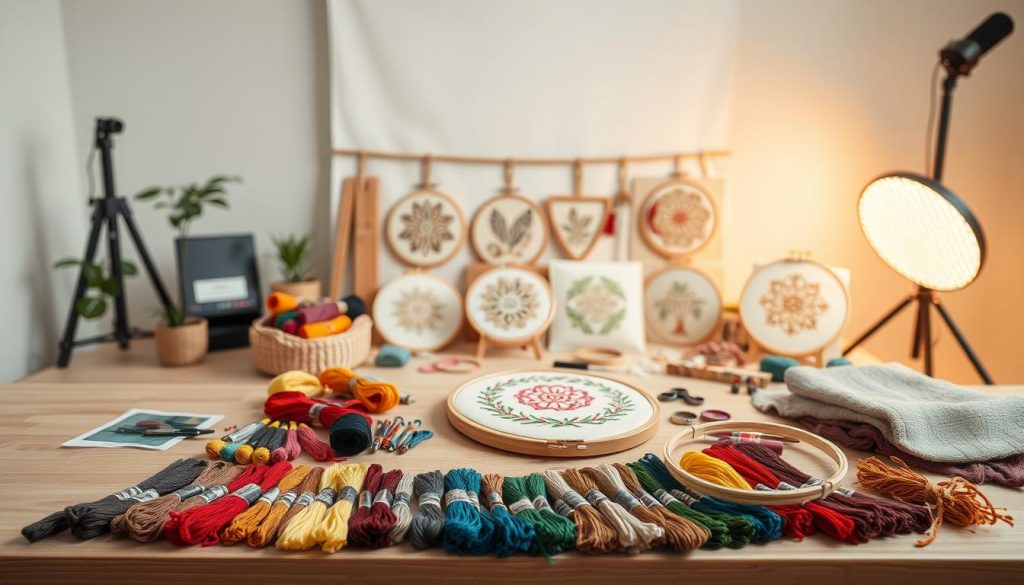
Starter kits vary, but they usually include everything you need to start. Needlepoint kits have canvas, yarn, and needles for canvas work. Embroidery kits include patterns, threads, and needles for woven fabrics.
Choose needles based on the fabric and yarn. Tapestry needles work well for canvas, while embroidery needles are better for woven fabrics. Buying needles in packs saves time when switching projects.
Quality thread brands are important. DMC and Anchor are good for stranded cotton. For wool or specialty yarns, check craft suppliers for branded yarns. Better floss and yarn prevent breakage, saving time and effort.
Before starting, estimate how long your project will take. Small cross-stitch pieces take 3–6 hours. A 5″ x 7″ piece can take 20–50 hours. Simple embroidery can finish in 1–3 hours, while bigger projects take 10–30 hours.
Needlepoint can be time-consuming, depending on the design. Canvas with fine counts and full coverage can take hours. Choose smaller designs if you have limited time.
Think about maintenance and finishing from the start. Avoid using hoops on needlepoint canvas. Use stretchers or frames for tension. Hoops and Q-snap frames are good for embroidery.
Washing and care depend on the materials. Test a small scrap if possible. Many embroidered linens can be hand washed and pressed at low heat. Use acid-free backing and framing to preserve colors and fabric. For pillows and upholstery, add secure backing and lining to extend life.
Combine techniques to save time or add texture. Use cross stitch for fast areas and embroidery for details. This mix helps manage project time without sacrificing creativity.
| Project Type | Typical Size | Average Project Time | Recommended Tools | Care/Finishing |
|---|---|---|---|---|
| Small Cross-stitch | 2″ × 2″ | 3–6 hours | Embroidery needles, stranded cotton from DMC | Gentle rinse, press flat, frame with acid-free board |
| Medium Cross-stitch | 5″ × 7″ | 20–50 hours | Q-snap frame, DMC or Anchor threads, size-24 needles | Hand wash test, stretch on foam board, acid-free framing |
| Simple Embroidery | Lettering or small motif | 1–3 hours | Embroidery needles, stranded cotton, small hoop | Light hand wash, low-heat press, frame or applique |
| Moderate Embroidery | Decorative panel | 10–30 hours | Hoop or frame, multiple needle sizes, quality thread brands | Test wash, mount on acid-free backing, optional glazing |
| Needlepoint | Varies; dense coverage | Comparable to large cross-stitch | Needlepoint kits, tapestry needles, wool or silk yarns | Use stretchers for work, secure backing for pillows, avoid hoops |
Conclusion
Embroidery is a wide field of creative needlework. It includes many fabrics, threads, and stitches. On the other hand, needlepoint is a specific craft. It uses yarn and tapestry needles for dense, durable work.
When choosing between needlepoint and embroidery, embroidery is great for freeform decoration and garments. Needlepoint is better for strong texture and durability, like upholstery. Cross stitch is a grid-based option that’s easy for beginners and good for patterns.
Don’t be afraid to mix methods. You can add embroidered accents to needlepoint or use cross stitch borders with satin-stitch motifs. Start with simple kits for each technique. Invest in quality supplies like DMC floss and the right tapestry needles. Good materials and techniques make projects more fun and long-lasting.
 English