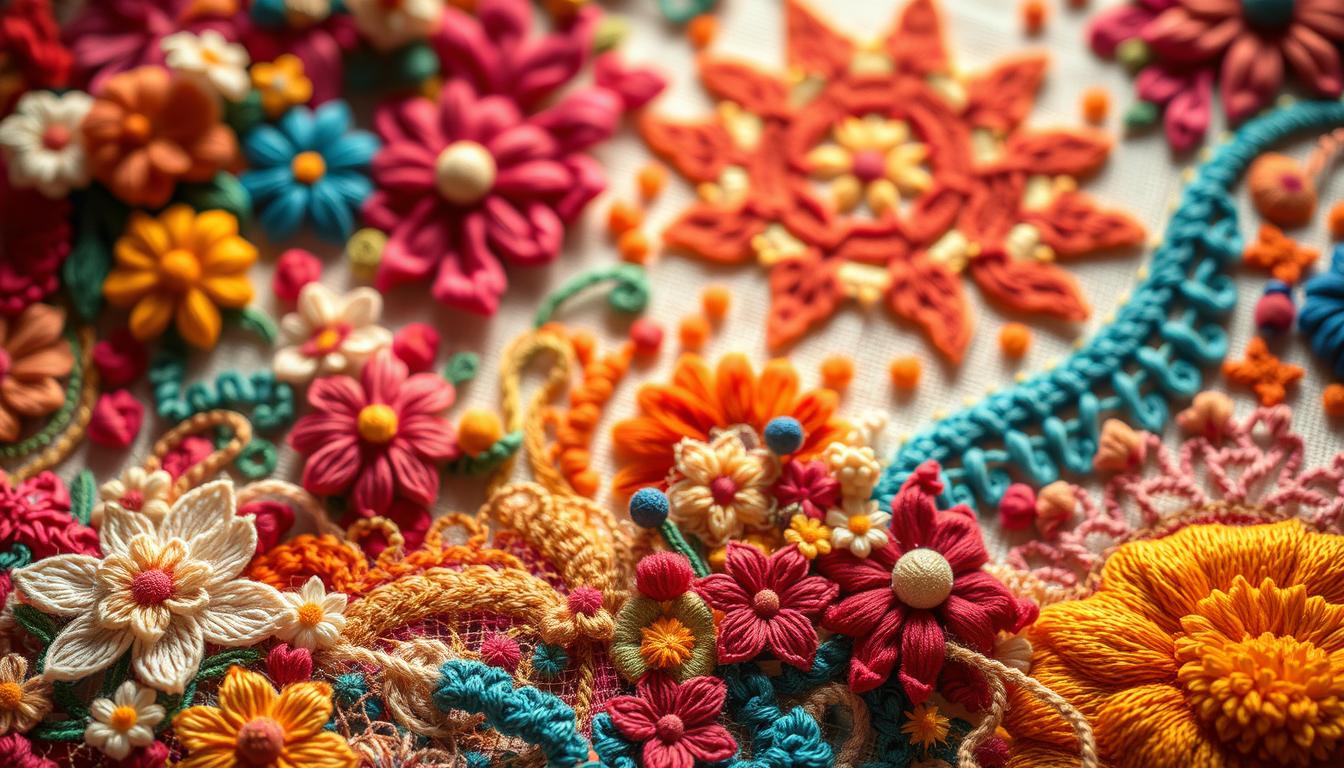
Ever thought about how a simple thread can transform a plain shirt or fabric into something special?
Embroidery is a form of creative needlework. It uses a needle, thread, yarn, and sometimes beads or sequins. This art adds color, texture, and stories to fabric. You can do it by hand or with a machine, blending craft and design.
The basic stitches like running stitch and satin stitch are essential. They help you create texture and shapes. Embroidery can range from personal patches to stunning textile art. It’s perfect for hobbies, small businesses, and even sustainable projects worldwide.
As you continue reading, you’ll discover what embroidery is all about. You’ll learn about the difference between handwork and machine methods. And you’ll see how embroidery can inspire your next project.
Key Takeaways
- Embroidery is the art of decorating fabric using needle, thread, and embellishments.
- It combines technical stitches with creative design to create thread art and textile art.
- Basic stitches form the foundation for more complex techniques and textures.
- Work can be hand-made for uniqueness or machine-produced for repeatability.
- Embroidery fits hobbies, small businesses, cultural expression, and sustainable upcycling.
Understanding embroidery: definition, history, and cultural significance
Embroidery is a mix of art and storytelling. Each stitch tells a story, showing both beauty and meaning. It’s different from sewing, which focuses on making clothes and fixing them.
What embroidery is and how it differs from sewing
Embroidery uses special tools and techniques. It involves hoops, specific needles, and ways to transfer patterns. These tools help create textures and designs that sewing doesn’t.
Needlepoint and embroidery are different. Needlepoint uses a grid, while embroidery is more free-form. This choice affects the look and feel of the final piece.
Brief historical timeline and global traditions
Embroidery has been around for thousands of years. Ancient civilizations like the Egyptians and Chinese used it to decorate fabrics. These early works show the artistry of thread.
In Europe, the Middle Ages saw the creation of epic tapestries. The Industrial Revolution brought new machines for embroidery. Today, we see a blend of old and new techniques.
Across the world, embroidery is a treasure trove of culture. In China, Suzhou embroidery is famous for its beauty. In Palestine, tatreez tells stories of villages. Japan’s sashiko adds strength and beauty to fabrics.
Cultural and contemporary relevance
Embroidery is more than just decoration. It marks important life events and shows social status. It’s a way to keep traditions alive and share stories.
Today, embroidery meets modern fashion and technology. Designers use it to add texture and tell stories. Artists explore new ways to use thread, blending it with other materials.
As you learn more about embroidery, you’ll see its ongoing evolution. It connects people globally, bringing old traditions to life and creating new ones.
Essential embroidery tools and materials for beginners and pros
Choosing the right supplies makes stitching easier and more enjoyable. Start with fabric choices embroidery basics so your first projects behave predictably. Cotton poplin or muslin gives an even weave that suits most samplers. If you want a refined finish, consider linen vs cotton for texture and drape when you have steady tension. For counted-thread work, Aida cloth is the go-to fabric because its grid simplifies placement.
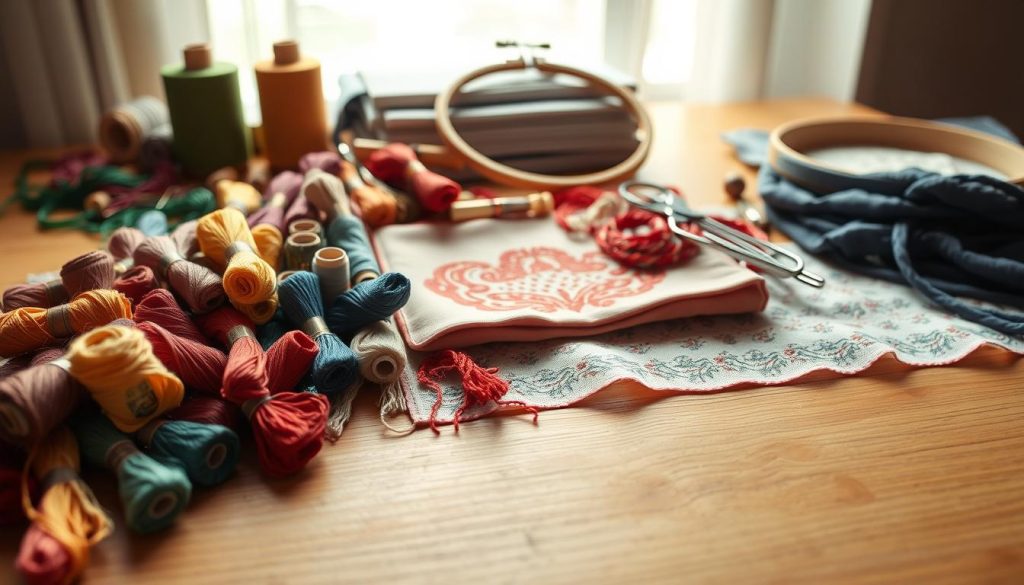
Pick fabrics by project. Towels and napkins work best with absorbent cotton. Denim and heavy canvas demand stronger threads and a longer needle. Stretchy garments need stabilizers for embroidery so stitches do not distort. Specialty surfaces like silk or organza reward careful handling. Leather and plastic require specific needles and a steady hand.
Threads and yarns change the look of every stitch. Stranded cotton floss such as DMC thread gives clear, soft coverage for hand work. Perle cotton adds sheen without splitting. For machine shine, choose polyester vs rayon with care: polyester resists washing, rayon shines brighter but can be fragile. Metallic and novelty threads create effects, yet they often call for special needles and patience.
Heavier yarns, like crewel wool, make bold texture for traditional crewel work. Match needle type to thread weight. Embroidery/crewel needles with long eyes suit stranded floss. Chenille needles carry thicker yarns. Replace needles often to avoid snags and broken strands.
Stabilizers for embroidery protect fabric and keep stitches flat. Use cut-away stabilizers for garments that face heavy wear. Tear-away suits firm fabrics and quick projects. Water-soluble stabilizers allow floating designs on delicate cloth and wash clean after stitching.
Embroidery hoops maintain tension and prevent puckering. Wooden and plastic hoops in 5–7 inches are versatile for many hand pieces. Larger hoops work for panels and hoops under 3 inches hold small details well. If you prefer modern tools, a magnetic hoop or MaggieFrame speeds setup and keeps even tension without sharp marks.
Useful aids extend beyond hoops. A hooping station or alignment guides help you place designs precisely. Storage tools like floss organizers and needle minders keep threads tidy and ready. Small sharp embroidery scissors from Fiskars or similar brands trim threads cleanly at the fabric edge.
Needles, stabilizers, hoops, and transfer tools form a basic kit that grows with your skills. For transfers, use water-soluble pens for light fabrics and Frixion heat-erasable pens for medium tones. Lightboxes and water-soluble paper help with darker cloth. Build your set slowly, focusing on quality pieces that last.
| Item | Best for | Notes |
|---|---|---|
| Cotton poplin / muslin | Beginners, practice pieces | Even weave, easy hooping, pairs well with DMC thread |
| Linen | Advanced projects, heirloom work | Beautiful texture, less forgiving than cotton; consider linen vs cotton before starting |
| Aida cloth | Counted cross stitch | Clear grid for needlepoint vs embroidery distinction; ideal for cross-stitch charts |
| DMC thread (stranded cotton) | Hand embroidery | Reliable colors, divisible strands, staple for many stitchers |
| Polyester / Rayon threads | Machine embroidery, sheen effects | Polyester resists washing; rayon offers high shine—choose polyester vs rayon based on use |
| Crewel wool | Textured, bold surface work | Used for crewel techniques; needs larger needles |
| Stabilizers (cut-away, tear-away, wash-away) | Garments, firm fabrics, delicate pieces | Prevents puckering; select stabilizers for embroidery by fabric and wear |
| Embroidery hoops / MaggieFrame / magnetic hoop | Tension control, machine and hand use | Hoops keep fabric drum-tight; MaggieFrame and magnetic hoop systems speed alignment |
| Needles (crewel, chenille) | All thread weights | Long eye for easy threading; change sizes per thread and fabric |
| Embroidery scissors | Cutting threads, trimming fabric | Small sharp tips; Fiskars and similar brands offer durable blades |
Basic stitches and techniques to get started with embroidery
Start with a short practice set to build confidence. Focus on consistent tension and even spacing. Learn the running stitch, backstitch, split stitch, and satin stitch. These stitches are the foundation of most projects.
Core hand stitches
The running stitch is a simple stitch for outlines and quick seams. Keep the stitch length even for clean lines.
Use the backstitch for continuous, crisp lines. Stitch backward into the previous hole for a seamless look.
Try the split stitch for braided lines. Pierce the middle of the prior stitch for textured outlines.
Use satin stitch for smooth fills. Lay parallel stitches edge-to-edge inside an outlined shape for a solid surface. For larger areas, use long-and-short fills as an alternative.
Decorative stitches and texture builders
Mix decorative embroidery stitches to add interest. French knots give tiny raised dots. Wrap the thread two to four times for different knot sizes and keep tension steady so knots hold.
The chain stitch makes linked lines for decorative borders and fills. Lazy daisy, a detached chain, creates neat petal shapes and floral motifs.
Explore texture embroidery with seed stitch, bullion knots, and couching for metallic threads. Combining these with core stitches adds depth and character to simple designs.
Pattern transfer and hooping best practices
Use pattern transfer embroidery techniques that suit your fabric. A water-soluble pen works well for washable marks. Test any Frixion or heat-erasable pen on scrap fabric first.
Trace designs on a lightbox or sunny window for precise placement. Transfer paper helps with darker fabrics and complex patterns while ensuring accurate embroidery alignment.
Follow hooping best practices to prevent distortion. Fit the fabric over the inner hoop, press the outer hoop down, and tighten until the surface is drum-tight. Pull evenly around the hoop and avoid leaving fabric tightened for long periods to reduce hoop marks.
Pro tips: pre-wash fabrics to avoid shrinkage, test marks on scraps, and use stabilizers when needed. Try magnetic hoops and guiding lines to speed setup and improve embroidery alignment on detailed patterns.
Types of embroidery and stitching types: hand, counted-thread, and machine
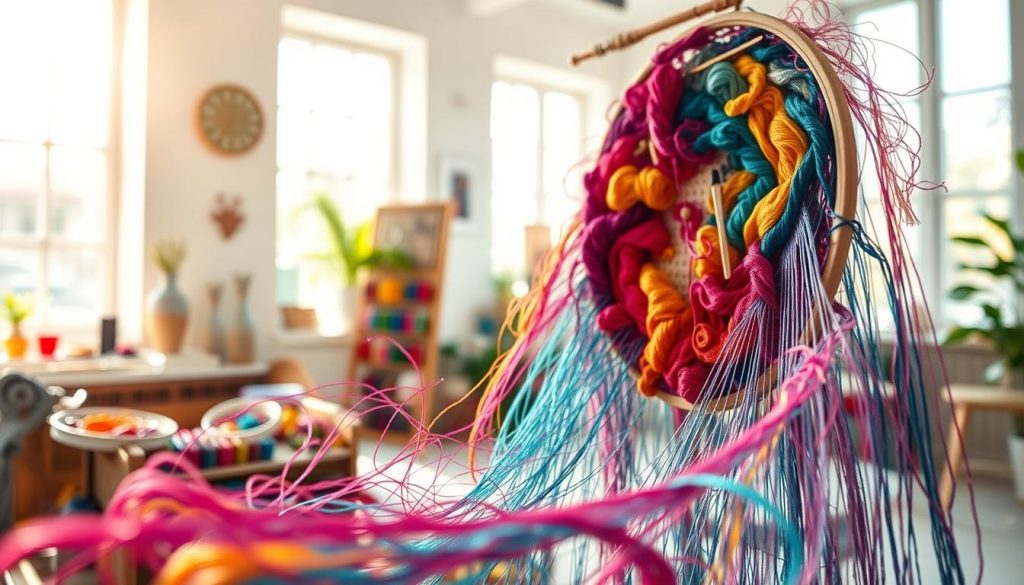
There are three main paths in stitching: freehand, counted-thread, and machine. Each suits different needs, from hobby projects to business needs.
Freestyle and surface approaches
Freestyle and surface embroidery let you work freely. You can use satin stitch, chain stitch, and French knots for texture. Thread painting adds shading with long-and-short stitches.
Crewel uses wool on linen for organic designs. Sashiko features running stitches for geometric patterns and reinforcement.
Counted-thread techniques
Counted-thread methods use fabric weave for precise stitches. Cross stitch is on Aida cloth, making patterns easy. Needlepoint covers canvas with tent stitches for durable results.
Needlepoint is great for wear, unlike broader embroidery. It covers both counted and surface methods.
Machine embroidery and scaling
Machine embroidery is fast and consistent. It digitizes artwork for machine use. You can use flat fills, appliqué, or 3D puff embroidery for effects.
Proper digitizing and upkeep prevent issues. This is key for large orders.
Which to pick for practice or profit
Start with freestyle and thread painting for art. Try cross stitch and counted-thread for patterns. For business, learn digitizing and use commercial machines.
| Type | Best uses | Key strengths |
|---|---|---|
| Surface / Freestyle | Art pieces, wearable accents | Creative freedom, texture variety (satin, stem, knots) |
| Counted-thread (Cross stitch) | Charts, pixel-style imagery | Beginner-friendly patterns, precise repeats |
| Needlepoint | Home decor, durable items | Canvas coverage, strong upholstery results |
| Machine embroidery | Branding, product lines | Speed, consistency, 3D puff embroidery options |
Mixing methods can lead to great results. Combine needlepoint with surface embroidery for highlights. Use machine embroidery for logos and handwork for unique touches. This mix supports both creative projects and a successful business.
Creative projects and real-world applications for your needlework
Embroidery can turn simple fabrics into unique pieces you can wear, give, or show off. Begin by choosing projects that fit your skill level and the materials you have. Small, focused efforts can lead to quick wins and teach you skills for bigger projects.
Apparel and accessories
You can add monogramming to polo shirts or use personalized clothing embroidery on sweatshirt chests and sleeves. Embroidered hats and belts make standout accessories when placed on curved panels. For footwear, choose sturdy polyester threads for embroidered shoes and reinforce seams to handle wear.
Functional home textiles
Use towels embroidery to add initials or motifs that survive frequent washing. Table linens embroidery and cushions embroidery let you coordinate color palettes for dining and living spaces. Pick cotton or linen and cut-away stabilizers for long-lasting embroidered home decor.
Seasonal pieces and decorative accents
Seasonal embroidery is perfect for ornaments, themed table runners, and garlands. Create holiday sets with matching cushions embroidery and table linens embroidery to build family traditions. Small stitched decorations turn ordinary rooms into festive spaces.
Gifts and keepsakes
Embroidered gifts like monogrammed towels or personalized aprons make memorable presents. Personalized baby onesies and embroidered cards work well for showers. Small items such as bookmarks, coasters, and patches are quick to finish and easy to mail.
Kids and baby projects
Kids embroidery should focus on durable stitches and safe threads. Add names or playful motifs to beanies, socks, and pajamas. Reinforced machine embroidery on personalized baby onesies helps garments stand up to repeated washing and active play.
Upcycling and repair
Upcycling with embroidery breathes new life into worn jeans or jackets. Cover frayed areas with decorative patches or embroidered panels to extend garment life. This approach supports sustainability while creating one-of-a-kind style.
| Project Type | Best Fabrics | Recommended Techniques | Durability Tip |
|---|---|---|---|
| Personalized clothing embroidery (shirts, sweatshirts) | Cotton blends, French terry | Stabilizers, satin stitch, monogramming | Use cut-away stabilizer for stretch |
| Accessories (embroidered hats, belts, bags) | Twill, canvas, leather with backing | Appliqué, dense satin, placement on panels | Use cap frames for hats; back with tape |
| Footwear (embroidered shoes) | Canvas, denim | Reinforced stitches, polyester thread | Secure backing and edge stitching |
| Home linens (towels embroidery, table linens embroidery) | Cotton, linen | Monogramming, decorative borders | Choose cut-away stabilizer for laundering |
| Decorative items (cushions embroidery, embroidered home decor) | Canvas, upholstery fabric, linen | Textured stitches, layered appliqué | Use proper backing and lining |
| Seasonal embroidery | Various: felt, cotton, linen | Small motifs, ornaments, themed sets | Secure hanging loops and edges |
| Gifts and kids embroidery (embroidered gifts, kids embroidery, personalized baby onesies) | Cotton, jersey, fleece | Names, simple motifs, reinforced machine stitches | Pre-wash fabrics and test thread strength |
| Upcycling with embroidery | Denim, leather, worn cotton | Patchwork, decorative repairs, visible mending | Stitch over tear edges and use stabilizers |
Advanced techniques, special materials, and troubleshooting common issues
Explore beyond flat stitches with 3D embroidery like stumpwork and foam underlay. Use padding and secure anchoring for stability, whether by hand or machine.
Metallic thread and glow thread add a unique touch but need extra care. Use specialty needles, slow speeds, and adjust tension to avoid breaks. Always test threads on scraps first.
Try embroidery on leather, plastic, or coolers for a creative challenge. Use a stable mount, heavy-duty needles, and strong thread. Test on scraps to find the right needle and tension.
Fixing embroidery issues starts with checking a few things. If fabric puckers, check hoop alignment and stabilizer. Even tension in the hoop ensures crisp results.
Thread breaking often comes from dull or wrong needles, low-quality thread, or wrong machine tension. Regularly replace needles, use trusted brands, and check bobbin threading for machine issues.
Proper hoop alignment is key for clean stitches and consistent results. Ensure the hoop is secure and the design is centered. Update firmware and refer to your machine manual for fixes.
Keep your embroidery machine in good shape to avoid problems. Clean the bobbin area, oil as needed, and change needles between projects. This helps prevent skipped stitches and tension issues.
When selling products, presentation is everything. Use natural light, close-ups, and lifestyle shots to show quality. Consistent visuals build trust and confidence with buyers.
Choose Etsy for a handmade audience or Shopify for full control. Gelato offers on-demand fulfillment for easy shipping and inventory management.
Set your embroidery prices carefully. Include materials, labor, overhead, platform fees, and shipping. Research similar items, consider perceived value, and test prices to find the right balance.
Good digitizing and stabilizers are key for quality production. Ensure repeatable quality with proper setup in digitizing tools. Use print-on-demand services like Gelato to scale without logistics hassle.
Stay on top of trends like abstract geometry and cultural fusion motifs. Use customer feedback and sales data to refine your niche and grow a loyal audience.
Conclusion
Embroidery is a craft that mixes old traditions with new ideas. You can start with basic stitches like running stitch and satin stitch. You’ll also need DMC floss, needles, hoops, and stabilizers to avoid common issues.
This summary shows the wide world of embroidery. You can try hand embroidery, counted-thread forms like cross stitch, and machine embroidery for bigger projects. Explore different styles, from Suzhou to modern trends like metallic threads and 3D effects.
Start with a simple project like a monogrammed towel or a small hoop art. Practice transferring patterns and using hoops. Use online resources to get better. If you want to sell, Etsy or Shopify can help you grow your business.
When choosing between needlepoint and embroidery, think about your goals. With regular practice and smart choices, your embroidery can grow from small projects to something you can sell.
 English