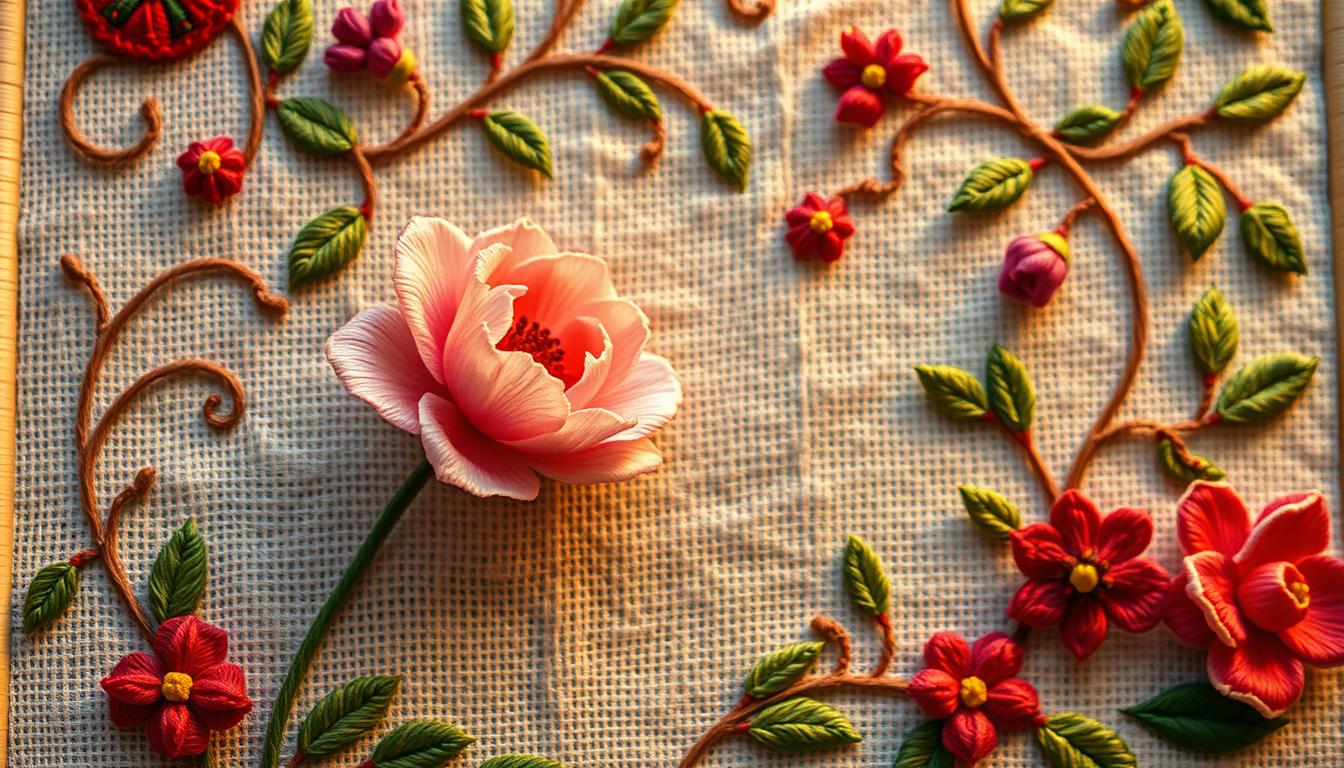
Ever thought a simple stitch could make an old shirt look new? Or turn a plain pillow into something special?
Embroidery is back in style, thanks to a revival. It’s not just for those who enjoy a slow pace or want to improve their needlework. It’s a way to unleash your creativity and learn new skills.
In this article, you’ll discover how embroidery designs guide your choices in color, texture, and stitches. You’ll also learn about beginner kits, like the Azenera Embroidery Kit. It comes with patterns and video guides to help you master the basics.
By growing your embroidery skills, you can make your clothes unique, add texture to your home, and even start a small business.
Key Takeaways
- Embroidery is part of a wider revival that welcomes beginners and seasoned crafters alike.
- Hand embroidery and needlework build creative skills and offer a calming, focused practice.
- Embroidery designs guide your color and stitch choices for polished results.
- Starter kits with pre-printed fabric and tutorials accelerate learning and confidence.
- This craft connects historical tradition with modern applications for home, fashion, and small business.
What is embroidery and why it matters for your crafting journey
Embroidery is when you turn thread into pictures and textures on fabric. As you learn, you’ll see how designs guide each project. Simple designs teach you control, while complex ones challenge your skills.
Designs serve as a blueprint for your projects. They give you structure and direction, but also let you choose the scale and stitches. Knowing the range of designs helps you pick projects that fit your skill level and goals.
Embroidery has a long history across the world. Archaeologists have found ancient silk from China and detailed textiles from Persia, India, and Japan. The Bayeux Tapestry is an example of how embroidery was used to tell stories and show status.
In many cultures, needlework was a sign of wealth and important events. Medieval church vestments and 18th-century aristocratic clothes used fine threads and gold to show rank. Learning about these traditions helps you see the craft’s value beyond just making things.
Today, there’s a growing interest in heritage crafts in cities and small towns. Young people are taking up needlework for its calming effect, creative outlet, and even as a way to make money. Galleries and studios now showcase embroidery as modern art.
Studying both traditional and modern embroidery deepens your skills. You learn technical skills and understand the culture behind embroidery. This knowledge opens up opportunities to teach, sell, or create meaningful pieces.
Getting started: Tools, materials, and beginner-friendly projects
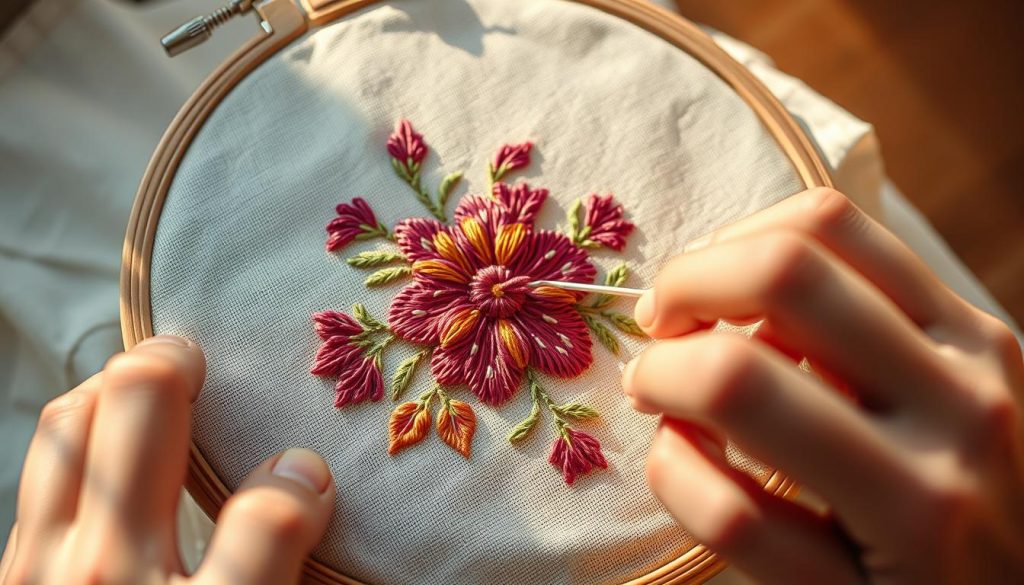
Start with a small setup to focus on technique. A basic embroidery kit from DMC or Clover will help you practice. Choose a quiet spot, good light, and a flat surface for steady tension.
Essential tools and materials for hand embroidery
You’ll need a hoop, sharp needles, scissors, and threads in cotton and silk. These tools help you practice tension and stitch size. A needle threader and thimble can make learning easier and reduce strain.
Choosing fabric and transferring designs
Cotton and linen are great for beginners. They hold stitches well and are good for many designs. Heavier fabrics and silk are for more advanced work.
Pre-printed patterns are easy to start with. You can also use tracing, soluble pens, or iron-on transfers. Choose the method that fits your patience and design detail.
Starter projects to build your needlework skills
Start with small floral motifs, initials, or simple shapes. These projects teach you running, satin, and backstitch. Try a pre-printed sampler to practice many stitches at once.
Move on to larger pieces that use different stitches and colors. Focus on spacing and neat finishes. Short sessions help build precision and confidence.
| Item | Why it matters | Example |
|---|---|---|
| Embroidery hoop | Maintains fabric tension for even stitches | 8-inch bamboo hoop |
| Needles | Different sizes for thread types and fabric weight | Crewel needles, milliners |
| Threads | Colorfast threads give lasting color and smooth coverage | Cotton floss, silk thread |
| Fabric choices | Controls stitch behavior and final look | Cotton, linen, silk for advanced pieces |
| Transfer tools | Helps get accurate designs onto fabric | Soluble pens, iron-on transfer, tracing paper |
| Starter project ideas | Builds basic stitch set and confidence | Small florals, monograms, geometric samplers |
| Learning aids | Guides technique and expands stitch repertoire | Instruction manuals, video tutorials |
| Full embroidery kit | Provides curated tools and practice patterns | Pre-printed fabric, colorfast threads, needles |
Master core stitches and expand into modern embroidery techniques
Start with a simple roadmap to learn from basic to textured work. Focus on control, tension, and spacing. These basics help you explore new techniques and join the embroidery revival.
Basic stitches every crafter should master
Begin with satin stitch for smooth fills, backstitch for clean lines, and French knots for details. These stitches improve your control and understanding of fabric and thread. Practice short sessions to get the hang of it and avoid puckering.
Advanced stitches and textural techniques
Move on to chain stitch, lazy daisy, bullion knots, and long-and-short stitch for depth. Mixing these stitches adds interest and texture. Try layering them to create textured work seen in modern embroidery.
Practice strategies to increase precision and speed
Use structured practice like stitch samplers, timed exercises, and step-up patterns. Repeat each stitch to build muscle memory. Watch videos and follow kits for spacing and finishing tips.
Work with purpose and at your own pace. Watch makers like DMC educators and textile artists who stress patience and focus. With time, your practice will improve, and you’ll feel ready to try more advanced techniques in the embroidery revival.
Using design, color, and texture to grow your creative range
Start by looking at existing motifs and think about how to adapt them for your projects. You can mix florals with geometric shapes, scale elements up or down, and shift placement to change the mood of a piece. This kind of design translation gives you a framework to make an idea feel fresh and personal.
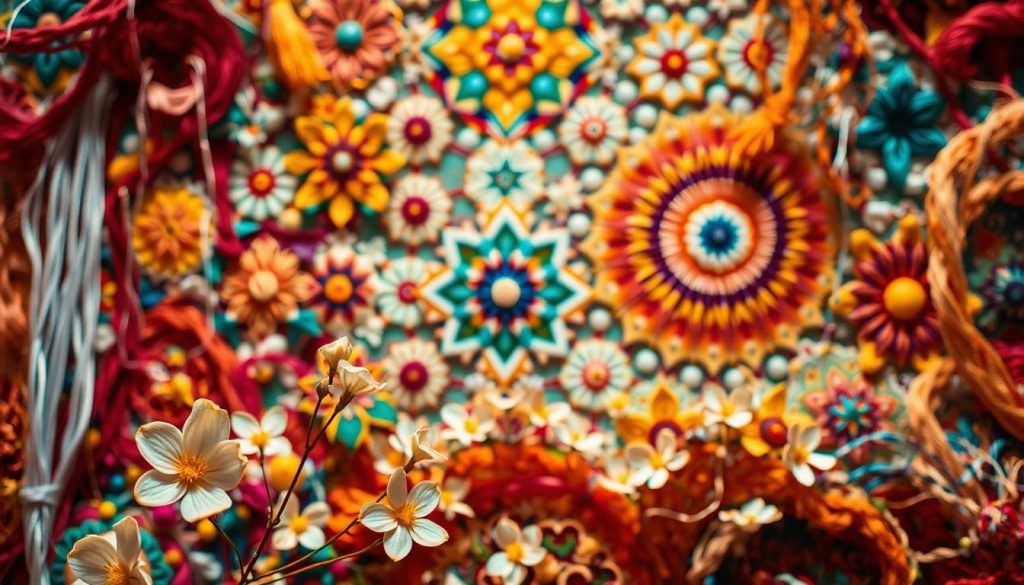
Use stitch selection to complete your design translation. Long-and-short stitch smooths color changes. French knots and bullion add focal points. Try swapping a satin stitch for chain stitch to alter line quality and weight. Small changes in stitches help your motifs read clearly at different sizes.
Learn basic color harmony rules to guide choices that support your concept. Complementary palettes create energy. Analogous schemes feel calm. Triadic sets bring balance. Apply color theory for embroidery when you pick thread shades to control mood and depth.
Work gradients into florals and landscapes with careful thread blending. Ombre effects read like painterly shading when you transition from light to dark across a petal or sky. Using color theory for embroidery with gradient techniques makes pieces feel deliberately cohesive.
Think in layers when creating texture. Start with a flat fill, add raised stitches, then finish with beads or tiny appliqué. Layering turns a flat motif into a tactile scene that invites touch. Creating texture this way keeps the surface lively and varied.
Mix thread weights and materials to expand your palette of tactile options. Silk, cotton, and metallic threads each reflect light differently. Historic use of silk and metal inspired prestige effects. In modern embroidery you can borrow that idea for both art and wearable pieces without heavy formality.
Use kits or video tutorials to practice targeted skills. A good kit will guide your choices in color and finishing so your experiments look polished. Repeating small exercises in creating texture and color blending builds confidence quickly.
Below is a quick comparison to help you plan a piece using motif, color, and texture.
| Focus | Technique | Visual Effect | Best Use |
|---|---|---|---|
| Motif Mixing | Layer floral + geometric | Contrast and balance | Home decor and wall art |
| Color Strategy | Complementary or analogous | Energy or calm | Wearables and botanical scenes |
| Gradient Blending | Ombre thread transitions | Depth and dimension | Landscapes and petals |
| Textural Build | Layered stitches, beads | Tactile richness | Statement pieces and couture trims |
| Material Choice | Mix silk, cotton, metallic | Light variation and sheen | Special occasion items and highlights |
| Learning Path | Kits and focused tutorials | Polished results faster | Skill building and practice |
Embedding embroidery into broader crafts and problem-solving practice
Embroidery is great for other crafts, helping you grow your skills. You can add stitched panels to quilts or sew patches onto jackets. These ideas mix quilting and embroidery with sewing and wearable art.
Cross-crafting applications: quilting, sewing, and wearable art
Use embroidery to make quilts stand out or personalize clothes. Small badges look good on denim and canvas. Think about the project’s scale, fabric, and how it will hold up in the wash.
Developing troubleshooting and creative problem-solving skills
Problems like uneven tension or thread tangles can happen. Check your hoop and thread first. Test a small area before starting a big project.
Fixing these issues helps you become better at embroidery. You learn to turn mistakes into cool design choices.
Turning craft into business or mindful hobby
Embroidery is a calm, screen-free activity. It helps you live in the moment and reduces stress. Many find it meditative.
The embroidery revival has opened new business opportunities. Small brands and artists sell unique items. Look at art schools and boutiques for inspiration on starting your embroidery business.
| Path | What to Offer | Key Skill | Why it Works |
|---|---|---|---|
| Quilt Makers | Embroidered quilt panels and memory quilts | Fabric selection and stabilizing stitches | Combines heirloom value with practical use, counters craft decline |
| Apparel Designers | Hand-stitched wearable art and custom patches | Placement, durability, laundering knowledge | Offers unique pieces that attract niche buyers and boutiques |
| Small Business Sellers | Limited-edition home goods and commissioned portraits | Customer communication and production planning | Leverages the embroidery revival to reach conscious consumers |
| Hobbyists | Mindful projects for stress relief and family gifting | Consistency and simple pattern adaptation | Provides daily calm and a creative outlet without commercial pressure |
Conclusion
Embroidery is more than just decoration. It’s a way to improve your skills in design, color, and texture. It also helps you practice focused needlework.
By learning basic stitches and trying out new techniques, you get better at precision and solving problems. These skills are useful in quilting, sewing, and making wearable art.
Begin with a beginner’s kit or good materials from brands like DMC or Gütermann. Use video tutorials or guides to learn. Start with simple projects to build your confidence.
Practice a little each day. This way, you can move from simple designs to more complex ones without feeling stressed.
Balance old and new by studying historical methods and following modern artists. See your embroidery as a hobby, a way to express yourself, or a start for a creative business. Each view deepens your craft and connects you with others.
Your embroidery journey can grow at your own speed. With the right materials, regular practice, and creativity, you’ll improve your skills. You’ll find joy in both modern and traditional embroidery.
 English