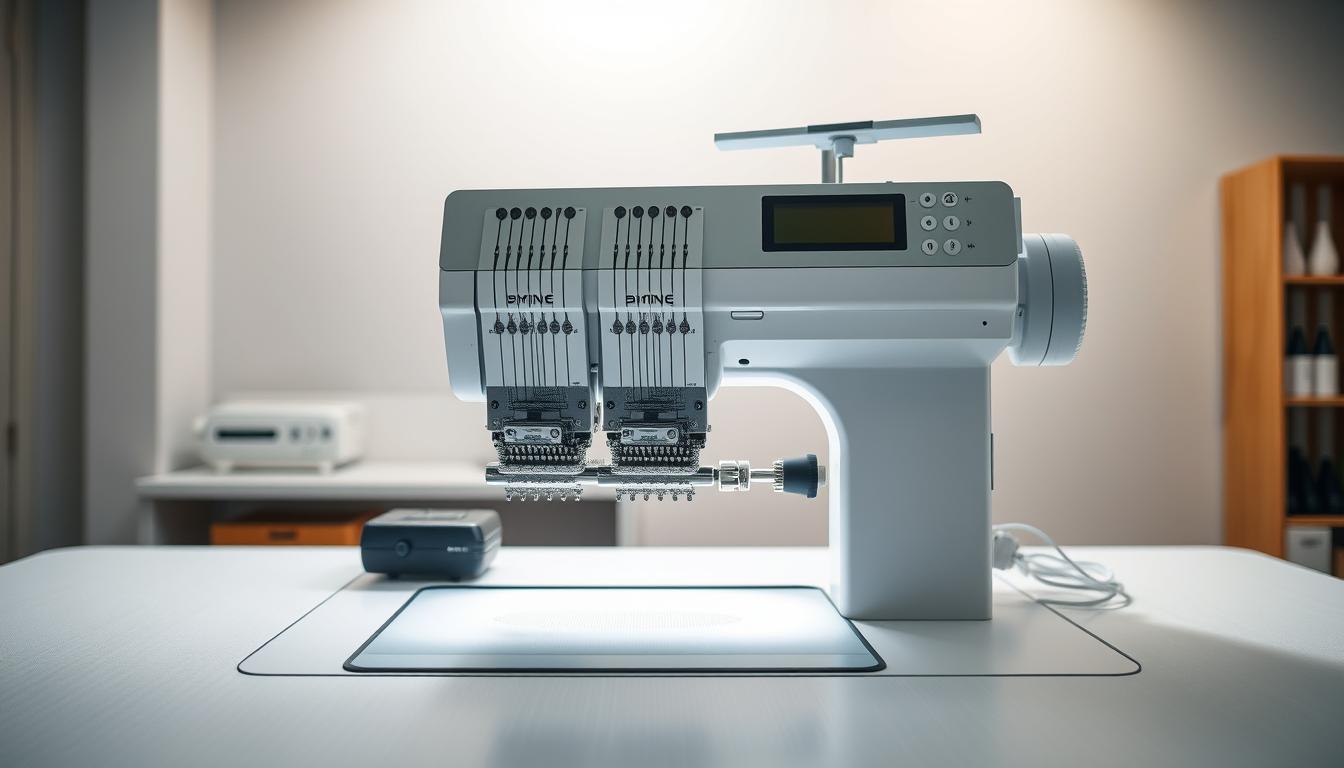
Could the machine on your worktable be the difference between a hobby that sparks joy and a small business that truly takes off?
This guide helps you find the right tool for your needlework projects. Whether you want to join the embroidery revival, add modern embroidery to your product line, or simply upgrade your sewing machine for cleaner finishes, you’ll learn what matters most.
You will discover clear differences between embroidery and sewing machines. You’ll learn when a combo unit makes sense. And you’ll see which features like throat width, built-in designs, and connectivity matter for creativity and efficiency.
Expect practical advice for beginners, makers scaling to a small business, and creatives who value heritage crafts while using today’s technology.
Key Takeaways
- Know the core purpose: embroidery machines for designs, sewing machines for garment construction.
- Look at hoop size and throat width to match projects and fabric types.
- Built-in designs, fonts, and connectivity affect ease and speed of modern embroidery.
- Combo machines offer versatility, but dedicated units often give better performance for business use.
- Start with realistic expectations: simple accessories and workflow habits speed learning.
Understanding the difference between embroidery machines and sewing machines
Choosing between a sewing machine and an embroidery machine depends on your goals. Sewing machines are best for making clothes, fixing them, or quilting. Embroidery machines are for adding logos, monograms, or 3D designs.
This guide explains what each machine does and when to use one over the other. It helps you pick the right tool for your needlework projects.
What each machine is built to do
Sewing machines sew fabric together. They use feed dogs and a flat presser foot for even layers. You can make seams, hems, and quilts with them.
Embroidery machines decorate fabric. They use hooping systems and needles to make detailed designs. They’re great for precise artwork and motifs.
Technical differences and core components
Sewing machines focus on straight stitching and hands-on control. They have feed dogs, presser foot, bobbin, and a simple throat plate. They’re easy for beginners.
Embroidery machines create decorative designs. They have multi-needle heads, automatic thread changers, and large fields. They also have touchscreens and can import designs.
When to choose one over the other
Use a sewing machine for construction, mending, or quilting. It’s good for strong stitching and easy to learn. It’s perfect for garment work.
Choose an embroidery machine for decoration or personalization. It offers precision and features for complex designs. Multi-needle models are fast but need more setup.
Consider a combo machine if you’re short on space or money. Combo models do both sewing and embroidery. They have smaller hoops and slower speeds.
If you want to keep traditional embroidery alive, use an embroidery machine. It lets you practice hand-stitching when you want a personal touch.
Embroidery machine types and when to pick each
When you’re looking for embroidery machines, you have many choices. Each one fits different needs, budgets, and goals. This guide helps you choose between machines for home use, professional use, and large-scale production.
Single-needle, multi-needle, and combo machines
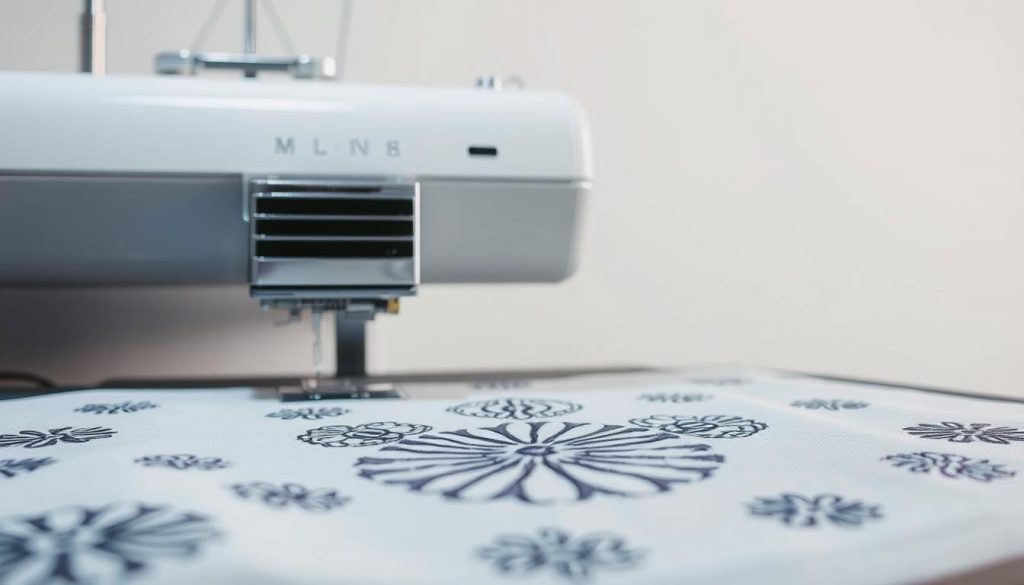
Single-needle machines are the cheapest and most portable. They’re great for hobbyists and small projects. You can easily switch threads by hand.
Multi-needle machines are faster and change colors automatically. They’re perfect for commercial work and big orders. They offer high stitch rates and larger fields.
Combo machines do sewing and embroidery in one place. They’re smaller and more versatile. They’re good for those who want to sew clothes and add embroidery without two machines.
Computerized and industrial options
Computerized machines have touchscreens and USB imports. They let you edit designs right on the machine. Brands like Brother and Janome make these easy to use.
Industrial machines focus on speed and durability. They’re for big production shops. Brands like Juki, Tajima, and SWF offer heavy-duty machines for high volume work.
Which type fits your scale: hobbyist vs. business
If you stitch for fun or gifts, a single-needle or combo machine is best. They offer great value for hobbyists and crafters.
Small businesses should look at multi-needle machines. They have bigger hoops and automatic features. Brands like Janome and Husqvarna Viking are good for growing businesses. For huge production, industrial machines from Juki and Tajima are the best choice.
Think about your investment, order volume, and project types when choosing. Match the machine to your needs to avoid future upgrades.
Key features to evaluate when buying
Choosing a machine means balancing features against how you plan to use it. Look past marketing and check the practical items that affect daily work. Below are the most important specs and what they mean for your projects, costs, and time.
Embroidery field and throat width
Hoop size determines the maximum design you can stitch in one pass. Smaller hoops like the Brother SE700 4″x4″ suit patches and monograms. Larger fields such as the Janome M17 11.3″x18.2″ let you handle big panels and fewer re-hoops.
Your throat width controls how far the fabric can extend under the presser foot. A wider throat width helps when you work on jackets, quilts, or bulky garments. Match your typical project scale to the hoop size and throat width before you buy.
Built-in designs, fonts, and software compatibility
Built-in fonts and designs get you started without extra files. Machines differ: Bernina and Janome models ship with hundreds of built-ins, while smaller machines may offer a few dozen. Count matters when you need variety on the fly.
Embroidery software shapes your creative options. Check compatibility with Embrilliance and other digitizing tools. Confirm that the machine reads common file formats and supports USB or wireless transfers for simple workflow integration.
Connectivity, automation, and user interface
USB and wireless transfers speed design import. App integration and on-screen editing let you preview, resize, and mirror designs before stitching. These features reduce trial runs and wasted thread.
Automation features like automatic threading, thread cutting, jump-stitch trimming, and auto-tension save time and lower errors. A clear touchscreen and intuitive menus help you work faster and learn controls without steep friction.
Durability, motor power, and maintenance considerations
Motor power affects speed and the ability to handle heavy fabrics. Brushless, high-power motors in premium machines and industrial models deliver smoother performance for long runs. Check SPM and note the trade-off between speed and stitch precision.
Durability ties to build quality and service networks. Brands such as Brother, Janome, Bernina, Juki, and Baby Lock offer broad support and parts. Anticipate routine care: hoop, needle, and thread maintenance keeps machines reliable and prevents a craft decline over time.
| Feature | What to check | Example models | Why it matters |
|---|---|---|---|
| Hoop size | Max field dimensions, included hoops | Brother SE700 4″x4″, Janome 14000 9.1″x11.8″ | Determines re-hooping frequency and project size |
| Throat width | Distance from needle to machine body | Janome M17 11.3″x18.2″, Bernina 590E medium | Allows bulky fabrics and larger garments |
| Built-in fonts & designs | Quantity, editability, on-screen preview | Bernina hundreds, Janome 350 built-ins | Saves time and expands creative options |
| Embroidery software | Compatibility, file formats, digitizing tools | Embrilliance, Janome proprietary, Brother software | Enables custom designs and professional results |
| Connectivity & UI | USB, Wi‑Fi, touchscreen, app support | Brother SE2000, Husqvarna Viking models | Simplifies transfers and on-machine edits |
| Automation | Auto-threading, trimming, jump-stitch control | Bernina, Janome high-end, Husqvarna JOYOS Advisor | Reduces manual steps and speeds production |
| Motor power & durability | SPM, brushless motors, metal internals | Juki industrials, Janome M17, Bernina 590E | Handles heavy use and long production runs |
| Maintenance & support | Service network, spare part availability, warranty | Brother, Janome, Bernina dealer ecosystems | Limits downtime and long-term repair costs |
Embroidery for beginners
Starting needlework can seem daunting. Begin by picking a few key tools and learning basic skills. This guide will help you find the right tools, machines, and tips to learn quickly.
Essential accessories and supplies
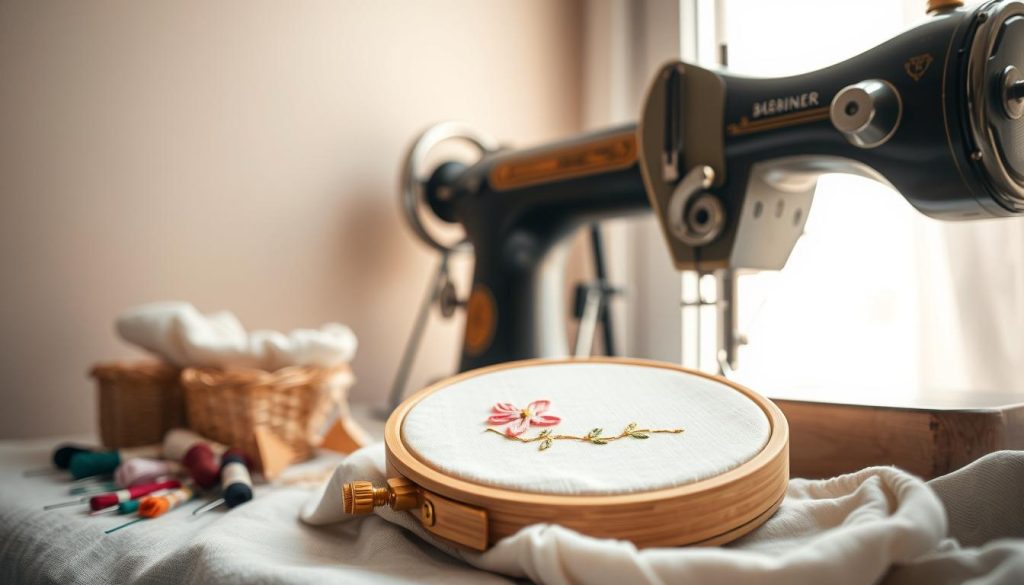
Stabilizers are more important than you think. Use tear-away for woven fabrics, cut-away for knits, and no-show mesh for thin shirts. Water-soluble toppers are great for towels.
Choose a 40wt polyester thread from brands like Madeira for durable, colorfast results. Keep 75/11 embroidery needles for general work and 90/14 for knits. Replace needles every 8–10 hours to avoid mistakes.
Small tools make quick fixes. Curved scissors and tweezers help with jump threads. Pre-wound bobbins save time. Magnetic hoops like MaggieFrame make rehooping easier. Embrilliance Essentials is a user-friendly software for editing and resizing.
Starter machines and realistic expectations
Choose a machine that fits your project needs. The Brother PE800 and Brother NQ1600E have larger hoops and USB import. The Brother PE600 is more affordable but has a smaller hoop.
Baby Lock and Janome models offer more room for growth. Baby Lock Alliance has advanced features for home projects. The Janome Memory Craft 500E has a larger hoop and on-screen editing. Expect to invest in digitizing software later for custom designs.
Workflow tips to accelerate learning
Hoop size is key for what you can make. Aim for at least a 5×7″ field. Practice hooping with scrap fabric and the right stabilizer until it feels natural.
Watch video tutorials for real-time help. Join community groups for advice and tips from experts. Start with simple designs, focus on hands-on practice, and move to digitizing when you’re more confident.
Combo machines versus separate machines
Choosing between a sewing-embroidery combo and separate units affects your workspace, budget, and workflow. Combo machines, like the Brother SE2000, combine sewing and embroidery in one. They save space and money, and you can switch tasks without moving machines.
Pros and cons of combo units
Combo machines offer versatility for hobbyists and makers with limited space. They handle both garment construction and decorative work, speeding up small projects and saving money.
But, there are trade-offs. Most combos have smaller hoops, like 4×4″ to 5×7″. Single-needle embroidery is slower for multi-color designs. If a combo breaks, both sewing and embroidery stop until it’s fixed. They might not be ideal for high-volume or demanding production.
Advantages of dedicated separate machines
Separate machines let you do embroidery and sewing at the same time. You can use a dedicated Brother or Janome sewing machine for construction. A multi-needle Baby Lock or Juki handles heavy embroidery, boosting throughput and reducing downtime.
Dedicated embroidery machines often have larger hoops, faster stitch speeds, and better thread management. They’re great for complex, multi-color work. Upgrading one function without replacing both lets you grow your business more easily.
When a combo is the right choice
Go for a sewing-embroidery combo if you’re starting out, working from a small studio, or on a tight budget. The Brother SE2000 is a good choice for makers who want solid embroidery features without a separate unit. Combos are perfect for personalized gifts, small runs, and learning both crafts.
If you see yourself doing heavy production, needing large hoops, or working with frequent multi-color designs, separate machines are better. Think about your current needs and future plans before deciding on a path for your craft or business.
Scaling up: choosing machines and tools for a small embroidery business
When you decide to scale, pick machines and tools that match your volume, budget, and brand. Look for production embroidery features that speed up your work and cut down on errors. Think about how each purchase supports your craft and the broader embroidery culture you represent.
Production-focused machine features
Look for multi-needle machines that handle automatic color changes. Large hoop fields matter when you work on bigger garments. Higher stitches-per-minute (1,000+ SPM) and robust metal internals reduce cycle times and increase uptime.
Consider prosumer and commercial models from Janome, Bernina, Juki, and Tajima for reliability. Industrial 15-needle units like SWF MAS-15 suit high-volume shops. These machines support consistent quality for heritage crafts and modern custom work.
Efficiency boosters and ROI tools
Invest in features that shave minutes off each piece. Automatic thread trimming, placement cameras, and touchscreen advisors cut rework and speed operator training. Multi-hoop systems let you run batches with fewer stops.
MaggieFrame magnetic hoop systems can reduce hooping time dramatically and improve tension consistency. That lowers defects and raises throughput, helping your small embroidery business show better margins when you track ROI tools and metrics.
Cost, space planning, and long-term maintenance
Balance upfront cost against labor savings. Multi-needle machines cost more but cut turnaround time. Industrial equipment needs dedicated space, proper electrical supply, and ventilation.
Set aside budgets for spare parts, scheduled servicing, and software updates. Brands such as Brother, Janome, Baby Lock, Bernina, and Juki offer broader service networks, which helps you avoid long downtime.
| Decision Area | Key Considerations | Impact on Your Business |
|---|---|---|
| Machine Type | Multi-needle vs single-needle; industrial vs prosumer | Throughput, initial cost, training needs |
| Production Features | Large hoop fields, 1,000+ SPM, metal internals | Faster jobs, consistent quality, longer lifespan |
| Efficiency Tools | Automatic trimming, cameras, MaggieFrame hoops | Less rework, faster setup, improved ROI tools |
| Space & Utilities | Dedicated floor area, electrical specs, ventilation | Safe operation, compliance, scalable layout |
| Maintenance Plan | Service agreements, spare parts, regular cleaning | Lower downtime, predictable costs, longer machine life |
Project-driven machine recommendations and use cases
Choose a machine based on your projects. Small, personal projects need different tools than big sewing jobs or quilting. Make sure the machine fits your needs to avoid spending more later.
For simple tasks like monogrammed towels or custom patches, a basic single-needle or combo machine works well. Models like the Brother PE600 or PE800 are budget-friendly and easy to use. They’re perfect for starting your collection of personalized gifts.
For sewing clothes and hats, you’ll need a special setup. Look for machines with cap attachments, magnetic hoops, and strong tools like NeedleCam or laser guides. The Baby Lock Alliance and commercial multi-needle units are great for these tasks. They handle curved surfaces and fast, colorful designs well.
Quilting and projects that mix sewing and embroidery need a big workspace and precise stitch control. Machines like the Janome Horizon Memory Craft 14000 or Bernette 70 Deco are good choices. They offer strong sewing and flexible embroidery fields, making it easy to switch between tasks.
Before buying, think about the size of your projects and the machine you need. Small gifts are best for entry-level combos or single-needle machines. For clothes and hats, go for specialty hoops or commercial multi-needle models. Quilting needs a wide workspace and strong motor for thick layers.
Modern embroidery tools help keep the craft alive by drawing in new makers. Matching your machine to your projects saves time, money, and keeps your creativity flowing.
Conclusion
Choose a machine that matches your goals. Sewing machines are for construction, embroidery for decoration, and combo units for both. For a growing business, look at multi-needle or industrial machines from brands like Brother, Janome, and Bernina.
These machines offer speed and durability. Consider hoop size, throat width, speed, and automation. This ensures your workflow stays smooth as your output grows.
Brand features are important. Look at built-in designs, connectivity, user interface, and local service. A quiz or assessment can help you choose between beginner-friendly models and production machines.
Start with a reliable entry-level machine if you’re new to needlework and modern embroidery. Then, plan upgrades as your skills and orders increase.
Balance tradition and innovation by exploring embroidery culture and the embroidery revival. Join communities, follow tutorials, and invest in compatible software. This will help you master design transfer and digitizing.
Keep heritage crafts in mind while using modern embroidery tools. This way, your work honors technique and meets contemporary markets.
Before buying, assess your project types, workspace, and maintenance needs. Prioritize hoop size, automation features, and good service support. With the right plan, you can enjoy creative growth and build a sustainable practice in needlework.
 English