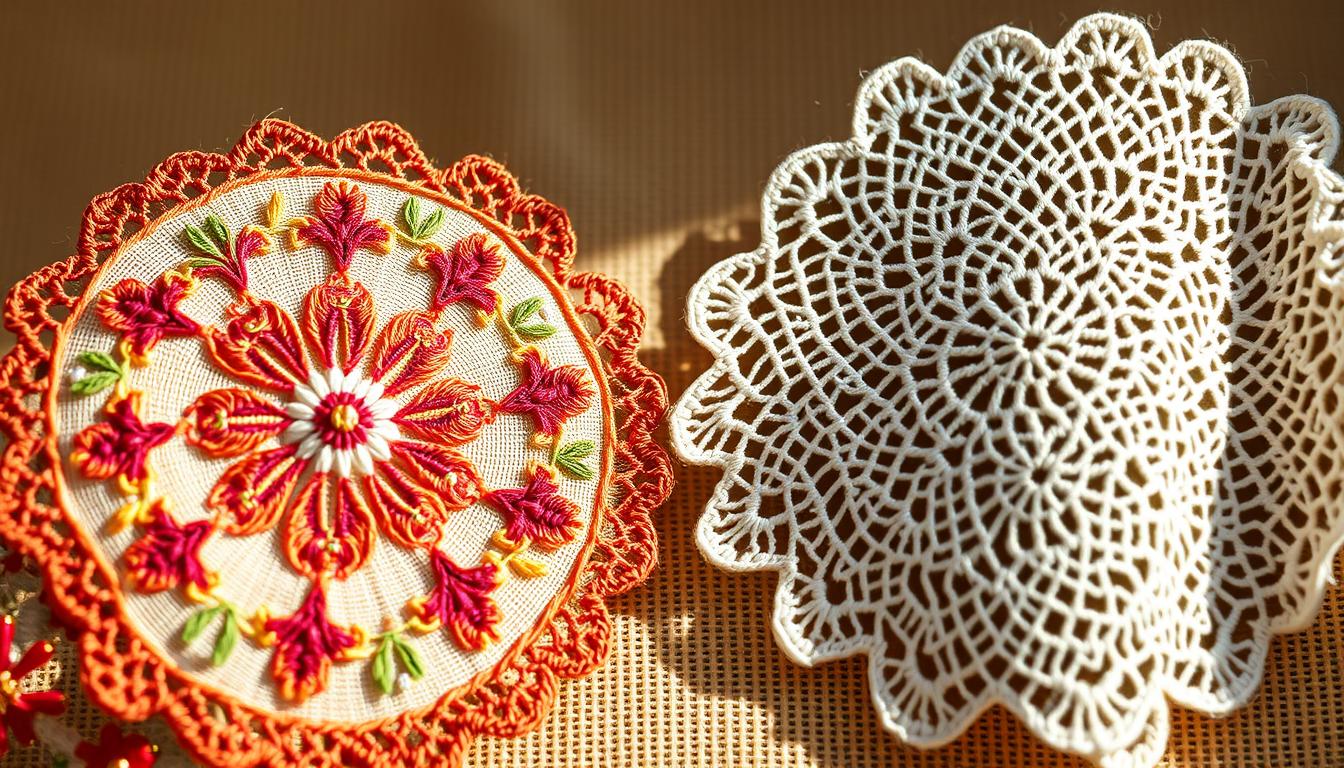
Ever thought if embroidery and crochet are related in the world of thread art?
At first, they seem similar in creative needlework. But, embroidery is about decorating surfaces, while crochet makes fabric with a single hook. You’ll see how they differ, where they meet, and why it matters for your projects.
Embroidery can go on many surfaces, like knits, woven fabrics, and even fragile items with the right stabilizers and needles. Crochet, on the other hand, started from tambour and now uses one hook to create fabric, not just decorate it.
This article will help you choose between needlepoint, cross stitch, tambour, and modern embroidery. You’ll learn which one is best for visible mending, political statements, or adding a touch to a crocheted scarf.
Key Takeaways
- Embroidery and crochet share materials but serve different purposes: surface decoration versus fabric construction.
- Embroidery adapts to many substrates with proper stabilizers and needle techniques.
- Crochet evolved from tambour and other needle arts and now builds fabric using a hook.
- Knowing craft differences helps you choose the right method for visible mending, art, or wearable items.
- The article will compare specific stitches and tools so you can combine embroidery and crochet effectively.
What are the basics: embroidery and crochet explained
Embroidery and crochet both love thread art but start from different places. Embroidery decorates fabric with needles and various stitches. Crochet, on the other hand, creates fabric with a single hook and looped stitches.
Core tools and materials for embroidery
Embroidery needs needles, threads, and a frame. Hand embroidery uses special needles and floss. Machine embroidery uses machines like the Brother PE770 and hoops like 4×4 in and 5×7 in.
Threads can be cotton, silk, or even metallic. Stabilizers like Sulky Sticky Fabri-Solvy keep stitches neat. Tulle is often used on nap fabrics.
Core tools and materials for crochet
Crochet is simpler, needing just a hook and yarn. Hooks vary by material and size. Yarns range from fine linen to bulky acrylic and wool.
Choosing the right yarn affects the fabric’s feel. For kitchen and spa cloths, use specific yarns like Lion Brand kitchen cotton. This makes adding embroidery easier and more durable.
How techniques differ: needle, hook, and stitch motion
Embroidery uses a needle to create patterns on fabric. Techniques include running stitch, satin, and cross stitch. Needlepoint fills areas with dense coverage.
Crochet uses a hook to create fabric. It forms chains and loops. Tambour needlework can mimic crochet, showing historical connections.
Embroidery and crochet differ in their finished products. Embroidery adds texture on top, while crochet creates fabric itself. Knowing these differences helps you choose the right technique or mix both.
embroidery: history, forms, and surprising materials
Embroidery is a part of many cultures, used for both craft and record. It’s found in ceremonial clothes and everyday linens. The history of embroidery in Persia, China, and medieval Europe shows its importance.
Stitches were used to show rank, tell stories, and mark important life events. The Bayeux Tapestry is a long example of how embroidery was used for public storytelling. Today, needlepoint and thread art carry on this tradition in galleries and craft rooms.
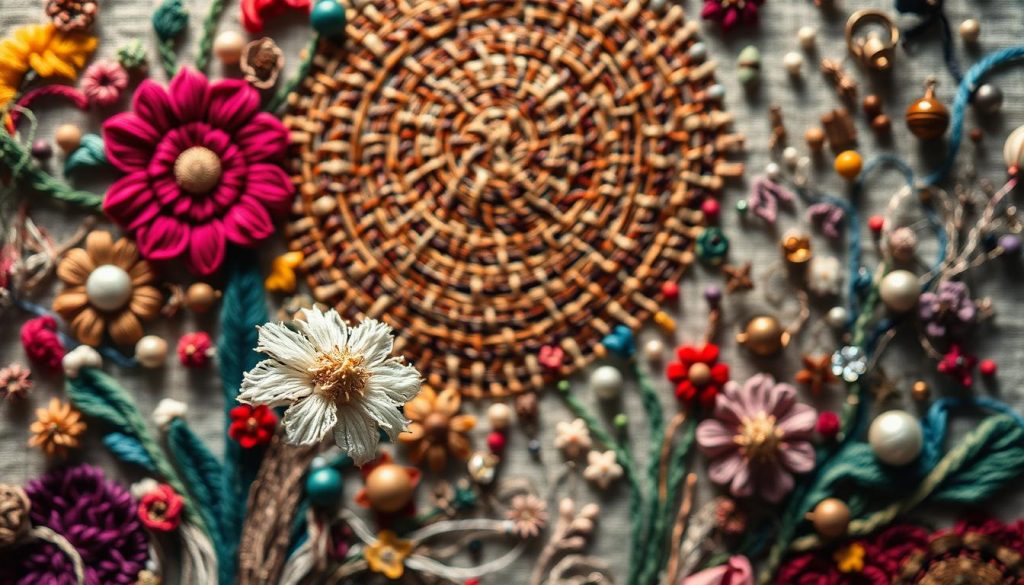
Creative needlework has evolved from a domestic skill to a public statement. Prison samplers and suffragette handkerchiefs show how embroidery was used for memory and testimony. Political embroidery carried messages when other voices were silenced.
Embroidery materials go beyond traditional silk and cotton. You’ll find metallic threads that once showed wealth. Unusual embroidery includes human hair work from Mexico and late Imperial China.
Today, makers stitch on wood, leaves, postcards, photographs, and even toilet paper. This pushes the limits of thread art.
Working on fragile surfaces requires special care. Use low-density outlines and careful hooping to preserve them. The right stabilizer and stitch plan prevent damage when using unusual canvases and threads.
Visible mending turns repair into decoration. It uses embroidery to highlight patches, not hide them. This practice combines sustainability with storytelling, making wear a part of the garment’s look.
Try adding embroidered overlays to knitted or crocheted pieces. This shows how embroidery can enhance texture and message without changing the fabric. Small stitched motifs or needlepoint details can turn everyday textiles into art.
How the finished look and texture compare between the craft differences
When comparing embroidery and crochet, it’s important to understand their visual and tactile differences. Embroidery is a form of surface decoration that adds details to existing fabric. On the other hand, crochet creates fabric by making loops and joins.
This fundamental difference affects how a piece looks, feels, and functions in everyday use. The choice between embroidery and crochet can significantly impact the final product.
Surface decoration vs. fabric construction
Embroidery adds motifs and texture to existing fabric without changing its structure. Needlepoint, for example, can make fabric heavier and less flexible due to its dense fills. Crochet, on the other hand, builds the fabric itself, with the pattern and stitch choice determining its behavior.
For textile art and wearable pieces, embroidered motifs sit on top of the fabric. Crochet, by contrast, defines the fabric’s openwork, stretch, and thermal properties. If you want a motif on top, choose embroidery. For a handmade fabric, crochet is the better choice.
Texture and absorbency considerations
Functional items require careful consideration of absorbency and hand feel. Crocheted washcloths, made from dense cotton yarn, offer excellent absorbency and scrubbing texture. Embroidered spa cloths, while attractive, may have reduced absorbency and a stiff surface if the stitching is heavy or dense.
For spa and dish items, use small, low-density embroidery on quality kitchen cotton. Wet-finish the cloth with a hot wash and high-heat dry to tighten the weave before stitching. These practices help the fabric withstand embellishment.
When embroidery enhances knitted or crocheted items — stabilizers and toppers
Embroidery on knits and crochet needs support to avoid distortion. Use stabilizers that suit the textile and design. Sulky Sticky Fabri-Solvy is a good choice as a washaway mesh, helping to position delicate fabrics without stretching them.
Toppers protect the fabric’s pile and prevent the needle from catching loops. Tulle is a cost-effective topper that can be basted around the perimeter instead of hooping. After stitching, trim excess stabilizer, spray water to dissolve the mesh, press, and optionally starch for a neat finish.
| Characteristic | Embroidery | Crochet |
|---|---|---|
| Main role | Surface decoration and detailed motifs | Fabric construction and structural patterning |
| Impact on drape | Can stiffen or weigh fabric, specially with dense fills | Defines elasticity, drape, and thermal qualities |
| Best for | Small accents, monograms, and textile art details | Washcloths, garments, and structural items |
| Absorbency | May reduce absorbency if stitching is dense | High when using dense cotton yarn; good scrub texture |
| Stitching types | Surface stitches, fills, satin, and applique | Chains, single/double crochet, shells, and textured stitches |
| Stabilizers & toppers | Sulky Sticky Fabri-Solvy, tearaway, water-soluble toppers | Use stabilizers when adding embroidery on knits or open crochet |
Understanding these practical differences will help you choose the right technique for your projects. If combining techniques, test small samples with chosen stabilizers and stitching types. This ensures the desired absorbency, hand, and appearance before starting the final piece.
Needle techniques, stitching types, and overlap: where they meet
Counted-thread work and looped construction share common ground. Cross stitch and needlepoint use evenweave fabric and grid-based placement. This is different from crochet, which uses continuous loops.
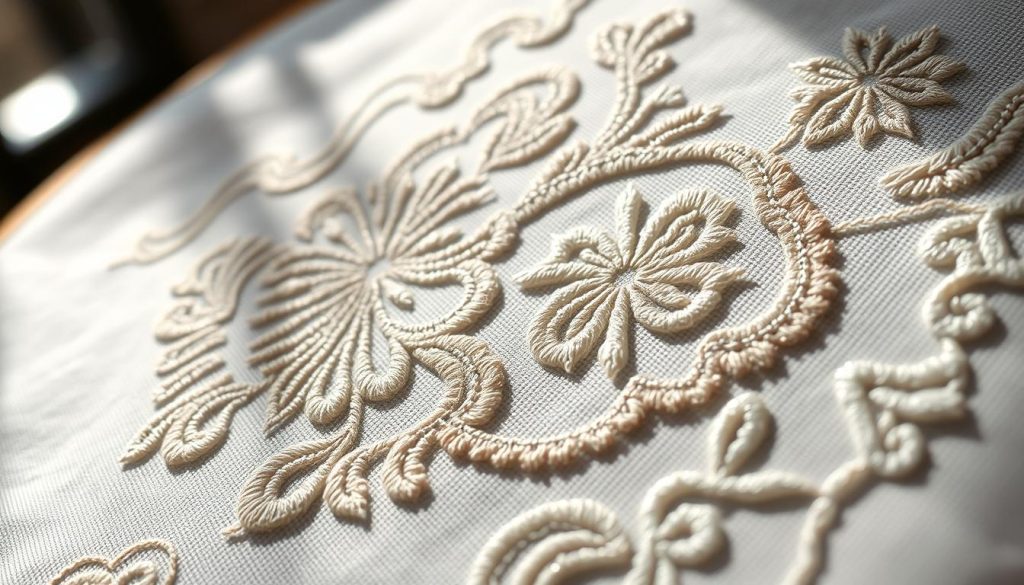
Cross stitch and needlepoint focus on pixel-like motifs. Needlepoint vs embroidery shows how structure affects texture and durability. These differences are key when mixing thread art and hooked work.
Tambour and tambour embroidery use a hooked needle for chain-like lines. This technique is similar to small crochet chains. Early crochet instructions used tambour needle techniques, influencing modern crochet.
Needle techniques show connections between design and tool development. The shepherd’s hook and passementerie chain-work influenced both. This explains why some embroidered chain stitches look like crochet loops.
Adding embroidery to knits or crochet can be done with machine embroidery. Use the right setup, including proper hoops and stabilizers. Brands like Brother have machines for small hoops.
Sulky Sticky Fabri-Solvy is great for lacy or textured fabrics. Hoop the stabilizer, place your dry, blocked item, and add a tulle topper. Baste around the edge and choose simple motifs.
For fragile items, use tearaway stabilizer and a water-soluble topping. After stitching, trim toppers and rinse out washaway stabilizers. Let the piece dry flat. These tips protect delicate work and keep finished pieces functional.
Practical project ideas and tips for combining thread art and crochet
Begin by wet-finishing your crochet pieces. Use quality kitchen cotton for dishcloths and spa cloths. Wash them hot, dry on high, then press or block to tighten the fabric. This makes the fabric denser and better for embroidery.
Choose small, low-density motifs for corners or hems. This keeps the fabric absorbent and soft. For machine work, pick small designs for textiles like dishcloths. For handwork, match threads and needles to your yarn weight. Avoid dense satin fills that stiffen the fabric.
Make smart stabilizer choices before stitching. Sulky Sticky Fabri-Solvy is great as a washaway mesh for knit and crochet. Use a tearaway stabilizer for sturdier projects. A water-soluble tulle topper or washaway mesh helps control pile.
For fragile substrates like novelty toilet-paper gifts, use layers of tearaway stabilizer. Cover with water-soluble topping. Use very low-density designs for gift embroidery. Remove toppers gently after stitching. If stabilizer remains, trim neatly before packing.
Start with simple embroidery projects to build confidence. Embellished spa cloths and decorated dishcloths work well with small machine motifs. Use Sulky Sticky Fabri-Solvy and a tulle topper for clean results. These make great boutique items and gifts.
Explore hoop art and small framed pieces. Use 4×4 or 5×7 hoops on fabric, photos, or thin wood panels. Match your stitching types to the canvas and secure suitable backing or washaway mesh. After stitching, trim stabilizer and finish the edges for a clean display.
Follow some embroidery tips: test density on a scrap, use matching topper color to hide residue, and pick simple motifs for corners. Use machines like Brother PE770 for reliable hooping. Always respect stabilizer and density best practices to protect the textile.
Conclusion
Embroidery and crochet are two different crafts. Embroidery uses needle and thread to decorate surfaces. Crochet, on the other hand, creates fabric with a hook.
Knowing the difference between needlepoint and embroidery helps you pick the right craft for your project. Use embroidery for detailed designs, stories, or repairs. Choose crochet for making items like scarves, doilies, or toys.
You can mix both crafts for unique results. Start by choosing good yarn and testing how it looks when wet. Also, pick designs that are not too dense.
For machine work on crocheted items, use stabilizers like Sulky Sticky Fabri-Solvy. This keeps your stitches neat and your fabric smooth. These steps help you combine embroidery and crochet successfully.
Remember, textile art is more than just making things. It has a rich history, from the Bayeux Tapestry to suffragette handkerchiefs. Use this history and mix techniques to make your work more interesting.
 English