Ever wondered why some embroidery looks sharp, while others look messy?
The secret lies in the backing or stabilizer. It keeps fabric steady, stops puckering, and guards fibers. For DIY and hand embroidery, the right stabilizer makes all the difference.
Experts at Sulky of America created tools and sample packs. They answer the question, “What stabilizer do I use?” Their Stabilizer Selector Tool helps pick layers and types for various fabrics and techniques. But, always test on scraps to see how different factors affect your work.
For fabrics, heavier ones need lighter stabilizers, and lighter ones need heavier ones. Stabilizers range from 1–1.5 oz to 3–3.5 oz. Knowing this helps achieve cleaner, more durable designs.
Key Takeaways
- The stabilizer is the hooped backing that prevents puckering and movement during embroidery.
- Choose lighter stabilizers for heavy fabrics and heavier stabilizers for light fabrics.
- Brands like Sulky provide selector tools and sample packs, but always test on scrap fabric.
- Stabilizer weight categories: lightweight, medium, and heavyweight guide your choice.
- Proper stabilizer selection improves stitch quality for machine embroidery and DIY embroidery projects alike.
Understanding embroidery stabilizers: what they are and why they matter
Before you pick a backing, understand how stabilizers work. A stabilizer is a material placed under or over fabric to keep it steady. It stops the fabric from moving or puckering while you stitch, keeping your design perfect.
Definition and role of a stabilizer
A stabilizer is used with the fabric in the hoop for embroidery. It helps the needle stay steady, keeping the fabric from getting distorted. Companies like Sulky and Madeira make different stabilizers for various fabrics and techniques.
How stabilizers affect stitch quality and durability
Your choice of stabilizer greatly affects your stitch quality and how long it lasts. For dense designs, you need a heavier stabilizer to avoid thread pull. For simple embroidery on stable cotton, a lighter stabilizer works well.
If the item will get washed a lot, choose a stronger stabilizer. Stabilizers can soften with washing, which might affect their performance over time.
When you must always use a stabilizer
Some projects need stabilizer use every time. Delicate fabrics, dense fills, and appliqué need support to avoid damage. Even simple designs on stretchy fabrics require the right backing to keep the stitches looking good and last longer.
Testing is key. Use a Stabilizer Selector or test stitches on scraps to see how it works. Machine settings, needle condition, thread choice, and how you hoop it all affect the stabilizer’s performance. This step is part of your prep, whether you’re doing embroidery for wellness or as a creative therapy.
Types of stabilizers and expert use-cases
You’ll pick stabilizers based on the fabric, design, and embroidery types. Small changes in backing can save hours of trimming. They also reduce puckering and improve embroidery patterns on different materials.
Cut-away for stretch and wash
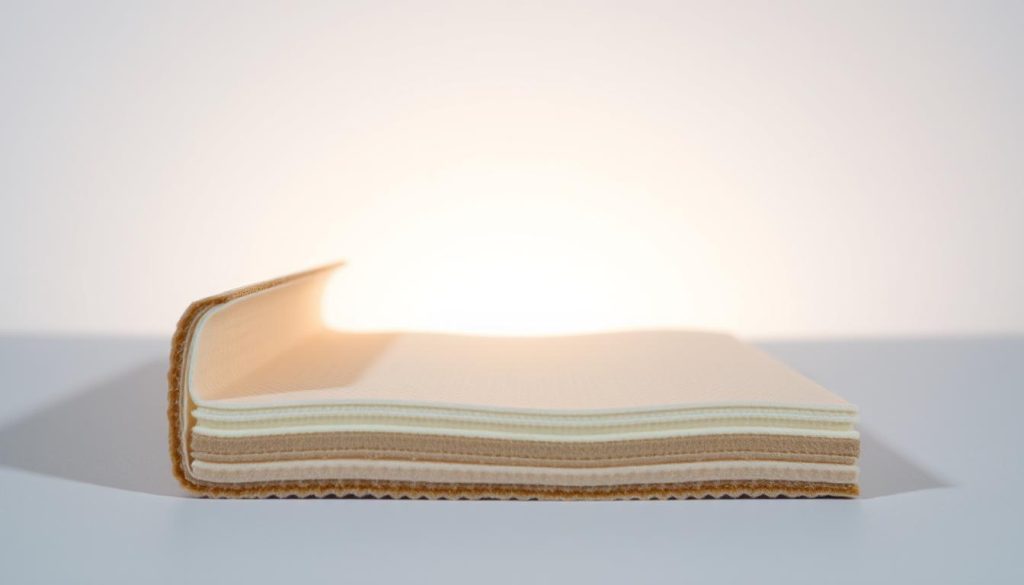
For knits or items that get heavy washing, use a cut-away stabilizer. It gives lasting support. Choose lightweight cut-away for low stitch density and heavyweight for dense designs.
Many brands offer fusible cut-away that bonds to the shirt knit. It resists distortion through dozens of washes.
Tear-away for stable woven fabrics
A tear-away stabilizer is best for firmly woven cottons and canvas. It provides temporary support. Use paper-like or adhesive options for towels, bags, and leather.
Instead of one heavy sheet, stack multiple light layers for extra strength. This avoids bulk on the back.
No-show mesh for technical shirts
For stitching polos or moisture-wicking golf shirts, use a no-show stabilizer. It cuts bulk and stays invisible. This woven cut-away is thin yet strong, supporting low to medium stitch counts without showing through light fabrics.
Fusible no-show mesh like Floriani No-Show Mesh Fusible gives extra hold during sewing.
Topping and water-soluble topping to keep stitches on the surface
Textured fabrics like pique, terry, or fleece need a topping to stop stitches from sinking. Use water-soluble topping and film toppings. They sit above the design while the backing supports from below.
Brands like Sulky Solvy and Madeira Aquafilm let you remove the film with water or by tearing. This keeps embroidery patterns crisp on nap and loops.
Specialty stabilizers: foam, heat-away, wash-away
Use foam for raised, 3D effects on caps and large lettering. Stitch column fills to trap the foam, then trim excess to shape the finished piece. Heat-away films dissolve with heat for leather and suede projects where water is a problem.
Wash-away, or fully water-soluble stabilizers, work for organza, tulle, and free-standing lace. They leave no residue after rinsing.
| Stabilizer | Best for | Key benefit | Typical use with embroidery patterns |
|---|---|---|---|
| Cut-away stabilizer | Knits, stretch fabrics, dense designs | Permanent, long-term support through wash | High-density logos, small lettering, long-wear garments |
| Tear-away stabilizer | Stable woven fabrics, towels, bags | Easy removal, clean backstitch finish | Light designs on cotton shirts, non-stretch fabrics |
| No-show stabilizer (poly mesh) | Polos, tech shirts, lightweight fabrics | Invisible support, low bulk | Low to medium stitch counts, subtle logos |
| Water-soluble topping | Pique, terry, fleece, textured surfaces | Prevents stitches from sinking into nap | Towel monograms, textured fabric fills |
| Foam | Caps, 3D lettering | Creates raised, dimensional effects | Bold, block lettering and patches |
| Heat-away stabilizer | Leather, suede, heat-tolerant materials | Dissolves with heat, avoids water exposure | Emblems, patches, leather appliqué |
| Wash-away (water-soluble) | Organza, tulle, lace, delicate items | Leaves no residue after rinsing | Free-standing lace, cutwork, delicate trims |
Choosing the right stabilizer for your fabric and design
Choosing the right backing starts with the fabric. Use a simple stretch test: pull the material across two fingers. If it stretches a lot, you should choose embroidery stabilizer options like heavy cut-away. Medium knits work best with light cut-away. Stable woven fabrics accept tear-away well. Thicker fabrics usually need lighter backing. Thin fabrics call for heavier support.
Match stabilizer to fabric stability and stretch
For sheer or lightweight fabrics, pick wash-away or tear-away stabilizers to avoid bulk. Denim, canvas, and heavy knits need cut-away for lasting hold. Mesh cut-away gives breathability when solid cut-away is too thick. For stretchy items consider fusible backings or adhesive stabilizers to keep layers from shifting while you stitch.
Consider stitch density and design complexity
Stitch density drives your stabilizer choice. Dense, high-stitch-count designs demand heavier backing or multiple layers. Use poly mesh under dense work to add support without stiffness. For delicate designs you might combine a tear-away with a light topping to keep threads on the surface.
Account for washability and end-use
If the item will be laundered often, select a sturdier backing because stabilizers soften with washing. For pieces that can’t be wet, avoid water-soluble toppings. Heat-sensitive fabrics should not use heat-away stabilizers. Color matters: white is common, black works for dark garments, and no-show stabilizers suit light fabrics where you don’t want backing to show.
Hooping method, machine settings, and thread considerations
Hooping techniques are as important as the stabilizer choice. Tight hoop tension can warp fabric. Loose hooping lets layers shift. Use adhesive-backed stabilizers for very stretchy materials to fuse stabilizer to fabric and reduce movement. Check needle condition and thread tension before you start.
Tools like Sulky’s Stabilizer Selector can guide your pick by fabric and technique, but always run a test. Environmental factors such as humidity affect water-soluble products. Test combinations on a scrap to confirm the look and feel before you begin production.
- Rule of thumb: thicker fabric → lighter stabilizer; thinner fabric → heavier stabilizer.
- Layering: combine poly mesh with tear-away for invisible support plus strength.
- Production tip: match stabilizer weight to stitch density and intended wash frequency.
Choosing right gives cleaner results and reduces rework. You may find the process calming, close to embroidery therapy, and part of your craft routine that supports embroidery wellness.
Practical recommendations and expert top picks for common projects
Choose stabilizers that fit the fabric and the design. The right backing keeps stitch quality high and reduces puckering. Below are practical picks you can test on scrap fabric for your next machine embroidery projects or DIY embroidery session.
T-shirts and polos
For lightweight tees use a light water-soluble tear-away or a light cut-away when stitch count is low. For polos and golf tech shirts pick no-show poly mesh, often layered for extra support so the backing stays invisible. Test on the same knit weight before you stitch a full run.
Sweatshirts, hoodies and heavy knits
Heavy knits need medium to heavy cut-away to prevent distortion. Dense designs call for heavier stabilizer weight to keep columns steady. For a softer hand after washing choose a polyester cut-away that tolerates frequent laundering.
Denim, canvas, and jackets
Use heavy cut-away for structured jackets and canvas. Combine tear-away with wash-away options for denim to balance permanence and easier cleanup. For industrial-style laundering pick polyester-based backings to keep color and strength.
Towels, terry cloth, and fleece
Layer a medium weight water-soluble tear-away under the design and add a water-soluble topping like Aqua-Top to stop stitches from sinking into the pile. This combo gives clean surface detail and stabilizes from the back during stitching.
Headwear, caps, and 3D foam lettering
Structured caps do best with medium to heavy tear-away. For 3D foam lettering place the foam on top and stitch short column fills. Use foam up to about 3 mm and remove excess carefully; a heat gun or hair dryer helps tidy stray pieces.
Delicate fabrics, lingerie, and silk
Minimize weight and test first. Water-soluble or wash-away stabilizers like Sulky Solvy or Vilene work well. For stretchy or skin-contact items consider fusible backing to fuse fabric and stabilizer into one stable unit and reduce irritation.
Use multiple lightweight layers instead of one heavy sheet for easier removal and neater backs. Keep sample packs from brands like Floriani, Sulky, and Madeira to match stabilizer to fabric. Try simple embroidery patterns as tests to refine choices for your creative therapy or therapeutic embroidery projects.
These choices support both hobby work and health crafts. When you explore embroidery patterns for small machine embroidery projects, you gain confidence and better results. Treat this as a practical checklist for your next DIY embroidery or creative therapy session.
Conclusion
Choosing the right stabilizer is key. It depends on the fabric, stitch density, and how it will be used and washed. You have options like lightweight, medium, and heavy stabilizers. There are also cut-away, tear-away, poly mesh, and topping types.
Use guides from Sulky, Floriani, and Madeira to start. But always test on a scrap first. This ensures it works with your needle and thread.
Machine settings are just as important as the stabilizer. Needle size, thread type, and tension all affect the outcome. Run a sample stitch to check for any issues.
When you find the right combination, the stabilizer becomes a secret helper. It makes your stitches clearer and your work last longer.
For hobbyists, the right stabilizer makes embroidery therapy easier. It reduces frustration and helps you achieve better results. This lets you enjoy the creative process more.
Start with simple patterns and document your progress. As you get better, refine your approach. This way, you can focus on the design and the journey.
Here’s what to do: know your fabric and its stretch. Check the stitch density of your design. Use manufacturer tools to help choose. Test on scraps with your machine setup.
Choose the stabilizer or combo that gives you the cleanest stitch. This will help you create professional-looking pieces. It also maximizes the emotional and creative rewards of embroidery and creative therapy.
 English