Could a simple hoop, a spool of DMC floss, and an hour of your time unlock a new creative habit you actually keep?
You don’t need a workshop or expensive gear to start embroidery. With basic supplies, you can begin. You’ll need a 5″–6″ wooden embroidery hoop, 100% cotton fabric, and DMC or Anchor six-strand floss. This makes starting out easy and fun.
Beginner-friendly tips help too. Use chenille or crewel needles for easier threading. Keep floss lengths to about an arm’s length. Split strands to change stitch thickness. A small hoop keeps tension steady and makes projects portable.
For wearable projects, wash garments before stitching and test colorfastness. Stabilizers like Sulky Sticky Fabric-Solvy or DMC Magic Paper give extra support. This makes your first clothing attempts manageable and durable.
Key Takeaways
- Start with a small wooden hoop, 100% cotton fabric, and DMC or Anchor floss.
- Chenille needles and split six-strand floss make stitching easier for beginners.
- Keep thread lengths short and use a 5″–6″ hoop for better tension and portability.
- Stabilizers and pre-washing garments help when stitching on clothing.
- Beginner embroidery is low-cost, scalable, and rewarding for creative needlework.
Why embroidery is a beginner-friendly craft
Embroidery is welcoming with simple tools and clear rewards. You start with a hoop, cotton, a needle, scissors, and some floss. This low cost makes it easy to try without spending a lot.
Low startup cost and minimal supplies
You don’t need fancy gear to begin. A basic kit has fabric, a hoop, needles, and thread. Using six-strand cotton floss lets you create bold or delicate lines.
Simple learning curve and forgiving techniques
Basic stitches are easy to learn and quick to practice. Small mistakes rarely ruin a piece, so you can experiment freely. As you work, you build confidence and muscle for different stitches.
Many stitchers say to avoid perfectionism early on. Unpicking every tiny flaw slows progress. Focus on steady practice and finish simple motifs to see real improvement.
Scalable complexity and creative needlework
You can keep projects simple or add layers of detail as skills grow. Start with outline stitches, then explore satin fills, French knots, and layered textures. This scalability supports your interest in textile art across home decor and wearable pieces.
When you move to garments, use stabilizers and modest hoop tension to protect stretch and durability. This approach lets you enjoy creative needlework on shirts, jackets, and bags while keeping results neat and long-lasting.
Essential beginner supplies and how to choose them
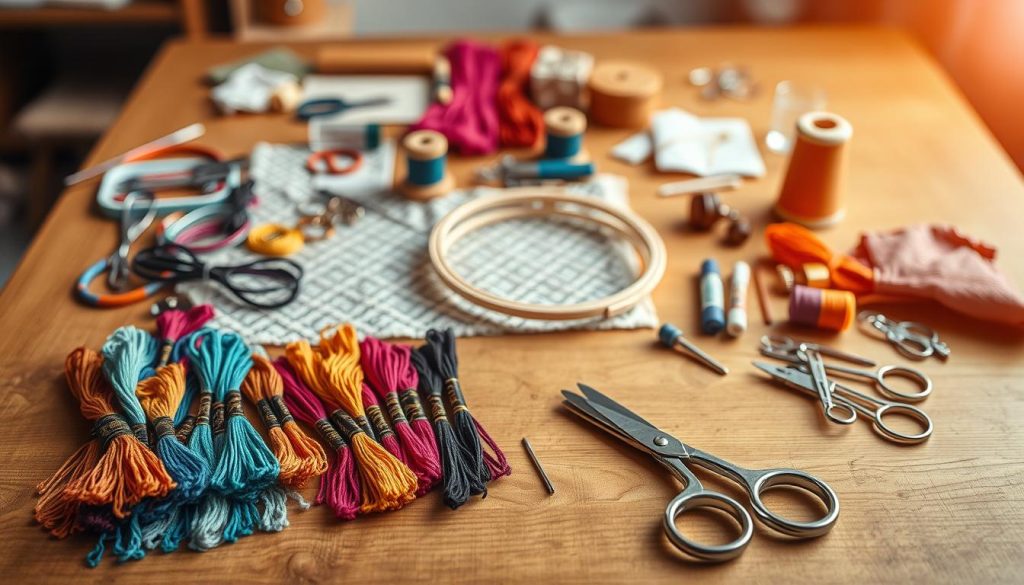
Having the right tools makes embroidery fun and easy. Start with a basic kit that has fabric, threads, needles, hoops, and simple transfer tools. This will help you with most beginner projects.
Choosing the right fabric
Beginners should use 100% cotton quilting fabric, like a fat quarter. Make sure it’s at least four inches bigger than your pattern. This size lets you hoop comfortably. For wearable items, medium-weight cotton and linen are good choices.
Avoid stretchy fabrics like satin and tulle at first. They can distort stitches and make tension hard to control.
Hoops, needles, and thread choices
Start with a 5″–6″ wooden hoop for good tension and portability. Wooden hoops are gentle on fabric. Plastic hoops are cheaper but be careful not to overtighten to avoid fabric damage.
DMC or Anchor six-strand cotton embroidery floss works for most projects. Cut lengths to about 50–80 cm to avoid tangles. Later, try Perle cotton and tapestry wool for texture.
Get assorted needles, including chenille and standard ones. Chenille needles are easier to thread. Use smaller-eyed needles for fine tasks and sizes 3–5 for medium-weight fabrics. For heavier fabrics, test darning needles to avoid holes.
Tools for transferring patterns and finishing
Water-erasable transfer pens are best for light to medium fabrics. They let you remove marks after stitching. Tailor pencils are useful but might not wash out fully, so choose wisely for garments.
Use stabilizer to support fabric and keep stitches crisp. Try sticky cutaway or wash-away options like Sulky Sticky Fabric-Solvy or DMC Magic Paper for transfers. Tender-touch cover-a-stitch backing protects the garment underside.
| Item | Recommended Choice | Why it helps you |
|---|---|---|
| Practice fabric | 100% cotton quilting fat quarter | Stable weave, easy to hoop, forgiving for mistakes |
| Hoop | Wooden 5″–6″ | Maintains tension, portable, gentle on fabric |
| Thread | DMC six-strand embroidery floss | Wide color range, easy to split, colorfast options |
| Needles | Chenille and embroidery sizes 3–5 | Large eye for easy threading, smaller for fine detail |
| Transfer tool | Water-erasable transfer pens | Clean, removable lines on most fabrics |
| Stabilizer | Stick & Stitch or Sulky wash-away products | Supports fabric, prevents puckering, aids finish |
| Extras | Thread organizers, needle threader, small scissors | Speeds work, reduces tangles, improves control |
Embroidery techniques that make learning easy
Start with a few reliable methods that build confidence fast. You’ll learn how basic stitches shape a design. You’ll see why thread handling matters and how correct hoop use keeps fabric steady. Short, focused practice sessions help you develop stitching consistency without frustration.
Basic stitches to master first
Practice a core set of stitches: backstitch, running stitch, satin stitch, stem stitch, and French knot. These basics cover outlines, fills, and texture. Use a free downloadable pattern to repeat each stitch until your motion becomes automatic.
Thread handling and splitting methods
Six-strand floss gives you control. Split the strands to change thickness or keep them whole for bolder lines. Make a habit of cutting thread to an arms-length of about 50–80 cm to reduce tangles. When you have roughly 8 cm left, stop and finish the end to keep neat backs and smoother work.
Tension, hoop use, and stitch consistency
Dress fabric in the hoop so it feels firm, not tight. Proper hoop use prevents puckering and supports even tension. Pull each stitch gently; tight pulls can pucker fabric while loose pulls look sloppy. For clothing, prefer shorter stitches—under 10 mm for durability.
Choose needle size to match thread and fabric. Chenille needles make threading easier. Finer needles suit delicate French knots and tight details. For garments, use fewer strands, often 2–3, so holes stay small and stitching moves through stabilizers more easily.
Keep sessions brief and focused on one technique at a time. Repeating a single stitch with attention to tension and thread handling builds consistent results. Over time, these small habits will deliver tidy work and steady progress in your needlework.
Practical tips learned from experienced stitchers
Start with a plan to keep your work tidy and progress steady. Choose a small 5″–6″ wooden hoop for smaller designs. This strategy helps avoid fabric distortion and ensures consistent stitches.
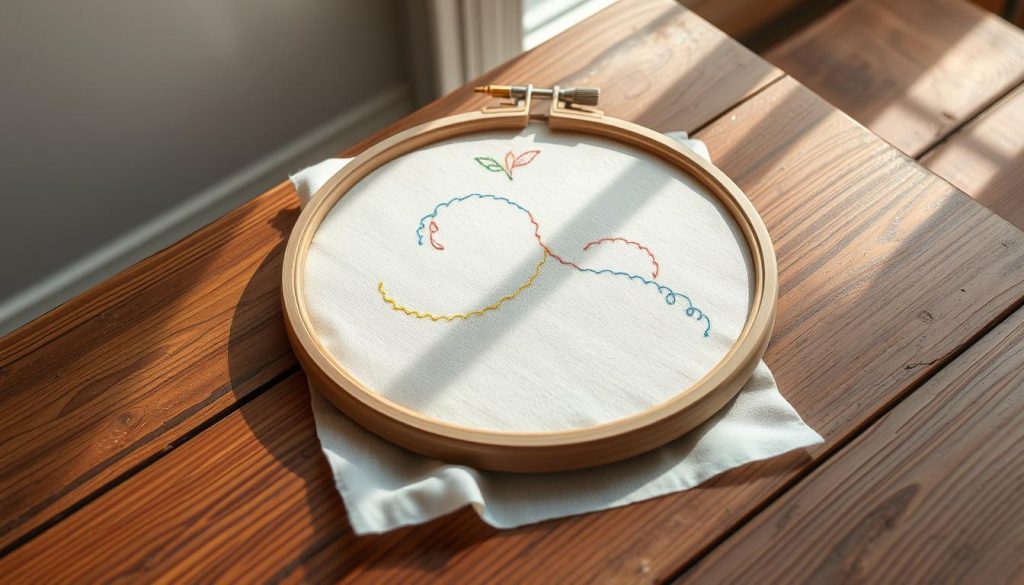
Use a chenille needle for easier threading with thicker threads or multiple strands. Split six-strand floss cleanly and keep thread lengths short to prevent knots. These tips save time and reduce frustration while stitching.
Don’t worry about tiny flaws. Most embroidery mistakes are not noticeable from a normal distance. Learn when to unpick and when to leave a small imperfection.
Keep the back tidy as you stitch. Weave thread tails under nearby stitches for at least 10 mm and snip close with sharp scissors. A neat back-of-work improves durability and makes framing or mounting easier later.
For garments, wash fabrics before stitching to prevent shrinkage and color change. Use stabilizers like Sulky Tender Touch or Stick & Stitch to support fabric, but wipe needles if they pick up residue. Secure ends with short weaves or small knots for wearability.
Stretch finished pieces onto a board to restore shape and add texture before framing. Presenting your work with care enhances the hand-stitched look and showcases your choice of finishing techniques.
Stitching on clothing and wearable projects
Working on garments requires special choices and techniques. Choose medium-weight, non-stretch fabrics like cotton, linen, or denim. Always prewash garments and test thread colorfastness before starting.
Fabric selection and stabilizers for garments
Stabilizers help keep stitches neat and prevent puckering. Use Sulky Sticky Fabric-Solvy or DMC Magic Paper for pattern transfer. Rinse water-soluble stabilizers after stitching.
After finishing, use a soft backing like Sulky Tender Touch. It protects the underside and your skin.
Practical sewing technique for durability
Keep stitches short, under 10 mm, to reduce snag risk. Use 2–3 floss strands to lower needle resistance. Avoid over-tightening and excess hoop tension to prevent fabric distortion.
Secure thread ends with knots. Form a small loop knot and pull through, then weave tails at least 10 mm under nearby stitches. A double knot can add longevity. Use stronger needles in sizes 3–5 for medium and heavy fabrics, and change needles if they become sticky or bent.
Care and washing advice for embroidered clothing
Handle your finished items gently. Hand wash or use a delicate machine cycle inside a delicates bag. Use cool water to protect thread color, then dry flat or line dry to prolong durable stitches.
Expect some shrinkage or stiffening after the first wash. The embroidery will soften over repeated cycles. Avoid tumble drying to reduce abrasion and wear. Follow these embroidered clothing care steps to keep pieces looking fresh and lasting longer.
Needlepoint vs embroidery and related craft comparisons
Needlepoint, cross stitch, and surface embroidery differ in tools, stitches, and goals. Needlepoint uses long, dense stitches on canvas for a firm finish. Cross stitch creates pixel-like patterns on an evenweave grid. Surface embroidery works freehand, mixing short stitches for delicate designs.
Consider the project’s purpose. Needlepoint is great for structured items like cushions. Cross stitch is ideal for geometric patterns. Surface embroidery is perfect for small decorations or expressive designs.
Tools show the craft differences. Needlepoint needs tapestry wool and large frames. Surface embroidery uses smaller hoops and floss. Cross stitch requires evenweave fabric and blunt needles.
Try other techniques for new textures. Crewel adds wooly texture and historic charm. Sashiko uses geometric stitches for reinforcement. Tapestry and rug techniques offer dense, durable textures.
Choose techniques based on your comfort and goals. Start with surface embroidery for quick results. Move to cross stitch for patterns. Needlepoint is best for dense, strong designs.
Needlepoint vs embroidery, cross stitch, and other techniques help you pick the right method. Think about tools and texture as you explore stitching.
Conclusion
You can start embroidery today with just a few basic supplies. You’ll need a small hoop, plain fabric, six-strand floss, and a few needles. Also, a transfer tool and scissors are essential. These items are affordable and easy to learn.
As you get better, you might want to add some extra tools. Things like needle threaders, stabilizers, and a good guide can help. They’ll let you explore more stitches and grow in confidence.
Start with good habits to improve faster. Use thread lengths of 50–80 cm and split strands evenly. Choose chenille or embroidery needles if threading is tricky. Working in small hoops helps keep your stitches even.
Don’t get too caught up in fixing mistakes. Instead, focus on finishing your work neatly. Mount or stretch your pieces to display them well. These habits make embroidery more fun and reliable.
Once you’re comfortable with basic stitches, try embroidering on clothes. Choose the right fabric and stabilizer. Keep your stitches short and secure, and test the thread’s colorfastness before washing.
Embroidery is easy to start, grow with, and enjoy. Begin with a simple kit and practice the basics. Then, try new stitches. Over time, you’ll create beautiful, lasting pieces that are both decorative and wearable.
 English