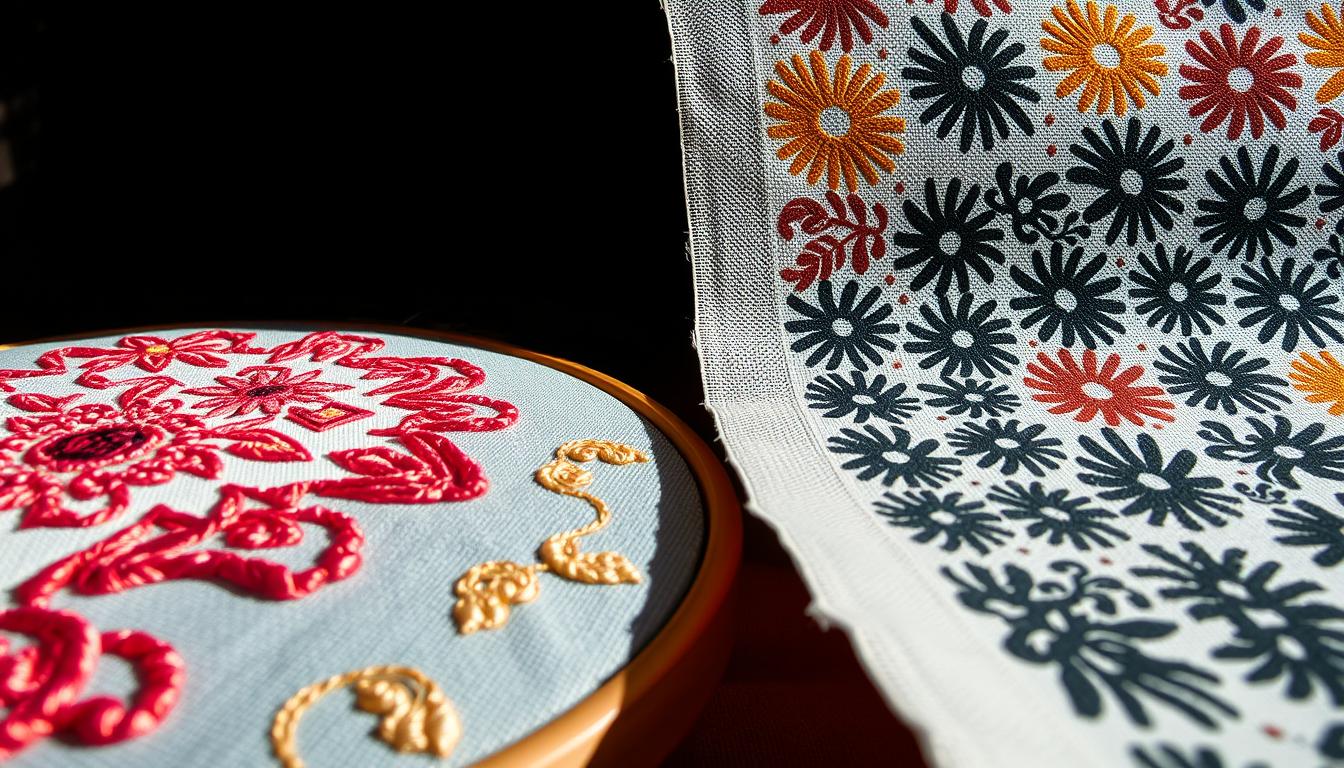
Which finish makes your custom apparel look more professional? Is it the raised stitch of embroidery or the bold flat color of screen printing?
When picking between embroidery and screen printing, think about durability, fabric, and the look you want. Embroidery offers a textured, premium finish. It’s perfect for workwear, polo shirts, and branded jackets. This method ties into the embroidery revival and keeps a long-standing craft alive, despite some fears of it dying.
Screen printing, on the other hand, provides vibrant colors and is cost-effective for large orders. It’s great for promotional tees and smooth cotton where vivid graphics are key. Your choice should depend on design complexity, order size, and budget.
Key Takeaways
- Embroidery delivers a premium, long-lasting textured finish ideal for uniforms and jackets.
- Screen printing is more cost-effective for vibrant, multi-color graphics on bulk orders.
- Choose embroidery for small logos and professional branding; choose screen printing for photographic images and wide color ranges.
- Fabric type matters: heavy, textured materials favor embroidery; smooth cotton favors screen printing.
- Consider setup costs—digitizing for embroidery and screens for printing—when planning order size and budget.
Understanding embroidery: What it is and how it works
Embroidery is the art of decorating fabric with needle and thread. It has been around for centuries, seen in cultures like Persian samplers and Japanese sashiko. This shows how embroidery connects old traditions with today’s world.
Looking at museum collections and folk costumes, you see embroidery’s history. It’s a skill passed down through generations. Today, it’s used in both traditional and modern ways.
Definition and history of embroidery
Embroidery uses stitches to create patterns and images on fabric. Early examples used natural fibers and simple stitches. Over time, artisans developed complex techniques, making unique designs in places like India, China, and Europe.
Now, these designs are found in today’s fashion. Heritage crafts play a big role when designers use traditional techniques to connect with local roots.
Hand embroidery versus machine embroidery
Hand embroidery shows the personal touch of needlework. Each piece can have unique variations that collectors and clients love. It’s perfect for custom items, heirlooms, and where texture is key.
Machine embroidery uses computers to make designs quickly and consistently. It’s great for uniforms, branded items, and large orders. You get precise and repeatable results with modern machines.
Typical process steps for machine embroidery
Machine embroidery starts with digitizing artwork. A technician turns a design into a digital file that outlines stitch types, density, and color changes. This step is an upfront cost to consider.
Next, you pick thread, stabilizers, and fabric. Heavy or textured fabrics need stronger stabilizers. You also need to place the garment correctly, like at the chest or sleeve.
After setting up, you load the digital file and thread the machine. The machine then stitches the design. Machines can handle detailed patterns but struggle with small text or subtle gradients.
Once stitching is done, you trim threads, remove stabilizer, and check the piece. A final inspection ensures the stitches are even and the look meets your standards.
| Stage | What you do | Why it matters |
|---|---|---|
| Digitizing | Convert artwork to embroidery file with stitch mapping | Determines stitch type, density, and production cost |
| Material selection | Choose thread, stabilizer, and fabric | Impacts durability, texture, and compatibility |
| Hooping | Secure garment in frame at intended placement | Ensures accurate positioning and tension |
| Machine stitching | Run the programmed design on the machine | Provides speed and repeatability for production |
| Finishing | Trim threads, remove stabilizer, quality check | Delivers clean appearance and long-lasting result |
When choosing between hand embroidery and machine methods, consider both looks and function. Hand embroidery adds texture, but it might not be good for waterproof fabrics. Machine embroidery offers quick, consistent results but has limited color options, making gradients hard to achieve.
What is screen printing and how the process works
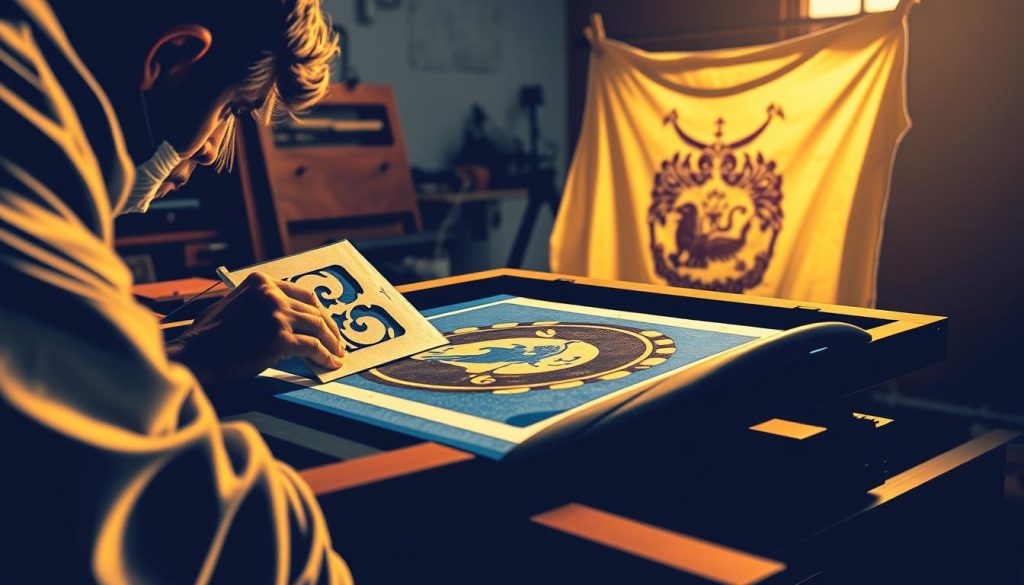
Screen printing, also known as silkscreen, is a way to make bold images on fabric. It uses a fine mesh to push ink through, creating strong colors. This method is great for team jerseys, T-shirts, and workwear.
Overview and brief history
Silkscreen started with ancient stenciling and came to the West in the early 20th century. Brands like Hanes and Gildan made it popular for T-shirt production. It’s known for its vibrant colors and lasting coverage.
Step-by-step screen printing process
First, you create a design with separate colors for each stencil on a mesh screen. For multi-color designs, you need multiple screens.
Next, place the garment on the press and align the screen. This ensures colors are sharp and consistent.
Then, apply ink to the screen and use a squeegee to push it onto the fabric. You build the image layer by layer.
After, cure the print with heat to set the ink. This makes the print last longer and prevents it from cracking.
Lastly, check the print for quality. You might need to repeat steps or make adjustments for complex designs.
Variants you may encounter
Specialty inks offer new creative options. Plastisol gives thick, durable prints. Water-based inks are softer. Discharge inks remove dye for vintage looks. Metallic and glow-in-the-dark inks add unique effects.
Direct-to-Film, or DTF, is a different method. It prints detail onto a clear film, adds adhesive powder, and then heat-presses it onto fabric. DTF is great for short runs and complex designs because it doesn’t need per-color screens.
| Method | Strengths | Best uses | Notes |
|---|---|---|---|
| Screen printing (silkscreen) | High opacity, vibrant solids, durable layers | Bulk runs, high-visibility gear, outdoor apparel | Setup increases with colors; works well with specialty inks |
| DTF (Direct-to-Film) | Photo detail, no per-color screens, versatile on substrates | Small-to-medium runs, complex multicolor prints | Requires film and powder; good for many materials without pretreatment |
| Water-based & discharge inks | Soft hand, breathable finish | Fashion tees, eco-conscious brands | May need underbase on dark garments |
| Plastisol & specialty inks | Opaque, durable, special effects | Workwear, safety apparel, novelty items | Thicker feel; ideal for raised or metallic looks |
When choosing a branding method, consider screen printing and modern embroidery. Screen printing is best for bold graphics and specialty inks. Modern embroidery offers a textured, premium look for professional logos and apparel accents.
Durability and long-term performance of embroidery and screen printing
You want your clothes to last. The choice between embroidery and screen printing depends on how they handle washing and wear. This section explains the key differences to help you decide.
How embroidery holds up to washing and wear
Embroidery uses thread to stitch designs into clothes. This makes them last longer than many prints. Using the right thread and digitizing techniques helps keep the embroidery looking good.
Using the right stabilizer keeps shirts smooth and patches flat on jackets. Embroidery works well on thick fabrics like denim and wool. Brands like Carhartt and Patagonia use it for durability.
But, be careful with waterproof clothes. The stitching can make them less water-repellent. This might not be the best choice for items like Gore-Tex.
Longevity of screen-printed ink and factors affecting durability
Screen printing’s durability depends on the ink, curing, and fabric prep. Good inks and proper curing can make prints last many washes. Brands like Wilflex and Rutland make strong, opaque inks.
DTF transfers are also durable if applied right. But, their long-term wear can vary. Ink adhesion, cure, and handling after printing affect how prints look over time.
Fabric compatibility and how it affects lifespan
Fabric type greatly affects how long a design lasts. Embroidery works best on thick or textured fabrics. Thin fabrics might distort under the stitches.
Screen printing is better for smooth fabrics like cotton tees. Dark colors might need an underbase for better look and feel. Synthetic fabrics need special inks and treatments for strong prints.
When choosing, consider the garment’s use and fabric. Think about how often it will be washed and if it will be exposed to wear and tear. This helps keep the design looking good for longer.
Cost comparison and order size considerations
Choosing between embroidery and screen printing depends on upfront costs, volume, and desired look. You must consider the cost of digitizing and setting up screens versus the cost per item. This is like a craft where the method affects both price and value.
Upfront costs: digitizing and setup
Embroidery requires digitizing, which turns designs into stitch files. The cost for this is a fixed fee for operator time and software. Complex designs increase machine hours and setup costs.
Screen printing needs a screen for each color. The cost for setting up screens increases with color and artwork size. Storing or replacing screens adds to ongoing expenses.
Per-unit cost differences for small runs and bulk orders
Embroidery costs per item stay high for small orders. This is because digitizing and machine time are split among few items. Labor and thread costs remain steady per piece.
Screen printing costs per item decrease with larger volumes. The initial screen setup cost is spread over many items. Adding colors increases initial costs but keeps ink costs low for big orders.
Digital transfer methods like DTF skip the need for per-color screens. For small to medium orders with many colors, these methods can lower costs compared to traditional screens.
When each method becomes the more economical choice
Embroidery is cost-effective for small quantities where a premium look is important. Items like jackets, caps, or corporate uniforms often justify higher costs for durability and brand image.
Screen printing is cheaper for large orders, mainly for single- or two-color designs. The initial screen setup cost is offset by low ink costs for hundreds or thousands of items.
For small batches with complex designs, DTF or digital printing might be the cheapest option. For big orders with single colors, screen printing usually offers the best price per item.
Design flexibility and visual outcomes for custom apparel
Choosing a decoration method affects your brand’s look and feel. Some designs need vibrant colors and smooth gradients. Others require tactile depth and a professional touch from raised stitching.
Color choices and gradient handling
Thread suppliers like Madeira and Gutermann offer a wide range of colors. But, thread color limits how well you can blend colors like in photos. To get around this, you can use stitch directions and density to mimic shading.
But, for true gradients, ink is the best choice. Screen printing and DTF offer a wider color range and cleaner gradients, making images look photo-realistic.
Fine detail and small text performance
Embroidery has its limits, like minimum stitch sizes and tight curves that can fray. Small logos and text can lose clarity after stitching. For thin lines and tiny text, screen printing is better, working well on smooth fabrics.
Texture and tactile differences
Embroidery adds a premium feel with its raised texture. It works well on items like polos, caps, and jackets. On the other hand, screen prints are flat, with plastisol having some body and water-based inks feeling soft against the fabric.
Practical design guidance
Use embroidery for simple logos, monograms, and branding where texture and durability are key. For designs needing complex colors, subtle gradients, or detailed line work, screen printing or DTF is better. This approach balances cost, appearance, and durability.
Practical uses and best applications for each method
Choosing between embroidery and screen printing depends on the item, the message, and how long you need the decoration to last. Below are clear use cases to help you decide which method fits your needs.
Use cases where embroidery shines
Embroidery gives a professional, long-lasting look. It works well on corporate polos, hats, jackets, and uniforms. For branded apparel that sees heavy wear, embroidery reinforces brand perception and stands up to repeated laundering.
Thicker fabrics like denim, canvas, and heavy outerwear accept stitches well. Caps benefit from raised logos that remain visible at a distance. When you want a premium feel, choose embroidery culture practices from experienced shops that maintain consistent thread tension and stitch density.
Use cases where screen printing excels
Screen printing is ideal for vibrant graphics and multi-color designs on t-shirts and event merchandise. For large-volume runs, promotional screen printing reduces per-unit cost while delivering bold, consistent color.
High-visibility gear that needs bright, durable markings performs well with screen printing. Specialty inks and reflective or fluorescent formulations improve visibility for safety vests and outerwear exposed to the elements.
Special situations: waterproof items, specialty inks, and fabric types
Water-repellent or waterproof garments often lose their performance if needle holes are introduced, so avoid embroidery that can compromise repellency. Use screen printing or heat-transfer methods when you need to preserve fabric coatings.
Specialty inks such as metallics, glow-in-the-dark, discharge, and reflective inks expand creative options for screen printing. Digital transfers like DTF work on varied materials without heavy setup and suit small runs or mixed-fabric orders.
Practical recommendation: pick workwear embroidery for professional branding and long-term use. Choose promotional screen printing or DTF for colorful, graphic-driven pieces and high-volume campaigns that rely on specialty inks or bright finishes.
Care, maintenance, and longevity tips for embroidered and printed garments
Good care for your clothes starts with simple habits. These habits protect the stitchwork and printed art. By following these routines, you can make your jackets, polos, and tees last longer. This helps keep the craft alive and supports the embroidery culture.
Washing and drying recommendations for embroidered pieces
Wash your clothes in cold water with a mild detergent. Use a gentle cycle to protect the threads and fabric. Turn your garments inside-out to reduce friction on the embroidered areas.
When drying, use low heat or air-dry them flat. This prevents shrinkage and stress on the threads. If you need to iron, do it inside-out on low heat. Never slide the iron across the stitches.
After washing, check for loose threads and remove any stabilizer residue. Trim stray fibers carefully to prevent unraveling. Sometimes, you might need to get professional touch-ups.
Best practices for preserving screen-printed designs
Wash your printed clothes inside-out in cold water. This limits abrasion and fading. Use mild detergents without bleach or strong optical brighteners.
For drying, use low heat or air-dry them. Avoid high-heat ironing directly on the ink. Instead, iron inside-out or place a protective cloth over the design.
Proper curing at production prevents early ink failure. When buying custom work, confirm the curing standards. This reduces the need for repairs.
Repair, touch-up, and refurbishment options for both techniques
Small embroidery flaws can be fixed by re-stitching or adding a patch. For complex logos, professional re-embroidery can restore crisp lines and color fidelity.
Screen prints that crack or fade can be refreshed with a recolor, overlay print, or heat-transfer patch. Specialty print shops can match inks and perform targeted repairs.
Choosing quality production methods up front reduces repair frequency. Always tell your decorator about expected wear. This helps them pick the best technique for longevity.
| Issue | Embroidered care | Screen print maintenance | Repair options |
|---|---|---|---|
| Washing | Cold, gentle cycle; inside-out | Cold, inside-out; avoid bleach | Re-stitching; recolor or reprint |
| Drying | Air-dry or tumble low | Air-dry or tumble low | Patch or overlay transfer |
| Ironing | Low heat, inside-out, no direct contact | Low heat, protective cloth over print | Professional touch-up; avoid DIY heat on damaged areas |
| Longevity factors | Thread quality, stitch density, stabilizer | Ink type, curing, substrate compatibility | Re-embroidery, overlay, targeted recolor |
| Best practice | Communicate use to decorator; invest in quality | Confirm proper curing and ink selection | Choose repair specialist experienced in brand materials |
Conclusion
When deciding between embroidery and screen printing, think about what’s most important for your project. Do you need something durable and detailed? Or are you watching your budget? Embroidery is great for a textured, professional look on items like jackets and caps. It’s a bit pricier upfront but lasts longer.
Modern embroidery works well on structured fabrics. It’s part of the embroidery revival, combining old-world craft with new tech.
Screen printing is better for bold, colorful designs and big orders. For smaller orders needing detailed prints, DTF is a good option. Remember, screen printing costs can go up with more colors. The type of fabric and ink used also affects the final look.
Before making a choice, consider your fabric, order size, and how much care the items need. Get quotes that break down costs like digitizing, thread or ink, stabilizer, and curing. This way, you’ll get a product that’s both durable and looks good.
Both embroidery and screen printing are key to the world of textiles. Embroidery brings back traditional craftsmanship, while screen printing makes large-scale production possible. Choose the method that fits your needs and the story you want your clothes to tell.
 English