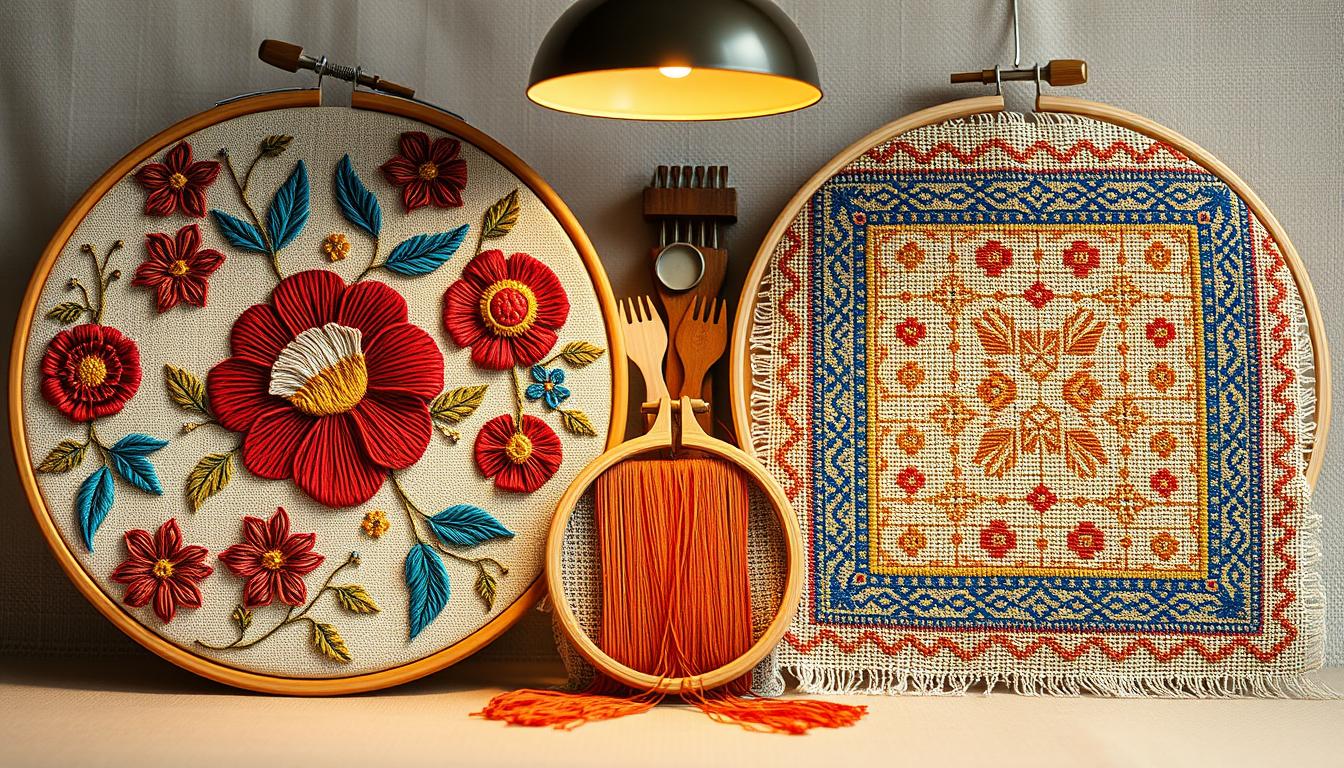
Which craft will give your project the look and longevity you want: delicate hand embroidery or the hearty texture of needlepoint?
Embroidery is the art of decorating fabric with thread, done by hand or machine. Needlepoint, on the other hand, uses a stiff canvas and wool or yarn. Each has its own strengths and weaknesses, affecting the outcome, cost, and durability of your project.
In this article, you’ll learn about the practical differences between embroidery and needlepoint. You’ll see how embroidery is great for delicate items and personal touches. Needlepoint, with its thick texture, is better for durable home decor.
Key Takeaways
- Embroidery covers a wide range: hand embroidery for detail and machine embroidery for speed and consistency.
- Needlepoint fills canvas for thick, durable pieces ideal for upholstery and pillows.
- Choose embroidery vs needlepoint based on fabric type, intended use, and desired texture.
- Hand embroidery offers varied stitchwork for garments and linens; machine embroidery suits high-volume or sturdy fabrics.
- Time, cost, and finish drive the decision—needlepoint can be more time-consuming but highly durable.
Understanding the difference between needlepoint and embroidery
Knowing the difference between needlepoint and embroidery is key. A few words can change everything from materials to tools. This section will give you the lowdown on both, including when to choose each for your projects.
What you call your craft affects how you approach it. Needlepoint refers to stitching on canvas with yarn or thread. Embroidery, on the other hand, is about decorating woven fabric with needle and thread. Needlepoint aims for a dense, tapestry-like texture, while embroidery is more versatile.
Origins and evolution
Embroidery has a rich history across cultures. From the Bayeux Tapestry to modern machine techniques, it’s evolved a lot. Needlepoint also has a long history, starting with ancient tent stitching and evolving into styles like Berlin wool work.
When the choice affects your outcome
Choose needlepoint for durability and texture in items like upholstery and rugs. Embroidery is better for fine details and quick projects like monograms. Think about the fabric and the look you want before deciding.
How patterns and practice differ
Embroidery patterns work well on various fabrics and scales. Needlepoint patterns are specific to canvas mesh. When choosing, consider the pattern’s complexity and the desired finish.
| Aspect | Needlepoint | Embroidery |
|---|---|---|
| Base material | Sturdy canvas designed for stitches to cover | Woven fabrics like cotton, silk, linen |
| Thread/yarn | Heavier yarns for full coverage and texture | Floss, stranded thread, silk for fine detail |
| Typical uses | Pillows, upholstery, rugs, decorative panels | Clothing, monograms, logos, delicate decor |
| Design approach | Grid-based patterns with solid fill | Freeform and motif-driven embroidery patterns |
| Durability | High wear resistance when properly finished | Varies by fabric and stitch; less suited to heavy wear |
| Production | Primarily hand or small-scale machine adaptations | Hand and industrial machine embroidery for repeats |
Material differences: fabrics, threads, and needles
Choosing the right materials is key to achieving your desired outcome. The type of canvas, fabric, yarn, and needle you pick affects the project’s durability, texture, and stitching ease. This guide helps you compare common options for needlepoint and hand embroidery, making it easier to select the best fit for your project.
Foundations: canvas versus woven fabrics
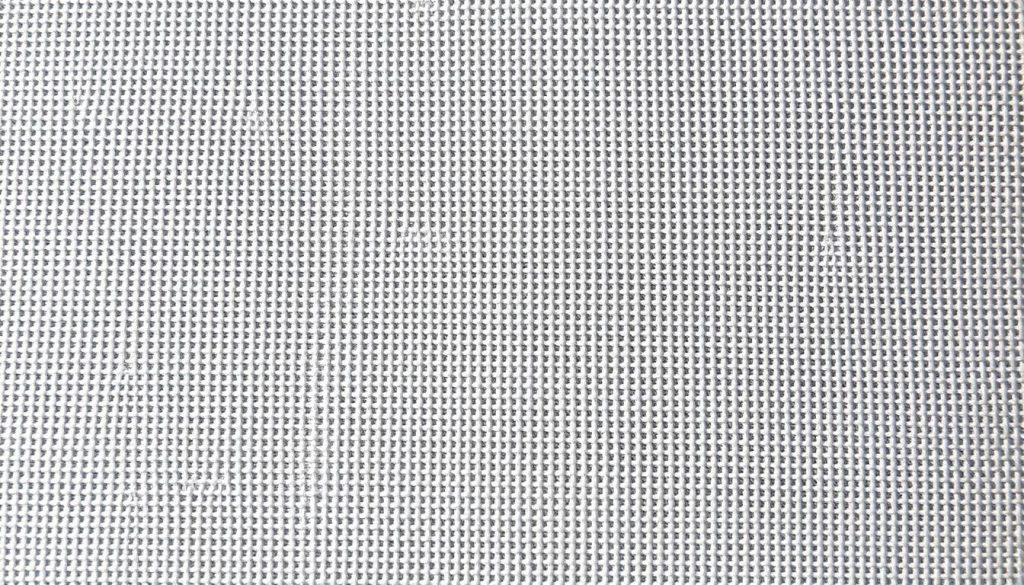
Needlepoint uses a stiff, open-weave canvas for a clear grid that guides each stitch. You can choose from mono and Penelope types in cotton, linen, or plastic. These canvases help you count holes for even coverage. A good canvas is essential for durable items like pillows or chair seats.
Embroidery works best on woven fabrics like cotton, linen, silk, and denim. You can also use evenweave options like Aida or Jobelan for counted work. These fabrics are hooped or framed to keep tension even and prevent puckering. The choice of fabric depends on the garment type and the level of detail needed.
Threads and yarns: coverage and texture
Tapestry wool and acrylic yarns are popular in needlepoint for full coverage and texture. Thick yarns pack the canvas tightly, making it durable. The choice of stitch and yarn weight determines the density of your piece.
Embroidery offers a wider range of options: embroidery floss in cotton or rayon, silk threads, metallics, and specialty fibers. These allow you to vary sheen and line weight. Embroidery floss can be split into strands for adjusting thickness, affecting coverage, shimmer, and tactile finish.
Tool differences: needles, hoops, and frames
Needlepoint requires tapestry needles with blunt tips and large eyes to handle yarn without splitting the canvas threads. Stretcher bars or solid frames are often used to keep the canvas taut for even tension across large surfaces.
For hand embroidery, sharp, slender embroidery needles are chosen based on the thread and fabric. Hoops, wooden frames, and magnetic frames help maintain steady tension. Machine embroidery needs stabilizers, dedicated hoops, and digitized patterns for reliable use on home machines.
| Element | Needlepoint | Hand Embroidery |
|---|---|---|
| Base material | Open-weave canvas (mono, Penelope); cotton or plastic | Woven fabrics like cotton, linen, silk, Aida, Jobelan |
| Typical thread/yarn | tapestry wool, bulky yarns for full coverage | embroidery floss, silk, rayon, metallics for detail and sheen |
| Needle type | tapestry needles: blunt tip, large eye | embroidery needles: sharp, slender, sized to floss |
| Tension tools | stretcher bars, solid frames | hoops, wooden frames, magnetic frames |
| Best use cases | home decor, heavy-use items that need durability | garments, embellishment, fine-detail work |
Project suitability and durability: what each craft is best for
When choosing a stitch, think about how the item will be used. Needlepoint creates dense, full-coverage pieces that last long. Embroidery is great for fabrics that need to be flexible and detailed. Picking the right method saves time and keeps your work looking good.
Needlepoint strengths for home decor and heavy-use items
Needlepoint is perfect for making tough surfaces. Using wool or heavy threads on canvas makes upholstery that lasts. Items like pillows, seat cushions, belts, and rugs become durable needlecrafts that can last for generations if stored right.
The full-coverage stitch pattern gives a tapestry-like texture. This makes needlepoint home decor great for rooms where items get used a lot.
Embroidery strengths for garments and customization
Embroidery is flexible on fabrics like cotton, denim, and silk. Hand techniques allow for delicate motifs on items like blouses or scarves without changing their feel. Machine work is good for complex logos and big designs for brands like Levi’s or Nike.
You can add personal touches to towels, tote bags, and jackets with fine detail. DIY embroidery projects let you try out monograms and small accents before making bigger custom pieces.
Matching technique to end use
Match the method to the purpose by testing small swatches first. Choose needlepoint for full coverage and lasting texture for décor and heavy-use items. Pick embroidery when fabric appearance, softness, and movement are more important than dense coverage.
For production, use machine embroidery on sturdy blends like polyester or wool for consistent results. Use hand embroidery on delicate textiles and gifts when varied stitch textures add value. This way, you get the right mix of durability and beauty for each project.
Beginner-friendliness: learning curve, entry projects, and tools
Starting a stitch hobby can be easy if you choose the right path. Needlepoint for beginners offers a clear grid and a few stitches to learn first. This grid makes it easy to see your progress.
Beginner embroidery lets you start with simple stitches and move to more complex ones. You can begin with the running stitch and then try satin stitch and French knots.
Why needlepoint can be beginner-friendly
Needlepoint for beginners often uses printed or stamped canvas with a visible mesh. You use tapestry needles and yarn for tent, continental, or basketweave stitches. The canvas grid helps you place stitches correctly, making it easy to fix mistakes.
Small projects like coasters or key fobs are great for beginners. They give you quick wins and boost your confidence.
Why embroidery can be approachable and scalable
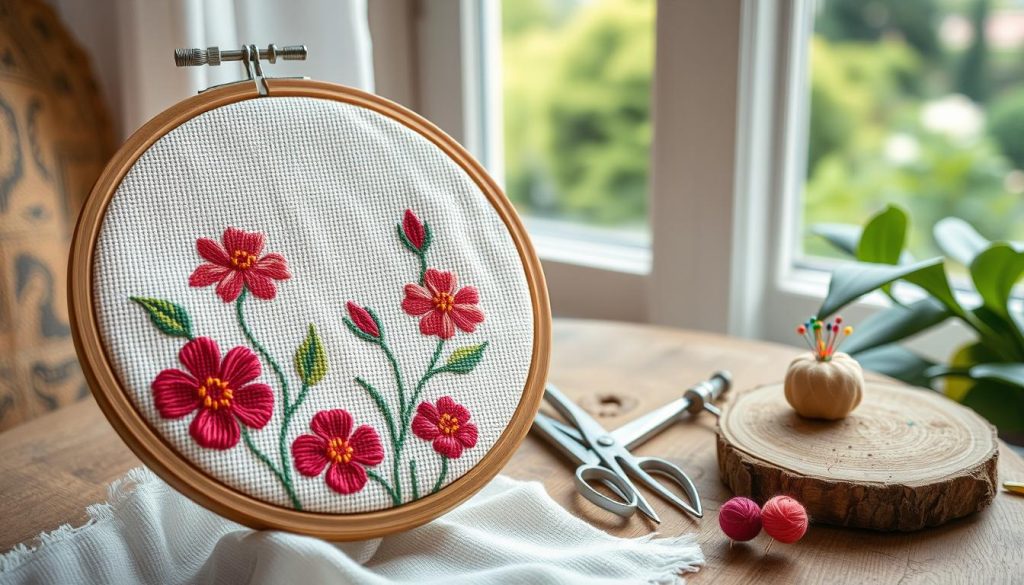
Hand embroidery starter projects often start with cross-stitch or simple samplers on Aida cloth. You can practice basic stitches with standard needles, embroidery floss, and a hoop. As you get better, you can try more advanced designs or mix stitches for texture.
Once you’re ready, you can explore DIY embroidery with home machines. This lets you scale up your projects.
Suggested starter projects for each craft
For needlepoint, try making stamped canvas coasters, a small ornament panel, or a tiny pillow front. These projects use a few colors and repeatable stitches for quick progress.
For embroidery, start with a cross-stitch sampler, a simple monogram on a towel, an embroidered patch on denim, or a napkin corner. These projects use basic patterns and require only floss, a needle, and a hoop.
A minimal starter kit for needlepoint includes a small canvas, tapestry needle, and yarn. For beginner embroidery, gather embroidery needles, floss, a hoop, and a few beginner guides. Both paths support easy DIY projects you can finish in a few hours.
Creative complexity and artistic possibilities
You can make needlepoint and hand embroidery into art by choosing carefully. Stitches, threads, and surfaces all matter. They help decide if your piece looks like a craft or art for a gallery.
Stitch variety and texture in embroidery
Embroidery patterns offer a wide range of stitches. You can use satin, chain, stem, split, blanket, and French knots to play with light and form. By separating six-strand floss, you can blend colors and layer stitches for depth.
Machine embroidery and digitizing tools help with complex shading and repeating patterns. You can mix hand and machine work. This way, you keep the personal touch where it counts and use speed for consistency.
Texture and coverage in needlepoint designs
Needlepoint is all about full coverage for a rich texture. Tent stitches like basketweave, half-cross, and continental make a strong, even base. This is great for upholstery or sturdy decor.
Decorative needlepoint stitches like Gobelin, Parisian, mosaic, and brick stitch add interest. They let you add beads or metallics. This makes your piece feel like a tapestry with depth.
Combining techniques and mixed-media approaches
Mixing embroidery and needlepoint opens up new visual possibilities. An embroidered panel can be set into a needlepoint background. This highlights details and adds relief.
Mixed-media embroidery uses beads, sequins, ribbon, paint, and found objects. These elements change scale and reflectivity. Today’s makers use them to create wearable art, upholstered pieces, and gallery art.
Stitching can be like creative therapy. Experimenting without a goal can be freeing. It lets you discover new textures and stories in your work.
Machine embroidery vs hand work: speed, consistency, and cost
When deciding between machine embroidery and hand work, consider speed, consistency, and cost. Machine embroidery is fast and consistent. Hand embroidery adds a personal touch. Here are some points to think about for production, gifts, and small businesses.
Advantages for production
For consistent runs or branded items, machine embroidery is the way to go. A commercial unit or the best machine for small shops is perfect. It lets you queue designs and stitch counts, saving time and effort.
High-density fills and polyester threads keep edges sharp on many pieces. This makes your work uniform and quick.
Advantages for craft and delicate fabrics
Hand work is great for delicate materials. It lets you change stitches easily and add details like French knots. This makes each piece unique and soft.
It’s perfect for special gifts and one-of-a-kind items. Each piece stays unique and often feels softer.
Cost and time trade-offs
Buying a home or commercial embroidery machine is expensive upfront. You’ll also need software and hoops. But, once set up, making lots of items becomes cheaper and faster.
Hand embroidery is cheaper for small projects but takes more time. Simple designs can be done in a few hours. But, complex designs take much longer, raising the cost.
- Choose machine embroidery for fast, repeatable output and uniform branding.
- Choose hand embroidery for softness, variety of stitches, and a handcrafted look.
- Balance the best embroidery machine purchase against expected run size to justify expense and reduce per-piece cost and embroidery time.
Health, wellness, and social benefits of needlecrafts
Needlework is more than just making things pretty. It’s a way to relax, focus, and connect with others. You can use simple stitches to calm your mind or tackle a detailed motif to sharpen concentration. This section explores how embroidery wellness and therapeutic embroidery benefit your body and mood, how creative therapy grows in groups, and practical ways to add stitching to your routine.
Embroidery wellness and therapeutic embroidery
Short, regular stitching sessions can trigger a flow state similar to meditation. Neuroscience shows that focused handcrafts reduce anxiety and lift mood. You can expect improved concentration and a calmer breathing pattern when you practice therapeutic embroidery several times a week.
Hand embroidery benefits extend to cognitive health. Persistent craft activity links to better memory and may lower the long-term risk of cognitive decline. Pick mindful, repetitive stitches when you need relaxation; choose expressive, varied stitches when you want emotional processing.
Creative therapy and community
Needlecraft groups meet in cities and towns across the United States. These gatherings mix skill sharing with fellowship, making health crafts a social practice as well as a personal one. You can learn new techniques while forming real friendships and feeling less isolated.
Creative therapy through group projects gives you a safe space to explore identity and story. Working alongside others promotes accountability and deepens the calming effects of stitching. Group feedback speeds skill growth and keeps projects enjoyable.
Practical tips to make stitching part of your wellness routine
Schedule short daily sessions to build habit. Portable projects like small cross-stitch or hoop embroidery fit pockets, commutes, and breaks. Rotate between machine work and hand stitching to vary pace and prevent strain.
Use ergonomic needles, a MaggieFrame or a standard hoop, and quality threads to reduce frustration. Match projects to your goals: choose tent stitches for steady relaxation and freehand embroidery for emotional expression. Keep sessions under 30 minutes when you start, then increase time as comfort grows.
Needlecrafts unite craft, care, and community. Whether you seek solitude or group energy, embroidery therapy and health crafts give practical, pleasurable tools to support your well-being.
Conclusion
When deciding between embroidery and needlepoint, think about your project goals. Needlepoint is great for full coverage and long-lasting items like home decor. It’s also perfect for upholstery because of its durability.
On the other hand, embroidery is better for quick personalization and budget-friendly projects. It offers versatility and faster results, making it ideal for garments.
Consider the tools and time you have. Machine embroidery is best for mass production and detailed patterns on thick fabrics. Handwork is better for delicate fabrics and unique gifts.
If you’re new, start with hand stitching or cross-stitch. These can help you build confidence before using a machine.
Think about the fabric, finish, budget, and how long you want the item to last. Both embroidery and needlepoint can boost your creativity and well-being. Choose the one that fits your lifestyle and goals.
 English