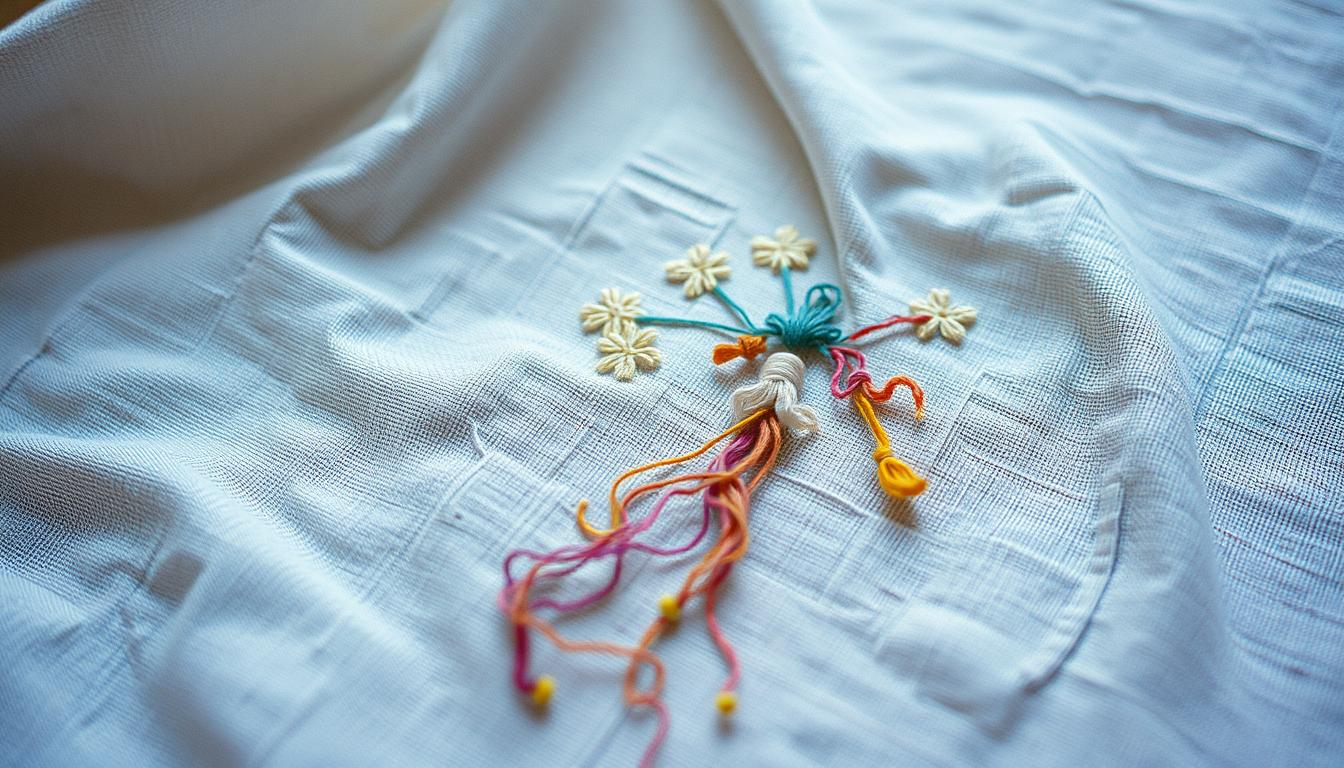
Can a name, logo, or mistake stitched into your favorite shirt really be erased without ruining the garment?
You’ll learn whether and how embroidery can be removed, what tools pros use, and what to expect from the results. Professional embroidery shops and custom embroidery services often remove stitches to correct errors, update logos, or repurpose thrifted finds. But, not every fabric stays the same after this process.
Machine embroidery is usually more uniform and often easier to remove than hand work. Success depends on fabric type, stitch density, and backing. Brands like Ricoma are found in professional embroidery setups. Tools such as Peggy’s Stitch Eraser and the DIME Stitch Ripper are in experienced embroiderers’ kits.
Removing embroidery is possible in most cases, but it can be time-consuming. It may leave marks or tiny holes. As you read on, you’ll get practical guidance. This will help you decide whether to remove, cover, or replace the stitching on your garment.
Key Takeaways
- Embroidery removal is common in embroidery services and doable at home or by a pro.
- Machine embroidery often comes out more cleanly than hand embroidery.
- Fabric type and stitch density determine the risk of permanent damage.
- Professional embroidery tools and brands speed the job but require skill.
- Decide first if you’ll re-embroider, apply a patch, or accept repurposing.
What it means to remove embroidery from fabric
Removing embroidery is a detailed process. It involves cutting, shaving, and pulling out the threads. This makes the fabric look like it never had embroidery.
You start by cutting the threads from the back. Then, you pull the threads from the front and clean up any leftover fibers. The goal is to remove the embroidery without damaging the fabric.
Definition of embroidery removal
Embroidery removal means taking out the threads from a design. You can use a seam ripper, a stitch eraser, or an electric trimmer. Each tool works differently, cutting or shaving the threads.
You might need to hire a professional or find online tutorials if you’re not sure how to do it.
Why you might want to remove embroidery
You might need to remove embroidery for several reasons. It could be to fix mistakes, update a brand, or change a name on a uniform. It’s also useful for refreshing gifts or repurposing old clothes.
Where removal is realistic and where it isn’t
Some fabrics are easy to work with. Cotton, denim, canvas, and sturdy knits can usually be fixed. You can remove the embroidery and start again.
But, some fabrics are harder to work with. Leather, vinyl, velvet, thin silk, and lightweight chiffon often show damage. In these cases, it’s better to cover the area or seek professional help.
| Fabric Type | Removal Outlook | Common Approach |
|---|---|---|
| Woven cotton | Good | Manual seam ripper, steam and press, re-embroider or sell as blank |
| Denim / Canvas | Good | Stitch eraser or seam ripper, heavy pressing, ideal for repurposing |
| Sturdy knits | Moderate | Careful pulling, use stabilizer, check for stretching |
| Silk / Chiffon | Poor | Avoid removal; consider patch or professional stitching services |
| Velvet | Poor | High risk of pile distortion; covering or repurposing advised |
| Leather / Vinyl | Poor | Permanent holes likely; remove only by specialists or cover |
If you’re short on time, it might be easier to just make a new blank. For complex designs, you might need to find a professional. Small fixes can be done at home with the right tools and patience. For bigger projects, it’s best to contact a stitching service.
Tools and materials you need for safe stitch removal
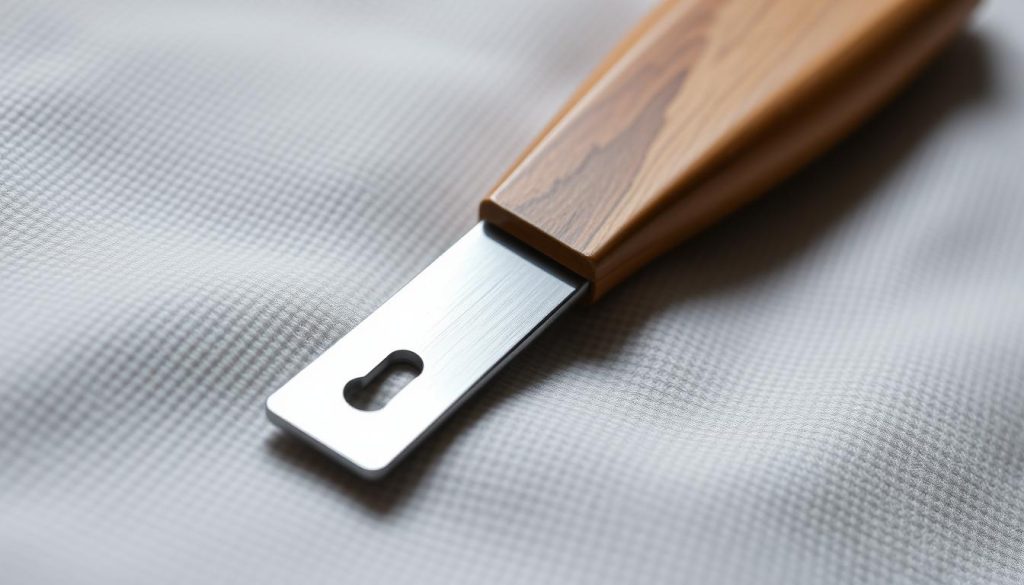
Before you start removing embroidery, collect tools that offer control and protect your fabric. The right tools make the process quicker and lower the risk of needing professional help.
Essential hand tools
First, grab a sharp seam ripper with a pointed head and safety ball. It helps slide under threads easily. Next, use small embroidery scissors for precise cuts without harming the fabric. Don’t forget angled tweezers to pull out short thread ends and stubborn bits.
Powered tools
For thick fill-stitch work, a stitch eraser or embroidery eraser is a good choice. These tools quickly remove bobbin threads, saving time on big designs. If you’re on a tight budget, an electric trimmer or a Wahl Peanut-style clipper can work, but they’re different. Use a household razor with caution; it’s easy to cut through thin materials.
Support materials
Use a fabric stabilizer to keep silk, jersey, or lace from stretching or distorting. Masking tape protects the garment’s right side and keeps it flat. A magnifying light helps see small details, reducing fabric damage.
Cleanup tools
After removing threads, a lint roller or sticky tape removes small clippings from both sides. Keep small scissors for trimming stray pieces close to the surface. For textured items like towels, a soft-bristle lint brush is better than sweeping by hand.
Organize these tools before starting. Proper preparation reduces mistakes and lets you decide if you can remove embroidery yourself or need professional help.
How to assess the embroidery before you start
Before you start, take a close look. You need to know if it’s machine or hand embroidery. Also, check the fabric, stitch patterns, and decide the best action. A quick check can save time and help you choose the right path.
Identify the stitch origin
Machine embroidery has uniform stitches and a continuous thread on the back. It often has dense logos that can be removed quickly. Hand embroidery, on the other hand, has varied tension and knots. It requires a gentler touch to avoid fabric distortion.
Check the fabric
Examine the material carefully. Denim and canvas can be steamed after removal. But, silk, chiffon, and thin knit need stabilizers and small tools to avoid damage. Leather, velvet, and other materials might show permanent holes, making covering or replacing better than removing.
Determine stitch type and density
Identify the main stitch pattern. Fill-stitch blocks are dense and can be removed in sections. Satin stitch edges are narrow and need careful shaving. Running stitch rows are best removed from the back to protect the fabric.
Assess structure and layers
Look for linings, interfacings, or multiple layers. A lined jacket or padded cap requires a different approach. You might need to unpick a lining or seek professional help for re-embroidery. For personalized gifts, consider the cost and time of professional services or online replacement.
Decide remove, cover, or re-embroider
Consider time, cost, and fabric risk. Small machine-filled motifs can be removed quickly. But, large or hand-stitched designs may take hours and damage some fabrics. Covering or re-embroidering might be better. Leave stabilizer in place for re-embroidery to avoid rehooping issues.
When to seek help
If unsure, search for local embroidery services. Professionals can handle complex pieces, delicate fabrics, or damaged areas. They can turn damaged items into quality gifts or personalized embroidery.
Step-by-step method to remove embroidery from shirts and garments
First, prepare the garment to avoid damage. Turn the shirt inside out to see the bobbin threads. Lay it flat and use masking tape or a hoop to keep it tight.
Test your method on a hidden seam or scrap first. This ensures the fabric won’t get damaged when you remove the embroidery.
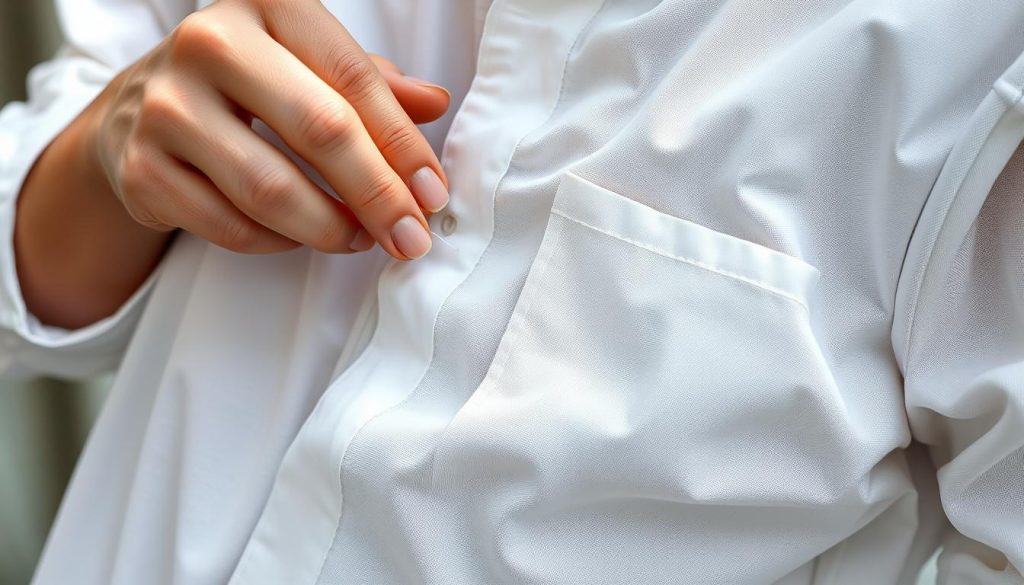
Have the right tools ready. You’ll need a seam ripper, scissors, tweezers, and a magnifier. For easier work, a stitch eraser or electric trimmer can be helpful. Use stabilizer for thin fabrics to protect them.
Start by working from the back to remove most stitches. Use a stitch eraser to shave threads gently. Make light passes instead of one deep cut.
If using a seam ripper, slide it under threads and cut every three to four stitches. Use household trimmers with care, keeping the blade flat and applying minimal pressure.
After cutting threads on the back, flip the garment to the front. Begin pulling threads with your fingers and tweezers. Pull threads only after they are fully cut at the back to avoid widening holes.
Work in small sections to control the process and spot snags early. Trim any snags or tiny nests with sharp scissors before using electric tools.
Use a lint roller or double-sided tape to pick up loose threads between passes. For stubborn bits, use the seam ripper from the front to loosen individual stitches while following the stitch path carefully.
Finish by cleaning the surface and restoring the fabric. Trim stray fibers close to the surface and use a lint roller to remove tiny pieces. Wash the embroidery area according to the garment care label to clear dust and residual bits from the removal process.
Once clean, press steam forgiving fabrics gently. Massage holes with your fingers so fibers settle back together.
If you plan to re-embroider, make sure the area is free of backing residue and loose fibers. Hoop the section with stabilizer for a clean stitch-out. For complicated jobs or if you prefer expert help, search for embroidery near me or professional embroidery services that can handle difficult fabrics or dense designs.
Techniques for different fabrics and tricky situations
Removing embroidery from various fabrics comes with its own set of challenges. It’s important to choose the right tools and methods for each material. For delicate fabrics, small, careful movements are key. On the other hand, heavier fabrics may require stronger actions, but be cautious not to leave marks.
Delicate fabrics
When working with silk, chiffon, and lace, you must be gentle. Use wash-away or tear-away stabilizer to prevent stretching. Work under magnification with a fine seam ripper or tiny scissors. Only cut short thread sections and remove threads with tweezers. Keep the stabilizer in place until you’ve finished cleaning to protect the fabric.
Thick and heavy fabrics
Denim and canvas embroidery can handle more force. Use a larger seam ripper or a stitch eraser for dense fills. Shave bobbin threads or take multiple light passes with the stitch eraser instead of one deep pass. After removal, press the area to help close tiny holes and reduce visibility.
Hats and structured items
Working on caps and hat embroidery requires dealing with curves and internal buckram. Keep the blank hooped if you stop mid-stitch to maintain alignment when you restart. Use small cordless tools for better maneuverability and avoid removing too many stitches, which can distort the crown. For persistent issues, consider a patch or professional embroidery services to preserve shape.
Non-forgiving materials
Leather, vinyl, and velvet embroidery pose permanent risks. Needle holes in leather and vinyl remain visible after thread removal. Velvet pile crushes and shows trace lines where stitches sat. Covering with a patch or applying a new embroidered patch often offers a better result than trying to restore the original surface. If you must proceed, use extreme caution and consider taking the item to an embroidery shop or seeking professional embroidery repair.
| Fabric | Best Tools | Risk Level | Recommended Outcome |
|---|---|---|---|
| Silk embroidery | Fine seam ripper, tiny scissors, tweezers, wash-away stabilizer | High | Careful removal; keep stabilizer until cleaning |
| Chiffon / Lace | Surgical seam ripper, magnifier, fine tweezers | High | Minimal cutting; leave stabilizer; avoid powered blades |
| Denim embroidery / Canvas | Large seam ripper, stitch eraser, heavy scissors | Medium | Multiple passes; press after removal |
| Hats (hat embroidery) | Cordless small ripper, tweezers, careful rehooping | Medium to High | Maintain hoop alignment; consider patching |
| Leather embroidery / Vinyl | Fine blades only if necessary; prefer patching | Very High | Cover or accept repurposing; seek embroidery services |
| Velvet | Fine scissors, soft brush, steam/press | High | Patch or re-cover; pile may not fully recover |
Pros, cons, and time expectations of each removal method
Choosing how to remove embroidery from fabric affects the outcome and effort needed. Small designs and simple patterns need different tools than thick, detailed embroidery. Here’s a guide to help you choose the best method for your project, budget, and skill.
Seam ripper method
The seam ripper is great for delicate areas and small designs. It works well on running stitch and narrow satin stitch edges. It’s safe for the fabric and quick for small motifs.
But, it’s slow for big designs. Removing large fill-stitch areas can take hours. You’ll need patience and steady hands for big logos.
Stitch eraser and electric trimmer
For heavy machine embroidery, a stitch eraser or electric trimmer is faster. They quickly remove thousands of stitches. This saves a lot of time.
Be careful with thin fabrics. Too much pressure can damage them. After using these tools, refine the edges with tweezers or a seam ripper for a clean finish.
Razors and household trimmers
For budget-friendly options, consider a household razor or hair trimmer. They work well on thick fabrics like canvas or denim. But, they’re not made for thread removal.
They can cut the fabric or leave it uneven. Use them with caution. This method is faster than hand tools but slower than electric erasers.
When to call a professional
For valuable items, delicate fabrics, or large designs, consider a professional. They can handle complex projects and advise on the best approach.
For corporate uniforms, weigh the cost of embroidery services against replacing the garment. Professionals can often restore items for re-embroidery or reuse, a skill not always covered in tutorials.
Aftercare: fixing holes, marks, and preparing fabric for new stitching
After embroidery removal, your next steps are key to the final look. Small needle holes and leftover backing residue can be lessened with care. Use specific methods to keep your fabric ready for new embroidery or patches without damage.
How to reduce visible holes
Place the fabric flat and gently massage the needle holes to align fibers. Use a steam press at low to medium heat for a few seconds to close threads. On cotton or denim, press repeatedly with a cloth to lessen holes.
Removing leftover marks and backing residue
Peel away tear-away stabilizer and use tweezers for tough spots. For wash away stabilizer, follow the manufacturer’s wash steps. A lint roller or double-sided tape removes stray fibers. Be cautious with adhesive-backed stabilizer or heat-activated backing, following product advice before applying heat or solvents.
Preparing fabric for re-embroidery or applying a patch
Ensure the area is clean and dry before rehooping. Keep the original orientation and test a small stitch-out first. Choose the right stabilizer for your new design, using stronger layers for heavy fills. If alignment is tricky, consider an embroidered patch or applique to hide any issues.
When to accept repurposing instead of complete restoration
Materials like leather, vinyl, or velvet may show permanent holes. If restoration seems unlikely, think about repurposing garment pieces or making embroidered gifts. For cheap blanks or heavily damaged items, consider replacing the garment or using custom embroidery on a new base through an embroidery shop or local services for better results.
Conclusion
Removing embroidery can usually be done, but it depends on the fabric, stitch type, and method. Machine embroidery is often easier to remove than handwork. For fill-stitch areas, a stitch eraser is helpful. For satin and running stitches, a seam ripper and careful hands are best.
Use the right tools like a seam ripper, embroidery scissors, and tweezers. Also, use stabilizer and a magnifying light to protect the fabric.
If the material is delicate, think about the time and effort needed. Professional embroidery services can handle tricky removals or re-embroidery. You can find them by searching “embroidery near me” or contacting an online provider.
After removing embroidery, use a lint roller, wash carefully, and steam to fix holes and marks. If damage is too much or time is short, consider a patch or a new garment. With the right steps, you can save a piece or prepare it for new embroidery without harming the fabric.
 English