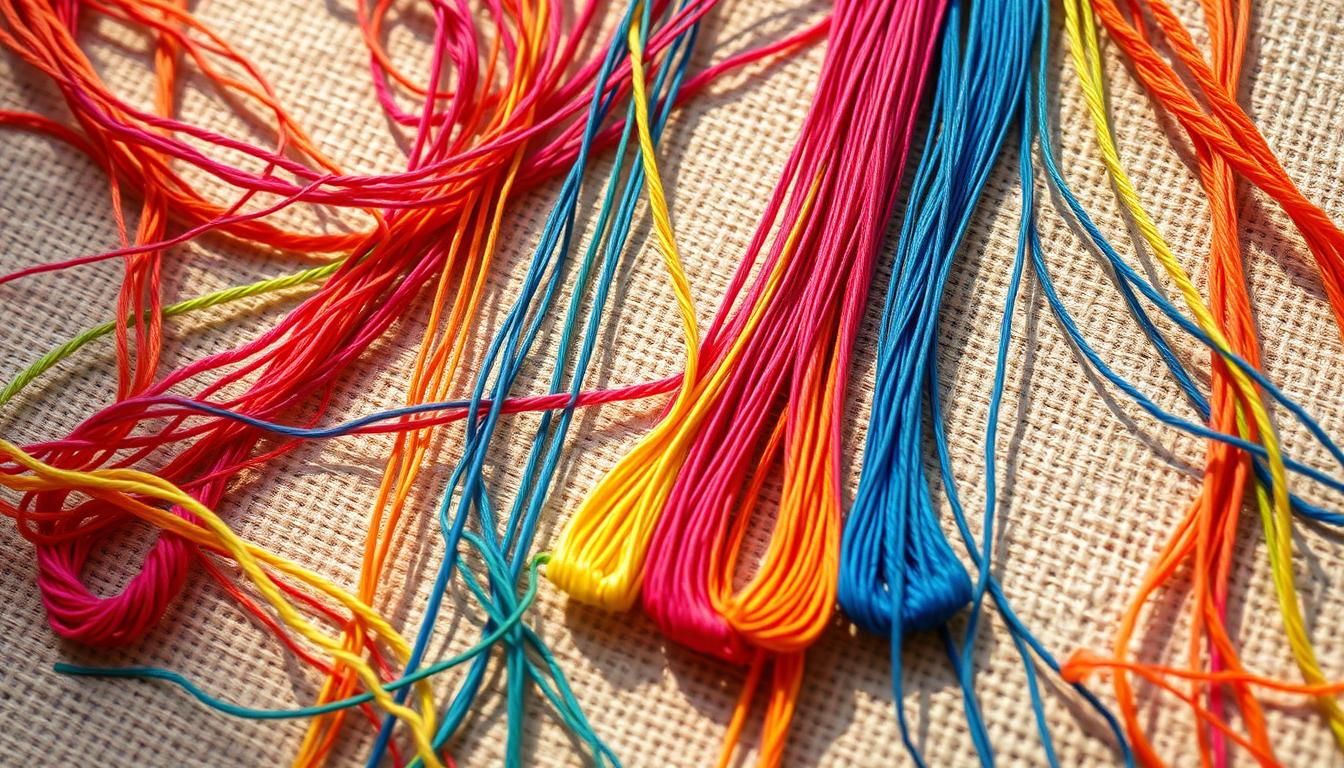
Ever thought about using embroidery floss for knitting?
Embroidery uses simple tools like thread, fabric, and needles. It creates detailed stitches like satin and back stitch. The thread, or floss, comes in different types like stranded cotton and linen.
This article will show you how embroidery thread can be used for knitting. You’ll learn about thread weight, plies, and WPI. Also, how the right tools make a big difference.
You’ll see how embroidery thread works differently than yarn. We’ll share tips for using it in knitting. This includes how to make it durable and control the gauge.
Key Takeaways
- Embroidery thread (floss and perle) can be used for knitting but behaves like fine yarn and needs tiny needles or hooks.
- Different thread types—stranded, perle, linen—have unique textures and split or hold together differently when knitted.
- WPI and strand count help you judge how embroidery thread maps to yarn weights for patterns.
- Working slowly with strong lighting and ergonomic tools improves results when knitting with embroidery thread.
- Combining needlework skills expands creative options in both traditional embroidery and modern knitting projects.
About embroidery thread and how it compares to knitting yarn
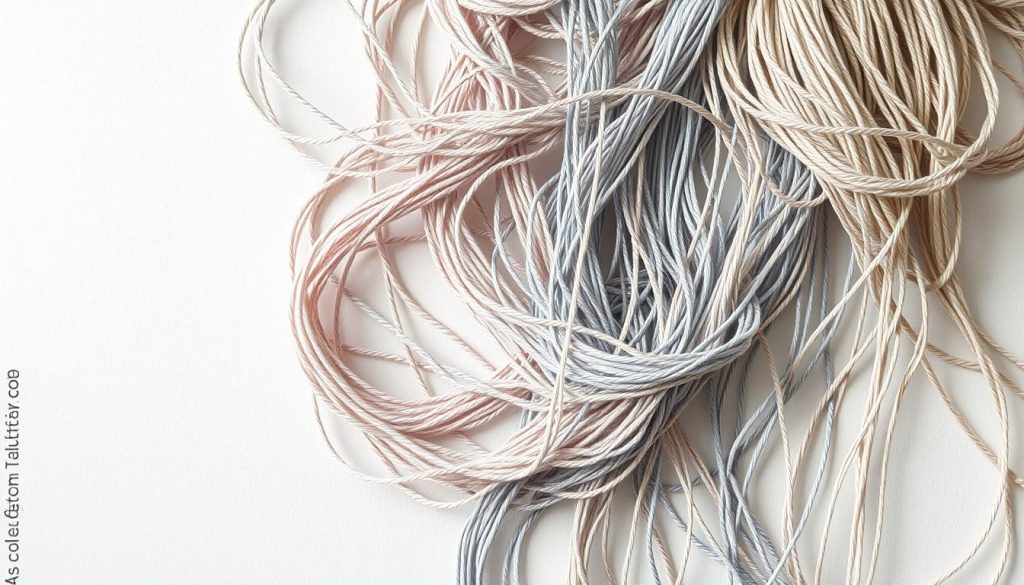
Looking at thread for needlework, you find many materials and structures. Knowing these options helps you choose the right thread. It will either work like knitting yarn or be very different in a knitted fabric.
Types of embroidery thread you may encounter
Stranded cotton floss is a common six-ply thread from brands like DMC. It can be split into single strands for finer or thicker stitches.
Perle cotton, from brands like Anchor and Gütermann, is not stranded. It has a tight twist for shine and texture. It comes in sizes like 3, 5, 8, 12, with size 3 being the thickest and size 12 the finest.
There are also specialty threads like linen thread, silk floss, tapestry wool, silk ribbon, and 12 wt cottons. These are used for embellishment and beading.
Physical differences important for knitting
Thickness is key. A full 6-ply stranded cotton floss is about 25 WPI, similar to yarn weight 1. Using two plies gets you around 40 WPI, close to lace weight. This helps match needle and hook sizes for the right gauge.
Twist and ply shape how stitches look and feel. Perle cotton’s twist adds texture and shine but limits stretch. Textured tapestry threads add loft and depth but don’t stretch like knitting yarns.
How you use threads matters. Separating stranded cotton floss lets you adjust gauge. Using multiple plies or pairing threads with soft yarn improves drape and resilience. This makes wearable pieces from both heritage crafts and modern embroidery.
Can you knit with embroidery thread? Practical possibilities and limitations
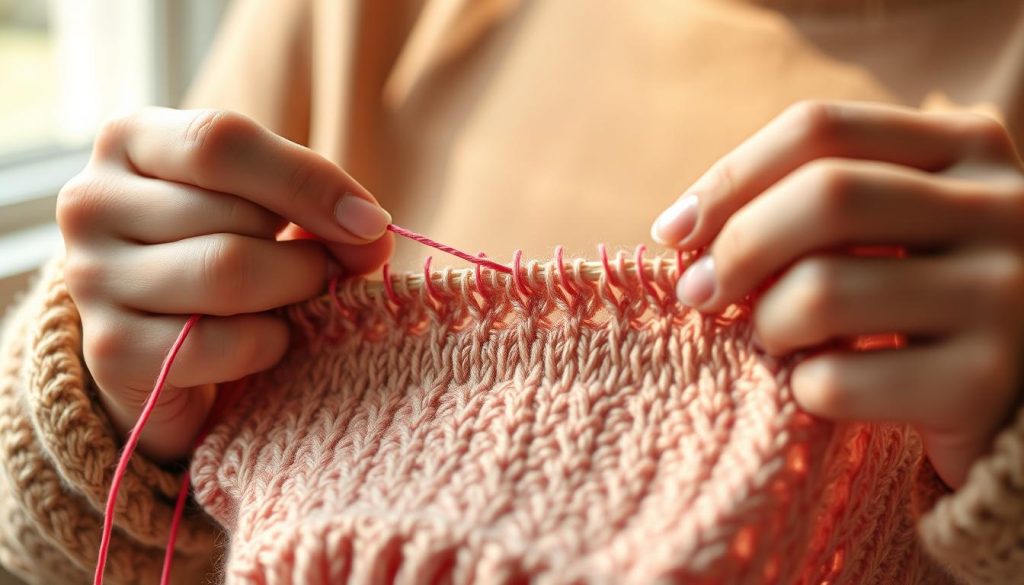
You can try using embroidery thread to grow your needlework skills. It works well for small, decorative pieces that knit up fast. This way, you can blend old embroidery traditions with new knitting styles, keeping these skills alive.
What you can realistically make
You can make trims, edgings, and embellishments that add a pop of color to your projects. Tiny appliqués, crochet flowers, and granny-square motifs are great for embroidery floss and perle cotton. Doll clothes and delicate lace panels are perfect for those who love fine details.
Amigurumi or small toys are possible if you’re okay with smaller sizes and tighter stitches. Remember, a 10-yard skein might only make a small swatch or a few inches of trim. So, plan your yarn needs before starting. Using neon machine thread or silk ribbon can add bold colors without making a full garment.
Limitations to expect when substituting thread for yarn
Embroidery thread doesn’t have the same bounce and durability as most yarns. Cotton floss, perle cotton, and metallic threads can fray or break when stretched. Wearable items made from thread might feel stiff or thin against your skin.
Colorfastness can vary by brand. DMC floss is usually colorfast, but some hand-dyed threads need extra care. Always test dyes before washing to avoid color changes from dying craft techniques.
Working with thread means using smaller needles or hooks and moving slower. You’ll need to pay close attention to your tension to avoid puckering and uneven rows. This can be tiring for your hands.
To get good results, use thread with stable backings, linings, or a yarn base. Save embroidery thread for panels, overlays, and trims. This way, you can enjoy the beauty of needlework while keeping your projects comfortable and durable.
Techniques and tips for knitting or crocheting with embroidery thread
Using embroidery thread for knitting or crochet is different. It adds fine detail and shine. But, you need to think about gauge, thread behavior, and hand comfort.
First, figure out the thread type, the fabric you’re working with, and how much time you have for swatching and managing threads.
Choose the right needle size based on wraps-per-inch. For example, full 6-ply floss works well with a 2.25 mm (B) needle. Two plies might need a 1.75 mm (0) needle.
Steel hooks with American numbering can be tricky. Opt for tools labeled for lace or superfine yarns. Ergonomic hooks and needles with soft handles help prevent hand fatigue when working on small stitches for a long time.
How to prepare and use threads effectively
To get the right gauge, divide the plies. Six plies act like size 3 crochet thread, four like size 5, and two like size 10. Use thread guards for slippery rayon or metallic threads like Razzle or Fruitti. Keep thread lengths short, about 12 inches, to prevent fraying.
Use ball skeins or magic knots to join colors. Always check the colorfast notes for hand-dyed Threads like Weeks Dye Works before washing a finished piece.
Swatching and pattern planning
Swatching is key. You’ll get a denser fabric and different drape than with yarn patterns. Test gauge and measure blocked samples to adjust stitch counts or needle sizes.
Prefer patterns for lace or fingering weight. Or adapt small-gauge lace patterns and recalculate repeats and shaping.
Practical thread management and hybrid techniques
Work with shorter lengths to avoid tangles with metallic or slippery threads. For more structure or warmth, hold an embroidery thread together with a lightweight yarn. Use a fine thread as a contrast strand for decorative effects.
For beading, couching, or hand-sewn finishing, use milliner, embroidery, or tapestry needles.
Quick checklist
- Swatch to confirm gauge and fabric drape.
- Match wraps-per-inch to needle sizes before you start.
- Choose ergonomic hooks for tiny tools to ease hand strain.
- Use thread guards and short lengths for slippery or metallic threads.
- Plan joins with balling or magic knots to avoid bulky joins.
Creative uses that bridge embroidery, knitting, and other needlework
Mixing hand traditions adds new texture and meaning to your work. You can use sashiko stitches for mending sweaters or add crewel designs to hat yokes. This approach keeps heritage crafts alive and adds to modern fashion.
Mixing heritage crafts and modern techniques
Try couching perle cotton or textured threads like Eleganza and WonderFil onto stockinette for bold stripes or overlays. Use tapestry wool or Koigu KPPPM mini-skeins to form needlepoint-like panels at knitting gauge for pillows or framed art. Hand embroidery with DMC floss or Weeks Dye Works brightens a cardigan with monograms and motifs.
Project ideas inspired by needlework categories
- Small embroidered motifs on sweaters or beanies to add a signature touch.
- Beaded trims using 12 wt threads such as Ellana or Weeks 12, with tiny beads for decorative edging.
- Crocheted granny squares from embroidery floss joined into lightweight blankets or wall hangings.
- Tiny amigurumi and delicate lace panels for dolls or display, made from six-ply floss.
- Needlepoint-style panels worked in knitting gauge for cushions and framed pieces.
Care and finishing when combining threads and yarns
Plan for mixed fibers when you block and wash. DMC floss and DMC tapestry wool are usually colorfast, but hand-dyed Weeks Dye Works shades should be tested first. Use linings or backings for delicate, thread-based knits to stabilize seams and stop stretching.
Secure ends with shorter stitch lengths to reduce fraying, specially with rayon or metallic threads. Store heritage-craft inspired pieces flat on acid-free tissue and keep them out of prolonged sunlight to protect hand-dyed and specialty fibers. When you combine threads and yarns, reinforce seams and plan seaming to ensure the piece lasts.
Conclusion
You can knit and crochet with embroidery thread, but it needs careful thought. Use WPI and small needles or hooks to match gauge. Swatch for drape and expect slower, more meticulous work.
Brands like DMC, Weeks Dye Works, and Eleganza Perle offer stranded and non-stranded options. These let you shape texture and shine in trims, lace panels, and decorative motifs.
Needlework crossover thrives because tools and basic skills transfer easily between crafts. Pair ergonomic needles with careful planning. Check colorfastness for wearables and stabilize pieces where needed.
Treat embroidery floss as a bridge between yarn and fine crochet thread. This expands your toolkit and refines your technique.
Embrace the craft revival by experimenting with modern embroidery and hand embroidery threads alongside knitting. Swatch, test washability, and combine techniques to create unique mixed-technique projects.
With intentional choices and practical preparation, knitting with thread opens new creative paths. It honors heritage needlework traditions and resists the dying craft narrative.
 English