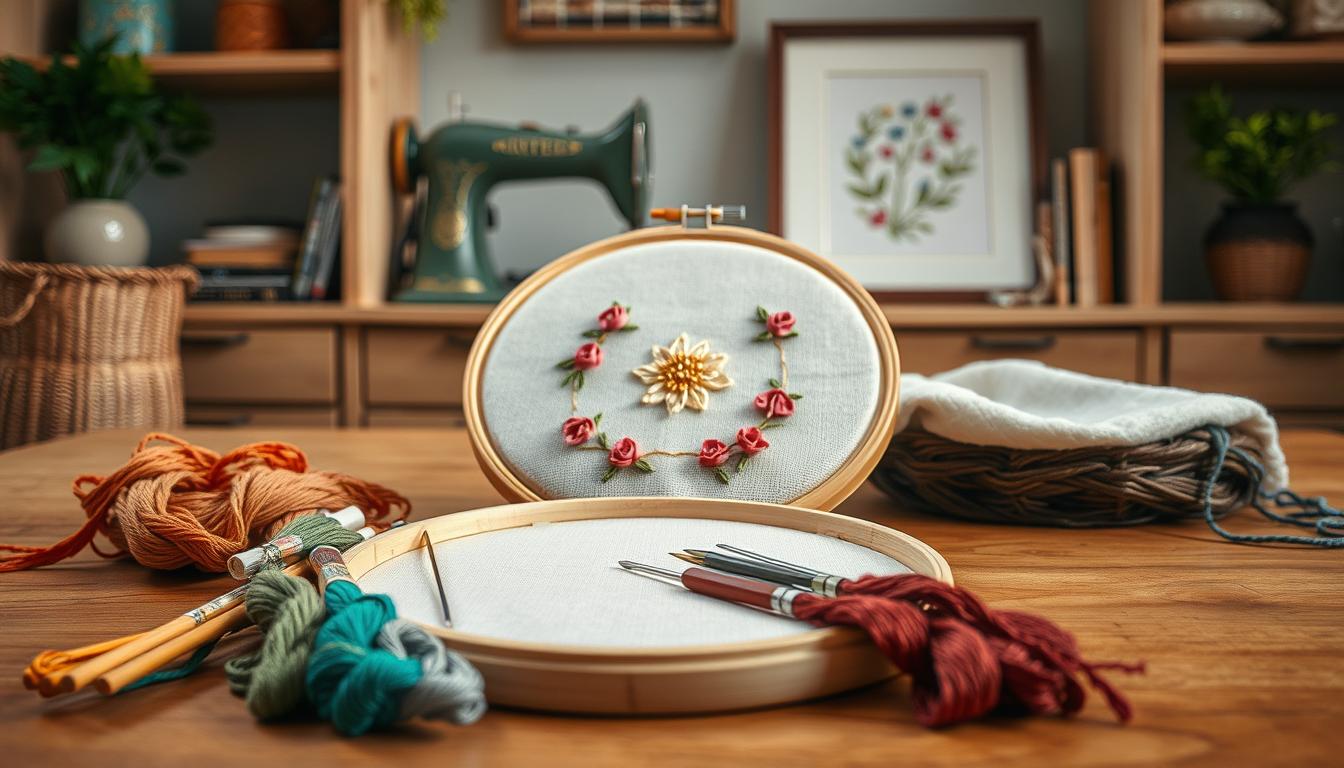
Ever wondered if embroidery or crochet is better for beginners? Embroidery adds details with thread, while crochet stitches together fabric. Knowing this can save you time and frustration.
Embroidery uses thicker thread to add designs to fabrics. You can do it by hand or with a machine. Many find it welcoming, with easy-to-learn stitches and quick progress.
Resources like Sublime Stitching and Wild Olive help beginners. They offer patterns and tutorials. But, managing fine details can be tricky at first.
Key Takeaways
- Embroidery is a needle art that decorates existing fabric.
- Beginner embroidery offers low-cost supplies and quick results.
- Learning embroidery basics is supported by many tutorials and pattern sites.
- Threading needles and working small details can be a minor hurdle for some beginners.
- Consider your goals—personalized gifts and small wall art often point toward embroidery over crochet.
What is embroidery and why beginners love it
Embroidery adds color and texture to fabrics like clothes and home decor. You can do it by hand or with a machine. It’s perfect for small projects that show quick results.
To start, you’ll need a few tools. These include an embroidery hoop, embroidery floss, needles, and fabric. You’ll also need scissors and a transfer pen. These tools are affordable, making it easy to begin.
Definition and basic purpose
Embroidery is a way to decorate fabric with thread. It’s great for personalizing gifts or adding flair to items. Learning the basics lets you tackle more complex designs later.
Tools you need to start: hoop, needles, floss, fabric
Start with a hoop, needles, floss, and fabric. Cotton or linen fabrics are best for beginners. A hoop helps keep your stitches even and fast.
Common beginner stitches and projects
Begin with simple stitches like the running stitch and satin stitch. These stitches are the foundation for many designs. Projects like samplers and monograms are great for beginners.
Pros and cons for beginners
Embroidery is rewarding because it’s affordable and projects finish quickly. It’s perfect for making personalized gifts. The larger needle eye makes threading easier for beginners.
But, there are challenges. Threading needles can be hard for those with poor eyesight. Detailed work requires patience. Machines can speed up work but are more expensive.
What is crochet and why many beginners choose it
Crochet is a needle art that creates fabric by linking loops of yarn with a single hook. You start with a slip knot, then make a chain. After that, you stitch into those loops to craft items like trims and blankets.
Every piece made by crochet is unique. Machines can’t match the handmade quality of this craft.
Learning crochet is appealing because it’s easy to start. You only need to know basic stitches like the chain, single crochet, and double crochet. These simple stitches help you follow patterns and complete projects quickly.
For beginners, start with a small set of yarn and hooks. A basic set includes hook sizes G/H through K and a medium-weight yarn. Don’t forget stitch markers and a yarn needle for finishing touches. You can start with one hook and add more as you learn, keeping costs low.
Beginner projects like granny squares, scarves, and simple toys are great for learning. Granny squares are excellent because they use common stitches and can be finished quickly. Scarves help you practice straight edges and consistent tension. Toys introduce shaping and amigurumi basics.
Starting with crochet has many benefits. It’s portable, uses a single tool, and offers a wide range of patterns. It’s also easier on your fingers than knitting and you won’t drop stitches. Once you get the hang of it, you can progress quickly.
But, there are challenges too. You’ll need to control your tension and deal with mistakes. If you make a mistake, you might have to rip out rows. At first, your fine motor skills or sore hands might slow you down. But, with practice, you’ll get faster and more consistent.
If you prefer learning through videos, YouTube and pattern sites have plenty of tutorials. Break your practice into short sessions and work on small projects. This will help you build confidence and keep moving forward.
Learning curve comparison: stitch complexity and muscle memory
Grab a needle or a hook and you can start quickly. Both embroidery and crochet offer fast results. Simple stitches and samplers show progress in hours, not weeks.
How fast you can learn basic stitches
You can learn basic embroidery stitches fast with a sampler. Projects often use straight stitch, backstitch, and satin stitch. These improve your pattern reading and stitch repetition.
Learning crochet is also quick. You can master chains, single crochet, and double crochet quickly. A few minutes of practice will show progress on a swatch.
Fine motor skills and hand fatigue
Embroidery needs precise needle work and small movements. If you have steady hands and good eyesight, you’ll progress fast. Taking small breaks helps avoid eye strain and wrist discomfort.
Crochet requires consistent tension and motion. Your hands might ache as you find a comfortable grip. Switching hooks, adjusting yarn, and short rests help build muscle memory without pain.
Common beginner mistakes and recovery speed
Embroidery mistakes include uneven tension and skipped stitches. Most errors can be fixed by unpicking and restitching. This keeps your motivation up.
Crochet mistakes often involve losing stitch count or inconsistent rows. You might need to frog back to fix errors. This can mean redoing larger sections if found late.
Both crafts benefit from repetition. As you repeat simple stitches, your hands learn the rhythm. This makes later patterns easier and reduces undoing work.
Time to see results: project speed and visible progress
Starting a new craft project, you want to see results fast. Embroidery often gives quick wins with small, neat areas of color and texture. You can work simple stitches for a few minutes and notice visible progress in crafting almost immediately.
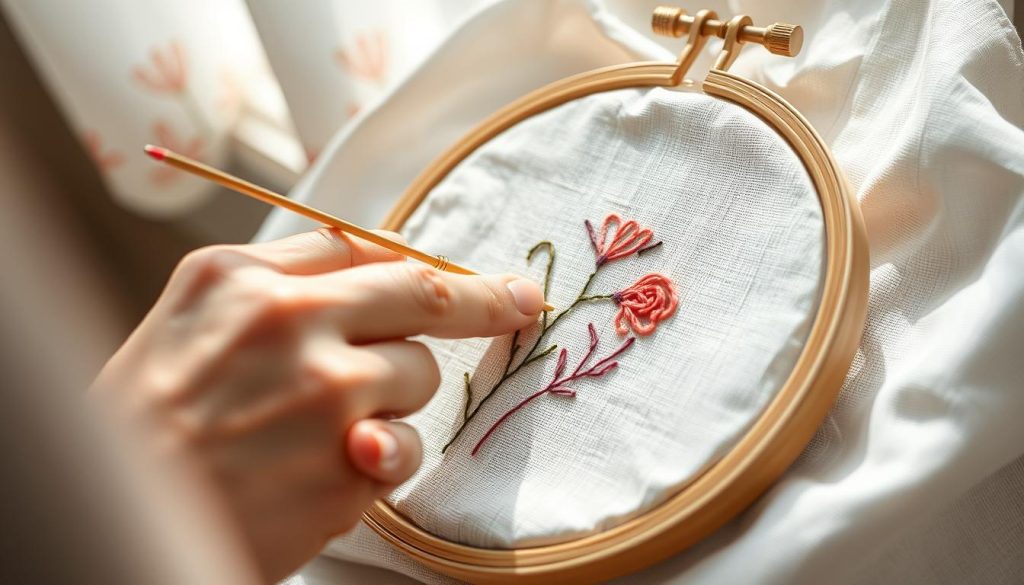
Small embroidery projects that feel rewarding quickly
Pick easy embroidery pieces to build confidence. Samplers, monograms, and small wall art let you practice simple stitches and finish sections in short sessions. These quick embroidery projects are ideal for starter embroidery and make thoughtful gifts without a long time commitment.
How crochet projects scale and when you’ll see large visible progress
Crochet shows progress in a different way. Working granny squares gives you distinct, repeatable units that grow into a blanket or bag. Once tension and technique settle in, crochet progress speeds up and entire rows or blocks appear quickly.
Which craft tends to feel more immediately satisfying to beginners
If you want fast, gift-ready results, beginner embroidery projects tend to feel more immediately satisfying. You finish defined motifs and see detail come to life in short bursts. If you enjoy steady accumulation toward a larger item, crochet and projects like granny squares offer clear momentum as pieces join together.
Practical tip: start with simple stitches in both crafts to build rhythm. Try a few quick embroidery projects and a set of granny squares to compare how each offers visible progress in crafting that matches your goals.
Tools, materials, and cost for starting out
You can start with embroidery or crochet without spending a lot. Basic supplies for both are easy to find in craft stores and online. This section will cover the costs for beginners and what to expect for more advanced tools or a yarn stash.
Embroidery basics
A starter embroidery kit costs between $10 and $30. It usually includes a hoop, needles, floss sampler, and fabric. DMC floss skeins are $0.60 to $1.50 each. You can find many beginner patterns from Sublime Stitching and Wild Olive for a low cost.
Embroidery materials and long-term notes
Embroidery materials are affordable for hobbyists. Spending more gets you premium threads or a home embroidery machine. Machines cost hundreds to thousands of dollars. Use needles with large eyes for thicker floss to make threading easier.
Crochet starter costs
A crochet starter kit costs $8 to $25. It includes a hook set, yarn, yarn needle, and patterns. Hooks match yarn weights. A basic set lets you try many projects. YouTube tutorials and guides help keep costs low.
Cost of crochet over time
The cost of crochet depends on yarn bought and types chosen. Basic acrylic yarn is cheap. Hand-dyed or merino wool skeins are $20 to $40 each. A yarn stash can become your biggest expense as your hobby grows.
| Item | Typical U.S. Price | Notes |
|---|---|---|
| Starter embroidery kit | $10–$30 | Hoop, needles, floss sampler, fabric; ideal for beginner embroidery practice |
| DMC floss skein | $0.60–$1.50 | Durable, colorfast thread for samplers and small projects |
| Small pattern book | $5–$15 | Good for project ideas and guided stitching |
| Crochet starter kit | $8–$25 | Hook set, yarn, yarn needle, basic patterns; quick way to start |
| Basic yarn skein | $3–$10 | Worsted-weight acrylic or wool for practice projects |
| Premium yarn skein | $20–$40 | Hand-dyed or high-quality fibers for special projects |
| Embroidery machine | $500–$5000+ | Major long-term investment for frequent embroiderers |
Choosing what to buy first
Start with a starter kit for embroidery or crochet and some patterns. If you like variety, buy a little for both crafts. Keep track of your spending to budget for premium threads or a yarn stash.
Final tip on value
Both crafts offer a chance to start cheaply and grow. You can begin with basic supplies and add more as you improve. Crochet lets you start with one hook and yarn, then expand your stash for bigger projects.
Learning resources and how to teach yourself
Choosing the right resources makes learning a craft easier and less frustrating. Start with small goals and repeat simple tasks until they feel natural. Use a mix of visual guides, hands-on practice, and community feedback to build steady progress.
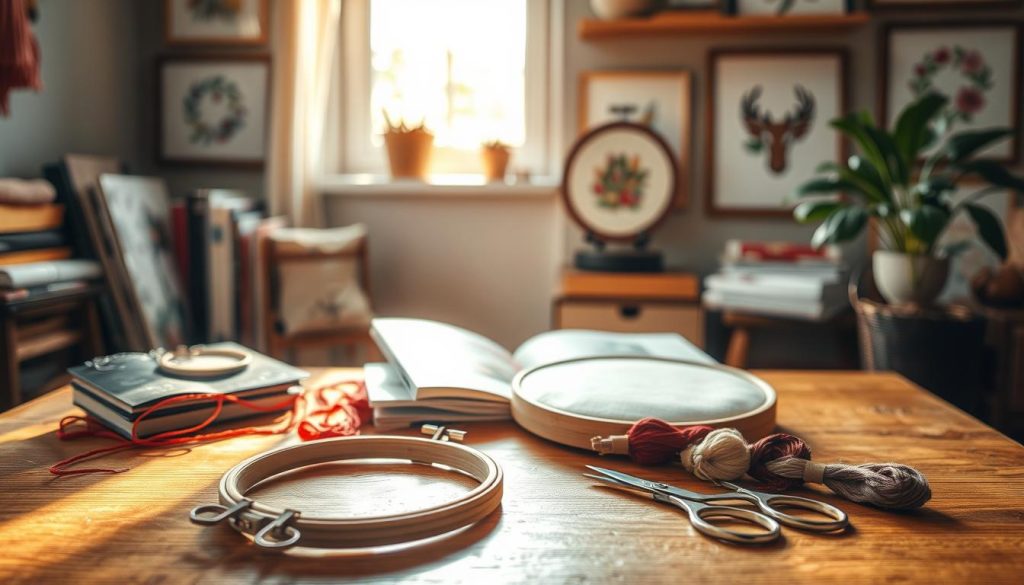
Best ways to learn embroidery: samplers, slow video tutorials, pattern sites
Begin with samplers to practice simple stitches and build confidence. Samplers let you try satin stitch, backstitch, and French knots in a small format that shows steady improvement.
Watch slow, focused videos labeled as best embroidery videos that pause between steps. Channels from Sublime Stitching and Stitching Cow offer clear demonstrations that help you learn how to embroider stitch by stitch.
Use pattern marketplaces and pattern sites to download beginner embroidery designs. These sites include photo guides and tool lists so you can compare floss types, needles, and fabrics before you buy.
Best ways to learn crochet: step-by-step videos, granny square tutorials, community patterns
For learning crochet, choose step-by-step videos that show hand position and tension. Bethintx1 and similar instructors slow down complex moves so you can copy motion and correct mistakes quickly.
Start with a granny square tutorial to practice chain, single, and double stitches in repeatable rounds. A granny square tutorial helps you understand gauge, hook size, and yarn weight in a compact project.
Follow community patterns for simple hats, scarves, or amigurumi to see how pieces come together. Stitch Diva and All About Ami offer patterns and stitch libraries that are useful when you expand beyond basics.
Online communities, pattern marketplaces, and local classes in the United States
Join forums and groups on Ravelry, Reddit r/Embroidery, and r/Crochet to ask targeted questions and share progress photos. Peer feedback helps you fix tension issues and improve stitch consistency.
Explore pattern marketplaces for both crafts to compare complexity, price, and reviews. Marketplaces often link to video tutorials and material lists so you can gather what you need before you start.
Look for local craft classes USA at yarn shops, community centers, and adult education programs. A single in-person session can teach ergonomics, correct hook or needle hold, and posture tips that reduce hand fatigue.
| Resource Type | Example | Best for |
|---|---|---|
| Sampler kits | Sublime Stitching beginner sampler | Practicing simple stitches and building confidence |
| Slow video tutorials | Stitching Cow, Bethintx1 | Learning hand positions, step-by-step motion |
| Pattern marketplaces | Ravelry, Etsy pattern shops | Finding project instructions and material lists |
| Granny square tutorials | Beginner video series and printable guides | Learning repeatable crochet motifs and gauge |
| Local classes | Yarn shops, community centers | Hands-on guidance for tension and ergonomics |
| Online communities | Ravelry groups, Reddit communities | Peer support, pattern troubleshooting, critiques |
Practical steps: buy a simple kit, follow slow video lessons, practice samplers or a granny square, post progress in a forum, and take one in-person workshop. These steps help you learn efficiently and keep craft time enjoyable.
When embroidery is a better choice and when crochet is preferable
Embroidery is great for quick, personal touches. It’s perfect for monograms, small art, logos, and personalizing clothes and linens. Even beginners can enjoy it and make great gifts on short notice.
For items you can wear or cozy blankets, crochet is the way to go. It’s easy to make hats, scarves, and clothes with just a hook. You can even crochet on a plane or at home.
Choose embroidery for detailed, small touches that enhance a piece. It needs little material, makes lovely gifts, and teaches basic stitches fast.
Choose crochet for items that need volume and function. It’s perfect for making blankets and clothes that last. Plus, it’s easy to take with you, great for busy lives.
Think about your crafting needs and vision. Embroidery needs close focus and steady hands, which can be tough for those with vision issues or shaky hands. Crochet can strain your hands at first but gets easier with practice.
Consider your long-term goals and what you enjoy making. For lots of small, personal items, embroidery is best. For big, practical textiles that are easy to carry, crochet is better. Choose based on your skills, time, and what brings you joy.
Conclusion
Choosing between embroidery and crochet depends on what you want to make and how you like to work. There’s no single needle art that’s objectively easier. Both embroidery and crochet let you learn basic stitches quickly, but each has advanced techniques that take time to master.
Embroidery is great for fast, decorative results and personalized gifts. It’s inexpensive to start and gives quick satisfaction. A small sampler or starter embroidery kit will show you why many people find it friendly and rewarding.
On the other hand, crochet is perfect for wearable items, blankets, or portable projects that use one tool. Its single-hook approach is versatile and often easier to manage for larger items. For many beginners, a granny square kit or basic yarn set makes learning crochet accessible and practical.
Try a tiny starter kit for each craft to see which fits your rhythm. Use online tutorials and community patterns as you progress. With clear goals—whether embellishment and personalization or garments and blankets—you’ll find the right path in learning embroidery or exploring crochet.
FAQ
What is the difference between embroidery and crochet?
Why do beginners often choose embroidery?
What basic tools do I need to start embroidery?
What beginner stitches should I learn first for embroidery?
What are the pros and cons of learning embroidery as a beginner?
What is crochet and why do many beginners choose it?
What starter tools and materials do I need for crochet?
Which beginner stitches will I learn first in crochet?
What are the pros and cons of learning crochet as a beginner?
How quickly can I learn basic stitches in embroidery versus crochet?
Which craft requires finer motor skills or causes more hand fatigue?
What common beginner mistakes happen in embroidery and crochet, and how easy are they to fix?
Which craft shows results faster—embroidery or crochet?
What small embroidery projects are rewarding for beginners?
What crochet starter projects give satisfying progress quickly?
How much does it cost to start embroidery or crochet in the U.S.?
FAQ
What is the difference between embroidery and crochet?
Embroidery adds designs to fabric using a needle and thread. Crochet, on the other hand, creates fabric from yarn loops. Embroidery decorates, while crochet builds the fabric itself.
Why do beginners often choose embroidery?
Beginners like embroidery because it’s easy to start and shows results quickly. It’s also good for making small gifts. Patterns from Sublime Stitching and Wild Olive make it fun to learn.
What basic tools do I need to start embroidery?
You’ll need a 6–8 inch embroidery hoop, embroidery floss, needles, fabric, scissors, and a pattern. These tools help you begin your embroidery journey.
What beginner stitches should I learn first for embroidery?
Start with basic stitches like running stitch, backstitch, and satin stitch. These stitches are essential for making simple designs and monograms.
What are the pros and cons of learning embroidery as a beginner?
Embroidery is great because it’s affordable and shows results fast. It’s perfect for personal touches and small gifts. But, it can be hard for those with poor eyesight, and machines are pricey.
What is crochet and why do many beginners choose it?
Crochet creates fabric with a single hook. It’s loved for being portable and easy to start. It’s perfect for making granny squares and amigurumi.
What starter tools and materials do I need for crochet?
You’ll need a set of hooks, worsted-weight yarn, stitch markers, a yarn needle, and simple patterns. These tools help you begin your crochet journey.
Which beginner stitches will I learn first in crochet?
You’ll start with the slip knot, chain, single crochet, and double crochet. These stitches are key for making granny squares and scarves.
What are the pros and cons of learning crochet as a beginner?
Crochet is great because it’s portable and uses a single tool. It’s forgiving and lets you see progress quickly. But, it can cause hand fatigue and requires consistent tension.
How quickly can I learn basic stitches in embroidery versus crochet?
Both crafts let you learn stitches quickly. Embroidery samplers and crochet granny squares are great for practice. Your speed depends on your experience and practice.
Which craft requires finer motor skills or causes more hand fatigue?
Embroidery needs precise needlework and good eyesight. Crochet requires consistent tension and can cause hand fatigue. Choose based on your skills and comfort.
What common beginner mistakes happen in embroidery and crochet, and how easy are they to fix?
Embroidery mistakes like uneven tension are easy to fix. Crochet mistakes, like lost stitch counts, may need frogging. Both can be fixed with patience and practice.
Which craft shows results faster—embroidery or crochet?
Embroidery shows results quickly because small projects finish fast. Crochet takes longer for larger projects but shows progress as you add rows.
What small embroidery projects are rewarding for beginners?
Try samplers, monograms, small wall hangings, or patches. These projects teach basics and are ready for gifts in no time.
What crochet starter projects give satisfying progress quickly?
Granny squares, scarves, and simple hats show quick progress. Granny squares are great for learning stitch variety and gauge control.
How much does it cost to start embroidery or crochet in the U.S.?
Embroidery starter kits cost –30. DMC floss skeins are
FAQ
What is the difference between embroidery and crochet?
Embroidery adds designs to fabric using a needle and thread. Crochet, on the other hand, creates fabric from yarn loops. Embroidery decorates, while crochet builds the fabric itself.
Why do beginners often choose embroidery?
Beginners like embroidery because it’s easy to start and shows results quickly. It’s also good for making small gifts. Patterns from Sublime Stitching and Wild Olive make it fun to learn.
What basic tools do I need to start embroidery?
You’ll need a 6–8 inch embroidery hoop, embroidery floss, needles, fabric, scissors, and a pattern. These tools help you begin your embroidery journey.
What beginner stitches should I learn first for embroidery?
Start with basic stitches like running stitch, backstitch, and satin stitch. These stitches are essential for making simple designs and monograms.
What are the pros and cons of learning embroidery as a beginner?
Embroidery is great because it’s affordable and shows results fast. It’s perfect for personal touches and small gifts. But, it can be hard for those with poor eyesight, and machines are pricey.
What is crochet and why do many beginners choose it?
Crochet creates fabric with a single hook. It’s loved for being portable and easy to start. It’s perfect for making granny squares and amigurumi.
What starter tools and materials do I need for crochet?
You’ll need a set of hooks, worsted-weight yarn, stitch markers, a yarn needle, and simple patterns. These tools help you begin your crochet journey.
Which beginner stitches will I learn first in crochet?
You’ll start with the slip knot, chain, single crochet, and double crochet. These stitches are key for making granny squares and scarves.
What are the pros and cons of learning crochet as a beginner?
Crochet is great because it’s portable and uses a single tool. It’s forgiving and lets you see progress quickly. But, it can cause hand fatigue and requires consistent tension.
How quickly can I learn basic stitches in embroidery versus crochet?
Both crafts let you learn stitches quickly. Embroidery samplers and crochet granny squares are great for practice. Your speed depends on your experience and practice.
Which craft requires finer motor skills or causes more hand fatigue?
Embroidery needs precise needlework and good eyesight. Crochet requires consistent tension and can cause hand fatigue. Choose based on your skills and comfort.
What common beginner mistakes happen in embroidery and crochet, and how easy are they to fix?
Embroidery mistakes like uneven tension are easy to fix. Crochet mistakes, like lost stitch counts, may need frogging. Both can be fixed with patience and practice.
Which craft shows results faster—embroidery or crochet?
Embroidery shows results quickly because small projects finish fast. Crochet takes longer for larger projects but shows progress as you add rows.
What small embroidery projects are rewarding for beginners?
Try samplers, monograms, small wall hangings, or patches. These projects teach basics and are ready for gifts in no time.
What crochet starter projects give satisfying progress quickly?
Granny squares, scarves, and simple hats show quick progress. Granny squares are great for learning stitch variety and gauge control.
How much does it cost to start embroidery or crochet in the U.S.?
Embroidery starter kits cost $10–30. DMC floss skeins are $0.60–$1.50 each. Crochet kits are $8–25. Premium yarn or machines increase costs.
Are there affordable learning resources for both crafts?
Yes. Resources like Stitching Cow and Sublime Stitching offer embroidery tutorials. Crochet learners can find help on YouTube and Ravelry. Etsy and free video channels also have lessons.
What are good ways to teach yourself embroidery or crochet?
Start with kits and follow video tutorials. Practice samplers for embroidery or granny squares for crochet. Join online communities and take classes for more help.
When should I choose embroidery over crochet?
Choose embroidery for quick decorative projects and personal touches. It’s ideal for small gifts and wall art.
When is crochet the better choice?
Choose crochet for making blankets, garments, and toys. It’s great for large projects and is portable.
Can I try both crafts before committing?
Yes. Try a basic embroidery sampler kit and a crochet granny square kit. This helps you decide which craft suits you better.
FAQ
What is the difference between embroidery and crochet?
Embroidery adds designs to fabric using a needle and thread. Crochet, on the other hand, creates fabric from yarn loops. Embroidery decorates, while crochet builds the fabric itself.
Why do beginners often choose embroidery?
Beginners like embroidery because it’s easy to start and shows results quickly. It’s also good for making small gifts. Patterns from Sublime Stitching and Wild Olive make it fun to learn.
What basic tools do I need to start embroidery?
You’ll need a 6–8 inch embroidery hoop, embroidery floss, needles, fabric, scissors, and a pattern. These tools help you begin your embroidery journey.
What beginner stitches should I learn first for embroidery?
Start with basic stitches like running stitch, backstitch, and satin stitch. These stitches are essential for making simple designs and monograms.
What are the pros and cons of learning embroidery as a beginner?
Embroidery is great because it’s affordable and shows results fast. It’s perfect for personal touches and small gifts. But, it can be hard for those with poor eyesight, and machines are pricey.
What is crochet and why do many beginners choose it?
Crochet creates fabric with a single hook. It’s loved for being portable and easy to start. It’s perfect for making granny squares and amigurumi.
What starter tools and materials do I need for crochet?
You’ll need a set of hooks, worsted-weight yarn, stitch markers, a yarn needle, and simple patterns. These tools help you begin your crochet journey.
Which beginner stitches will I learn first in crochet?
You’ll start with the slip knot, chain, single crochet, and double crochet. These stitches are key for making granny squares and scarves.
What are the pros and cons of learning crochet as a beginner?
Crochet is great because it’s portable and uses a single tool. It’s forgiving and lets you see progress quickly. But, it can cause hand fatigue and requires consistent tension.
How quickly can I learn basic stitches in embroidery versus crochet?
Both crafts let you learn stitches quickly. Embroidery samplers and crochet granny squares are great for practice. Your speed depends on your experience and practice.
Which craft requires finer motor skills or causes more hand fatigue?
Embroidery needs precise needlework and good eyesight. Crochet requires consistent tension and can cause hand fatigue. Choose based on your skills and comfort.
What common beginner mistakes happen in embroidery and crochet, and how easy are they to fix?
Embroidery mistakes like uneven tension are easy to fix. Crochet mistakes, like lost stitch counts, may need frogging. Both can be fixed with patience and practice.
Which craft shows results faster—embroidery or crochet?
Embroidery shows results quickly because small projects finish fast. Crochet takes longer for larger projects but shows progress as you add rows.
What small embroidery projects are rewarding for beginners?
Try samplers, monograms, small wall hangings, or patches. These projects teach basics and are ready for gifts in no time.
What crochet starter projects give satisfying progress quickly?
Granny squares, scarves, and simple hats show quick progress. Granny squares are great for learning stitch variety and gauge control.
How much does it cost to start embroidery or crochet in the U.S.?
Embroidery starter kits cost –30. DMC floss skeins are
FAQ
What is the difference between embroidery and crochet?
Embroidery adds designs to fabric using a needle and thread. Crochet, on the other hand, creates fabric from yarn loops. Embroidery decorates, while crochet builds the fabric itself.
Why do beginners often choose embroidery?
Beginners like embroidery because it’s easy to start and shows results quickly. It’s also good for making small gifts. Patterns from Sublime Stitching and Wild Olive make it fun to learn.
What basic tools do I need to start embroidery?
You’ll need a 6–8 inch embroidery hoop, embroidery floss, needles, fabric, scissors, and a pattern. These tools help you begin your embroidery journey.
What beginner stitches should I learn first for embroidery?
Start with basic stitches like running stitch, backstitch, and satin stitch. These stitches are essential for making simple designs and monograms.
What are the pros and cons of learning embroidery as a beginner?
Embroidery is great because it’s affordable and shows results fast. It’s perfect for personal touches and small gifts. But, it can be hard for those with poor eyesight, and machines are pricey.
What is crochet and why do many beginners choose it?
Crochet creates fabric with a single hook. It’s loved for being portable and easy to start. It’s perfect for making granny squares and amigurumi.
What starter tools and materials do I need for crochet?
You’ll need a set of hooks, worsted-weight yarn, stitch markers, a yarn needle, and simple patterns. These tools help you begin your crochet journey.
Which beginner stitches will I learn first in crochet?
You’ll start with the slip knot, chain, single crochet, and double crochet. These stitches are key for making granny squares and scarves.
What are the pros and cons of learning crochet as a beginner?
Crochet is great because it’s portable and uses a single tool. It’s forgiving and lets you see progress quickly. But, it can cause hand fatigue and requires consistent tension.
How quickly can I learn basic stitches in embroidery versus crochet?
Both crafts let you learn stitches quickly. Embroidery samplers and crochet granny squares are great for practice. Your speed depends on your experience and practice.
Which craft requires finer motor skills or causes more hand fatigue?
Embroidery needs precise needlework and good eyesight. Crochet requires consistent tension and can cause hand fatigue. Choose based on your skills and comfort.
What common beginner mistakes happen in embroidery and crochet, and how easy are they to fix?
Embroidery mistakes like uneven tension are easy to fix. Crochet mistakes, like lost stitch counts, may need frogging. Both can be fixed with patience and practice.
Which craft shows results faster—embroidery or crochet?
Embroidery shows results quickly because small projects finish fast. Crochet takes longer for larger projects but shows progress as you add rows.
What small embroidery projects are rewarding for beginners?
Try samplers, monograms, small wall hangings, or patches. These projects teach basics and are ready for gifts in no time.
What crochet starter projects give satisfying progress quickly?
Granny squares, scarves, and simple hats show quick progress. Granny squares are great for learning stitch variety and gauge control.
How much does it cost to start embroidery or crochet in the U.S.?
Embroidery starter kits cost $10–30. DMC floss skeins are $0.60–$1.50 each. Crochet kits are $8–25. Premium yarn or machines increase costs.
Are there affordable learning resources for both crafts?
Yes. Resources like Stitching Cow and Sublime Stitching offer embroidery tutorials. Crochet learners can find help on YouTube and Ravelry. Etsy and free video channels also have lessons.
What are good ways to teach yourself embroidery or crochet?
Start with kits and follow video tutorials. Practice samplers for embroidery or granny squares for crochet. Join online communities and take classes for more help.
When should I choose embroidery over crochet?
Choose embroidery for quick decorative projects and personal touches. It’s ideal for small gifts and wall art.
When is crochet the better choice?
Choose crochet for making blankets, garments, and toys. It’s great for large projects and is portable.
Can I try both crafts before committing?
Yes. Try a basic embroidery sampler kit and a crochet granny square kit. This helps you decide which craft suits you better.
.60–
FAQ
What is the difference between embroidery and crochet?
Embroidery adds designs to fabric using a needle and thread. Crochet, on the other hand, creates fabric from yarn loops. Embroidery decorates, while crochet builds the fabric itself.
Why do beginners often choose embroidery?
Beginners like embroidery because it’s easy to start and shows results quickly. It’s also good for making small gifts. Patterns from Sublime Stitching and Wild Olive make it fun to learn.
What basic tools do I need to start embroidery?
You’ll need a 6–8 inch embroidery hoop, embroidery floss, needles, fabric, scissors, and a pattern. These tools help you begin your embroidery journey.
What beginner stitches should I learn first for embroidery?
Start with basic stitches like running stitch, backstitch, and satin stitch. These stitches are essential for making simple designs and monograms.
What are the pros and cons of learning embroidery as a beginner?
Embroidery is great because it’s affordable and shows results fast. It’s perfect for personal touches and small gifts. But, it can be hard for those with poor eyesight, and machines are pricey.
What is crochet and why do many beginners choose it?
Crochet creates fabric with a single hook. It’s loved for being portable and easy to start. It’s perfect for making granny squares and amigurumi.
What starter tools and materials do I need for crochet?
You’ll need a set of hooks, worsted-weight yarn, stitch markers, a yarn needle, and simple patterns. These tools help you begin your crochet journey.
Which beginner stitches will I learn first in crochet?
You’ll start with the slip knot, chain, single crochet, and double crochet. These stitches are key for making granny squares and scarves.
What are the pros and cons of learning crochet as a beginner?
Crochet is great because it’s portable and uses a single tool. It’s forgiving and lets you see progress quickly. But, it can cause hand fatigue and requires consistent tension.
How quickly can I learn basic stitches in embroidery versus crochet?
Both crafts let you learn stitches quickly. Embroidery samplers and crochet granny squares are great for practice. Your speed depends on your experience and practice.
Which craft requires finer motor skills or causes more hand fatigue?
Embroidery needs precise needlework and good eyesight. Crochet requires consistent tension and can cause hand fatigue. Choose based on your skills and comfort.
What common beginner mistakes happen in embroidery and crochet, and how easy are they to fix?
Embroidery mistakes like uneven tension are easy to fix. Crochet mistakes, like lost stitch counts, may need frogging. Both can be fixed with patience and practice.
Which craft shows results faster—embroidery or crochet?
Embroidery shows results quickly because small projects finish fast. Crochet takes longer for larger projects but shows progress as you add rows.
What small embroidery projects are rewarding for beginners?
Try samplers, monograms, small wall hangings, or patches. These projects teach basics and are ready for gifts in no time.
What crochet starter projects give satisfying progress quickly?
Granny squares, scarves, and simple hats show quick progress. Granny squares are great for learning stitch variety and gauge control.
How much does it cost to start embroidery or crochet in the U.S.?
Embroidery starter kits cost $10–30. DMC floss skeins are $0.60–$1.50 each. Crochet kits are $8–25. Premium yarn or machines increase costs.
Are there affordable learning resources for both crafts?
Yes. Resources like Stitching Cow and Sublime Stitching offer embroidery tutorials. Crochet learners can find help on YouTube and Ravelry. Etsy and free video channels also have lessons.
What are good ways to teach yourself embroidery or crochet?
Start with kits and follow video tutorials. Practice samplers for embroidery or granny squares for crochet. Join online communities and take classes for more help.
When should I choose embroidery over crochet?
Choose embroidery for quick decorative projects and personal touches. It’s ideal for small gifts and wall art.
When is crochet the better choice?
Choose crochet for making blankets, garments, and toys. It’s great for large projects and is portable.
Can I try both crafts before committing?
Yes. Try a basic embroidery sampler kit and a crochet granny square kit. This helps you decide which craft suits you better.
.50 each. Crochet kits are –25. Premium yarn or machines increase costs.
Are there affordable learning resources for both crafts?
Yes. Resources like Stitching Cow and Sublime Stitching offer embroidery tutorials. Crochet learners can find help on YouTube and Ravelry. Etsy and free video channels also have lessons.
What are good ways to teach yourself embroidery or crochet?
Start with kits and follow video tutorials. Practice samplers for embroidery or granny squares for crochet. Join online communities and take classes for more help.
When should I choose embroidery over crochet?
Choose embroidery for quick decorative projects and personal touches. It’s ideal for small gifts and wall art.
When is crochet the better choice?
Choose crochet for making blankets, garments, and toys. It’s great for large projects and is portable.
Can I try both crafts before committing?
Yes. Try a basic embroidery sampler kit and a crochet granny square kit. This helps you decide which craft suits you better.
 English