Want your stitches to look like a pro made them? Or will they fray, fade, or break your flow? This guide helps you choose the best embroidery floss for your project by comparing real performance.
Whether you’re starting with embroidery or improving your skills, knowing about colorfastness, strand strength, and coverage is key. We tested big names like DMC, Anchor, and Cosmo. We also checked out store brands from Hobby Lobby and Michaels, and even some budget options from Walmart and online.
In this guide, you’ll learn how different threads work in beginner projects. You’ll also discover how to match colors across brands and tips for embroidering without wasting skeins. Keep reading to find the perfect mix of price, availability, and quality for your next project.
Key Takeaways
- DMC is the top choice for color range and consistency, making it great for matching patterns.
- Store brands like Artiste and Loops & Threads are affordable for beginners and small projects.
- Budget skeins can save money but might not be as good in colorfastness and strength as premium brands.
- Testing a small swatch before a big project can prevent color bleeding and poor coverage.
- For beginners, focus on smooth strand separation and reliable color over the cheapest price.
How we tested embroidery floss: methods, samples, and criteria
We followed a clear, repeatable process for testing embroidery floss. We chose common brands found in the U.S. to match what you see at Michaels, Hobby Lobby, Walmart, and online. Our goal was to see how threads perform in starter embroidery or DIY kits.
We focused on tasks that matter to beginners. Each sample was made with the same fabric, needle size, and hoop. This kept comparisons fair. You can try these tests at home to compare your threads.
Selection of brands and why we chose them
We picked DMC, Anchor, Cosmo, CXC, Sullivans, J&P Coats, Artiste (Hobby Lobby), Loops & Threads (Michaels), and Friendship Thread (Walmart). This mix includes premium, midrange, and budget options for beginners and hobbyists.
We aimed to show typical choices for starter embroidery and cross-stitch kits. You’ll see DMC alongside store brands to compare sheen, strand behavior, and dye consistency.
Practical tests performed
We stitched sampler hoops using backstitch and satin stitch. This evaluated texture, coverage, and strand separation. We tested for tangling, breakage, and needle eye feeding during long sessions.
Coverage tests used adjacent swatches. A DMC center square was surrounded by comparisons to judge opacity and coverage. We also compared saturated hues and near-matches across brands.
Colorfast and wash testing
For colorfast testing, we used two methods: a rinse/wash cycle and a 24-hour capillary test. We focused on reds and deep blues, which are often least stable.
Observations included dye migration, fuzzing, and sheen changes after washing. These tests mimic real-life wear when you launder embroidered items or make washable patches.
Price and availability criteria
We compared per-skein costs and multi-pack pricing. DMC is often pricier per skein, while Artiste and Loops & Threads offer economical multi-packs for beginners.
Availability checks noted dye-lot consistency and popular color stock. Some brands, like CXC, offer savings in large online sets with longer shipping. Consider cost, delivery, and dye-lot risk for big projects.
| Test Category | What we measured | Why it matters to you |
|---|---|---|
| Strand handling | Ease of separating, tangling, breakage | Good handling reduces frustration when you learn how to embroider and practice embroidery basics |
| Stitch coverage | Opacity with 1–6 strands, satin vs. backstitch look | Helps you pick the right floss for coverage in starter embroidery and small DIY embroidery projects |
| Colorfastness | Rinse test and 24-hour capillary soak | Prevents color runs on garments you will wash after completing your project |
| Sheen and texture | Visual sheen, softness, fluffing in needle eye | Influences finished stitch appearance and comfort during long sessions |
| Price & availability | Per-skein and pack cost, stock and dye-lot notes | Helps you budget for materials when starting DIY embroidery or scaling up projects |
Brand-by-brand review: performance, pros, and cons
Before you pick thread for your project, let’s look at major embroidery brands. We’ll cover what each offers. This guide helps you compare sheen, durability, price, and color range. So, you can choose the right skeins for your embroidery needs.
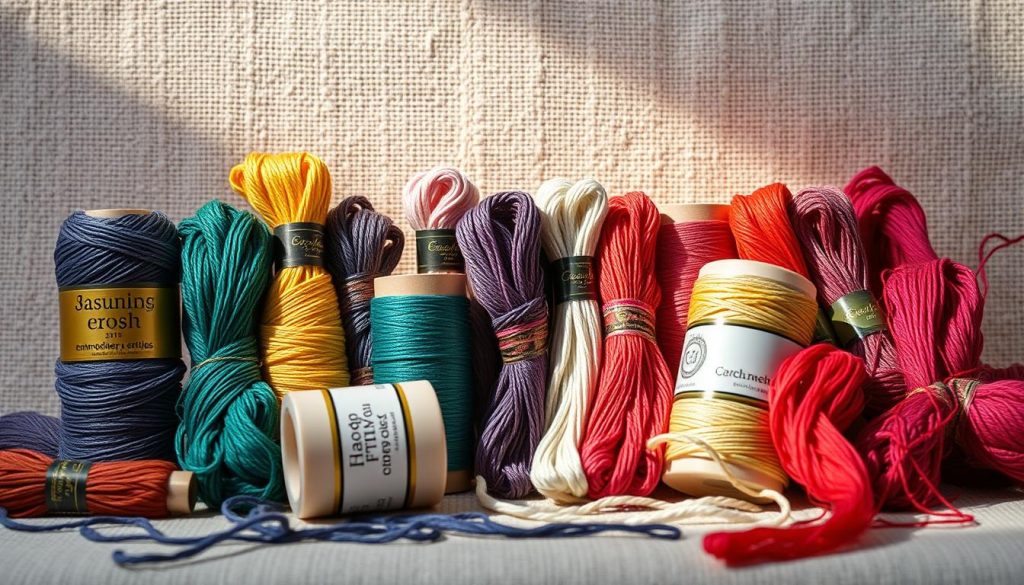
DMC is a top choice for many stitchers. Made in France from 100% Egyptian cotton, it has a glossy finish and consistent dyeing. It’s a favorite among designers for its wide color range. But, it’s pricier than store brands and can sometimes tangle.
Artiste (Hobby Lobby) and Loops & Threads (Michaels) offer great value. They have good texture and shine, similar to DMC. They’re perfect for beginners and those who want to practice without spending a lot. They’re great for learning simple stitches.
Friendship Thread at Walmart is very affordable. It comes in many variegated colors. But, it has a duller look and can break easily. It’s good for large practice pieces or rough work, but not for polished finishes.
Anchor is a British favorite with over 460 colors. Its cotton is slightly thinner but holds dye well. Cosmo from Japan offers vivid, colorfast shades and a smooth lustre. Both are known for their stitch consistency.
CXC and other import lines are budget-friendly alternatives. They have a DMC-compatible numbering system. Sullivans and J&P Coats offer affordable Egyptian and Pima cotton options. They perform well but can feel coarser or tangle more.
- Pros to weigh: color range, sheen, stitch coverage, and retail availability.
- Cons to note: price differences, occasional breakage with cheaper floss, and dye-lot variance across batches.
- If you follow an embroidery guide or pattern, check thread recommendations; matching brand and color numbers can save time and frustration.
Use these comparisons to pick the best floss for your embroidery. Consider your budget and project goals. For learning, focus on handling and price. For special pieces, choose high-end threads for colorfastness and sheen.
Practical guidance for beginners: starting embroidery and easy embroidery projects
Starting small is the best way to begin. This guide will help you pick the right floss, learn to separate strands, and practice simple stitches. These are the basics of embroidery.
Which floss to buy first
Start with affordable floss like Artiste or Loops & Threads. They offer a good starting point without breaking the bank. A basic set includes neutrals, black, white, and colors like red, green, blue, and yellow.
For consistent colors and quality, add DMC or Anchor to your collection. CXC is great for bulk colors but may take longer to ship from overseas.
How to separate strands and avoid breakage
When pulling floss, start from the center of the skein. Avoid outer ends to prevent bunching. Gently slide strands apart instead of pulling hard.
Use 12–18 inch lengths to avoid tangles and fluffing. If floss is brittle, use shorter lengths and fewer strands. Choose the right needle size and softer brands like DMC or Anchor to prevent breakage.
Simple stitches and embroidery basics to practice
Begin with backstitch, running stitch, satin stitch, stem stitch, and French knots. These stitches are essential and appear in many beginner patterns.
Practice even stitches and consistent tension on scrap fabric. Use an embroidery hoop to keep your fabric tight. Start with designs that have large satin areas or clear outlines to focus on technique.
- Practice tip: stitch small samples of each technique and wash them gently to check colorfastness and how threads behave after laundering.
- Project idea: a sampler square using one or two colors, showing each of the simple stitches listed above.
- Equipment note: a sharp, smooth needle and a compact pair of scissors make learning how to embroider less frustrating.
Color, coverage, and colorfastness: matching shades and washing tips
When you stitch, you want your colors to match and your coverage to be reliable. Start by noting that DMC is the common reference in many patterns. Brands like CXC and Sullivans publish conversion charts so you can do color matching embroidery without guessing. If you use hand-dyed threads from Paint-Box Threads or small-batch makers, make a swatch to compare before committing to a full piece.
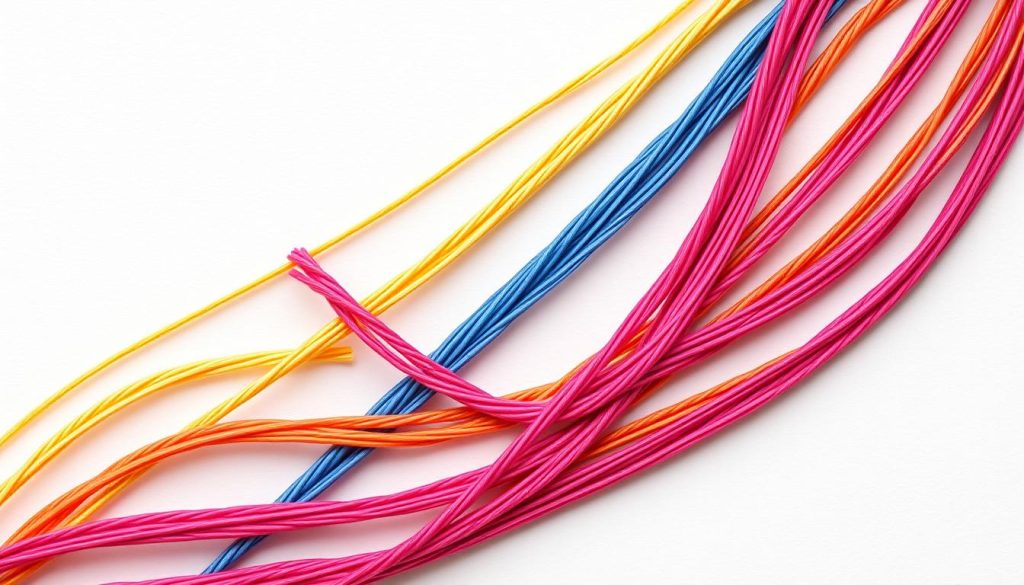
Buy all the skeins for a project at once when possible. Dye-lot variation can create subtle shifts, even within the same brand. Store brands such as Artiste and Loops & Threads cover general needs, but they may not match DMC exactly for projects that rely on precise color keys.
Coverage matters for stitch appearance and texture. In our comparisons, DMC and CXC typically gave strong coverage stitches with dense look and even tension. Anchor can read slightly thinner, though it also creates neat results. For full-coverage satin or cross-stitch, choose 100% mercerized cotton for sheen or soft poly-cotton blends for a fuller hand feel.
Pay attention to how certain threads handle dense fills. CXC often produced thicker-appearing stitches that reduced show-through of fabric. Sullivans showed some variance by shade, affecting neatness in tight areas. Friendship Thread looked duller in some tests and developed a bit of fuzz after laundering.
Colorfastness embroidery tests across DMC, CXC, Anchor, Sullivans, and J&P Coats showed minimal dye transfer in short capillary and rinse trials on saturated reds. Yet, test a small stitched swatch when you try a new brand. This step protects the final piece and confirms both color permanence and the look of coverage stitches.
Follow gentle care to preserve color and texture. For embroidery washing tips, hand-wash finished items in cool water with mild detergent. Avoid harsh agitation and wringing. Rinse until water runs clear, press gently between towels, and air-dry flat to avoid distortion. When you expect frequent laundering or plan an heirloom, prefer established mercerized cottons such as DMC or Anchor for long-term stability.
| Attribute | DMC | CXC | Anchor | Sullivans | Friendship Thread |
|---|---|---|---|---|---|
| Color range | Extensive, industry standard | Wide, often DMC equivalents | Strong range, classic tones | Moderate, some gaps | Limited compared to major brands |
| Color matching embroidery | High reliability | Good, conversion charts available | Fairly consistent | Variable by dye lot | Less predictable |
| Coverage stitches | Excellent | Excellent, thicker appearance | Good, slightly thinner | Mixed results | Moderate, can appear dull |
| Colorfastness embroidery | Very good | Very good | Very good | Generally good | Some fuzzing after wash |
| Embroidery washing tips | Hand-wash, cool, mild soap | Hand-wash, cool, mild soap | Hand-wash, cool, mild soap | Test swatch first | Test swatch recommended |
| Best use | Heirlooms, color-critical work | Full coverage, textured pieces | Everyday projects | Casual projects | Budget or practice pieces |
Choosing the best embroidery floss for your project and budget
Before picking a brand, think about your project, how long it will last, and your budget. This guide helps you pick the right embroidery floss for display pieces, practice samplers, or large wall hangings. It’s a quick guide for DIY embroidery or teaching a class.
When to choose premium floss
For projects needing color match, sheen, and durability, go for premium mercerized cotton from DMC, Anchor, or Cosmo. These brands are best for commissioned work, pet portraits, gifts, or heirloom pieces. Cosmo has a silky luster, Anchor offers a classic feel, and DMC is known for consistent color and quality.
When to choose affordable or store-brand floss
For bulk supply for practice or classroom work, choose store brands like Artiste and Loops & Threads, or budget options like Friendship Thread. Affordable floss is great for learning and large projects where sheen and small dye variations don’t matter. CXC and similar budget lines are good for cross-stitch and practice swatches when price is key.
Composition and feel: cotton vs. blends
100% Egyptian cotton gives smooth, lustrous stitches and consistent handling. Brands like DMC, Anchor, Cosmo, Sullivans, and J&P Coats use high-quality cotton for smooth stitches and fine detail. Poly-cotton blends may feel softer but can change how strands separate.
Practical technique tips
Adjust floss length and needle size to the thread type. Use shorter lengths for fluffier blends to avoid fraying. Test a small swatch to see how the thread behaves with your fabric and to confirm coverage for fillings or outlines. This quick test is a smart step in any embroidery guide before committing to a large piece.
Choosing for learning and projects
If you’re new to simple stitches or exploring DIY embroidery, start with affordable skeins for practice. Keep a few premium colors on hand for focal points or finished gifts. This mixed approach helps you learn without overspending while keeping quality where it matters most.
Conclusion
In this embroidery conclusion, the key takeaway is clear: DMC stands out for quality, color range, sheen, and reliability. If you want your project to look perfect, choose DMC skeins. Anchor and Cosmo are great premium options for those who want rich colors and smooth work.
When you start or learn embroidery, think about cost and quality. Start with a basic set from brands like Artiste and Loops & Threads for everyday practice. Use Friendship Thread or other discount spools for testing, but don’t rely on them for important projects.
For a budget-friendly option, consider CXC for wide coverage and soft skeins. But, check for slight differences and shipping effects. Always test threads for separation, coverage, and colorfastness before finishing a piece. This step saves time and keeps your work looking good.
For beginners, start small: make a basic kit from affordable brands. Practice simple stitches to improve your skills. Then, use premium threads for projects that need detailed color and sheen. This approach makes starting and improving in embroidery both affordable and rewarding.
 English