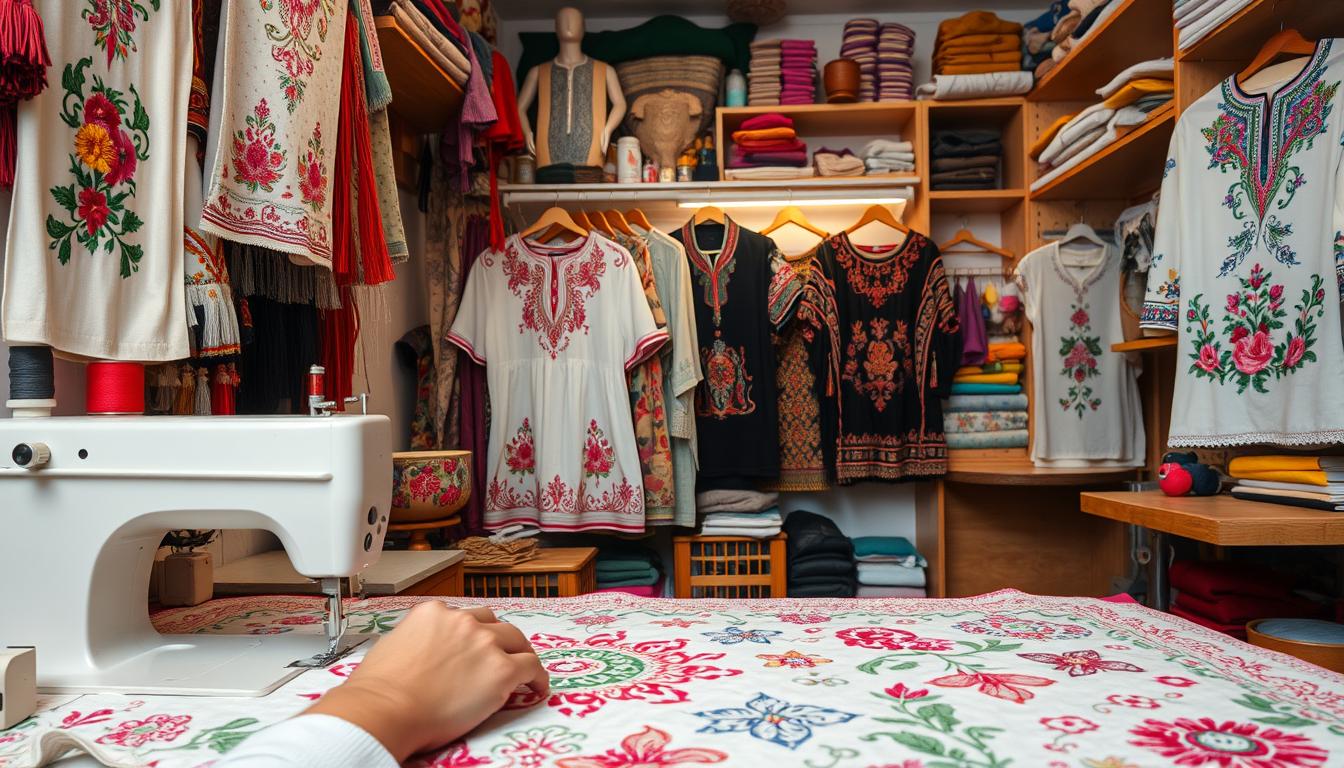
Ever thought about if a local stitch shop can match big names like CustomInk or Lands’ End?
Embroidery is an ancient art that now uses both hand skill and machine precision. When you look for embroidery near you, you want quality that lasts. Local shops offer personal service, quick turnaround, and hands-on samples to protect your brand.
Professional embroidery and custom work both last long if done well. Look for shops with clear experience, modern machines, and a portfolio of their work. Whether it’s for promotional items, team uniforms, or gifts, local services can add texture and quality that shines.
Key Takeaways
- Local embroidery mixes old craft with new machine tech.
- Search for experience, digitizing skill, and sample proofs before full production.
- Custom embroidery makes items last longer and look better.
- Compare local care from shops with big names like 4imprint and SanMar.
- Turnaround time and customer service are as important as stitch quality.
Why local embroidery shops matter for your custom embroidery needs
Choosing a nearby embroidery shop lets you control your design, fabric, and finish. You can see thread swatches, check machine quality, and confirm logo placement in person. This direct review reduces surprises and speeds up small changes.
Local shops offer both machine and hand finishing. This means you can get consistent runs or unique touches on gifts and uniforms. Personalized embroidery from a local provider often feels more special than mass-produced items.
Working with local embroidery is easier on logistics. You skip long shipping waits and high freight costs for proofs or rush orders. Searching for “embroidery near me” often leads to same-day consultations or quick sample checks.
Benefits of choosing a nearby embroidery shop
In-person meetings help with sizing, placement, and color. You can check thread types and fabric compatibility before big orders.
Nearby shops are flexible with small batches and custom requests. They handle unique apparel, corporate logos, and one-off gifts with care.
Local providers often have good relationships with regional suppliers. This helps when you need special threads, patches, or unique backing materials.
Local craftsmanship vs. online embroidery providers
Local craftsmen focus on tactile quality and finishing. Shops that use modern machines and skilled stitchers produce crisp digitizing and refined edge work.
National names like CustomInk and 4imprint are great for catalogs and large orders. But, consider the tactile inspection and bespoke finishes you get from a local shop.
Some local shops are part of networks like EmbroidMe or regional brands like Thread Logic and Stitch America. These models offer local contact with standardized processes for reliable turnaround and consistent services.
What to look for when searching “embroidery” near you
When searching for embroidery near you, focus on real work, not just promises. Look for clear photo galleries and physical samples. These should show off logo detail, edge finishing, and thread coverage.
Ask to see items similar to your project. This lets you judge stitch density and color fidelity.
Experience and portfolio review
Ask for a portfolio with corporate logos, team uniforms, and promotional apparel. Read Google reviews with customer photos to check consistency. Make sure the shop has worked with the fabric types you plan to use, like performance polyester or denim.
Technology, digitizing, and machine embroidery capabilities
Confirm the shop uses modern digitizing software. This software converts artwork into precise stitch files. Ask if they do digitizing in-house or outsource it and what proofing steps they follow, like test stitches on scraps.
Check if they run industrial multi-head machines. This ensures consistent machine embroidery output across large orders.
Turnaround time, pricing, and order minimums
Request a written quote that breaks down costs. This should include stitch-count pricing, setup fees, thread charges, and extras for appliqué or 3D puff. Ask about minimum order quantities and rush options for fast deadlines.
Compare promised delivery dates with customer reviews to confirm on-time performance.
Look for shops that offer quality embroidery services and clear communication. A professional provider will show you proofs, explain digitizing choices, and offer transparent pricing. This ensures your order meets your expectations.
Top embroidery techniques local shops should offer
When you visit a local shop, you want a clear list of services that fit your project. Look for shops that offer both fast, bulk work and slow, detailed work for unique items. A good studio will show you samples of each method so you can see the differences.
Machine embroidery for consistency and speed
Machine embroidery is great for making many items the same, like uniforms or logos. It uses computerized heads to make exact copies of designs. Ask if they use Tajima, Brother, or SWF machines for reliable stitching.
Hand embroidery and specialty stitching services
Hand embroidery adds a special touch you can’t get from machines. It’s perfect for unique gifts or heirlooms. Look for studios that show off their needlework portfolios. Expect longer wait times and careful thread selection for the best colors and durability.
Appliqué, 3D puff, and mixed-media techniques
Appliqué adds big color blocks and shapes that make designs pop. 3D puff embroidery uses foam and tight stitches to create raised designs. Shops that mix appliqué with machine and hand work create amazing mixed-media pieces.
| Technique | Best use | Typical turnaround | What to ask |
|---|---|---|---|
| Machine embroidery | Bulk logos, uniforms, repeatable patches | 2–7 business days | Digitizing sample, machine brand, thread chart |
| Hand embroidery | Custom gifts, textured art, luxury items | 1–4 weeks | Stitch types, thread fiber, portfolio examples |
| Appliqué | Large shapes, color blocking, durable patches | 3–10 business days | Fabric edge treatment, stabilizer, stitch density |
| 3D puff embroidery | Caps, bold branding, raised logos | 3–8 business days | Foam grade, stitch height, cap compatibility |
| Mixed-media techniques | Printed + stitched designs, appliqué + handwork | 5–14 business days | Combination samples, recommended stabilizers, care |
Ask about thread types, stabilizers, and foam grades for 3D puff embroidery. Good providers will explain how each choice affects durability and washability. Knowing these options helps you choose the right technique for your project.
Where to find the best local embroidery shops and trusted national alternatives
Start by searching for embroidery shops near you. Look at Google ratings, customer photos, and recent projects. Visiting a shop in person lets you see the quality of their work.
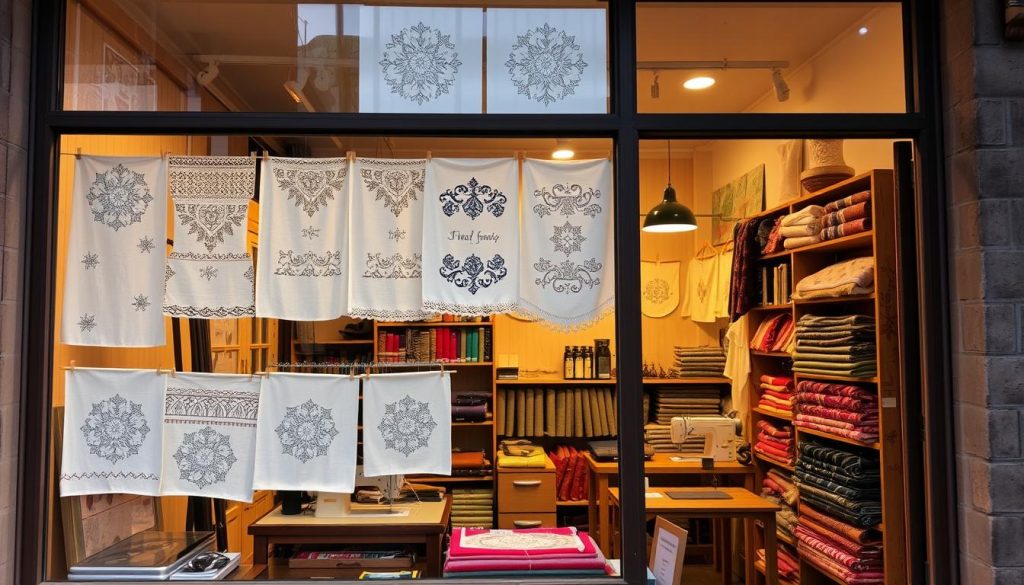
Local shops are great for small orders and custom gifts. They offer personalized service and can match colors exactly. You can also ask about their process for making changes and quick orders.
For big orders or easy online shopping, consider national options. Companies like CustomInk and 4imprint have great design tools and lots of products. EmbroidMe and Thread Logic are good for businesses with big orders.
When comparing national services, look at their guarantees, return policies, and shipping. Check if they use eco-friendly materials and offer tracking. National providers are good for big orders and shipping across the country.
Choose based on what you need. Local shops are best for small, urgent orders. Online vendors are better for big orders and a wide range of products.
Here’s a checklist for choosing: check their recent work, ask about digitizing, and look at their thread and stabilizer quality. Also, compare prices and services. This helps you find the best fit for your needs.
How to evaluate quality: questions to ask your embroidery shop
Start by asking a few key questions when you visit a local embroidery shop. Look for shops that are eager to discuss the technical aspects of digitizing and proofing. They should be willing to show you a stitched sample or a test run on your fabric before you place a big order.
Design and digitizing questions
Find out if the shop does their own digitizing and what software they use. Ask to see the digitized file or a low-resolution sample. This will help you see how well details will be captured in the final product.
Also, ask about how they handle complex logos or small text. Find out what limits they have for stitch density and underlay.
Materials, threads, and fabric compatibility
Make sure to ask which thread brands they use, like Madeira, Sulky, or Coats. Ask about color matching and if they can use Pantone numbers for brand accuracy. Discuss what fabrics they work with and what stabilizers they recommend for different materials.
This ensures your design stays flat and looks good after washing.
Order management, revisions, and guarantees
Learn about their revision policy: how many times you can make changes, any fees for rework, and what happens if the sample isn’t what you expected. Check how long it takes to complete an order and if there are rush fees.
Ask if they offer a written quality guarantee and how they handle any issues. Good embroidery services do quality checks and communicate clearly, even for large orders.
How to get the best results for apparel and embroidered gifts
Great results start with simple choices. Think about where your design will go, how big it should be, and what colors will look good on fabric. Making these choices early on helps avoid costly changes later and ensures your gifts and embroidery look professional.
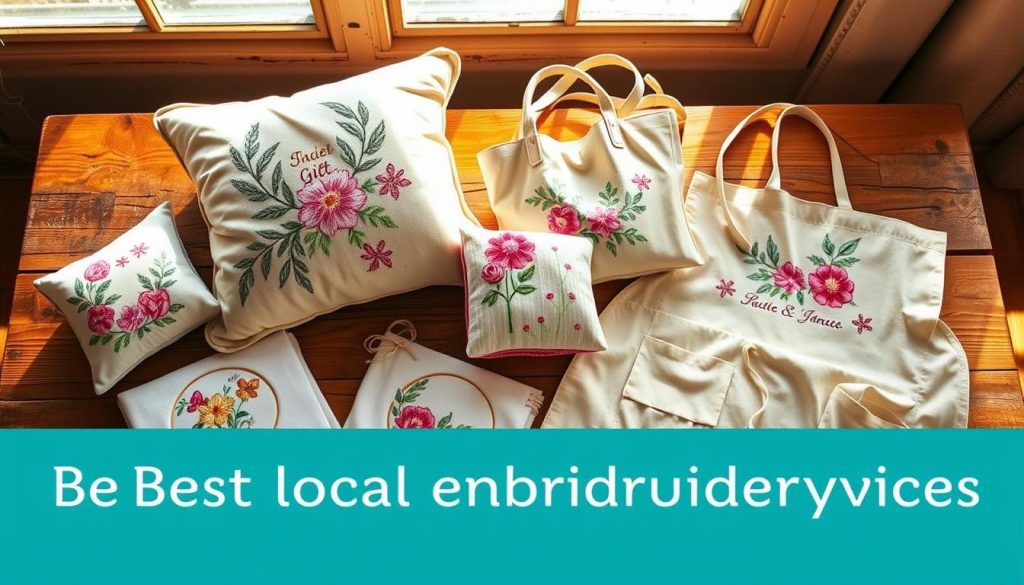
Placement, size, and color are key to the final look. You can place designs on the left chest, sleeve, or full-back. Left chest is subtle, sleeves are sporty, and full-back is visible for big designs.
Choose thread colors that stand out or match the fabric. Think about thread sheen for a matte or glossy look. For detailed logos, make them a bit bigger so stitches are clear, not blurry.
Get your artwork ready for production. Give high-resolution vector logos and color notes when you can. Ask the shop to digitize your file and send a proof stitch file for approval before making it.
Work with a shop that helps with design. Companies like CustomInk and Queensboro Embroidery have tools to help. Local shops can do test stitches to make sure your design looks good on your fabric and garment.
Follow care instructions to keep your embroidery looking good. Wash in cool water, avoid bleach, and don’t dry on high heat. This keeps the stitches and colors from fading.
Think about how long your embroidery will last. It usually lasts longer than prints and keeps its texture. The number of stitches and thread quality affect how long it lasts. For small logos, simplify details so they stay clear after washing.
| Focus | Best Practice | Why it matters |
|---|---|---|
| Placement | Left chest, sleeve, back | Balances visibility and wearability for apparel and embroidered gifts |
| Sizing | Scale up fine details; test stitch for small logos | Prevents loss of legibility after stitching and washing |
| Artwork | Provide vector logos and Pantone notes | Makes digitizing accurate and speeds production |
| Digitizing | Request proof stitch files | Lets you approve stitch density and placement before run |
| Colors | Choose contrasting or complementary thread; note sheen | Ensures legibility and matches brand intent for personalized embroidery |
| Care | Gentle wash, low heat dry, turn inside out | Extends life of stitches and keeps colors vibrant per care instructions |
Conclusion
Choosing the right embroidery shop can lead to lasting, high-quality results. Custom embroidery adds a professional touch to many items. Look for shops that let you review samples and discuss details before starting.
Use reviews and portfolios to compare services. Searching “embroidery near me” can help find local shops with clear pricing. National vendors are great for bulk orders, while specialty shops handle complex designs well.
Start by sketching your idea and choosing fabrics and thread. Then, digitize, test, and approve the final product. Asking about turnaround and guarantees ensures your embroidery looks and feels great.
 English