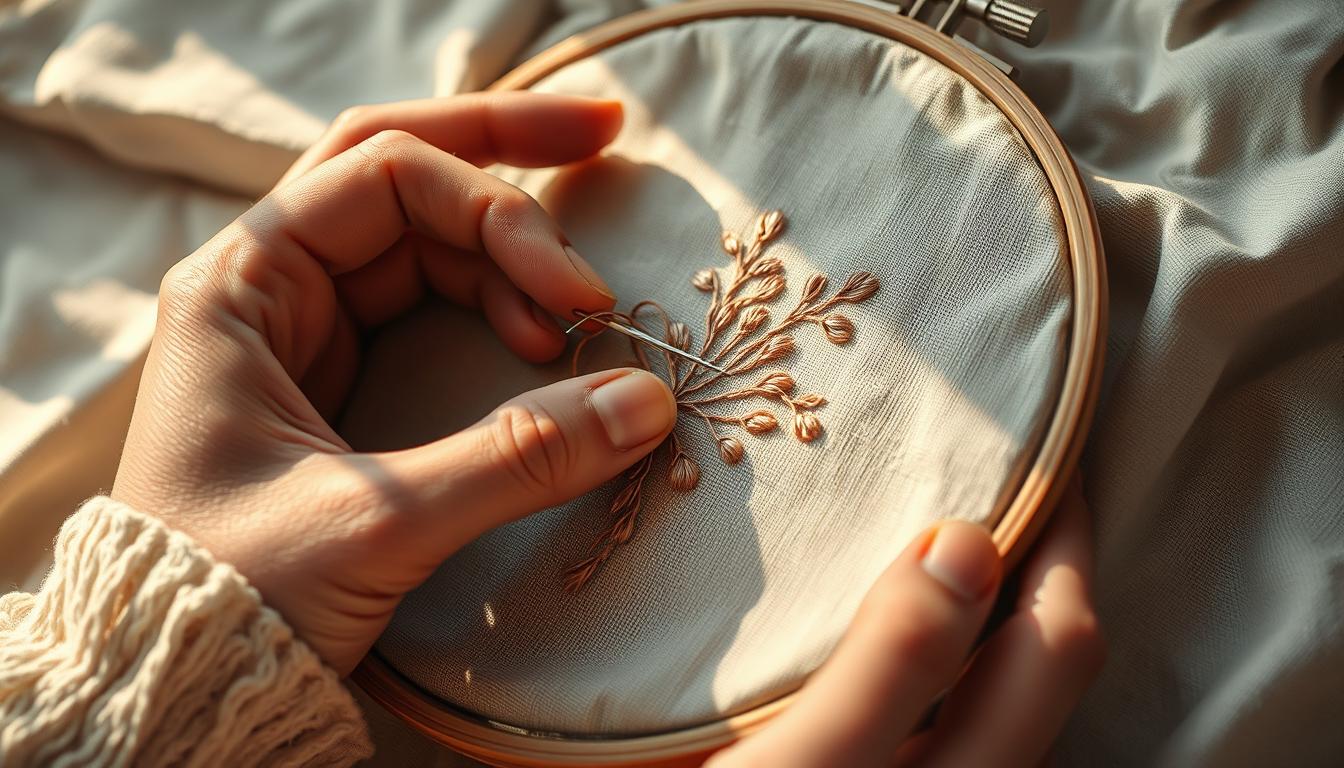
Ever wondered why simple embroidery stitches can turn plain fabric into art?
You can start embroidery at home with just a few tools. This guide will show you how to begin with a small set of tools and simple practice routines. Learning basic stitches like satin, stem, French knots, running, and backstitch will help you complete projects that look professional.
This article will guide you through learning embroidery. You’ll learn how to choose supplies, follow video tutorials, and use printable samplers. The goal is to master a few stitches, practice on samplers, and then move on to more complex projects.
Whether you’re new to embroidery or looking to improve, this series will help. It sets realistic goals and guides you to create beautiful, affordable projects.
Key Takeaways
- Embroidery is easy to start with a few basic stitches.
- DIY embroidery needs only a few, affordable supplies you can use at home.
- Practice samplers and short video lessons help build skills fast.
- Learning core stitches lets you tackle most beginner projects.
- This guide covers supplies, stitches, pattern transfer, and project ideas for steady progress.
Essential embroidery supplies and how to choose them for success
Getting the right embroidery supplies makes your stitching sessions calm and focused. Choose tools that fit your project and fabric. Arrange them neatly so you won’t pause mid-stitch. A little prep goes a long way in saving time and improving your work.
Must-have tools: needles, hoops, scissors, and floss
Begin with a clean kit: embroidery needles, sharp scissors, an embroidery hoop, floss, and a marking pen. Bohin embroidery needles are popular for their smooth fabric glide. Pick needle sizes based on your fabric and thread thickness.
Choose embroidery floss that fits your color scheme. Six-strand stranded cotton is versatile. DMC embroidery floss is recommended for its ease of use and fine detail. Small, sharp scissors are essential for neat edges and trimming close to knots.
Best fabrics for hand embroidery and why they matter
Natural, even-weave fabrics like linen and cotton blends are ideal. They offer consistent stitch length and a smooth hand. These fabrics work well with tracing methods and let needles move easily.
For samplers and practice, an 18 cm embroidery hoop is often preferred. It keeps fabric tight without distorting it. Sturdier fabrics handle iron-on or transfer paper better than very lightweight linens.
How to transfer patterns and choose the right method
Choose a pattern transfer method that suits your fabric and design. A lightbox with a friction or heat-erasable pen works well for linen and cotton. This method allows for precise tracing that washes away or disappears with heat.
Transfer pens and washable transfer papers are good for sturdier fabrics and bold designs. Iron-on transfers are quick for simple motifs. Direct drawing is best for freehand work. Always test your chosen method on a fabric scrap before starting your main piece.
Prepare your tracing supplies and resize PDFs as needed. Choose a sampler pattern that fits your hoop. Keep threads, needles, and scissors within reach for a smooth stitching experience.
Core stitches every stitcher should learn
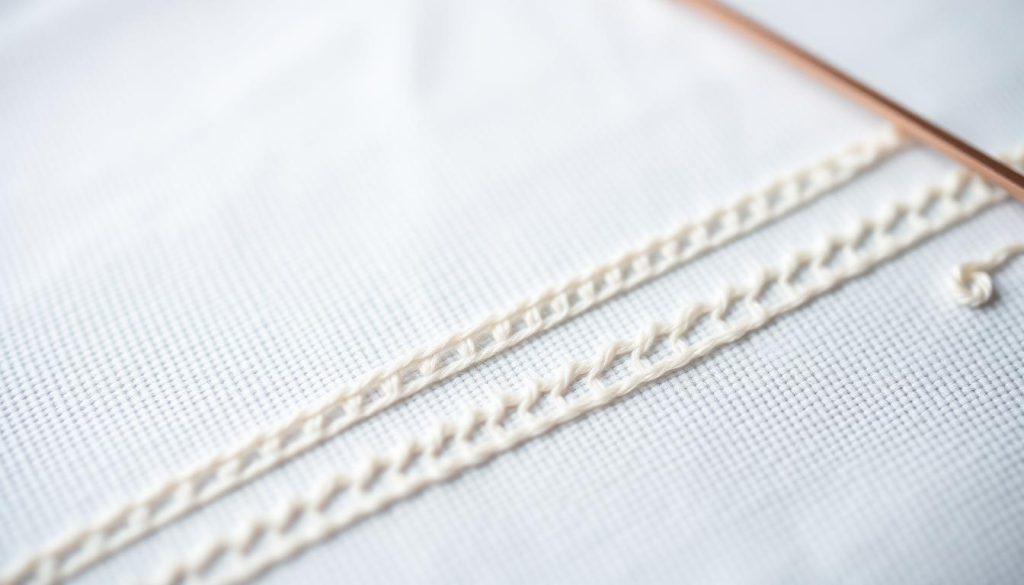
Begin with a few basic embroidery stitches for control. The satin stitch is great for smooth areas. The stem stitch works well for curved lines. The French knot adds tiny, textured dots.
Then, learn the running stitch for fast seams and quilting. The chain stitch is perfect for bold lines and letters. The backstitch is ideal for detailed lines and small details.
Move on to the 12 essential stitches. Include the feather stitch, herringbone, and woven spider’s wheel for texture and borders. Mastering these stitches lets you do outlines, fills, textures, and add details to designs.
Start with a slow learning plan. Begin with video demos, then practice on samplers with the 12 essential stitches. Focus on starting and stopping smoothly and handling curves and corners well.
Use specific tips while practicing. Try padded outlines before satin stitch for neat edges. Space French knots for texture. Vary running stitch length for shaping. These tips will enhance your work.
Embroidery patterns and project ideas to practice your stitches
Begin with a plan to move from simple repeats to more complex pieces. Use 18 cm hoop-sized sampler patterns to practice each stitch. These samplers often come with video tutorials to help you learn.
Sampler projects to learn stitches progressively
Start with samplers that list 12 or 18 stitches. Stitch one motif per section in a standard hoop. This helps you compare your work side by side.
Look for samplers with step-by-step video lessons. Pausing the tutorial lets you practice each stitch better. This improves your muscle memory quickly.
Beginner-friendly projects: hoops, tea towels, and patches
Begin with small projects for less stress. Hoop art is great for showing your progress. Tea towel embroidery and patches are good for practicing consistent stitches on useful items.
Finish your work neatly by adding felt or an iron-on backing. If you plan to display the hoop, trim the excess fabric for a clean look.
For care, hand wash in cold water with mild detergent. Line dry to protect your threads. Use color catchers to avoid dye transfer when mixing colors.
Design ideas for advancing skills: botanical, lettering, and stumpwork
For botanical embroidery, use stem stitch, fishbone, and long-and-short stitches. These create realistic petals and leaves. Practice smooth transitions between curves and straight stems.
Lettering embroidery uses backstitch, stem stitch, or split backstitch for clear words. Start with short phrases on small linens before making larger pieces.
Stumpwork adds depth with French knots, bullion knots, and woven roses. It also uses padded satin stitch. Learn to create 3D centers and raised leaves for natural shadows.
Start with samplers, then move to small items like hoop art and patches. Progress to botanical, lettering, and stumpwork. Use short practice sessions and video lessons to improve your skills.
Health, creative therapy, and the benefits of embroidery
Embroidery is a simple, low-cost way to calm your mind and rest your hands. It can be a meditative practice that fits into short breaks or long evenings. This makes embroidery wellness a form of creative therapy that many can enjoy.
Embroidery wellness and therapeutic embroidery explained
Therapeutic embroidery calms the nervous system with its repeated motions. Focusing on thread, needle, and pattern narrows your attention. This focus supports stress relief by bringing you into the present moment.
As a form of creative therapy, embroidery builds routine and small goals. Completing a tiny sampler gives you a quick win. These wins make the practice rewarding and help build your habit.
How embroidery supports mental and physical health
Mental benefits include reduced anxiety, better mood, and increased mindfulness. Regular stitching trains your attention and helps manage racing thoughts. Many find embroidering a reliable tool for mental health.
Cognitive gains come from learning new stitches and following patterns. Each time you practice, you strengthen memory and visual planning. Structured lessons improve your skill and confidence.
Physical benefits include fine-motor control and hand dexterity. Gentle, frequent practice keeps finger muscles active and improves coordination. Be careful with posture and hand strain; use ergonomic hoops and take frequent rests to protect joints.
Practical tips to get the wellness benefits from your practice
Start with short sessions to avoid fatigue and build consistency. Try small samplers you can finish in an hour or two to get quick satisfaction and maintain momentum.
Create a dedicated, comfortable workspace with good light and a drum-tight hoop to reduce eye strain. Keep needles and scissors nearby so you stay relaxed while you work.
Learn basic thread handling early: knotless starts, neat thread ends, and how to separate floss strands. Better technique lowers frustration and improves outcomes, which boosts the therapeutic effect.
Use embroidery as a mindful break. Focus on your breath and the rhythm of each stitch. You can pair stitching with soft music or a cup of tea to enhance calm.
Join a community for support and inspiration. Follow creators on YouTube, Instagram, or Pinterest. Weekly tips and shared projects help sustain motivation and deepen the health crafts benefits you feel.
| Wellness Goal | Embroidery Practice | Suggested Tools | Expected Benefit |
|---|---|---|---|
| Reduce stress | Short daily stitching sessions (15–30 min) | Small hoop, good lighting, soft music | Immediate calm and lowered tension |
| Build focus | Patterned samplers with 6–12 stitches | Printed patterns, needle threader, floss organizer | Improved attention and task completion |
| Improve dexterity | Fine-detail projects like lettering or small florals | Fine needles, high-contrast fabric, ergonomic hoop | Better hand coordination and finger strength |
| Boost motivation | Finishable projects: patches, tea towels, mini hoops | Preprinted kits, clear goals, timer for sessions | Satisfaction from completion and habit building |
| Social connection | Online challenges and local stitch groups | Smartphone for sharing, membership in communities | Support, ideas, and accountability |
Hand embroidery techniques vs. machine embroidery: when to use each
Choosing between hand and machine embroidery depends on your goals. Hand embroidery adds a personal touch with its texture and shading. It’s perfect for detailed work like botanical art and stumpwork.
Machine embroidery is great for speed and consistency. It’s ideal for logos, branding, and filling large areas evenly.
Think about the project’s size and your time. Hand embroidery is great for one-of-a-kind pieces or gifts. Machines are faster for making many items like towels or shirts.
Consider the cost and tools needed. Hand embroidery requires basic tools like needles and hoops. Machines need software and designs, but save time on big projects.
Choose based on the texture you want. Handwork excels in creating three-dimensional textures. Machines are better for precise, flat designs.
Handwork offers more control over your design. You can change stitches and add unique touches. Machines follow a file, ensuring clean lines and even fills.
Use machines for large projects needing precision and speed. Hand embroidery is best for personal, detailed work where you want full control.
| Factor | Hand Embroidery | Machine Embroidery |
|---|---|---|
| Best use | One-off art, textured botanical pieces, DIY embroidery gifts | Logos, uniform garments, production runs |
| Speed | Slow, deliberate, time-consuming | Fast, efficient for many items |
| Cost | Low startup cost, minimal equipment | High initial investment for machine and software |
| Creative control | High: freehand shading and three-dimensional stitches | High for consistency, limited for organic texture |
| Reproducibility | Low: each piece is unique | High: identical pieces with precise placement |
| Suitable projects | Stumpwork, bullion knots, raised roses, freehand lettering | Corporate embroidery, patches, counted designs converted to files |
Conclusion
You’ve learned how to start embroidery with basic, affordable supplies. You need a beginner kit with a needle, hoop, fabric, floss, scissors, and a pen. Then, download a sampler PDF and follow video lessons to learn the core stitches.
Practice 12–18 essential stitches with samplers and small projects. This helps you build skill quickly. It makes the embroidery journey manageable.
Start with sampler pages, then apply stitches to small projects like hoops and tea towels. When ready, try botanical, lettering, and stumpwork designs. Practice regularly and use videos and pattern PDFs from trusted teachers.
Follow embroidery teachers on YouTube and social platforms. Subscribe to pattern newsletters and join stitch-along groups. Remember, imperfections add character. You can always unpick and restitch to improve.
Keep practicing and enjoy the mental and creative rewards. With consistent practice, you’ll learn embroidery today. You’ll reap the benefits and make stunning stitches like a pro.
 English