Have you ever watched a detailed sampler and wondered if you could make something like that? Or do you think embroidery is only for gifted artists?
Embroidery is really just about pushing a needle and thread through fabric. This makes it easier to start than many think.
The difficulty depends on a few things. These include the stitching types, design complexity, tools, color choices, and any experience you have. With basic stitches like the running stitch, backstitch, and satin stitch, you can quickly build confidence.
As someone who learned embroidery on their own, you’ll find that practical habits help a lot. Using the right hoop, choosing proper needles, splitting threads, and keeping thread lengths moderate can make learning faster and less frustrating.
Key Takeaways
- Embroidery is accessible—basic stitches let you start quickly.
- Stitching types shape how hard a project feels.
- The right tools and simple needle techniques reduce frustration.
- Small projects can teach core skills in a few hours.
- Practice, patience, and good habits matter more than innate talent.
Why people think embroidery is hard: common myths and misconceptions
Many beginners give up before starting because of embroidery myths. They might think only gifted people can do it, or that it’s too expensive. They might also believe it’s for one gender. These ideas make textile art seem out of reach.
The truth is simple: with practice and a few tips, anyone can learn to stitch.
The myth of required innate talent
You don’t need a special talent to start with embroidery. It’s just about moving a needle through fabric and pulling thread. Breaking it down into simple steps helps you learn without feeling overwhelmed.
Many skilled stitchers began with basic stitches like backstitch and satin stitch. They learned as they went along.
Perceptions about time and cost
Embroidery is often seen as time-consuming and expensive. But small projects can be finished in just a few hours. You can start with basic supplies like DMC floss, a cheap hoop, and a blunt needle.
Using shorter threads and special needles makes it easier to stitch. This way, mistakes don’t feel as big of a deal.
Gender and cultural misconceptions
Some people think embroidery is only for women or is old-fashioned. But history shows men have been doing it for centuries, for both liturgical and royal purposes. Today, designers like Valentino and Elie Saab use it in their high-end fashion.
Modern stitchers use embroidery for all sorts of things, from repair to fine art. This shows how the craft has evolved and is now more diverse than ever.
Stitch types and difficulty: how the stitch you choose affects learning
Choosing the right stitches is key to starting well. Stitches vary in difficulty. Start with simple ones to build confidence. Your kit or class will guide you on the basics before moving to more complex stitches.
Simple starter stitches to build confidence
Start with running stitch and backstitch to draw shapes. These stitches help you get the hang of rhythm and tension. Try lazy daisy and chain stitch for adding details and curves.
Work with short thread lengths for better control. Use one or two strands for fine details and three to six strands for bold lines. Short lengths knot less and are easier to manage when you’re learning.
Progressing to textured and advanced stitches
Once you’re good at outlines, try French knots and bullion knots for texture. These add interest but need steady tension and good needle technique. Practice on scrap fabric to avoid frustration.
Choose the right needle as you get better. Chenille needles work well for many textured stitches. A finer embroidery needle is better for neat French knots and small details.
Stitching types comparison: needlepoint vs embroidery and cross stitch
Compare these to find what suits you best. Cross stitch uses a grid, which can be strict for beginners. Needlepoint uses larger canvas and a frame, affecting tension and planning. Hand embroidery offers the most freedom and variety.
| Needlework | Typical Surface | Learning Curve | Control & Freedom | Recommended Early Stitches |
|---|---|---|---|---|
| Cross stitch | Aida or linen | Beginner-friendly but strict counting | Grid-based, less forgiving of miscounts | Basic X stitch, backstitch for outlines |
| Needlepoint | Stiff canvas with frame | Moderate; tension and long strokes matter | Structured layout, strong tension control | Continental tent stitch, basketweave |
| Hand embroidery | Cotton, linen, mixed fabrics | Flexible; many paths from easy to advanced | High freedom, easy to adapt or correct | Running stitch, backstitch, lazy daisy, chain |
Practice a few stitches until they become second nature. This will help you learn new stitches faster and with less stress. Start with simple tools and build your skills gradually.
embroidery: tools, materials, and accessibility
Starting with hand stitching is simpler than you might think. You only need basic supplies, which are cheap and easy to find. Old shirts or fabric scraps are great for practicing before you buy expensive materials.
Essential, affordable tools to get started
Begin with a small hoop, 5″–6″ is perfect for beginners. It keeps your fabric tight and is easier to handle than big frames. Get a pack of general-purpose embroidery needles, a few skeins of six-strand floss, and small scissors.
A needle threader, a needle case, and a simple hoop stand are also good. You can find these at Michaels, Joann, and local haberdasheries. You don’t need fancy stuff to start with basic stitches.
Needle and thread choices that make stitching easier
Chenille needles are great for easier threading and smoother fabric passage. Use finer needles for detailed work like French knots. Choose the right needle size for your fabric; cotton needs a different size than linen or canvas.
Split your embroidery thread wisely. Most floss has six strands; try two to four strands for the right thickness. Keep thread lengths about 50–80 cm to avoid tangles and fraying.
Ergonomics and tools that reduce physical difficulty
Focus on ergonomics while stitching. Sit with both feet flat, keep your shoulders relaxed, and use a hoop stand or lap frame to bring your work closer. An embroidery hoop stand can free your hands and ease neck strain.
Think about using padded grips for needles, magnifiers for low vision, and task lamps for better lighting. These small changes help make embroidery easier for people with joint pain or limited dexterity.
| Item | Why it helps | Beginner recommendation |
|---|---|---|
| 5″–6″ Embroidery hoop | Keeps tension even and is easy to maneuver | Wood or plastic hoop, medium tension |
| Chenille needles | Larger eye eases threading and reduces hand strain | Size 18 or 22 pack |
| Six-strand embroidery thread | Split for desired thickness; versatile for many stitches | Cotton floss, basic color pack |
| Needle threader & padded grips | Simplify threading and improve comfort | Metal threader; silicone grips |
| Hoop stand or lap frame | Supports ergonomics and frees both hands | Adjustable tabletop stand |
| Good lighting & magnifier | Reduces eye strain and improves accuracy | LED lamp with clamp; 2x magnifier |
| Affordable fabric scraps | Low-cost practice surface before committing to premium materials | Old cotton shirts or quilting cotton |
| Needlepoint vs embroidery notes | Helps choose tools by technique; canvas needs sturdier needles | Use tapestry needles for needlepoint, embroidery needles for freehand |
Choosing designs and colors to control project difficulty
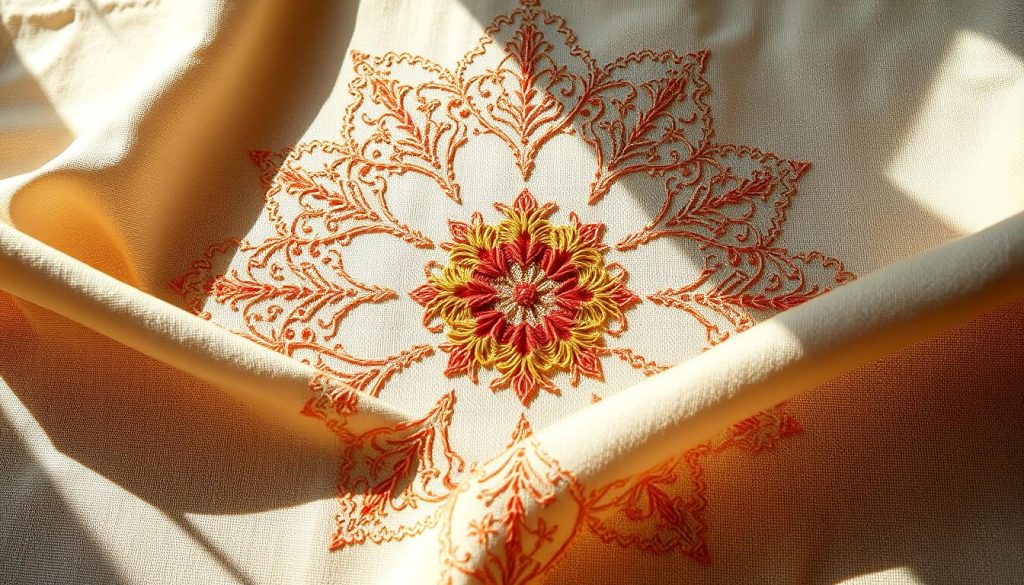
When picking an embroidery design, size and detail matter. Big, detailed patterns are hard and take a lot of time. But, small hoops with simple designs let you practice a few stitches at a time.
How design complexity affects challenge
Simple designs make progress faster and easier. Samplers teach basic stitches without too many colors. But, complex designs need more planning and can lead to mistakes.
Color planning and thread availability
Stick to a few colors to make planning easier and avoid thread changes. Using one or two colors means you won’t run out. Choose threads from brands like DMC or Anchor to avoid shortages.
Use split floss for texture and the right strand count for even coverage. Keep thread backs clean on light fabrics to avoid showing through. Trim loose ends before framing.
Balancing creativity and structure
If you like following rules, try a pattern or sampler. For more freedom, go for freestyle or mixed-media designs. These let you focus on your own style.
Try both structured and freestyle projects to see the difference. You’ll learn how planning, thread, and stitches affect your work.
Top practical tips to make embroidery easier based on real stitchers’ experience
Begin by breaking your project into smaller steps. Use clear guides and short tutorials to boost your confidence. Start with a simple design and stitch for 10–20 minutes daily. This helps you get into a rhythm and reduces frustration.
Using a small hoop and moving it across the fabric
Opt for a 5″–6″ hoop for better tension and control. Move the hoop as you stitch, not the fabric. This method prevents creases and keeps your stitches neat.
When threads start to pull or the fabric loosens, add more fabric to the hoop. Making small adjustments often is better than one big fix.
Thread management and efficient habits
Cut thread lengths to 50–80 cm to avoid tangles. Split six-strand floss to match the design’s requirements. Keep scissors and a needle threader handy for quick starts and stops.
Use chenille needles for easy threading and fine needles for delicate work. Stop stitching when 8 cm of thread is left for neat ends. These habits save time and prevent knots.
Finishing, stretching, and framing for professional results
Always stretch your finished piece to smooth out creases and enhance stitch texture. A stretched mount makes satin stitches look fuller and more even.
Invest in proper framing for selling or exhibiting your work. Framing turns embroidery into wall art. Include mounting instructions or a kit if you share your work.
Community tips and mindset
Join online groups or local workshops to share techniques and encouragement. Short, regular sessions make embroidery meditative and restorative.
Be forgiving of small flaws. Avoid constant unpicking unless it’s really necessary. On sheer fabrics, focus on a tidy back. On heavier fabrics, aim for secure, unobtrusive tails.
How prior needlework experience helps: from cross stitch to creative needlework
If you’ve worked with counted patterns, you know the basic motion. It’s pulling a needle and thread through fabric. This skill makes learning freehand embroidery easier. You’ll spend more time practicing than figuring out what supplies to buy.
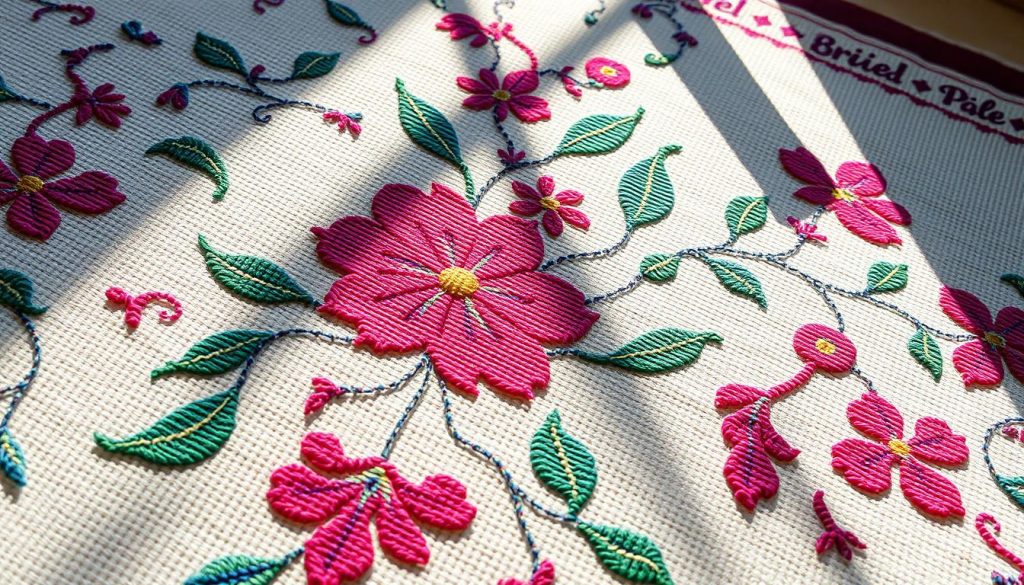
Skills from cross stitch and needlepoint are very useful. You’re good at reading charts, matching colors, and controlling thread tension. These skills help a lot when following embroidery patterns and planning color shading.
Needlepoint teaches you about different frames and tension. If you used a stretcher frame or a slanted workboard, you’ll notice differences with hand embroidery hoops. But, your patience and precision from canvas work will help you adapt quickly.
What changes when you switch to freehand work is the grid. Cross stitch requires strict placement, while embroidery lets you place stitches by eye. This freedom can feel strange at first. You’ll learn to judge spacing, balance, and how to split floss for subtle effects.
Embroidery is more forgiving. Small errors can become texture or accents. You can unpick a satin stitch or weave a stem stitch into nearby lines. This flexibility invites experimentation and supports growth in creative needlework.
For a quick contrast, use the table below to weigh core craft differences and transferable strengths.
| Skill or Trait | Cross Stitch / Needlepoint | Freehand Embroidery |
|---|---|---|
| Pattern reading | Chart-based, color codes, strict counting | Sketches, motifs, and loose guidelines |
| Tension control | Consistent tension required to keep grid neat | Varied tension for texture; forgiving in many stitches |
| Stitch variety | Limited palette of repeatable stitches | Hundreds of stitches for texture and shading |
| Tools and setups | Frames, larger canvases, rolling frames common | Hoops, tambour frames, work on varied surfaces |
| Common transferable strengths | Color matching, patience, needle handling | Applies directly to composition, shading, and needle techniques |
| Learning curve | Steep for precise counting; forgiving once mastered | Steep for mastering many stitches; forgiving for creative edits |
Conclusion
Embroidery is not hard to learn; it’s a skill you can pick up. The challenge comes from the stitches you choose, the design’s complexity, and the tools you use. Start with simple stitches and follow clear guides to build your confidence fast.
Every day, your habits matter a lot. Use a small hoop, pick easy-to-use needles, and manage your thread well. Finishing your work right also helps a lot. These tips make your embroidery look great and help you progress.
Many people think embroidery is too hard, but it’s not. It’s affordable, welcoming, and has many uses today. You don’t need to be good at it from the start. Just keep practicing and you’ll get better over time.
 English