Have you ever stopped to think about a stitched flower on a jacket? It might be saying something to you. This idea is at the heart of this article: embroidery is like language, creating meaning stitch by stitch.
Embroidery is everywhere, from clothes to carpets. It has been around for thousands of years. Ancient Egypt and Viking-age Sweden show its long history. China and the Near East also have ancient needlework traditions.
This guide will show you how embroidery is like words. You’ll learn about stitches, motifs, and regional styles. It’s a way to connect craft, culture, and story in surprising ways.
Learning embroidery is more than a hobby. It’s a way to keep memories and share stories through cloth. This guide will teach you the basics, simple projects, and tips. You’ll be able to start your own embroidered story with confidence.
Key Takeaways
- Embroidery appears worldwide on everyday items and carries deep cultural meaning.
- Historical evidence links embroidery to ancient cultures, including China, Egypt, and Viking-age Sweden.
- The metaphor “embroidery like words” helps explain how stitches build meaning.
- This article combines history, examples, and a practical beginner embroidery guide.
- You will learn simple stitches and projects to begin your own embroidered stories.
How embroidery tells stories the way language does
Embroidery is like a language you can see. Small motifs act as signs. Threads, stitches, and fabric form a grammar you learn by practice.
When you study embroidery basics, you start to see patterns as phrases. Objects become sentences.
Embroidery as narrative: symbols, motifs, and hidden meaning
Motifs are like words. The Bayeux Tapestry, nearly 70 meters long, tells of the Norman conquest. It even shows Halley’s Comet with a Latin caption.
This comet had different meanings for Normans and Anglo-Saxons. This shows how symbols in embroidery carry layered meanings.
Samplers, wall hangings, and garments encode events, status, and beliefs. You can trace births, trades, travels, and marriages through motifs. A single flower or bird can signal family ties, trade networks, or political allegiance.
Context, cultural grammar, and regional ‘dialects’
Different places have their own visual dialects. Qing dynasty silk robes use precise motifs that signal rank in imperial China. In India, Chikankari, Phulkari, Kantha, and Zardozi each follow regional rules and local tastes.
Byzantine and Scythian luxury embroideries, plus Viking-age finds in Sweden, reveal their makers’ priorities through technique and design.
Reading cultural embroidery means knowing its grammar. A motif that signals protection in one region might mark fertility in another. You must consider time, place, and the stitcher’s intent to interpret meaning correctly.
Medium and material as vocabulary
Materials speak too. Silk, cotton, and metallic thread change a motif’s tone. Gold or silver thread historically indicated power and status.
You can find unusual materials sewn into works: hair, leaves, wood, postage stamps, even coins. These choices add semantic weight to the image.
In Mexico, groom’s hair appears in scarves as a personal token. Late Imperial Chinese embroideries used hair to stitch Buddhist images. When you study the medium and material alongside stitches, you expand your embroidery vocabulary and sharpen your reading of textile messages.
Context determines reading. The same stitch can mean celebration, mourning, or protest depending on who made it and why. Thinking of embroidery as communicative practice helps you see stitched objects as records of lived experience, not mere decoration.
Embroidery and words: shared structure and learning process
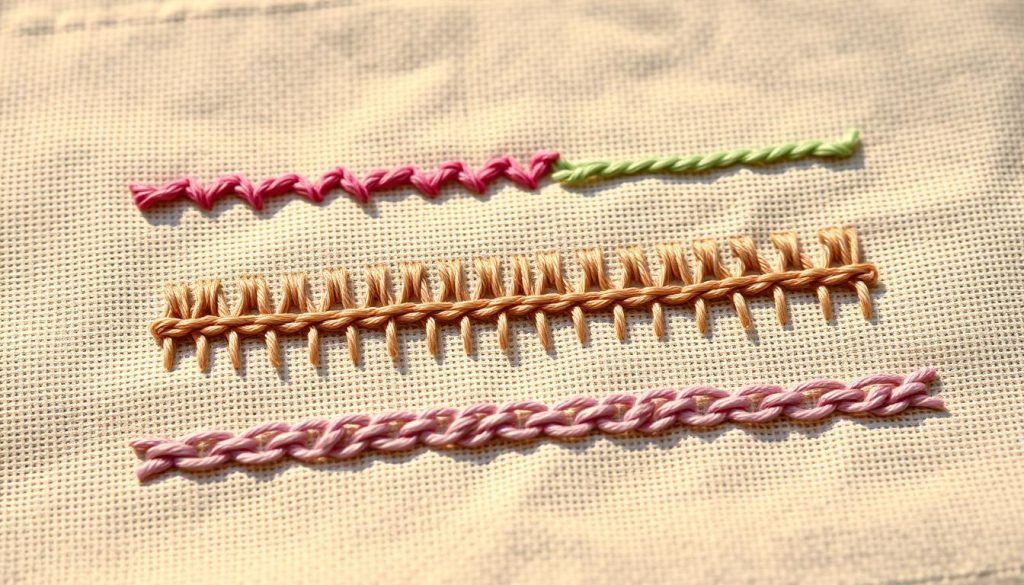
Learning embroidery is like learning a new language. You start with basic stitches, like letters. Stitches like the running stitch and satin stitch form a small alphabet you practice until it feels natural.
As you practice, you learn to embroider with purpose. Needle in and out becomes a rhythm. This rhythm helps you become fluent in embroidery and turns simple repairs into beautiful decorations.
Basic stitches as letters and simple patterns as words
Once you know the stitches, you mix them to create motifs. A backstitch row becomes a stem, and French knots add texture. Satin stitch fills in details. These patterns are like words, giving shape to designs.
From simple stitches to complex narratives
Embroidery often starts with practical tasks like mending. Girls were taught needlework for useful skills before it became a symbol of status. Over time, simple stitches turned into detailed samplers and portraits for the elite.
Industrial advancements like the Jacquard loom made production faster. But handwork’s craft skills remained valuable. You can see how stitches evolve from simple to complex by tracing their history.
Rules, tradition, and creative freedom
Tradition sets standards for quality and style. These rules ensure your work looks good and lasts. Learning embroidery basics teaches you about tension and finishing techniques.
Yet, many makers enjoy breaking rules. They experiment with colors and materials. Some find “stitching” casual, while “embroidery” seems formal. Showing easy projects can make embroidery more inviting.
You can choose to follow rules or not. Practice the basics, then add your own twist. As your skills grow, you decide whether to stick to tradition or create your own style.
Why perception matters: stitching vs embroidery and the power of naming
The words we use can make needlework seem welcoming or not. “Stitching” sounds fun and easy. “Embroidery” might seem too serious and hard.
This difference affects who wants to learn. It decides who signs up for classes or tries it at home.
Many say embroidery seems too hard, but stitching is inviting. When teaching or describing projects, use simple words. This makes starting easier and lets beginners ask questions without worry.
How labels shape who tries the craft
Words can attract or scare people away. Calling a workshop “advanced embroidery” might scare off beginners. But “easy embroidery” or “how to embroider” classes attract more.
Offer a clear path from basics to more advanced techniques. This keeps interest high and encourages learning.
Successful makers use simple language. They welcome mistakes and avoid hard terms. This makes the craft seem useful, not just for show.
Breaking barriers: making embroidery accessible
Start with simple kits and clear instructions. Use visible mending and upcycling projects to show its value. These tasks build confidence quickly.
Teach a few basic stitches and suggest small projects. This makes it feel achievable. Encourage trying new things on scraps to save money and learn from mistakes.
Community voice: bloggers, teachers, and attitude shifts
Online communities have changed how we see embroidery. Blogs like Feeling Stitchy show it as modern, political, and calming. They challenge old, elitist views and celebrate diverse makers.
Experienced stitchers mentoring beginners is key. Offer public stitching circles, tutorials, and honest talks about mistakes. This encourages more to try and enjoy embroidery.
| Barrier | Perception | Simple fix | Outcome |
|---|---|---|---|
| Jargon-heavy descriptions | Feels intimidating | Use plain phrases: easy embroidery, how to embroider | More sign-ups for classes |
| Fear of perfection | Avoidance of craft | Show visible mending and upcycle projects | Practical appeal and retention |
| Cost of supplies | Perceived exclusivity | Promote DIY embroidery with scraps and low-cost kits | Lower entry barrier |
| Lack of local mentors | Feeling of isolation | Create online community embroidery groups and tutorials | Peer support and skill growth |
| Historic standards anxiety | Belief you must follow strict rules | Teach embroidery basics with playful projects | Freedom to experiment |
Embroidery as evidence: social, political, and personal narratives
Embroidery lets us hear voices from the past. It’s like a living record, showing us events and beliefs. Sometimes, it tells us more than written documents do.
Historical records stitched in thread
The Bayeux Tapestry tells us about the Norman conquest. It even shows Halley’s Comet, giving us a glimpse of the 11th century. From the 5th–3rd centuries BCE, Scythian embroideries and Byzantine work show ancient cultures.
Qing dynasty silk robes and Egyptian tomb embroideries also survive. They show us fashion, rituals, and power. High-status materials like gold and silver thread showed rank.
Luxurious hand embroidery was a sign of wealth across cultures. Some embroidered items are now very valuable, like imperial thangkas.
Embroidery as resistance and testimony
Embroidery can also tell stories of protest and survival. Suffragette handkerchiefs in prison showed solidarity. A 1941 sampler from a Nazi concentration camp is a powerful testament to endurance.
Ashley’s Sack tells the story of a child sold into slavery. Embroideries by caregivers reveal abuse and neglect. Today, quilts and banners are used in activism, combining craft and politics.
Personal storytelling and memory
Family samplers and memorial pieces keep memories alive. Hair-embroidered scarves in Mexican weddings and Buddhist images in late Imperial China mark important life moments.
Learning embroidery was once a social skill. It helped people show their identity and status. When you stitch, you carry on a tradition that keeps family stories and history alive.
Embroidery is more than just stitching. It’s a way to document history, protest, and care. Your stitches can add to this rich tapestry of human experience.
Practical guide to start your own embroidered story
Ready to start your embroidery journey? This guide will help you with the basics. You’ll learn about starter supplies, simple stitches, and small projects. This way, you can enjoy embroidery without feeling overwhelmed.
Embroidery basics and starter embroidery kit checklist
Start with a starter kit to keep things simple. You’ll need a small hoop, crewel and embroidery needles, and stranded cotton. Also, include fabric scraps in cotton or linen.
Don’t forget embroidery scissors, a washable fabric marker, and pattern transfer tools. A short guide or online tutorial will help you learn the basics.
For a richer experience, try using linen, wool, or silk fabrics. But, these are optional for beginners.
Easy projects and simple stitches to tell a first story
Begin with projects that boost your confidence. Try visible mending on clothes or a small hoop piece with a design. These projects are rewarding and easy.
Practice simple stitches like backstitch, satin stitch, and stem stitch. These stitches help you create shapes and patterns.
Find patterns online from blogs and social media. DIY projects from others keep your ideas fresh and free.
Tips for learning embroidery and staying motivated
Set small goals and practice daily. Even 10 to 15 minutes a day can make a big difference. Use repetition to improve your stitches.
See yourself as a stitcher, not just an embroiderer. Start with simple designs and gradually move to more complex ones.
Join online groups or local classes for support. Try different canvases to keep your practice fun and avoid getting bored.
Remember, machine embroidery is fast, but handwork is unique. Mix both to meet your goals, whether as a craft or hobby.
Conclusion
Embroidery is like a language, using symbols and motifs to share meaning. It has been used for centuries, from the Bayeux Tapestry to suffragette handkerchiefs. These pieces tell us about history, beliefs, and daily life across cultures.
You don’t need to be a pro to start embroidering. Think of this guide as a map to get you started. Learn the basics, practice simple stitches, and use a starter kit. With easy projects and short practice sessions, anyone can begin.
Both hand and machine embroidery are important today. Your work will join a long tradition. With just a hoop, threads, and simple stitches, you can share your story. So, grab a needle and start stitching your own tale.
 English